What Is Mandarin Oil? Pressed From the Peel, Not Steamed
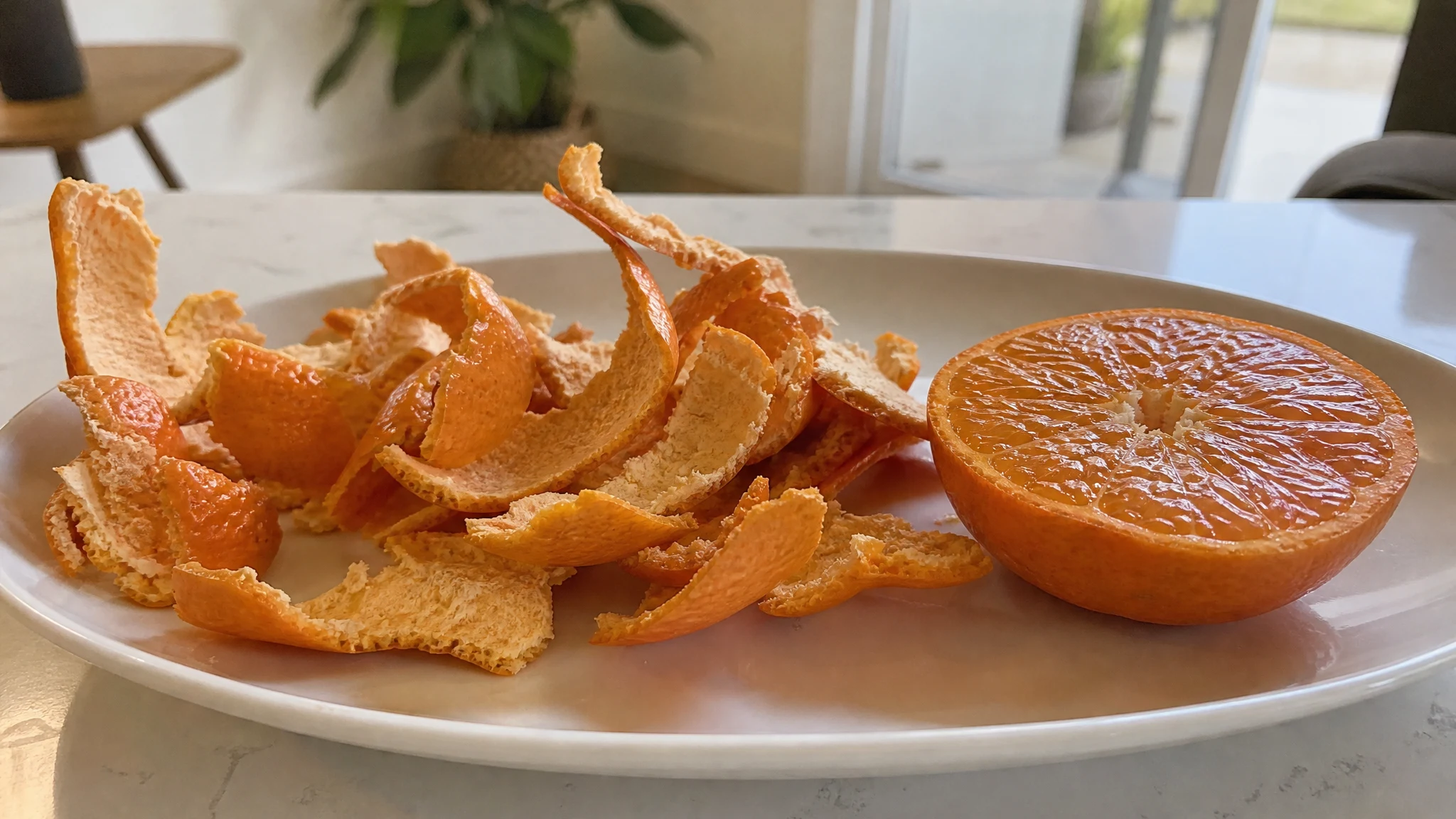
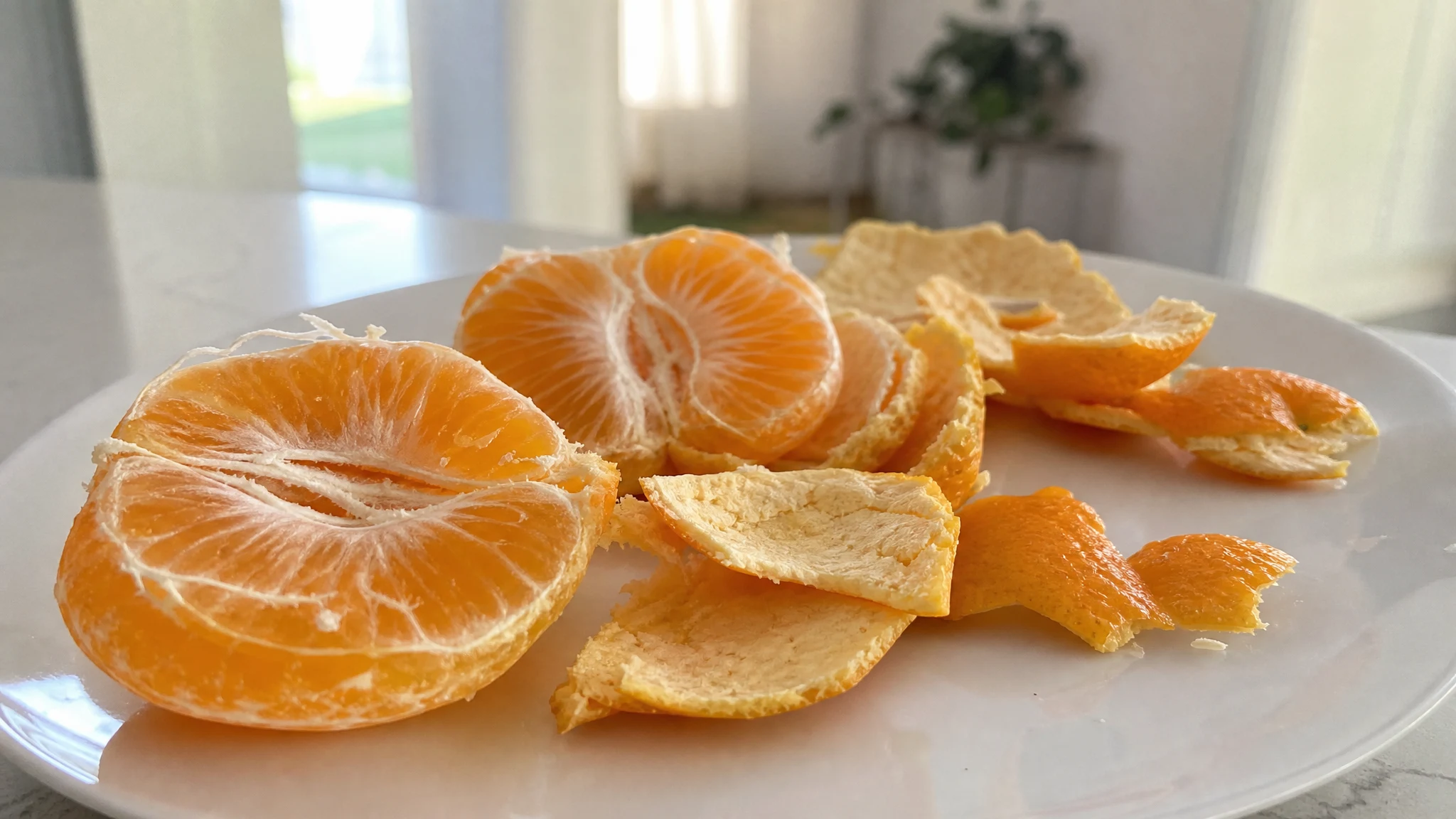
Mandarin oil is the oil in the peel of the mandarin fruit, Citrus reticulata, and the usual way to get it is to squeeze the peel without heat rather than steam it. That single detail sets it apart from the oils people mix it up with: sweet orange comes from a different species, petitgrain comes from leaves and twigs, and distilled citrus oils are a different material altogether. Here is what the name means and what to expect from a bottle.
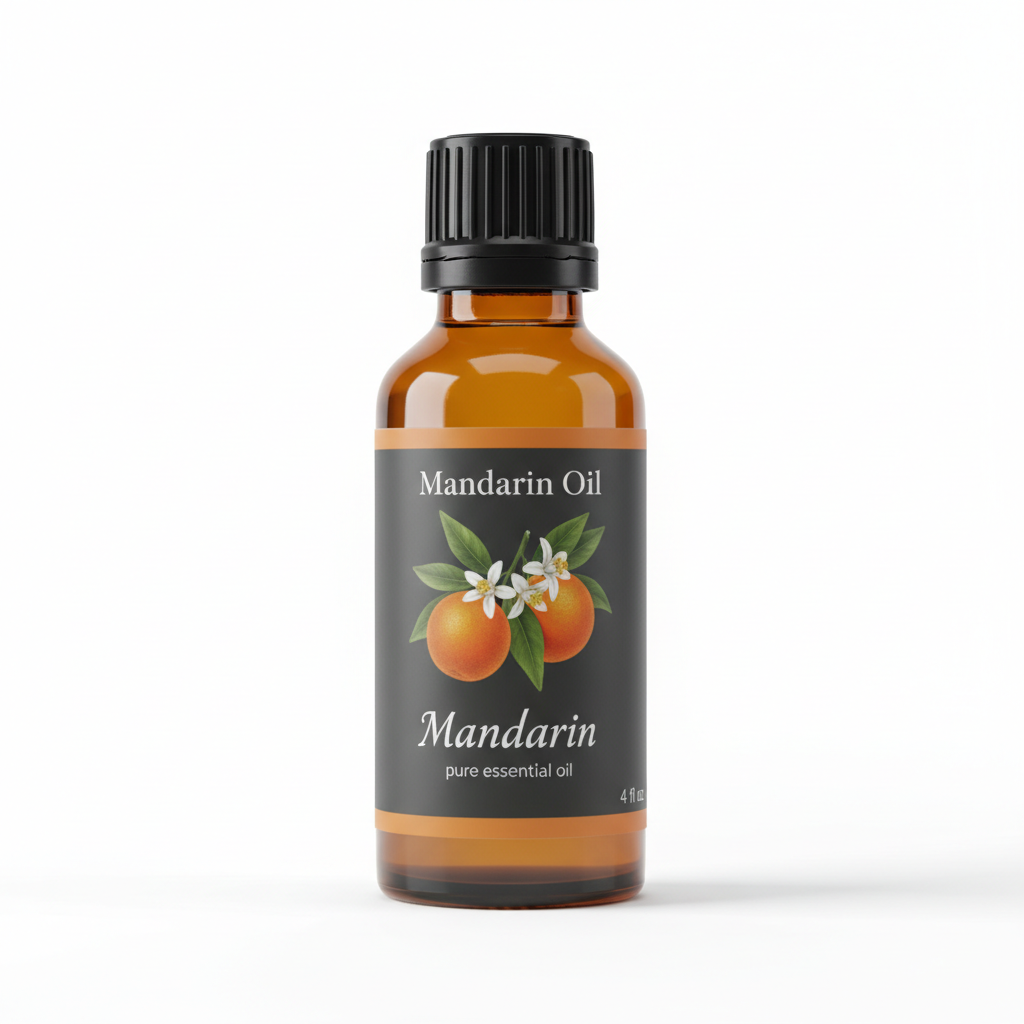
Mandarin Essential Oil
Our own Mandarin Essential Oil, in sizes from 0.5 oz to bulk.
From $12.99
Shop Now →The fruit behind the name
"Mandarin" is the everyday name for small, easy-peeling citrus, and botanists classify the group as C. reticulata Blanco. Tangerines are a horticultural group within it, while clementines are a mandarin and sweet orange cross (Oueslati et al., 2017). A genomic study of 60 citrus accessions showed how tangled the family tree is, with mandarins and sweet orange closely related (Wu et al., 2018). Our guess is that this kinship is why the oils of close relatives share so many molecules. For the two nearest neighbours, see mandarin and tangerine and mandarin and sweet orange.
How the oil is made
The peel carries its oil in tiny glands, and cold expression breaks them open mechanically. EFSA's description of the industrial route runs like this: the fruit surface is scarified, water is sprayed on to collect the oil, the mixture is filtered and a centrifuge separates oil from water (EFSA Panel, 2021). Mandarin is a modest producer. One study of peel oil recovery measured 2.41 kg per tonne of fruit for lemon and 1.43 for sweet orange against only 0.64 for mandarin (Brat et al., 2001), which helps explain why a good mandarin oil is a small harvest from a big fruit.
We sell one mandarin oil, described on our pages and on the certificate we publish as cold-pressed from the peel and sold neat, with no additives or fillers. Our production article goes through the steps.
What is inside
Pressed mandarin oil is mostly limonene, with a good share of gamma-terpinene and a handful of minor compounds that give it its character. EFSA's specification puts limonene at 65 to 80% and gamma-terpinene at 13 to 22%, and tracks methyl N-methylanthranilate, a marker for mandarin, at 0.15 to 0.7%. One laboratory study pressed three citrus peels and found limonene around 75% in Ponkan mandarin, against 86% in Valencia orange and 55% in Eureka lemon (Lu et al., 2019), a handy reminder that each citrus has its own balance. For a fuller look, see the composition article.
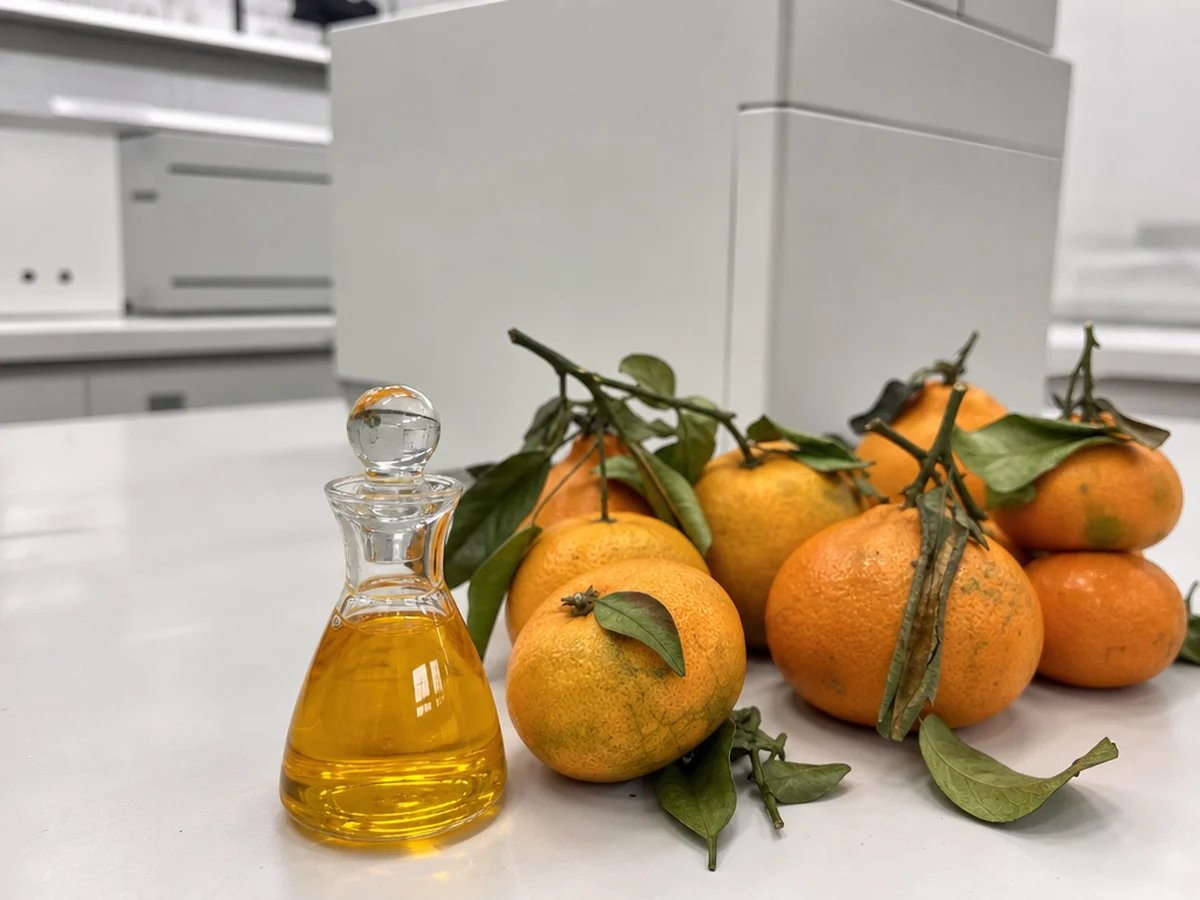
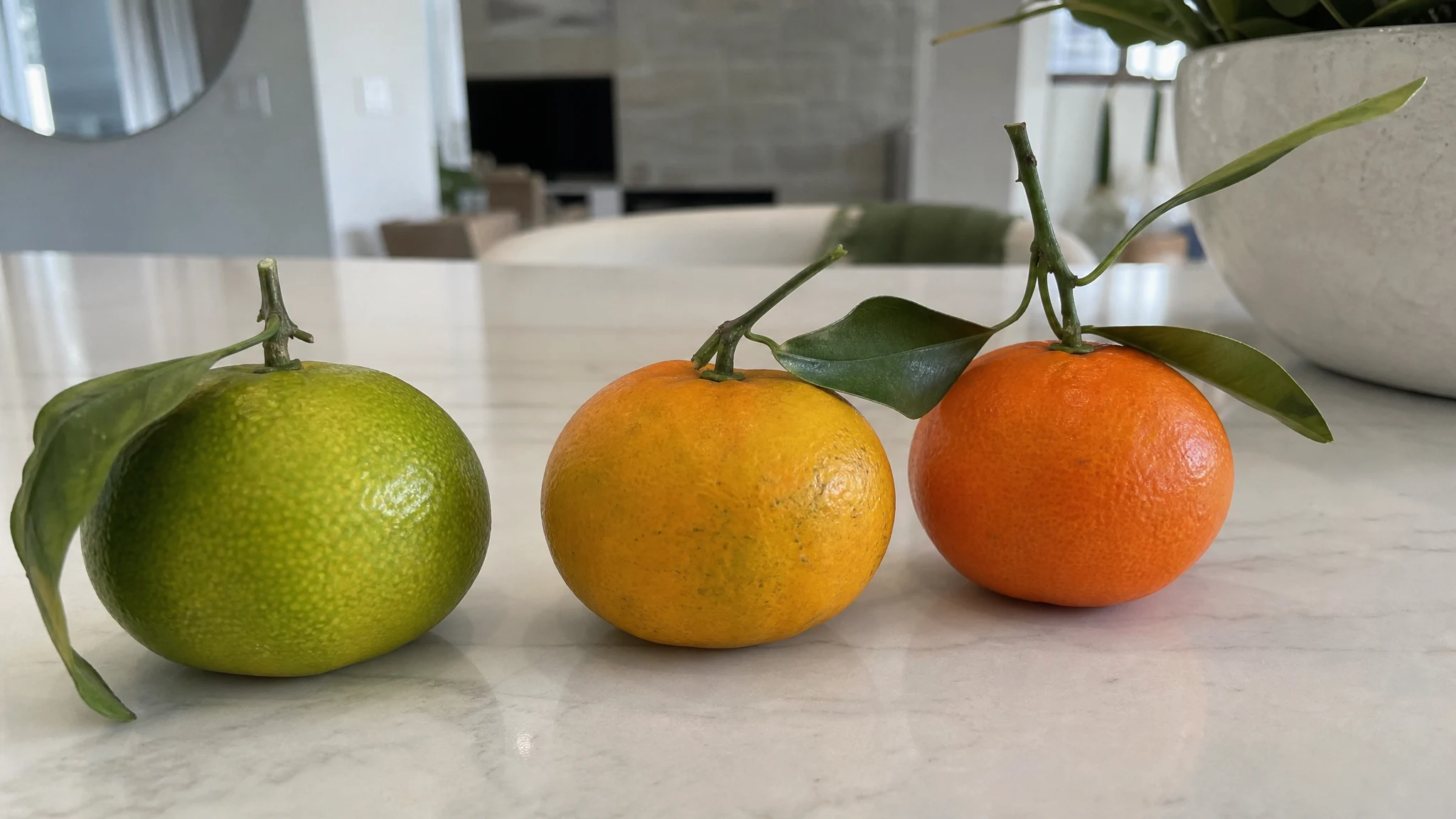
EFSA also describes two colour types, green (green to green-brown) and red (orange to red-amber). The certificate we publish for one batch lists a green liquid, a relative density of 0.852, a refractive index of 1.471 and an optical rotation of +69.80 degrees at 20 C, all within EFSA's physical ranges. Those are bulk constants rather than a composition profile; our COA guide shows how to read them. As for scent, we describe it as sweet, mellow and juicy with a faint floral hum, and it works as a top note, which is why it brightens a diffuser or a blend quickly. The perfumery article explains the top-note idea.
What to expect when you open a bottle
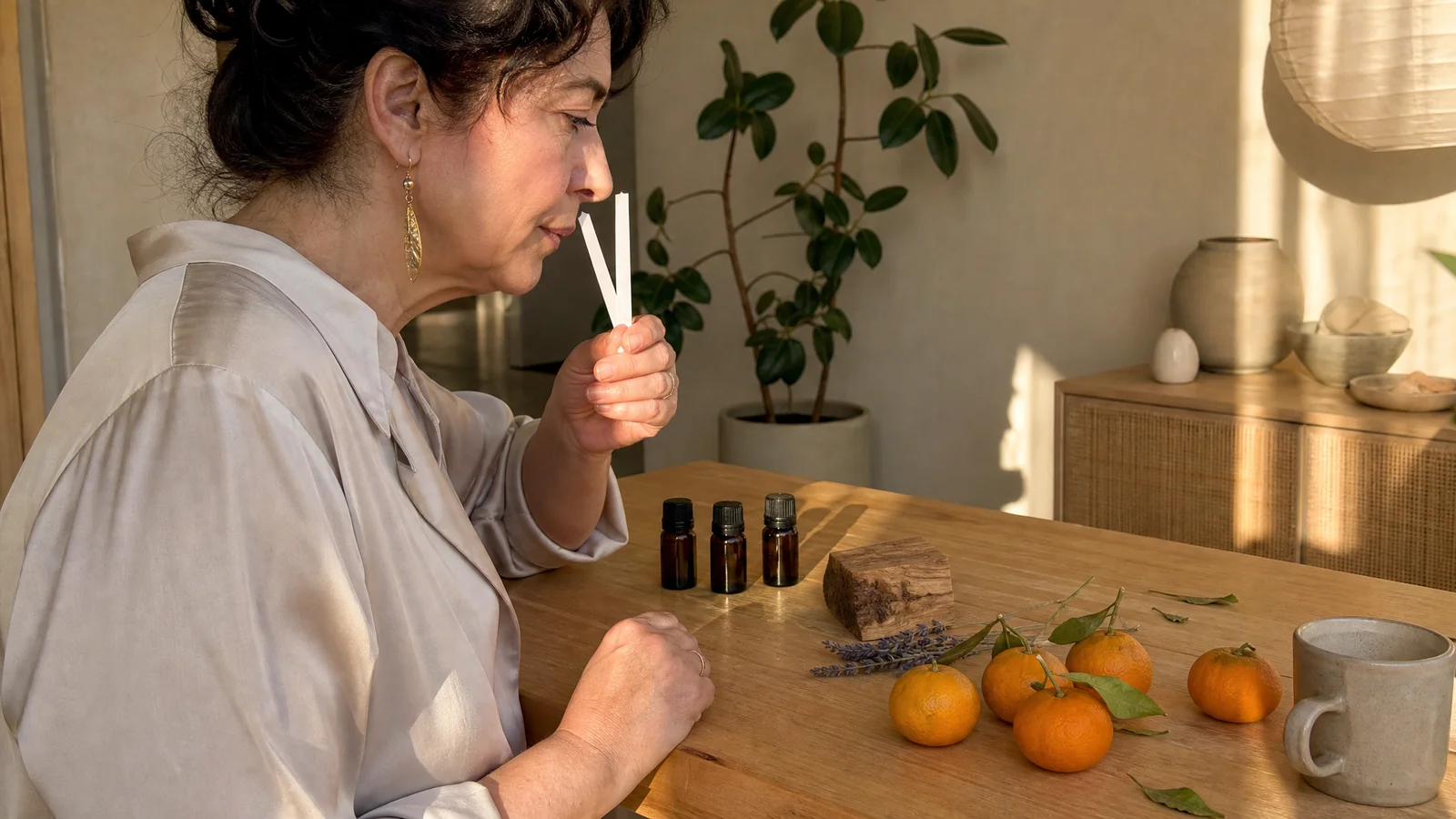
The first thing you will notice is the scent, which is sweet, mellow and juicy, with a faint floral hum, a little orange-blossom-tinged. It is the softest citrus of the family, with none of lemon's sharp edges. Tip the bottle gently and you will see a green liquid, which is how the Certificate of Analysis we publish for one batch describes it. It is thin, not syrupy, so a dropper releases it quickly and you should count slowly.
Give your nose a minute with it. The brightest part of the scent is gone within moments, and what remains is the rounder, quieter side of the oil. That is why we like to smell a new bottle at the start of a project and again at the end, so we know what has stayed with us.
What it is not
- Not sweet orange oil. A different species, with a limonene share of 93 to 97% in EFSA's orange specification against 65 to 80% for mandarin.
- Not petitgrain. That is a leaf-and-twig oil; see petitgrain against peel oil.
- Not a distilled oil. Hydrodistilled mandarin and tangerine oils are a different product, with limonene running from about 33% to 81% across five Egyptian cultivars (Elmaidomy et al., 2026).
- Not a medicine. It is an external cosmetic and aroma oil, and we make no medical claims for it.
Using it sensibly
EFSA treats the oil as an irritant to skin, eyes and airways and a skin sensitiser. Limonene oxidises in air, and aged, oxidised limonene gave positive patch tests in 5.2% of 2,900 consecutive dermatitis patients (Bråred Christensson et al., 2013); those patients were already referred for dermatitis, so it is not a rate for everyone. The practical habits are simple. Our guidance for skin is 0.5% to 2% in a carrier oil, with a patch test first, away from eyes, children and pets, and never taken internally. Store the bottle tightly capped, cool and dark. Expressed mandarin has extremely small amounts of furanocoumarins according to the Tisserand Institute (Tisserand Institute), but that is category guidance and not a figure for our batch, so check IFRA standards before a leave-on product for sun-exposed skin. Our citrus comparison and IFRA article go further.
When you do buy mandarin oil, anywhere, ask for the botanical name, the extraction method and a document that covers the lot. That is what sorts a real peel oil from a vague one.
Keep those few words in mind, Citrus reticulata, peel, cold-pressed, and a mandarin oil label will rarely surprise you.
Mandarin Essential Oil
Mandarin Essential Oil from our own shop, in sizes from 0.5 oz to bulk.
From $12.99
Shop Now →Sources & Further Reading
- Oueslati et al., 2017. Genotyping by sequencing reveals the interspecific C. maxima / C. reticulata admixture along the genomes of modern citrus varieties of mandarins, tangors, tangelos, orangelos and grapefruits. PLoS One. PMC5628881
- Wu et al., 2018. Genomics of the origin and evolution of Citrus. Nature. Europe PMC
- EFSA Panel on Additives and Products or Substances used in Animal Feed, 2021. Safety and efficacy of a feed additive consisting of expressed mandarin oil from the fruit peels of Citrus reticulata Blanco for use in all animal species (FEFANA asbl). EFSA J. PMC8190682
- Brat et al., 2001. Essential oils obtained by flash vacuum-expansion of peels from lemon, sweet orange, mandarin and grapefruit. Fruits. Cambridge Core
- Lu et al., 2019. Peel oils from three Citrus species: volatile constituents, antioxidant activities and related contributions of individual components. J Food Sci Technol. PMC6801276
- Elmaidomy et al., 2026. Volatile composition of essential oils from major Egyptian Citrus cultivars: a multivariate chemometric approach. Sci Rep. PMC13338266
- Bråred Christensson et al., 2013. An international multicentre study on the allergenic activity of air-oxidized R-limonene. Contact Dermatitis. Europe PMC
- Tisserand Institute. Phototoxicity: essential oils, sun and safety. tisserandinstitute.org