Mandarin vs Sweet Orange Oil: Can You Swap Them?
Recipes love to say "swap in sweet orange" for mandarin, or the other way around, and for a quick room spray it will not end the world. But the two oils are not twins. They come from related but different fruits, they are built differently on the inside, and a drop-for-drop swap quietly changes how much of the most reactive molecule in the bottle you are using. Here is what is worth knowing before you substitute.
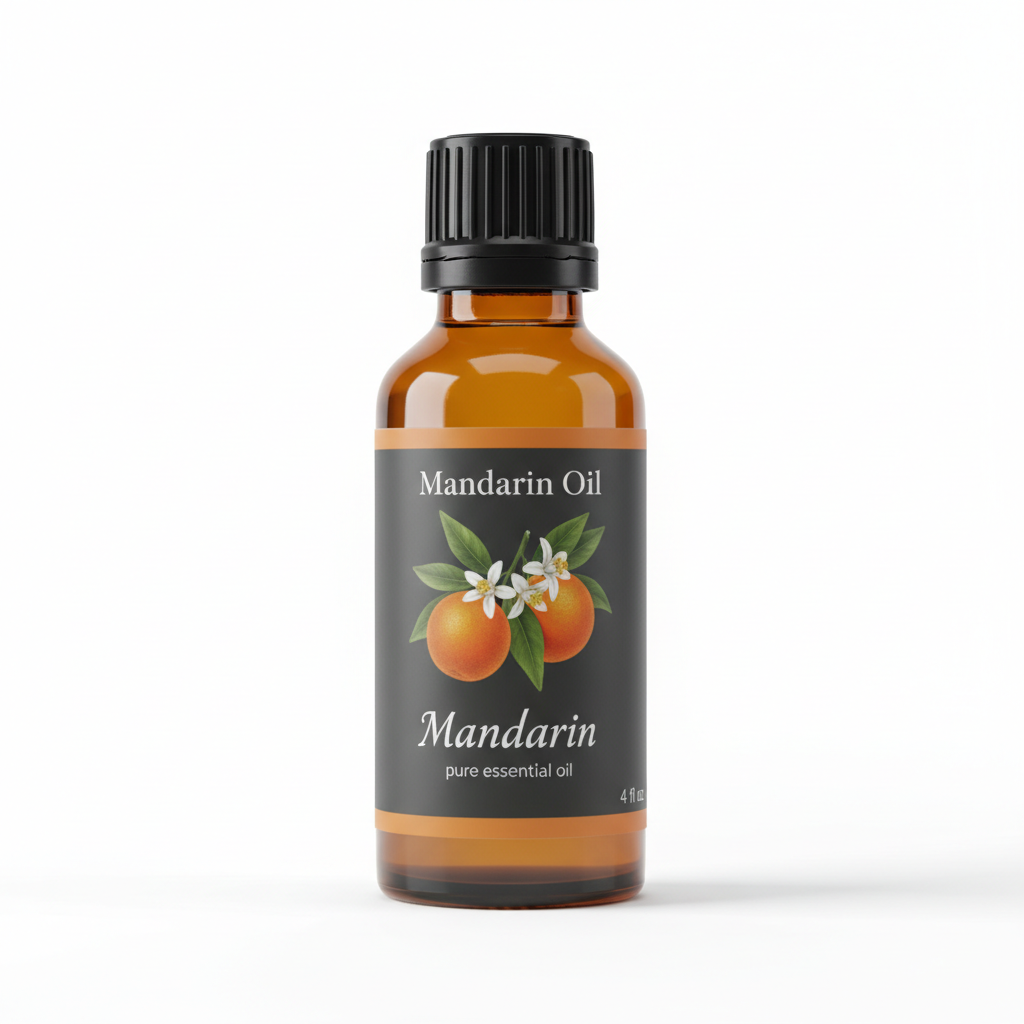
Mandarin Essential Oil
Our own Mandarin Essential Oil, in sizes from 0.5 oz to bulk.
From $12.99
Shop Now →Cousins, not copies
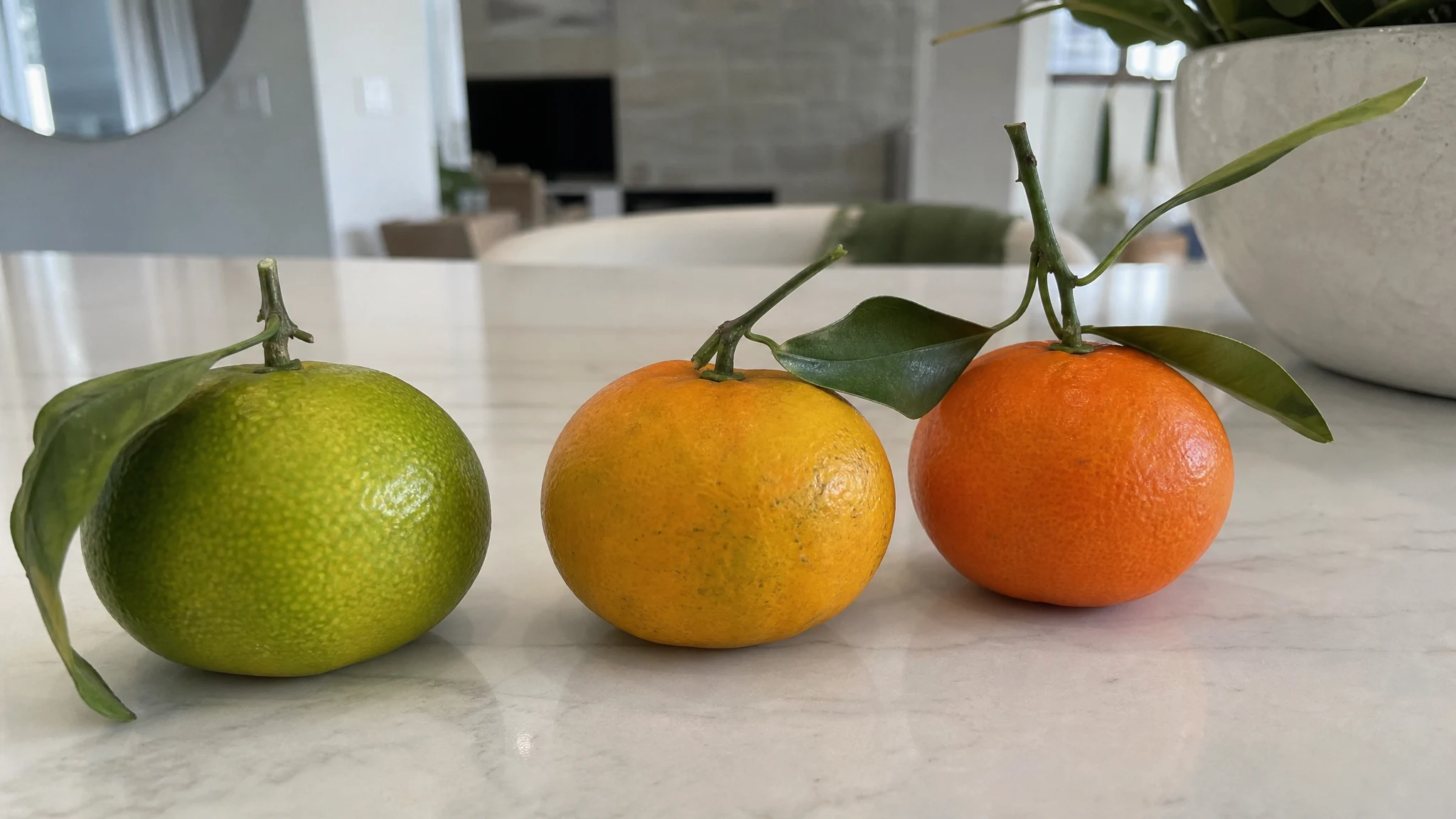
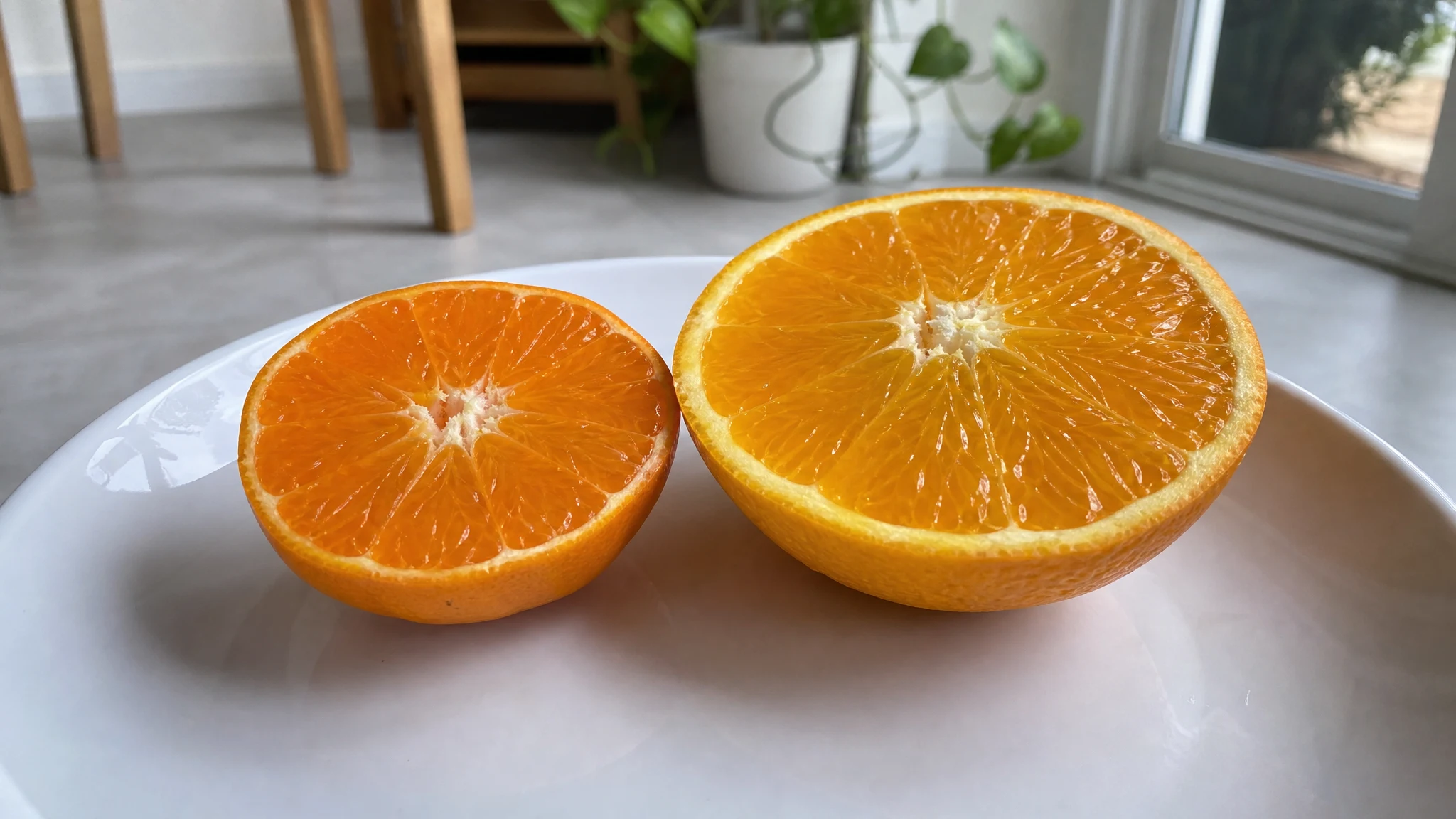
Mandarin is the group classified as Citrus reticulata. Sweet orange, Citrus sinensis, is a secondary species that arose from crosses between ancestral citrus: a 2017 genetic study found about 41% of the sweet orange genome comes from pummelo, and the 2018 Nature paper on citrus origins describes an extensive network of relatedness among mandarins and sweet orange. In plain terms, sweet orange carries mandarin ancestry. That is why the two smell as if they belong to the same family, and also why they are still two different oils.
One is nearly all limonene, one is not
A 2019 study cold-pressed Valencia orange and Ponkan mandarin peel side by side and found limonene at 85.50% in the orange and 74.93% in the mandarin. The mandarin's next biggest component was gamma-terpinene at 9.70%, where the orange's was myrcene at 4.69%. EFSA's reviews of the two oils tell the same story from a different angle: its five sweet orange batches averaged 92.4% limonene by GC-MS, while its ten mandarin batches averaged 65.63%, with a range from 56.4% to 68.6%. The mandarin also carries methyl N-methylanthranilate, a nitrogen-containing marker EFSA measured at 0.51% to 1.59%.

What does that mean for your nose? None of these papers ran a smell panel, so we cannot give you a measured answer. We describe our mandarin oil as sweet, mellow and juicy with a faint floral hum, and reasoning from the chemistry, a more varied supporting cast is a sensible explanation for a rounder character. Smell both before you commit to a large batch. Our guide to mandarin oil composition has the wider picture.
The swap, worked out
Say a recipe asks for 12 drops of sweet orange per ounce of carrier and you use 12 drops of mandarin. At the relative density of 0.852 on the Certificate of Analysis we publish for one batch, and about 20 drops per ml, that is roughly 0.6 ml or 0.51 g of oil. Multiply by the EFSA mean limonene readings and mandarin delivers about 0.34 g of limonene (0.51 x 0.6563), while sweet orange delivers about 0.47 g (0.51 x 0.924), around 41% more for the same mass. Densities differ between oils, so this is arithmetic from published averages and not a measured substitution.
The direction matters because oxidized limonene is the better-documented skin allergen. In a six-country patch-test study, air-oxidized R-limonene gave positive reactions in 5.2% of 2,900 consecutive dermatitis patients, with centres ranging from 2.3% to 12.1%. Those were people referred for dermatitis, so it is not a rate for everyone, but it is a good reason to keep either oil fresh and well capped.
Sun and skin
Pressed citrus oils are the family the sun rules were written for. The Tisserand Institute states that expressed mandarin and tangerine contain extremely small amounts of furocoumarins, not enough to make them phototoxic, and that IFRA and EU guidance caps bergapten at 15 ppm. For sweet orange, EFSA reported furocoumarins including 8-methoxypsoralen below the detection limit in its five expressed batches. Those are batch results for feed-additive lots, so they describe the oils in general. The certificate we publish carries no furocoumarin figure, so for a leave-on product that will sit in sunlight, ask us in writing through the contact page before ordering, and ask any other supplier for the same number. Dilution and a patch test apply to both, and our safety basics cover the steps.
Smell them side by side
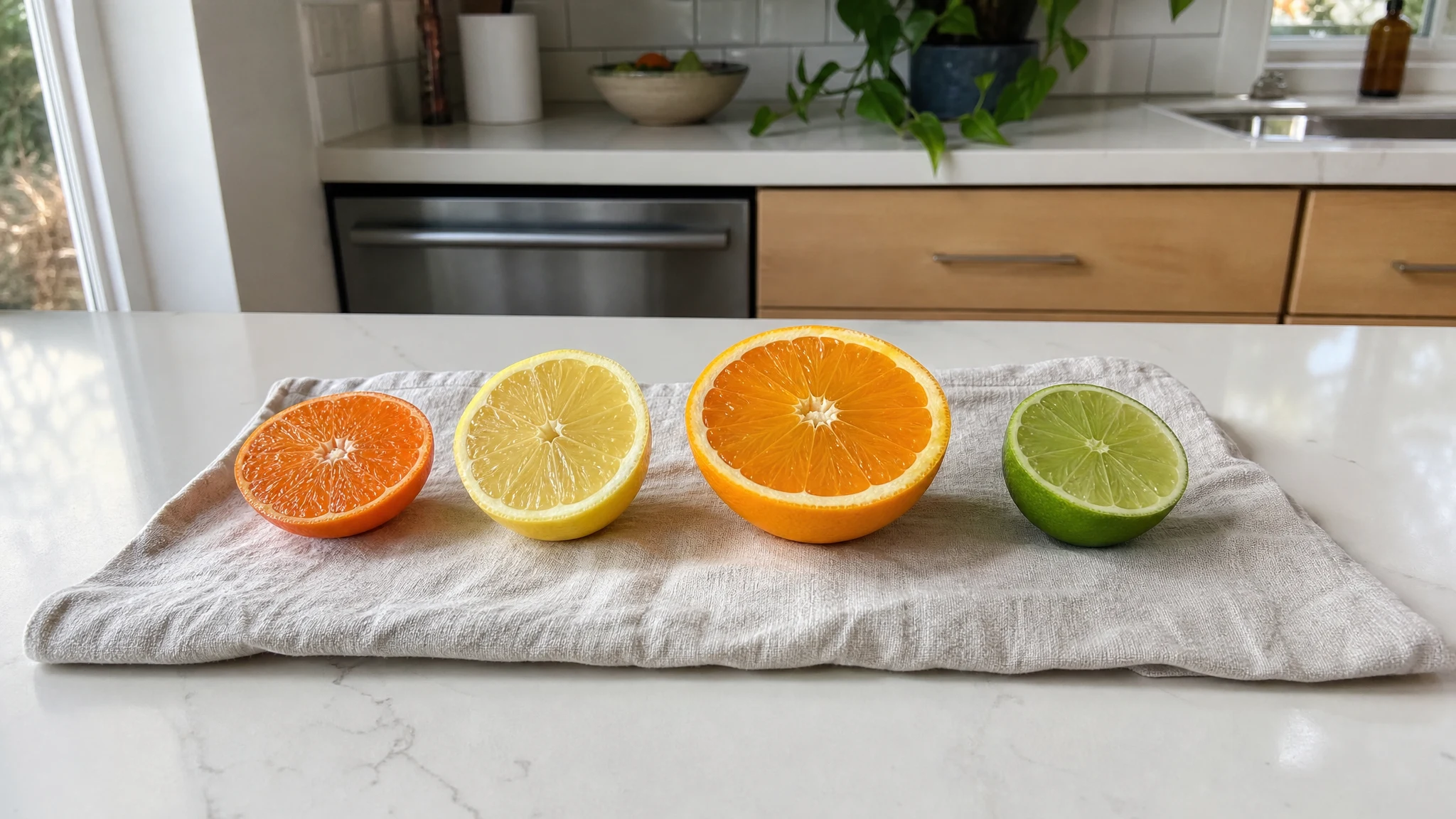
Numbers only go so far, so we suggest a simple test if you are weighing a swap. Put a drop of each oil on its own strip of paper, label them in pencil, and smell them one after the other with a pause for fresh air. Our mandarin oil reads sweet, mellow and juicy with a faint floral hum; the oil from the other fruit is the one you may find more familiar and more direct. You will also notice how each one changes after ten minutes, which is when your project actually starts to smell the way it will.
Why the price tag differs
We do not quote prices here, but the literature explains why mandarin tends to cost more. In a flash vacuum-expansion study, peel oil yield was 1.43 kg per tonne of sweet orange and 0.64 kg per tonne of mandarin, about 2.2 times more from the orange. Reasoning from that, a given weight of mandarin oil needs more fruit behind it. Our price guide shows how to compare offers fairly.
How we would choose
- For cheerful, generic citrus in cleaning or a big home fragrance project, sweet orange is the usual pick, sold by soap and aromatherapy suppliers.
- For a softer, rounder citrus beside lavender or vanilla, mandarin is the one we sell and recommend trying.
- For repeatable results every batch, neither oil is a fixed formula, so look for lot documents from whichever seller you choose.
Our mandarin oil is cold-pressed from the peel and sold neat, which means the dilution maths is yours to do. If you also want to untangle the mandarin and tangerine names, we cover that in mandarin vs tangerine oil.
Mandarin Essential Oil
Mandarin Essential Oil from our own shop, in sizes from 0.5 oz to bulk.
From $12.99
Shop Now →Sources & Further Reading
- Lu et al., 2019. Peel oils from three Citrus species: volatile constituents, antioxidant activities and related contributions of individual components. Journal of Food Science and Technology.
- EFSA FEEDAP Panel, 2021. Safety and efficacy of a feed additive consisting of expressed mandarin oil from the fruit peels of Citrus reticulata Blanco for use in all animal species (FEFANA asbl). EFSA Journal.
- EFSA FEEDAP Panel, 2021. Safety and efficacy of feed additives consisting of expressed sweet orange peel oil and its fractions from Citrus sinensis (L.) Osbeck for use in all animal species (FEFANA asbl). EFSA Journal.
- Oueslati et al., 2017. Genotyping by sequencing reveals the interspecific C. maxima / C. reticulata admixture along the genomes of modern citrus varieties of mandarins, tangors, tangelos, orangelos and grapefruits. PLoS One 12(10):e0185618.
- Wu et al., 2018. Genomics of the origin and evolution of Citrus. Nature 554:311-316.
- Bråred Christensson et al., 2013. An international multicentre study on the allergenic activity of air-oxidized R-limonene. Contact Dermatitis 68:214-223.
- Tisserand Institute. Phototoxicity: essential oils, sun and safety.
- Brat et al., 2001. Essential oils obtained by flash vacuum-expansion of peels from lemon, sweet orange, mandarin and grapefruit. Fruits 56(6):395-402.