Mandarin Oil Safety: 5 Habits for Everyday Use
Mandarin is the sweetest, softest-smelling citrus oil we know, and that friendly aroma is exactly why it deserves a little care. "Gentle" describes a scent, not a safety rating. European regulators treat mandarin peel oil as an irritant to skin, eyes and airways and as a skin sensitiser, which is a good reminder that it is a concentrated plant material, not a perfume you can splash around. The good news is that five simple habits cover nearly everything.
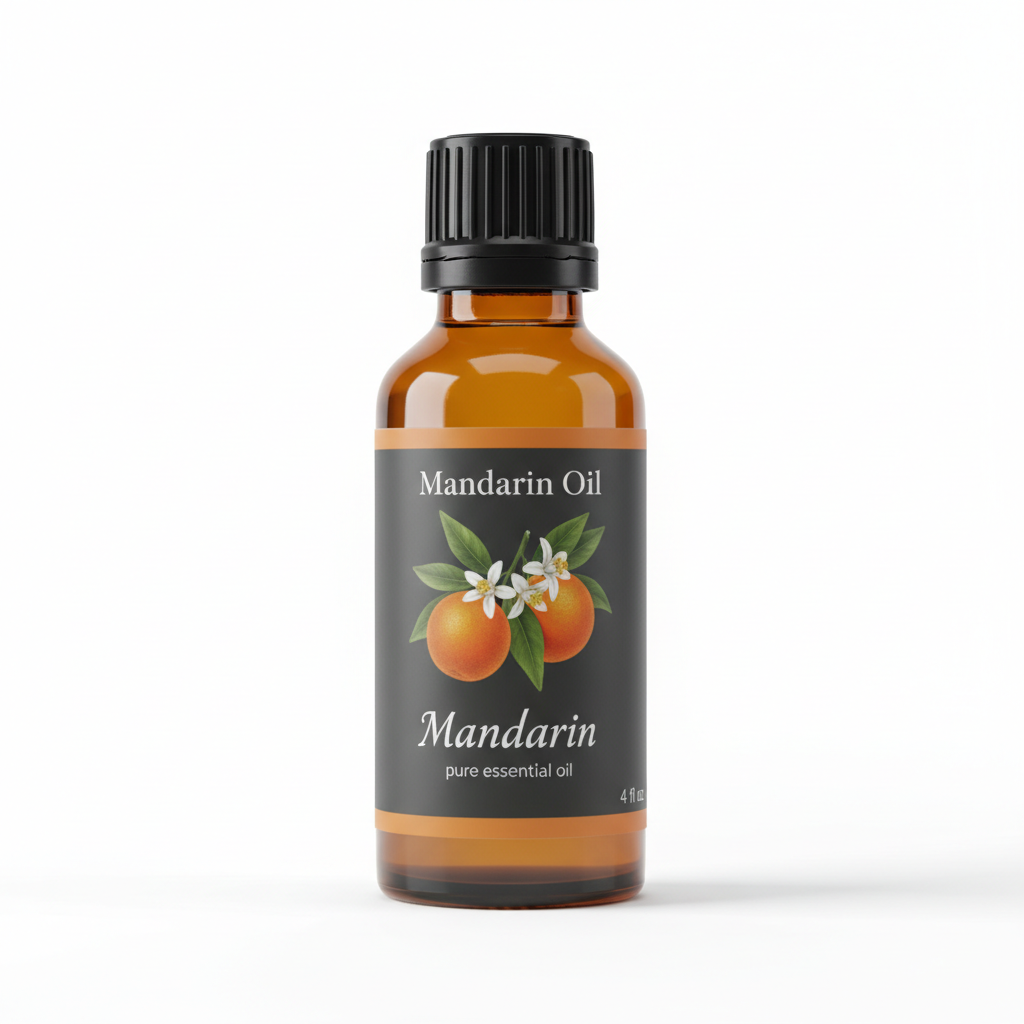
Mandarin Essential Oil
Our own Mandarin Essential Oil, in sizes from 0.5 oz to bulk.
From $12.99
Shop Now →Dilute it, and start at the low end
The EFSA panel that assessed mandarin oil put the hazard classification in plain terms: irritant to skin, eyes and respiratory tract, and a skin sensitiser. Irritation depends on concentration, which is why dilution is the first habit. Our own guidance is 0.5% to 2% in a carrier oil, roughly 3 to 12 drops per ounce, and if citrus oils are new to you we would start at the bottom of that range. We think of 0.5% to 2% as a general skin line, not a mandarin-specific limit set by a standards body, so we never describe 2% as "safe".
The Tisserand Institute helps fill in the picture: 0.5 to 1.2% for the face and other sensitive areas, 1 to 3% for body oils and lotions, and 0.2 to 1% for skin that already reacts easily. Read together, that means the low end for your face and for any skin that is touchy. Our skin guide has the drop counts worked out.
Patch test, then wait
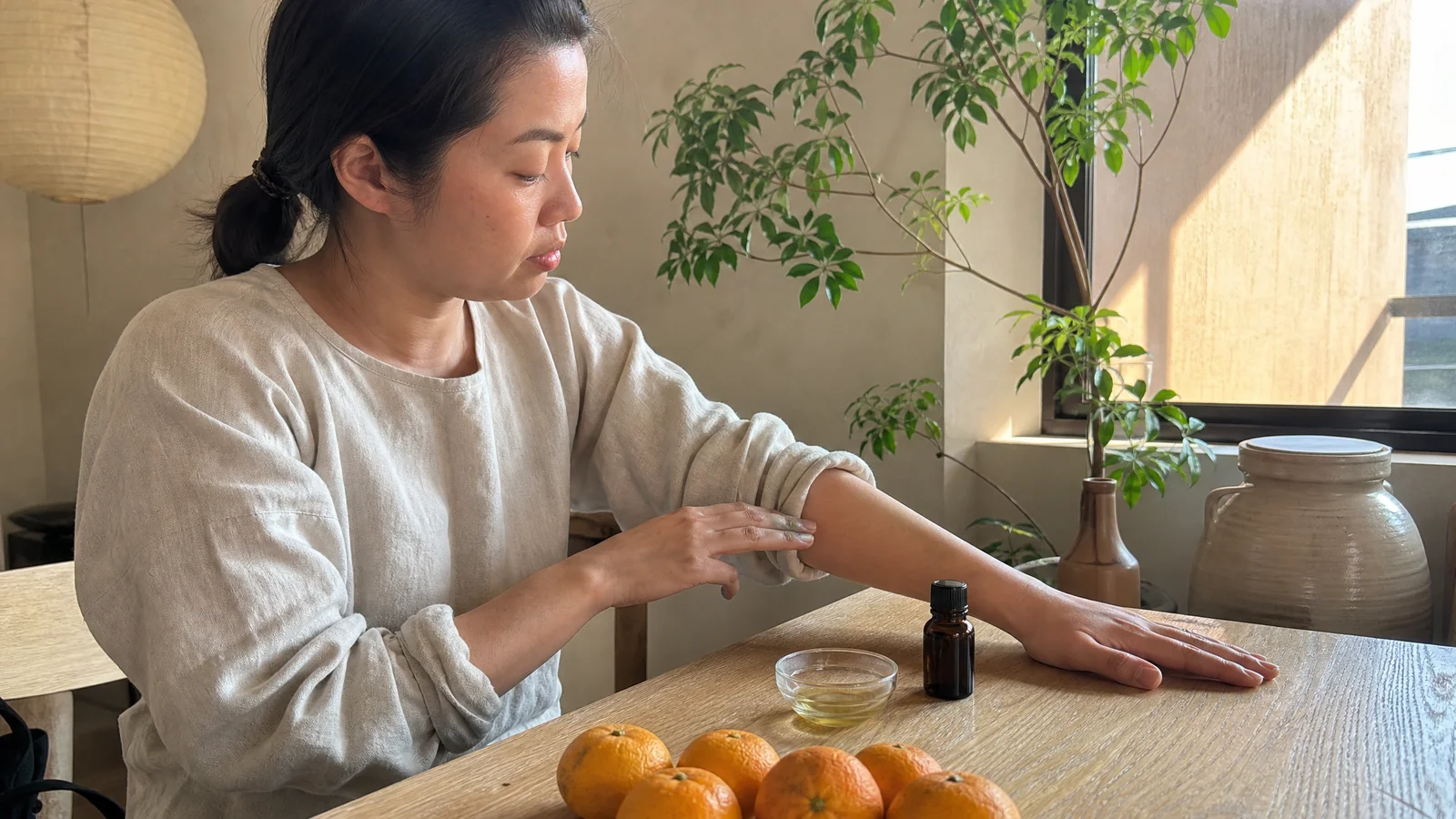
Put a little of your diluted blend on the inside of your forearm and leave it alone. If a rash, itch or redness shows up, stop and wash the oil off gently; Poison Control gives the same advice, and adds that essential oils should not go on damaged skin. Give it a day before you decide. Anything that spreads, blisters or lingers is a question for a dermatologist.
Keep the oil fresh
Limonene, the main component of citrus peel oil, reacts with air, and the oxidised form is the one most linked to skin sensitisation. In a large multicentre patch-test study of 2,900 dermatitis patients, 5.2% reacted to air-oxidised limonene. Tisserand's advice is blunt: old oils should not be used because of the risk of irritation. So we recommend small bottles, a tightly closed cap, a cool dark cupboard, and a date written on the label when you open it. Our storage article explains how heat, light and air space speed things up.
Be sensible about sun
Citrus peel oils are the family people think of when sun and skin come up. The Tisserand Institute says expressed mandarin and tangerine contain extremely small amounts of furanocoumarins, not enough to make them phototoxic, and it gives the IFRA and EU limit for bergapten in leave-on products as 15 ppm. That is a statement about the category of oil, and the certificate we publish for one batch does not include furanocoumarin data, so we do not make a promise for our bottle. The practical habit is simple: if you are heading for a beach day or a sunbed, skip leave-on citrus blends that day. Blends deserve a second look, because bergamot, a popular partner, carries a good deal more bergapten (Tisserand lists 0.11 to 0.33%) and sets the sun limit for the whole jar. We compare the two in mandarin against bergamot.
Make the habits easy
Habits stick when they are convenient, so set things up once. Choose a shelf or drawer that is cool, dark and out of reach, and give the bottle a permanent home there. Keep a small marker beside it for dating the label. Put a spare small dropper bottle and a clean cloth in the same spot, and the whole routine takes about a minute.
When you mix a blend, mix only what you expect to use in a few weeks, and write the oil, the dilution and the date on the jar. Next time you pick it up you will know exactly what it is, which is a small safety habit all by itself.
Finally, wash your hands after handling the oil, and before you touch your eyes or your face. Citrus oil on a fingertip is easy to forget about.
Keep it away from children and pets
Tisserand does not recommend essential oils on children under 5 and says to keep bottles and diffusers well out of reach. Poison Control says to lock bottles away from children and pets, and if anything is swallowed to call 1-800-222-1222. For animals, the Merck Veterinary Manual says cats lack an enzyme that helps clear many compounds, birds are at high risk, and diffusers are best run for under 30 minutes with pets out of the room and the air moving. That page does not single out citrus oil, so we treat it as sensible general caution. Do not put the oil on a pet, and call your veterinarian if one is affected. We cover diffusing in more detail in our evening diffuser article.
Our mandarin oil is an external cosmetic oil and is not for internal use; the ingestion article explains why a food listing for a flavouring is a different thing. If you are pregnant or nursing, have a skin condition or a citrus allergy, ask your doctor or midwife first, and read what the sources say in our pregnancy article.
None of this is meant to dampen the fun. Dilute, test, store well, think about the sun and keep little ones and animals clear, and mandarin is one of the easiest oils to live with.
Mandarin Essential Oil
Mandarin Essential Oil from our own shop, in sizes from 0.5 oz to bulk.
From $12.99
Shop Now →Sources & Further Reading
- EFSA FEEDAP Panel, 2021. Safety and efficacy of a feed additive consisting of expressed mandarin oil from the fruit peels of Citrus reticulata Blanco for use in all animal species (FEFANA asbl). https://pmc.ncbi.nlm.nih.gov/articles/PMC8190682/
- Tisserand Institute. Dilution for essential oils. https://tisserandinstitute.org/dilution-essential-oils/
- Poison Control. Essential oils: Poisonous when misused. https://poison.org/articles/essential-oils
- Bråred Christensson J et al., 2013. An international multicentre study on the allergenic activity of air-oxidized R-limonene. Contact Dermatitis. https://europepmc.org/article/MED/23510342
- Tisserand. We are here to help answer your frequently asked questions. https://www.tisserand.com/pages/frequently-asked-questions
- Tisserand Institute. Phototoxicity: essential oils, sun and safety. https://tisserandinstitute.org/phototoxicity-essential-oils-sun-and-safety/
- Merck Veterinary Manual. Toxicoses From Essential Oils in Animals. https://www.merckvetmanual.com/toxicology/household-hazards/toxicoses-from-essential-oils-in-animals