Blending Mandarin Oil: Which Partners Last Longer
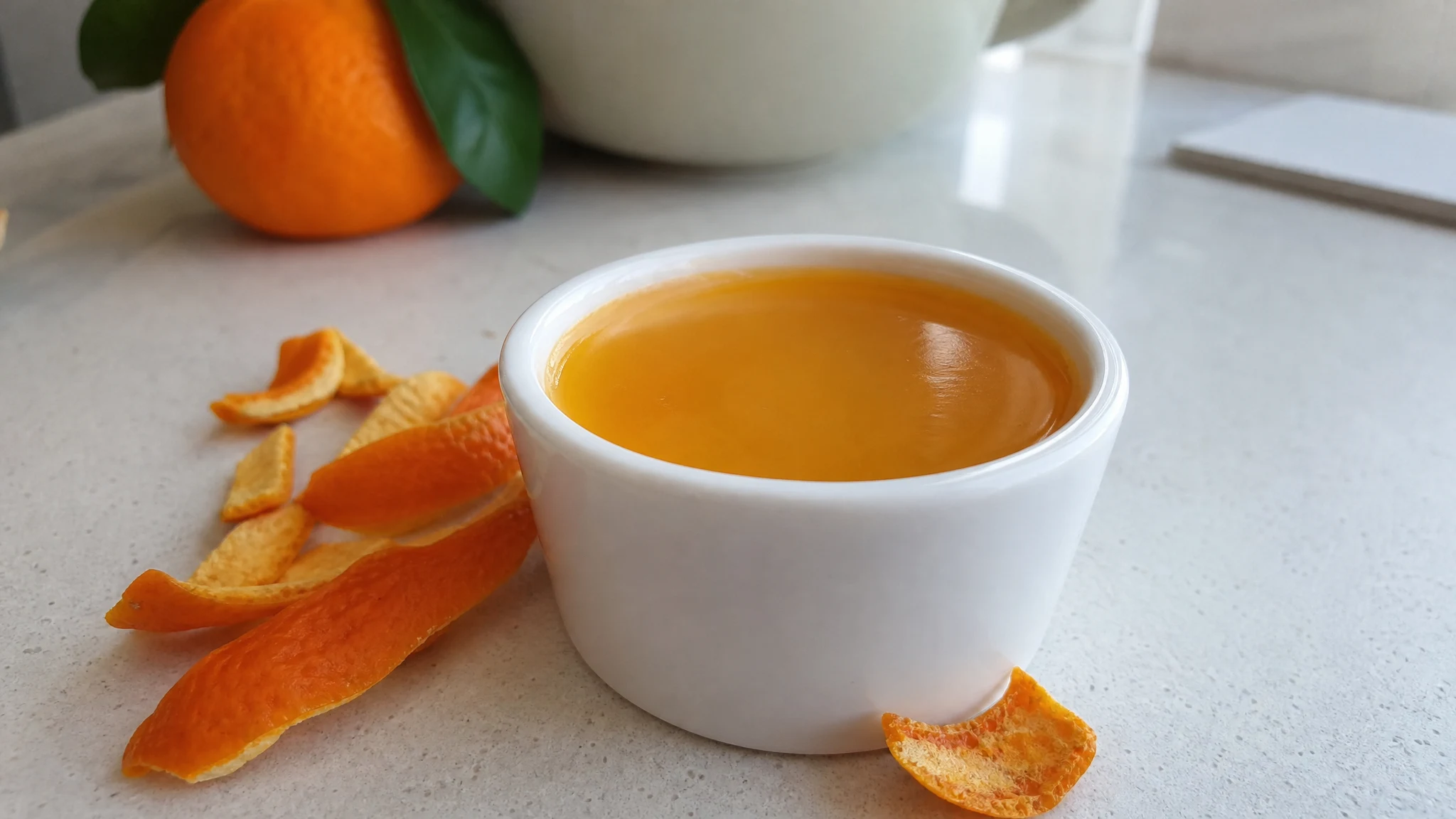
Open a bottle of mandarin and the first thing you notice is how bright and juicy it is. The second thing, if you wait, is how quickly that brightness leaves. Most pairing lists only tell you which oils smell pleasant beside mandarin. The more useful question is which partners are still around when the mandarin has gone, because that is what decides whether a blend feels balanced after five minutes and still pleasant after two hours.
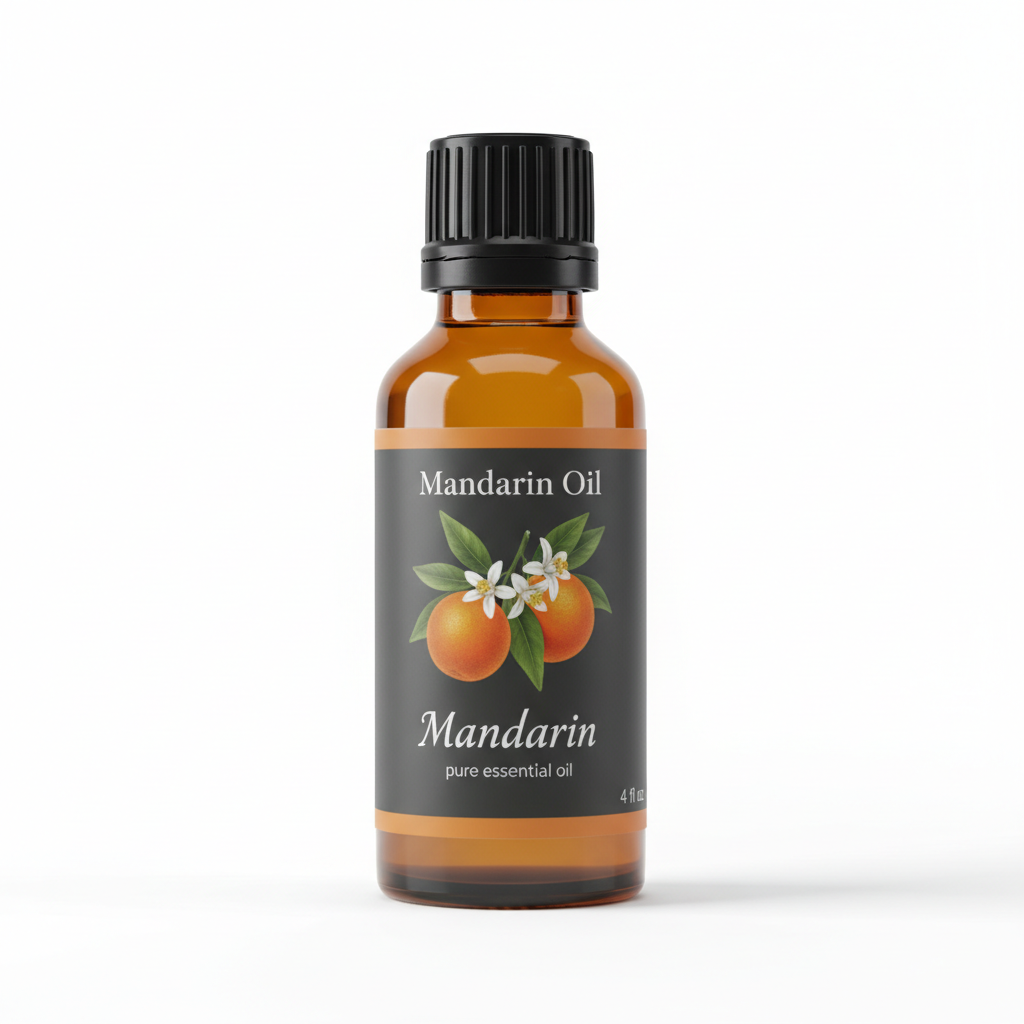
Mandarin Essential Oil
Our own Mandarin Essential Oil, in sizes from 0.5 oz to bulk.
From $12.99
Shop Now →A ruler for how fast things leave
Perfumers talk about top, middle and base notes, and one fragrance patent from Procter and Gamble puts numbers on the idea using vapour pressure at 25 C: top notes above 0.1 Torr, middle notes from 0.001 to 0.1, and base notes below 0.001. That is one company's convention, with software-calculated pressures, not a universal standard, but it works well as a ruler because it makes the gaps visible.
Limonene, the main compound in mandarin peel oil, has a vapour pressure of about 1.55 mmHg at 25 C according to PubChem's compiled records. Linalool, a floral-smelling compound, is about ten times lower, around 0.16 mmHg. Vanillin, the heart of vanilla, is at about 0.00012 mmHg. Divide one by the other and limonene is roughly 13,000 times more volatile than vanillin. A mandarin and vanilla blend is not a chord so much as two things leaving the room on different schedules, with mandarin first.
These are single compounds, not the whole oils, so treat the numbers as a picture of how far apart molecules can sit. Every partner oil has its own composition, and the GC-MS for the exact oil you buy is worth checking.
Three jobs a partner can do
Rather than rating scents, which is a matter of taste, it helps to think about what you want a partner to do.
- Extend the opening. Another light, quick oil, such as sweet orange, keeps the blend bright for about as long as mandarin does and then fades alongside it. If you like that fresh lift and do not mind it being short, this is the easy route. Our mandarin and sweet orange comparison explains how the two oils differ.
- Bridge the middle. A middle-weight oil rich in compounds like linalool and linalyl acetate, which evaporate a few times more slowly than limonene, carries the blend on after the mandarin has lifted. If a partner oil's own GC-MS shows those compounds high, it will do this job.
- Anchor the base. A heavy partner such as vanilla or frankincense is what you smell last. Because the gap is so large, an anchor works best as a small share of the blend.
We recommend lavender, chamomile, frankincense, vanilla, neroli and bergamot as partners for mandarin, and the volatility ruler shows how they can suit different jobs once you check each oil's composition. We sell the mandarin only (see our shop), so you will find the partners at a craft or supply shop. If a label says "vanilla", check what it actually is, since an extract, an absolute and a fragrance are different products.
The arithmetic still applies to the whole jar
A blend does not earn a bigger allowance than a single oil. Tisserand's diffuser guidance of 6 to 8 drops for an adult, and 4 drops in total for ages 5 to 12, counts every oil together. So a 3:1 mandarin and partner blend at 8 drops is 6 drops of one and 2 of the other.
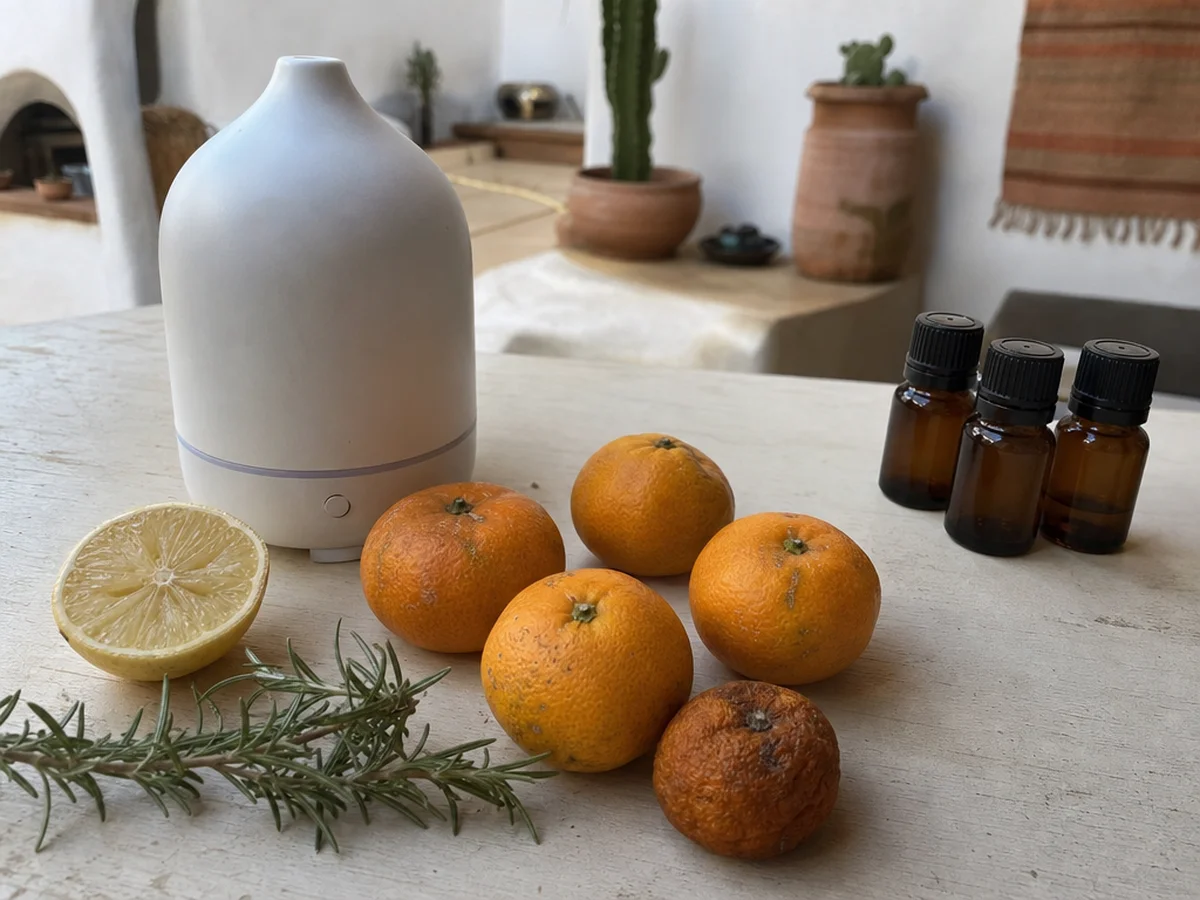
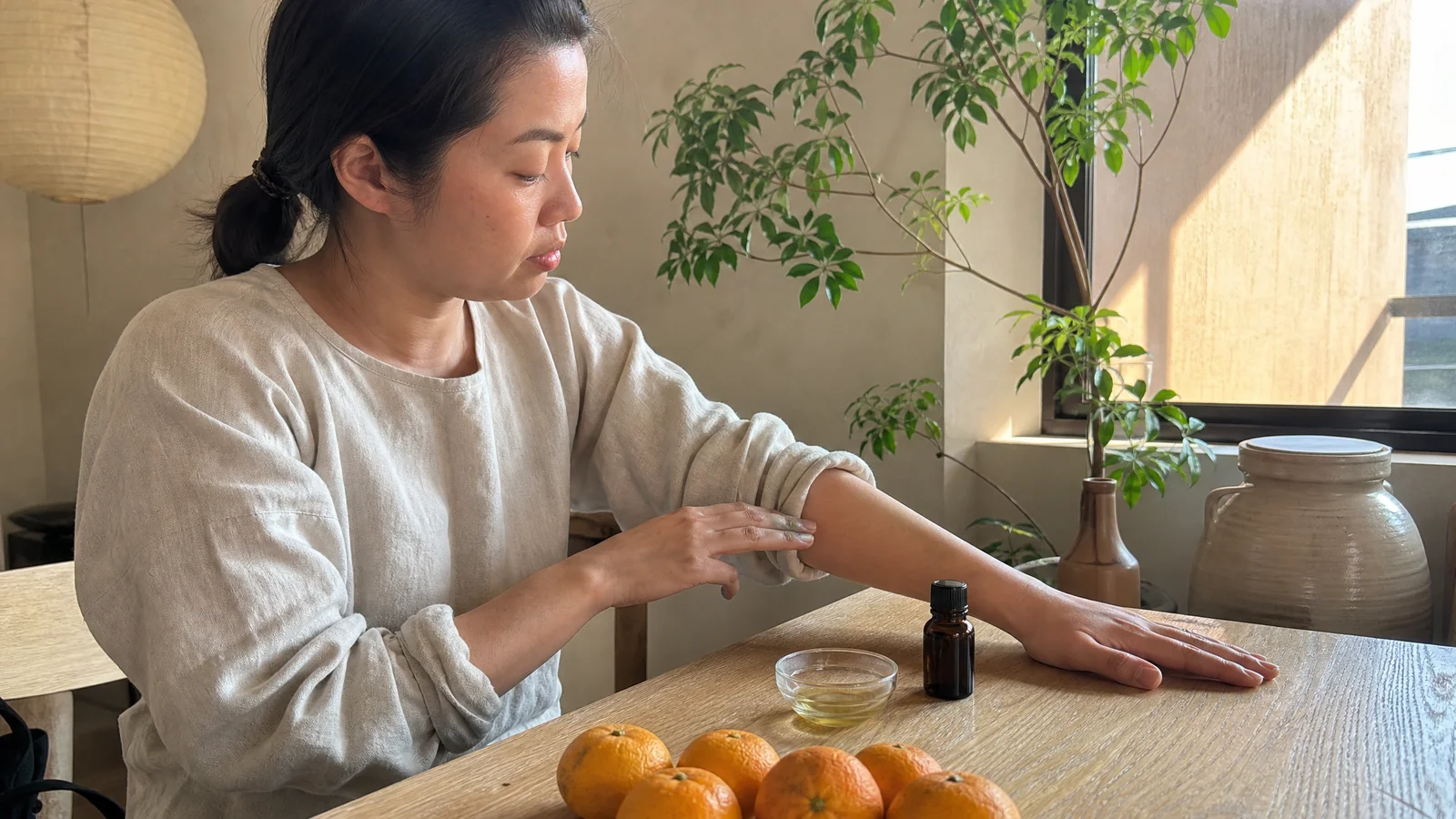
The same goes for skin. Our general line is 0.5% to 2% total, and in an ounce of carrier 1% is about 6 drops across all the oils in the jar; with three oils in equal shares, that is 2 drops each. Our roller bottle article works the same sums for 10 ml. Treat these as starting arithmetic you can adjust.
Partners bring their own limits, and bergamot is the one to work out. Tisserand lists it at 0.11 to 0.33% bergapten against a 15 ppm (0.0015%) limit for leave-on products. If all the bergapten in a blend came from bergamot, that works out to a bergamot share of roughly 0.45% of the finished product at the high figure and 1.4% at the low one. The sums are ours, from the published range. The sun story is in mandarin against bergamot.
Smell it the slow way
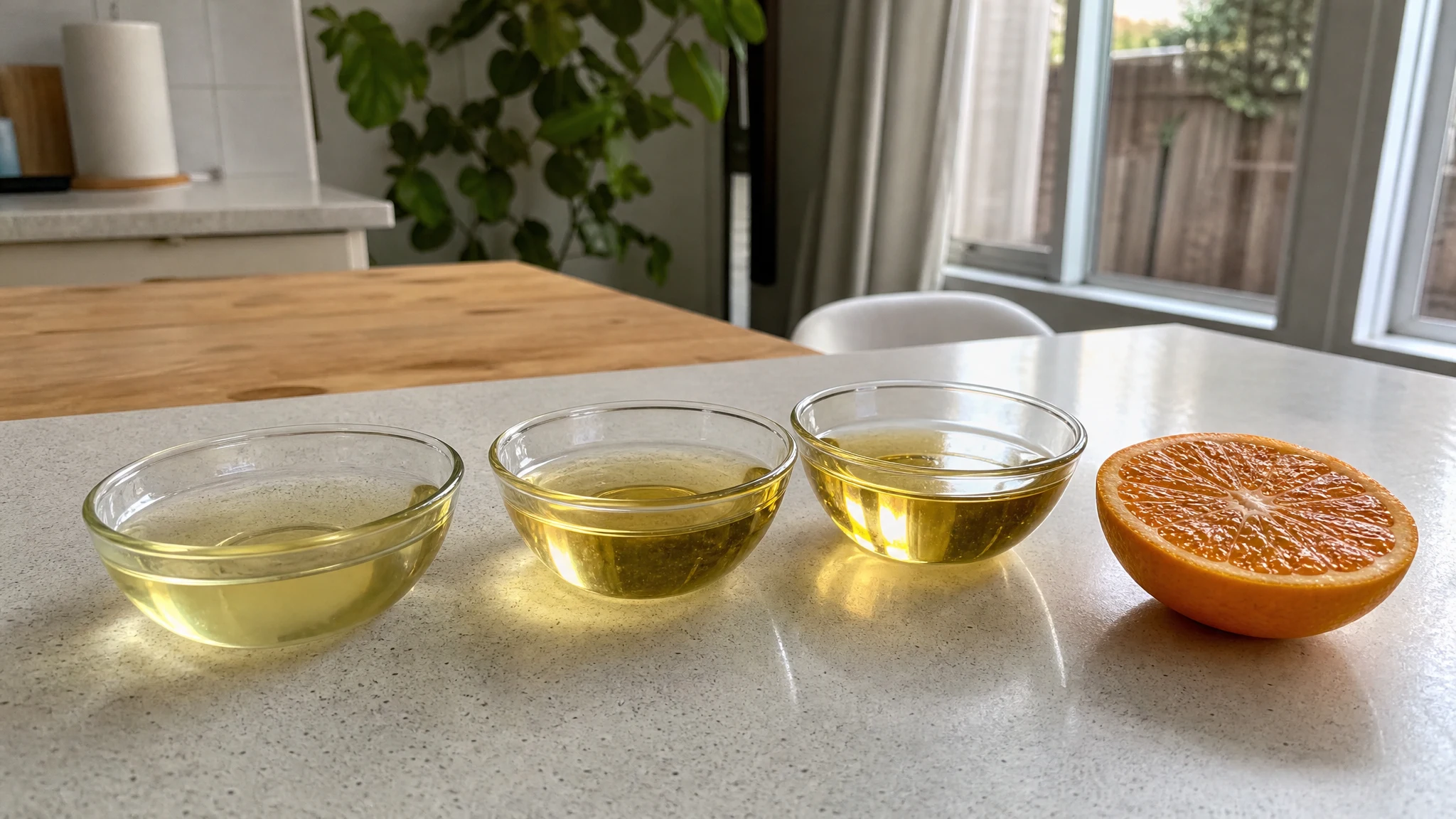
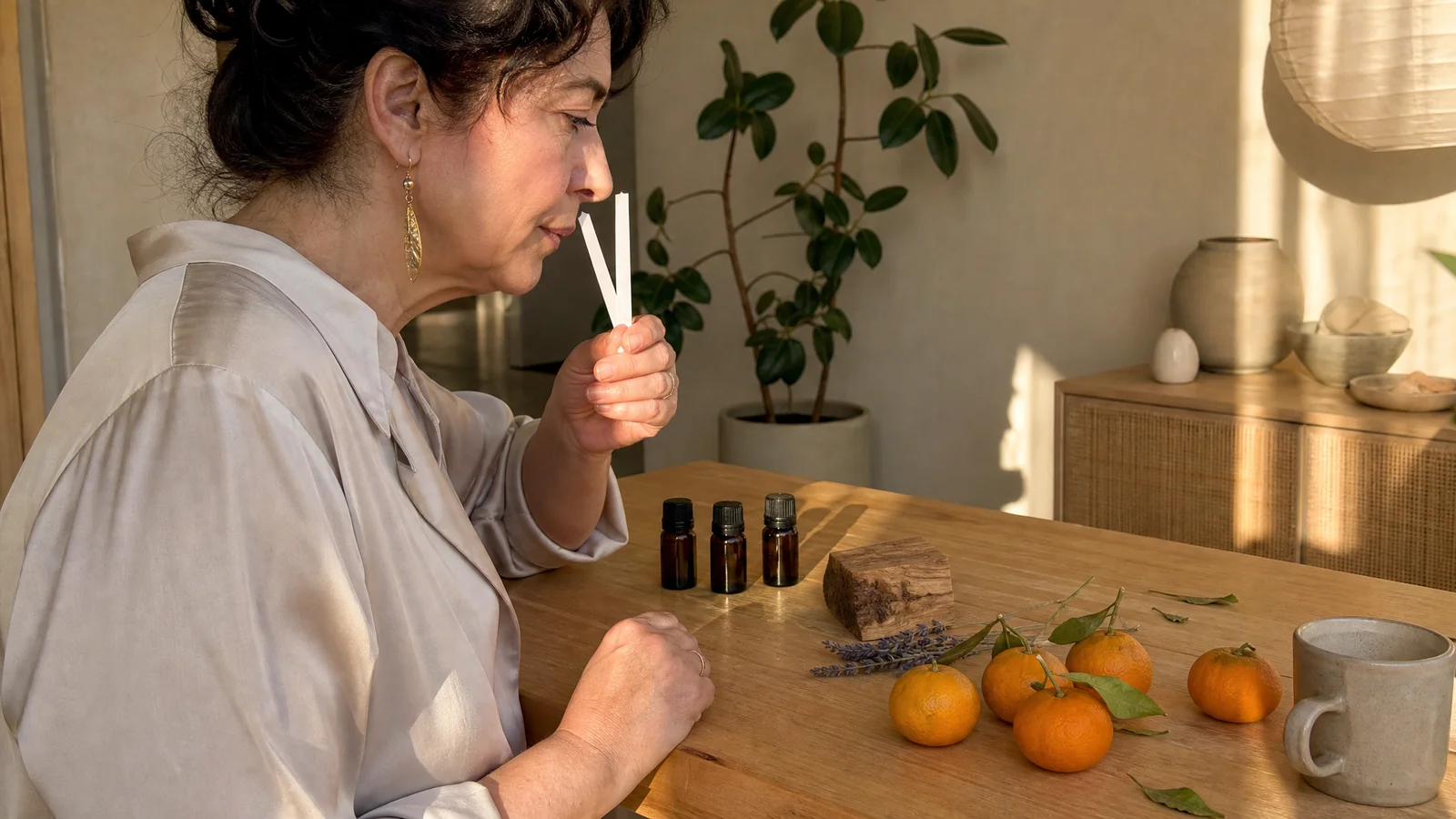
Here is a habit we recommend before you mix anything. Put a drop of each oil on its own clean paper strip or plain cotton pad, label them, and wave each one gently under your nose. With mandarin you will notice that sweet, mellow, juicy opening with a faint floral hum behind it. Set the strips down and come back after a few minutes, then again after an hour. Some will have faded to almost nothing and some will have grown warmer and rounder, and that tells you more about a pairing than any list can.
Then lay two strips side by side, or hold them together in one hand, and smell the pair. It costs a drop or two and it saves you from mixing a whole bottle you do not like.
Keep notes, even short ones
Write the total drops, the split and the date on a scrap of paper or in your phone. When a blend turns out lovely you will want to repeat it, and when it does not you will want to know which part to change. Change one thing at a time, a drop more of the partner or a drop less, and the blend will teach you its own balance. If you repeat blends often, larger sizes are on our bulk page, and our guide to buying mandarin essential oil in bulk explains how bulk buying works.
A way to plan your next blend
Choose the job first: extend, bridge or anchor. Pick one partner and look up its own safety limits, since the strictest oil in the jar sets the ceiling. Count total drops rather than drops per oil. Then smell the result at 30 minutes and again at two hours, not just in the first minute. If you want the perfumer's view of mandarin as a top note, our natural perfumery article goes further, and the winter blends article shows anchoring in a seasonal setting.
Think of mandarin as the welcome at the door. It greets you warmly and then steps aside, and the partner you choose is the conversation that follows.
Mandarin Essential Oil
Mandarin Essential Oil from our own shop, in sizes from 0.5 oz to bulk.
From $12.99
Shop Now →Sources & Further Reading
- Procter and Gamble, US patent 9,814,661 B2. Fragrance compositions. https://patents.google.com/patent/US9814661
- Tisserand. We are here to help answer your frequently asked questions. https://www.tisserand.com/pages/frequently-asked-questions
- Tisserand Institute. Dilution for essential oils. https://tisserandinstitute.org/dilution-essential-oils/
- Tisserand Institute. Phototoxicity: essential oils, sun and safety. https://tisserandinstitute.org/phototoxicity-essential-oils-sun-and-safety/