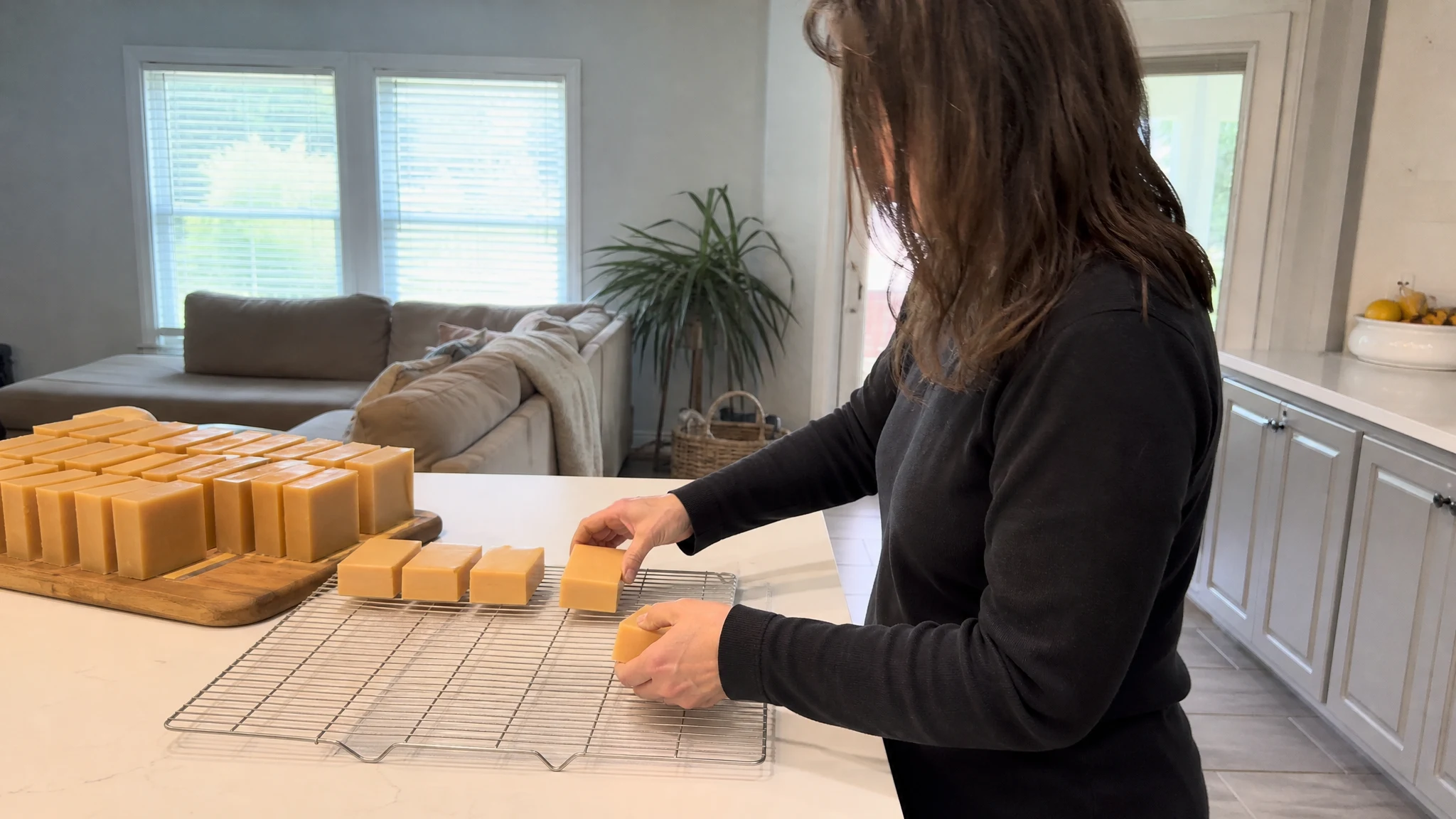
Mandarin Oil in Cold Process Soap: Will the Scent Last?
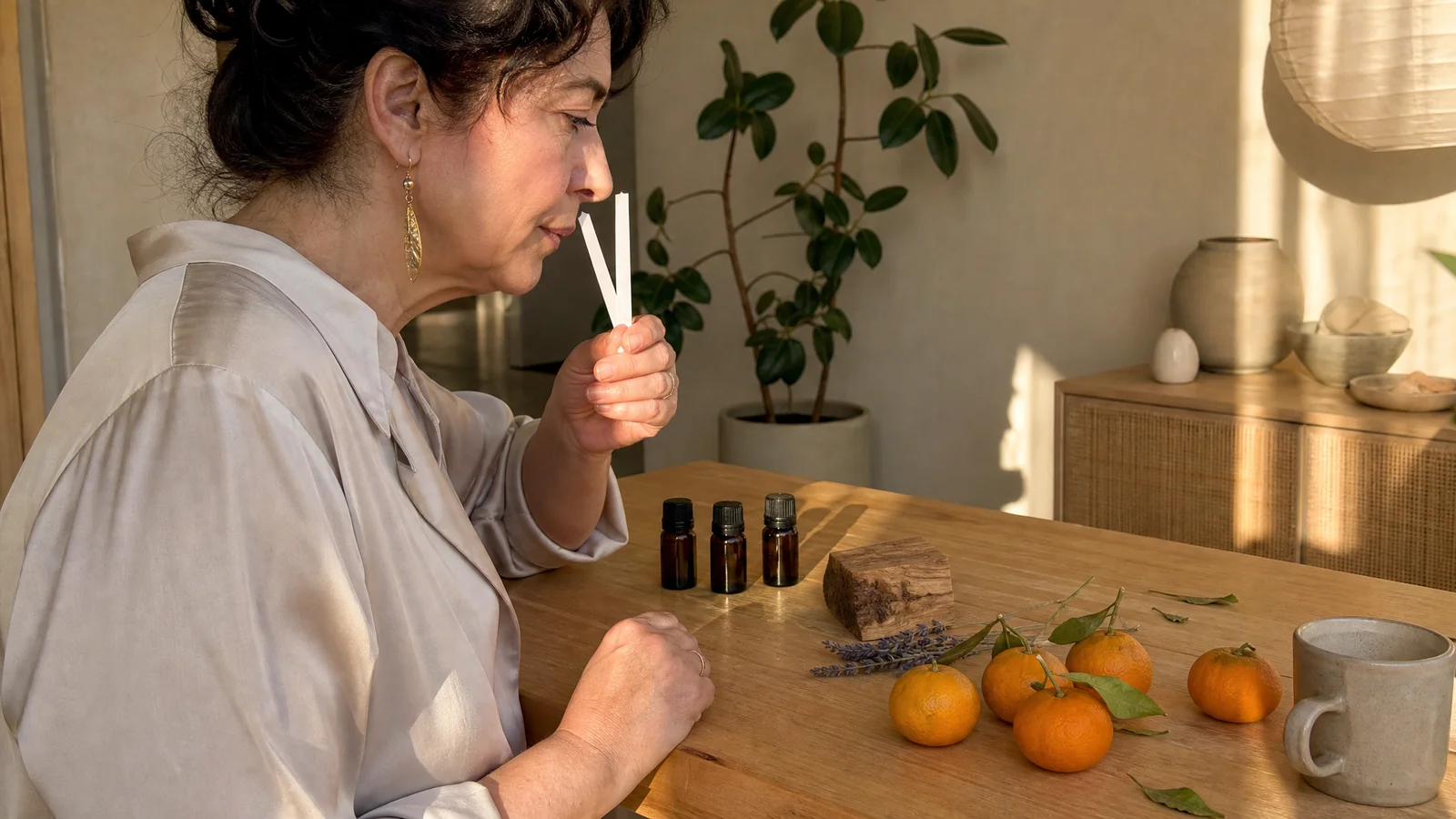
Ask any soap maker about citrus oils and you will hear the same story: glorious in the bottle, glorious in the pot, and then a whisper by the time the bar has cured. Mandarin is the sweet, juicy end of that story, and it is worth understanding why before you pour a batch around it.
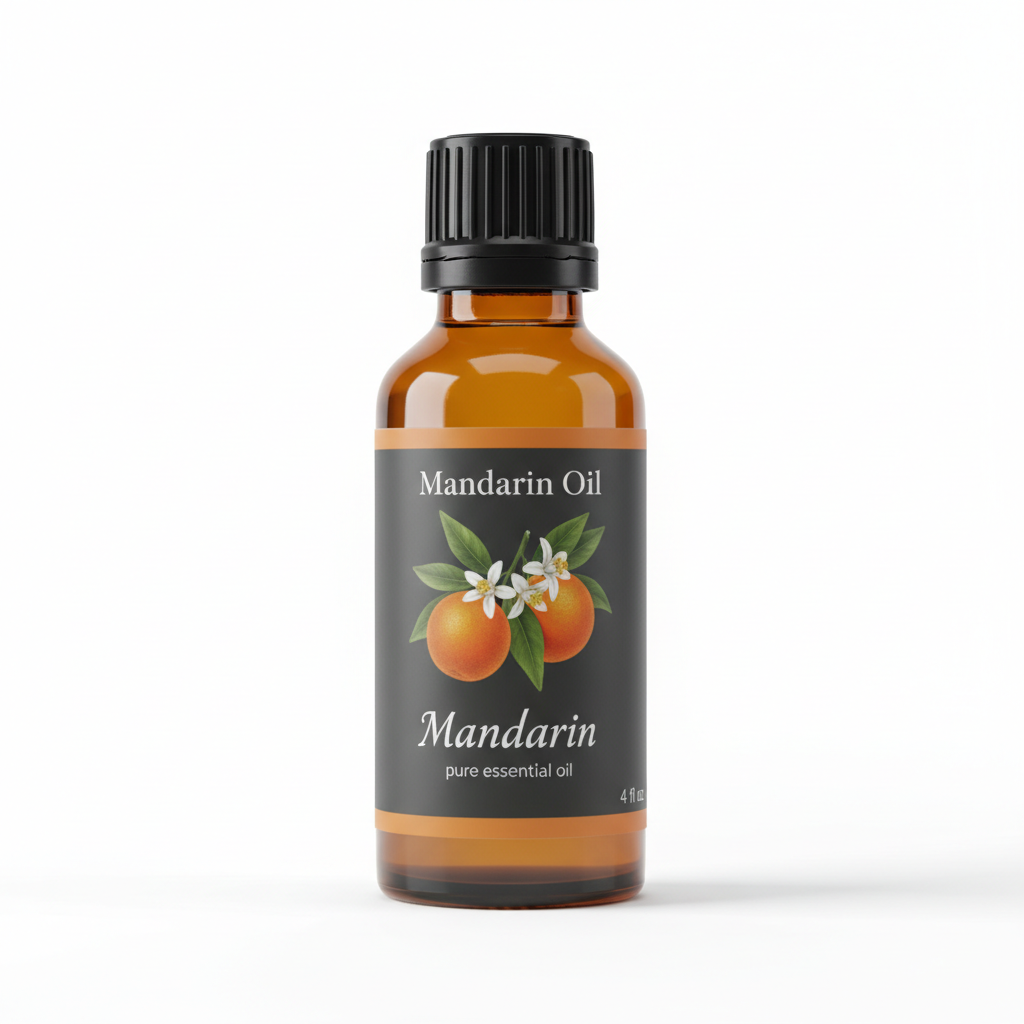
Mandarin Essential Oil
Our own Mandarin Essential Oil, in sizes from 0.5 oz to bulk.
From $12.99
Shop Now →Why a top note struggles in soap
Start with how quickly mandarin evaporates. Its main component, limonene, has a vapour pressure of about 1.55 mmHg at 25 C and a closed-cup flash point of 113 F (45 C), according to PubChem. Anything that readily turns to vapour will leave an open bar over the weeks of a cure. Heat makes that loss faster, which is our reasoning, so a bar that goes through a hot gel phase probably has more to lose than one that stays cool.
The oil's make-up points the same way. In a laboratory pressing of ponkan mandarin, 96.57% of the oil was monoterpene hydrocarbons and only 1.81% oxygenated compounds, with limonene at 74.93%. The EFSA batches averaged 65.63% limonene and 21.85% gamma-terpinene, both light hydrocarbons. There is very little heavy, slow-leaving material to hold the scent in place, which is the opposite of an oil like vanilla or a resin. The certificate we publish for one batch gives no composition, so these are literature figures.
You will often read that lye "eats" citrus oil. Sodium hydroxide solutions are strongly alkaline, about pH 13 at 0.5% and 14 at 5%, but we found no measurement showing that alkalinity destroys limonene, so we would treat that one as folklore until someone tests it. We also searched Europe PMC for any study of fragrance retention in cold process soap and found none; the closest paper looked at the fats and sensory perception of seven herbal soaps, not at citrus scent loss. Fade is a widely reported experience, not a measured result, and fixes like "add it at thin trace" are likewise advice we cannot rank from sources.
How much oil to use
Tisserand's range for wash-off products, which includes soap and body wash, is 2 to 4%. Our 0.5% to 2% line is a leave-on skin dilution, so it does not apply to soap. Mind the basis, too. Tisserand's figures are percentages of the finished product, while many soap recipes state oil as a share of the weight of the fats.
For a 1,000 g batch, and the relative density of 0.852 on our published certificate, here is the arithmetic:
- 2% is 20 g of oil, about 23.5 ml
- 3% is 30 g, about 35 ml
- 4% is 40 g, about 47 ml
Will more oil give a longer-lasting scent? That is untested, but more oil also means more limonene in the bar to oxidise, and oxidised limonene is a recognised skin sensitiser. That is a good reason to use fresh oil from a small bottle, kept capped, cool and dark.
A fair test for your own recipe
If you want an answer rather than an opinion, make one batch and divide it before the oil goes in. Change one thing between the portions, for example when the oil is added or whether the bars go through gel, and keep an unscented bar as a control. Have a few people who do not know which bar is which smell them on day 1, 14, 28 and 42, scoring on a fixed scale. Note the batter temperature at pour, the warmest the bars get, and the room where they cured. If the portions cannot be told apart at day 42, that variable did not matter at your scale. One batch and three noses support a decision for your recipe, not a general rule.
Enjoying the bar while it lasts
Even if mandarin is a short-lived guest in a bar, there is a lot of pleasure in it. Write the oil share and the date on a card as you make each batch, and give yourself a moment at pour time to smell the bowl: that sweet, juicy citrus is the most generous it will ever be. Then smell a bar at the end of the cure and see what is left. Over time those little notes become your own record of what works in your kitchen.
A cured bar sits happily in a dish with some air around it, away from a steamy shower and a sunny sill. If you give bars as gifts, a small paper wrap and a line about the fragrance helps people enjoy it while it is at its best.
Sun, safety and what we sell
Lye burns skin and eyes and needs a proper soap-making guide, with children and pets out of the room. On sun, Tisserand notes that IFRA's 0.4% limit for bergamot excludes soap and other wash-off products, and that expressed mandarin contains extremely small amounts of furanocoumarins. That describes the category of oil; the certificate we publish has no furanocoumarin figure. We sell the mandarin oil only, so lye, fats, moulds and any partner oils come from a soap-making supplier.
If what you want is a mandarin scent that sticks around, formats without a weeks-long open cure can suit it better. Our sugar scrub article and bath oil article cover two, and our cold-pressed against steam-distilled comparison looks at how the extraction method changes what is in the bottle.
Citrus in soap is a bit like a summer morning: lovely, brief and worth planning around. Treat the fade as part of the craft and test your way to the version you like.
Mandarin Essential Oil
Mandarin Essential Oil from our own shop, in sizes from 0.5 oz to bulk.
From $12.99
Shop Now →Sources & Further Reading
- Molecules, 2018. The Effects of Cold Saponification on the Unsaponified Fatty Acid Composition and Sensory Perception of Commercial Natural Herbal Soaps. https://europepmc.org/article/MED/30223479
- Lu Q et al., 2019. Peel oils from three Citrus species: volatile constituents, antioxidant activities and related contributions of individual components. J Food Sci Technol. https://pmc.ncbi.nlm.nih.gov/articles/PMC6801276
- EFSA FEEDAP Panel, 2021. Safety and efficacy of a feed additive consisting of expressed mandarin oil from the fruit peels of Citrus reticulata Blanco for use in all animal species (FEFANA asbl). https://pmc.ncbi.nlm.nih.gov/articles/PMC8190682/
- Tisserand Institute. Dilution for essential oils. https://tisserandinstitute.org/dilution-essential-oils/
- Tisserand Institute. Phototoxicity: essential oils, sun and safety. https://tisserandinstitute.org/phototoxicity-essential-oils-sun-and-safety/