Green vs Red Mandarin Oil: What the Colour Tells You
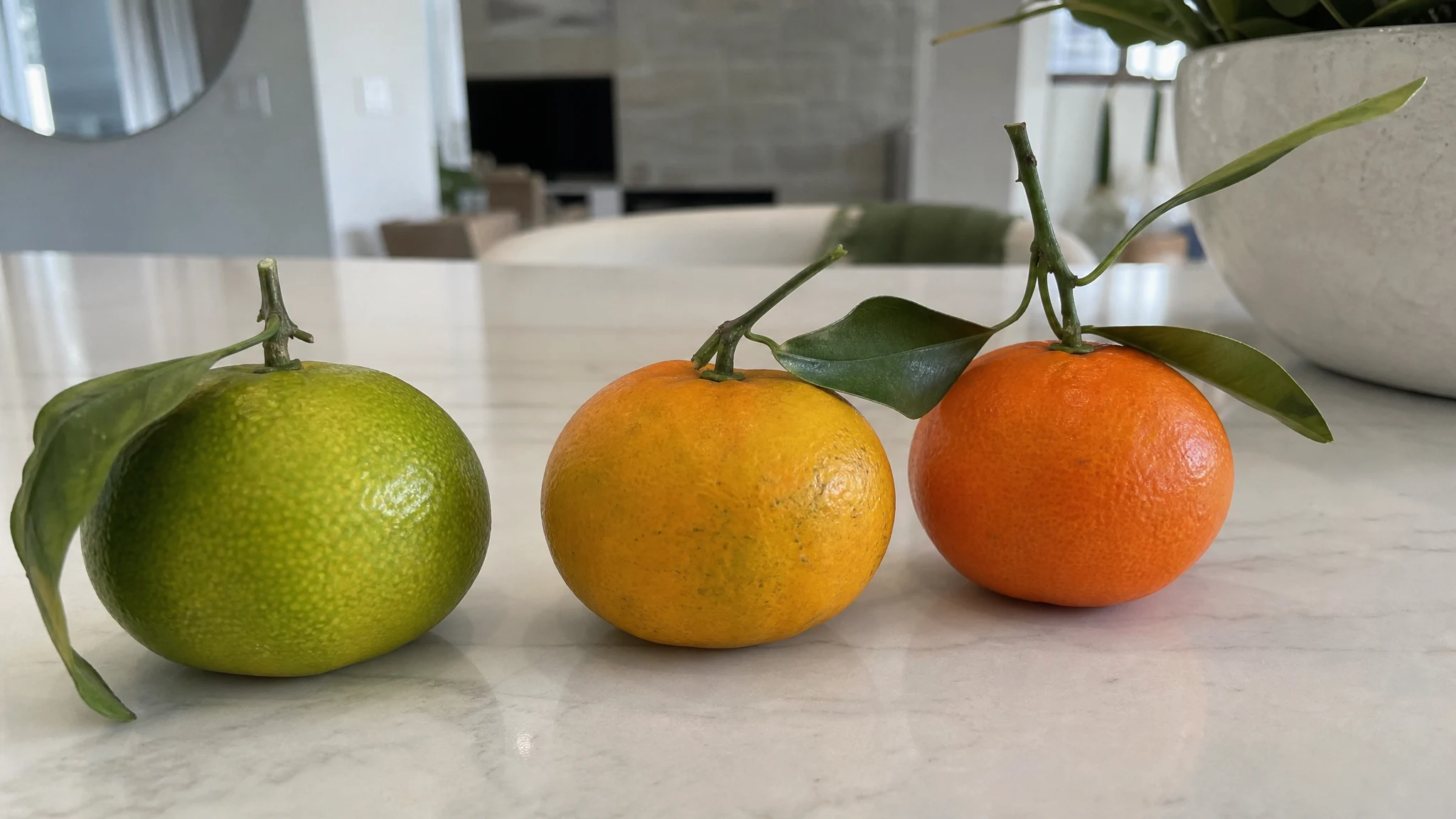
If you shop for mandarin oil long enough you will meet green, yellow and red versions, usually with a tidy story attached: green from early fruit, yellow from the middle of the season, red from fully ripe mandarins. It is an appealing idea, and it is worth knowing what the documents actually support, because it changes what to ask before you buy.
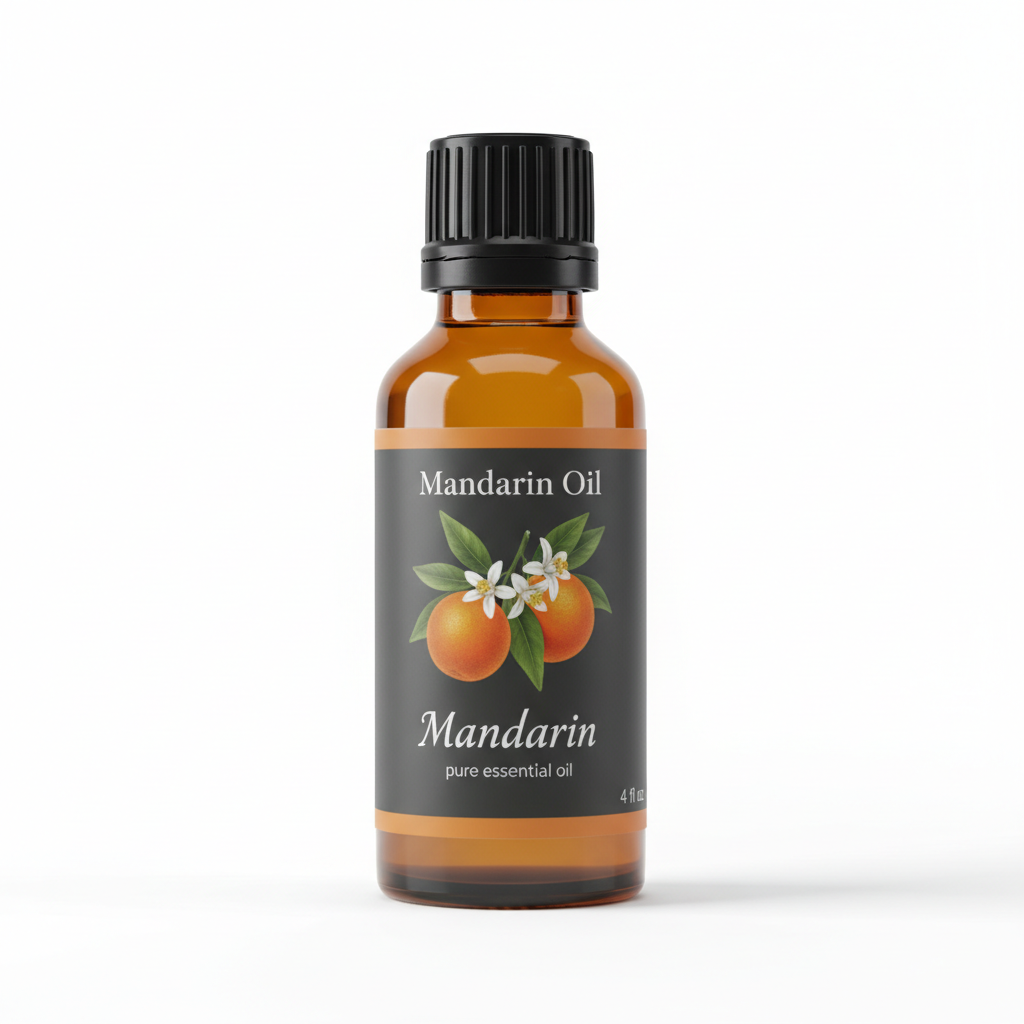
Mandarin Essential Oil
Our own Mandarin Essential Oil, in sizes from 0.5 oz to bulk.
From $12.99
Shop Now →A colour word describes the liquid
When the European Food Safety Authority assessed mandarin oil in 2021, it described the green type as "a green to green-brown clear mobile liquid" and the red type as "an orange to red amber clear mobile liquid". It tested ten batches, five of each colour, all from Italy except one green batch from Brazil. In the parts of the opinion we read, neither type is tied to a harvest stage or a month, and the composition tables pool all ten batches together instead of splitting them by colour.
So "green" tells you what the oil looks like and, at most, the trade category it sits in. It does not on its own tell you the fruit was unripe, when it was picked, or how the oil will smell. Those are separate facts that a good seller can write down.
What a ripening study found
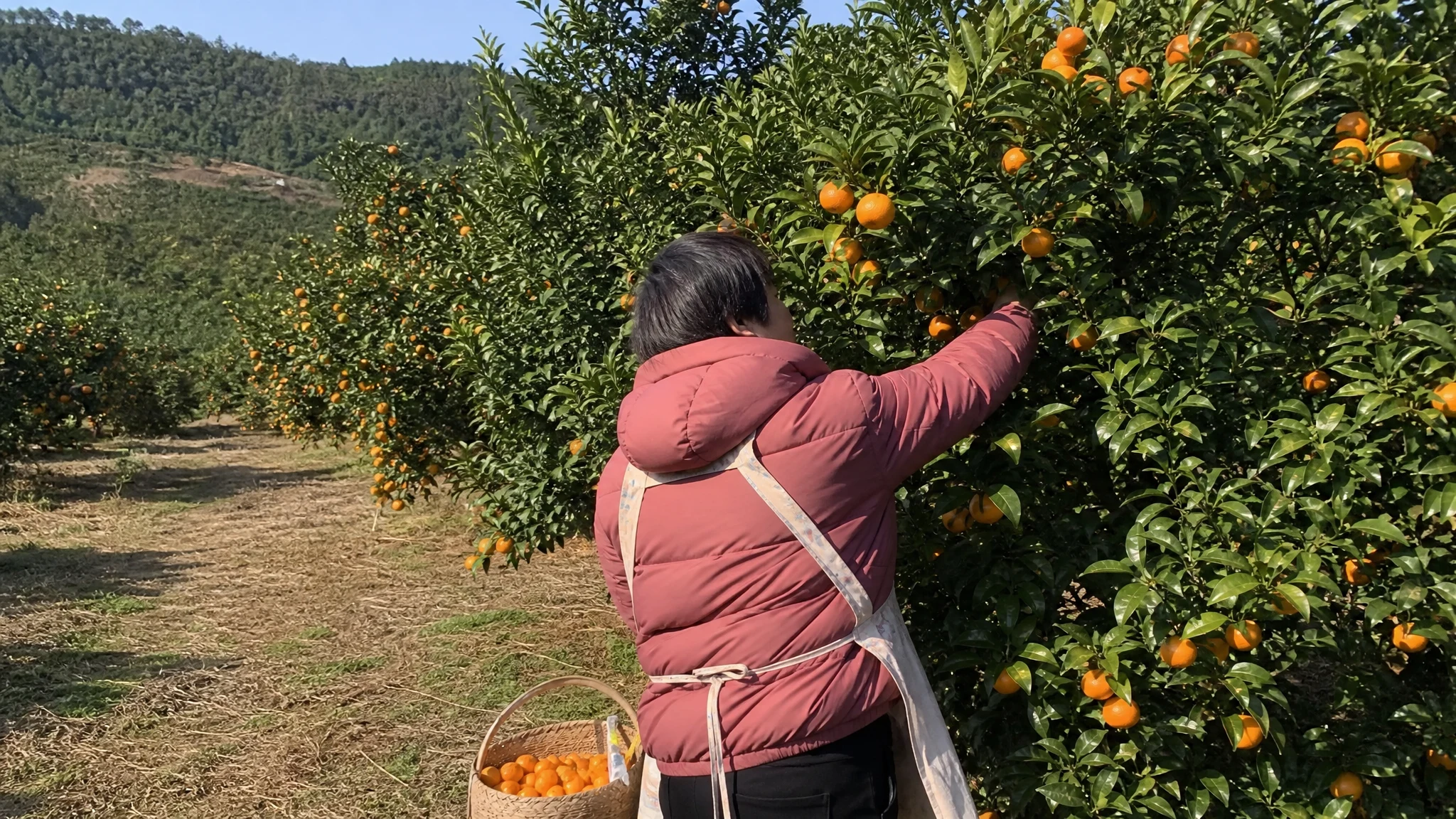
The closest thing to a harvest-timing experiment is a 2012 Tunisian study. Researchers sampled peel oil from one mandarin cultivar, Elarbi, at three stages: green and immature, yellow and semi-mature, and orange and mature. The results are fun to read because they refuse to follow a straight line. Limonene dipped at the yellow stage (51.81%) and then rose past its starting point at the orange stage (69.00%, against 65.37% when green). The yellow-stage oil carried 26.43% of the compound 1,8-cineole, against almost none in the green and orange samples, and the oil yield jumped about twelvefold between the first two stages.
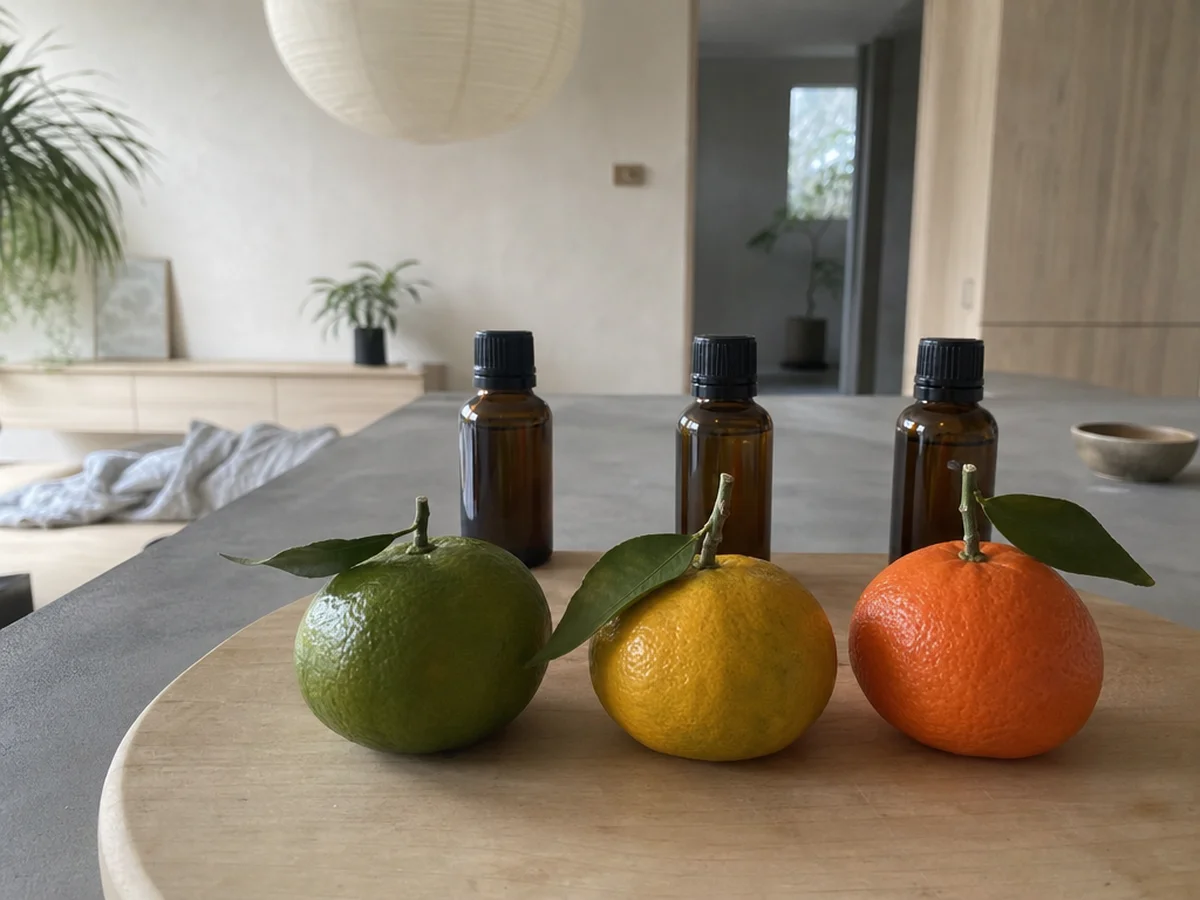
Our reading is that composition shifts during ripening, and not in a simple "greener means more of X" way. It is a single cultivar in one area in one season, so we would not carry those percentages across to a commercial oil. The authors themselves say yields and composition can depend on environment and extraction conditions.
Variation within one species
A 2019 review of citrus peel oils puts mandarin limonene at about 95% in many reports, though occasionally down to 60%, and notes that important variations can occur within the same species depending on cultivation and variety. Variety, growing conditions and ripeness all move the numbers, and no source we read tells you how much of a given oil's profile is down to ripeness alone.
One difference the EFSA data did flag is a pesticide residue (chlorpyrifos) in some of the green batches and none reported in the red. With five batches per type that is a note about those batches, not a property of green oil. What it does show is that a residue screen is a different document from a colour description.
What this means for our oil
We sell one mandarin oil, cold-pressed from the peel, so there is no green-versus-red choice in our shop. The certificate we publish for one batch lists the appearance as "Green liquid", the smell as "Unique aroma of mandarin", a relative density of 0.852, a refractive index of 1.471 and an optical rotation of +69.80 degrees. That "Green liquid" line describes appearance; it is not a claim about unripe fruit or a harvest stage, and the certificate gives no origin or GC-MS. If you need a harvest stage, a composition profile or a residue result for a product, ask us in writing through the contact page and get the answer in writing.
Seeing the colour for yourself
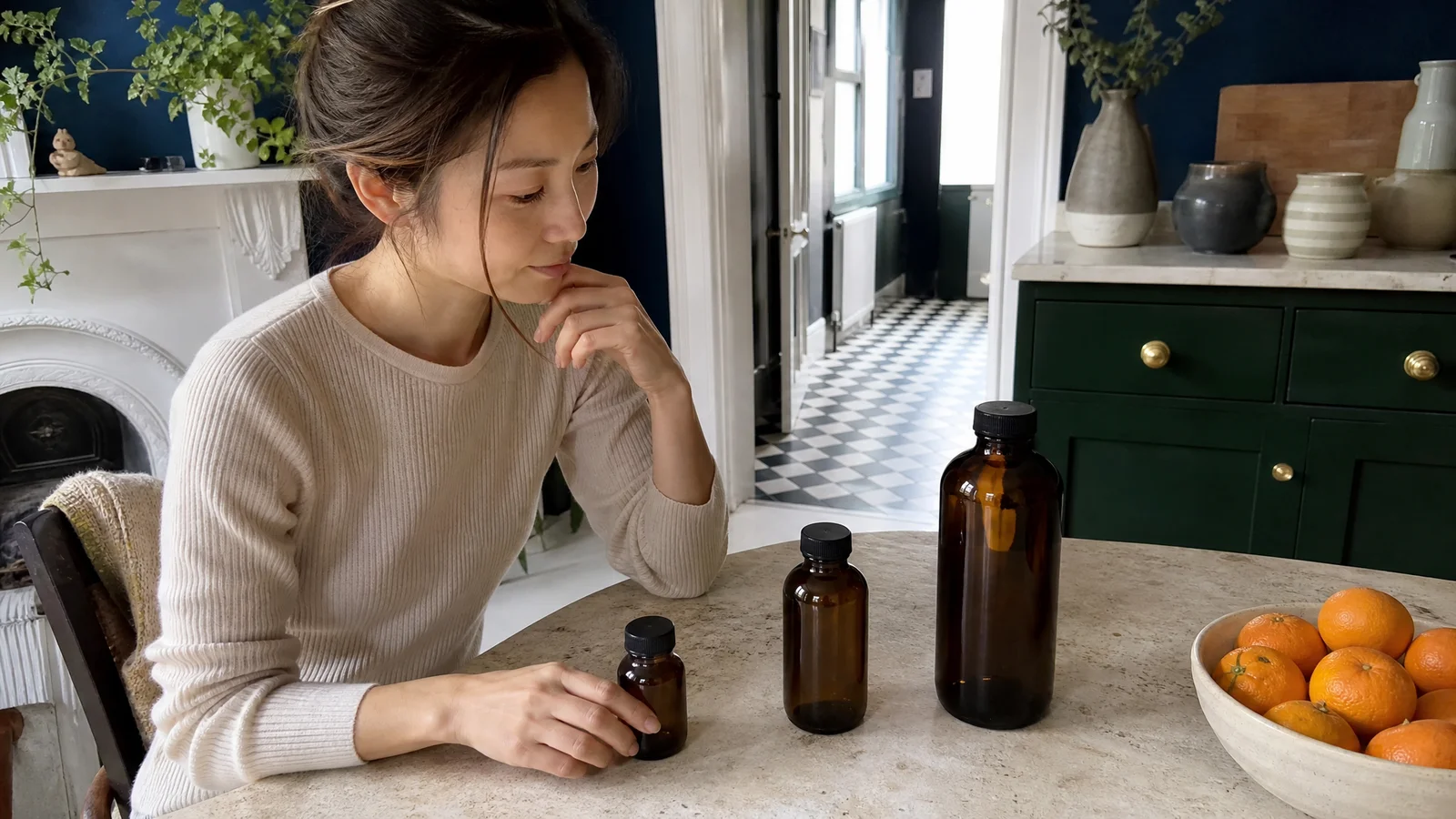
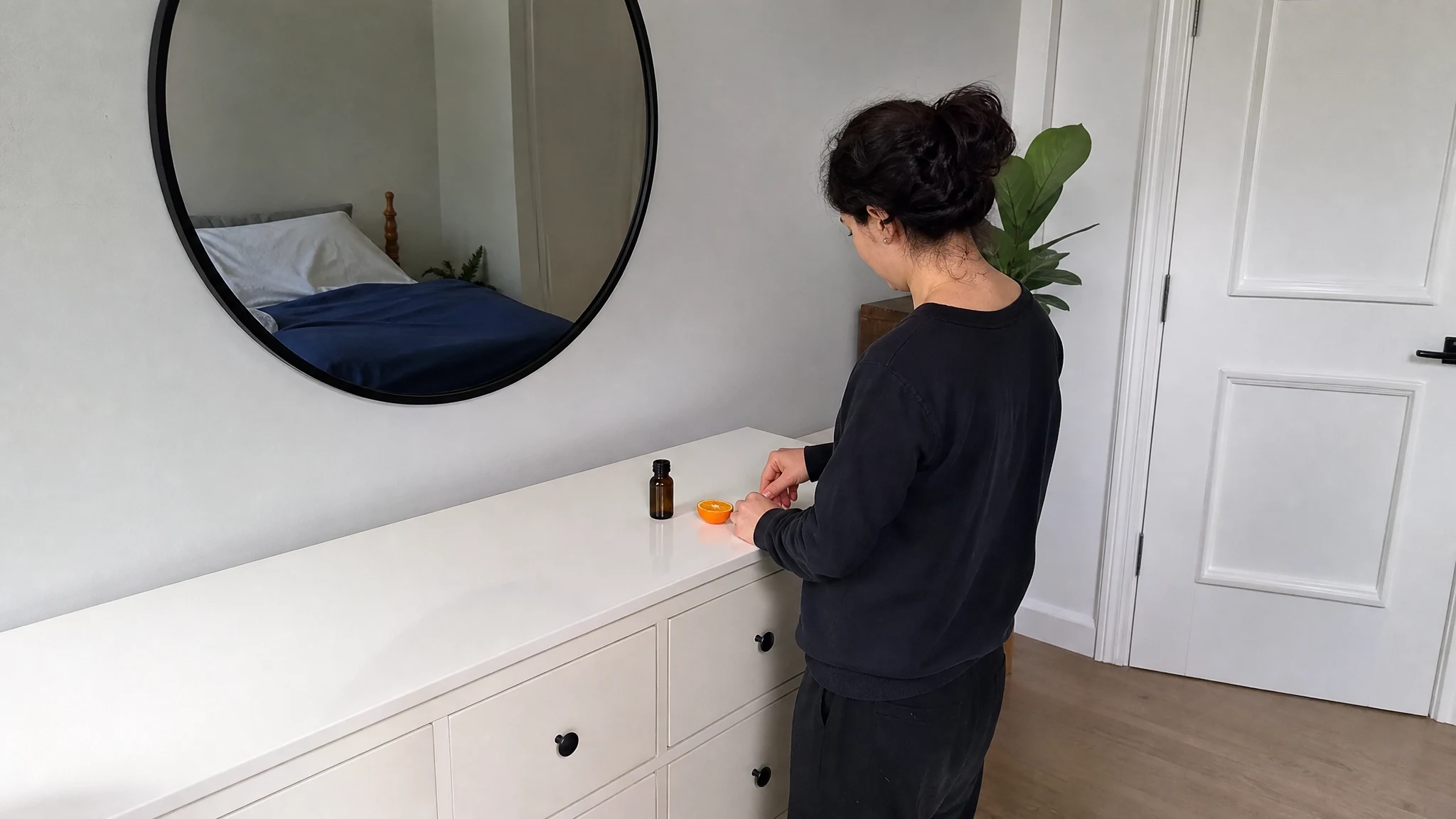
Our oil comes in amber glass, which keeps light out but makes it hard to judge the colour through the wall. If you want to see it, tip a drop onto a white saucer or a clean white tile in daylight. You will notice the colour far better than you can through the glass, and a drop on a strip of white paper will show you how it looks when it is thin.
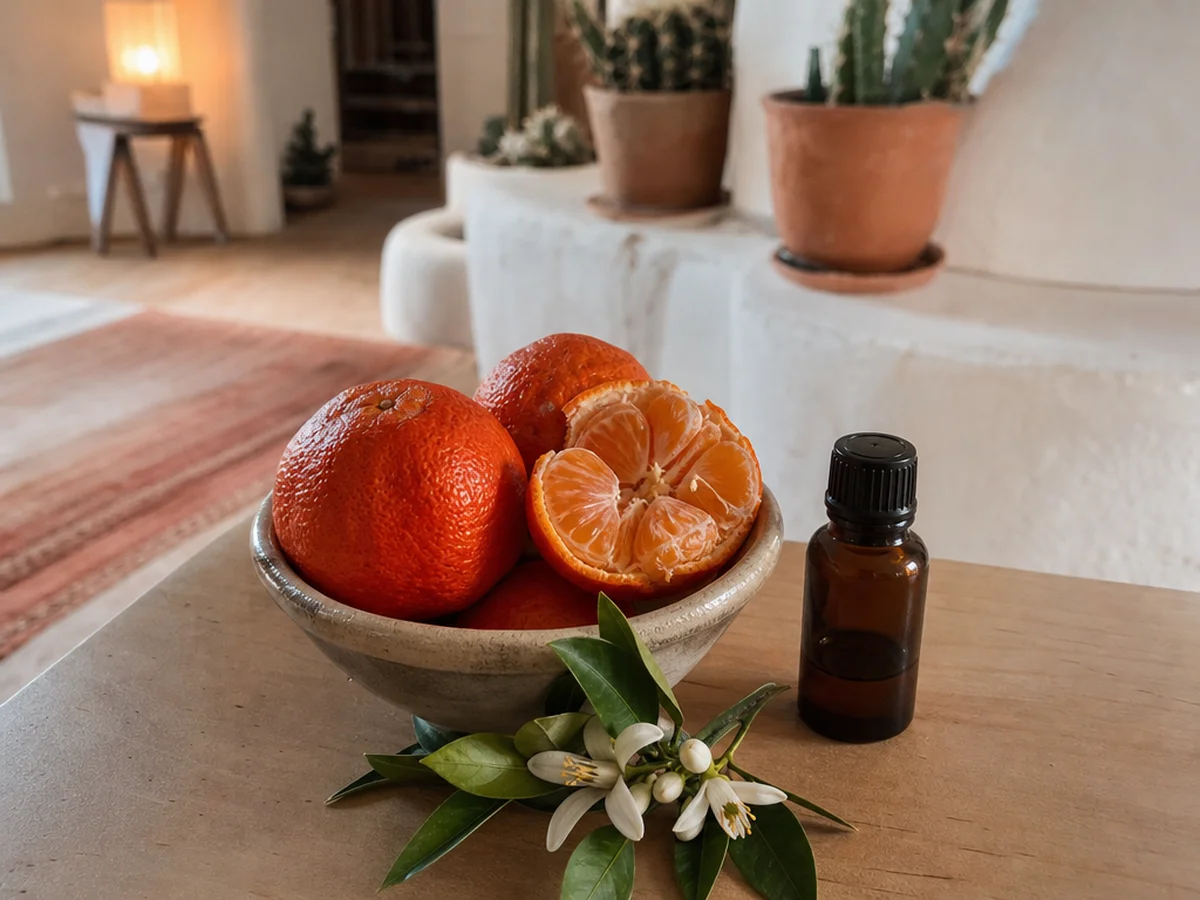
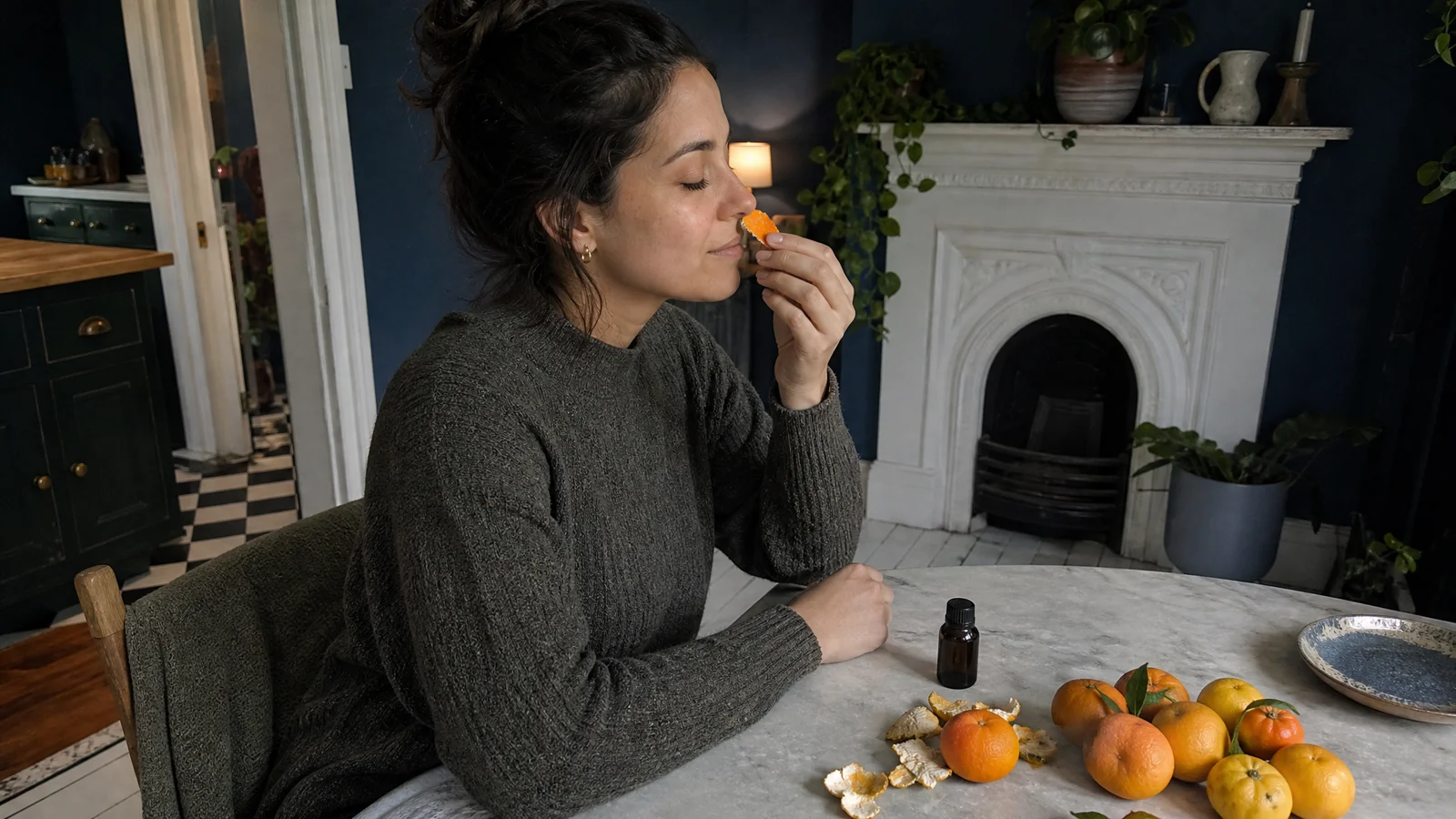
The next time you are in the fruit aisle, pick up a mandarin and scratch the peel with a fingernail. The scent that jumps out is the real thing in miniature, and you may notice that the colour of the skin tells you very little about how sweet the fragrance is. Colour is a pleasant clue, not a verdict.
Questions worth asking any seller
- What does "green" mean here: oil colour, fruit stage or trade category?
- Can you give a harvest period, an origin and a GC-MS report for this specific lot?
- Does a residue screen exist for the lot?
- How do the figures compare with a stated reference, remembering that cultivar and season move them?
For more on reading what a seller gives you, see our guide to reading the COA, the origin and grade guide, what the sources report about composition and mandarin against tangerine.
If you are curious, make it a game: line up two bottles from two sellers on a white saucer in daylight, note the colour of each, and then smell them. You will find colour and scent are two separate pieces of information, and both are worth writing down next to the date.
A colour word is a good prompt for one question, not a reason to buy. The answers you get back are the real product information.
Mandarin Essential Oil
Mandarin Essential Oil from our own shop, in sizes from 0.5 oz to bulk.
From $12.99
Shop Now →Sources & Further Reading
- EFSA FEEDAP Panel, 2021. Safety and efficacy of a feed additive consisting of expressed mandarin oil from the fruit peels of Citrus reticulata Blanco for use in all animal species (FEFANA asbl). https://pmc.ncbi.nlm.nih.gov/articles/PMC8190682/
- Bourgou S et al., 2012. Changes of peel essential oil composition of four Tunisian citrus during fruit maturation. ScientificWorldJournal. https://pmc.ncbi.nlm.nih.gov/articles/PMC3353483/
- Gonzalez-Mas MC et al., 2019. Volatile Compounds in Citrus Essential Oils: A Comprehensive Review. Front Plant Sci. https://pmc.ncbi.nlm.nih.gov/articles/PMC6370709/