Mandarin vs Tangerine Oil: Same Species, Different Labels
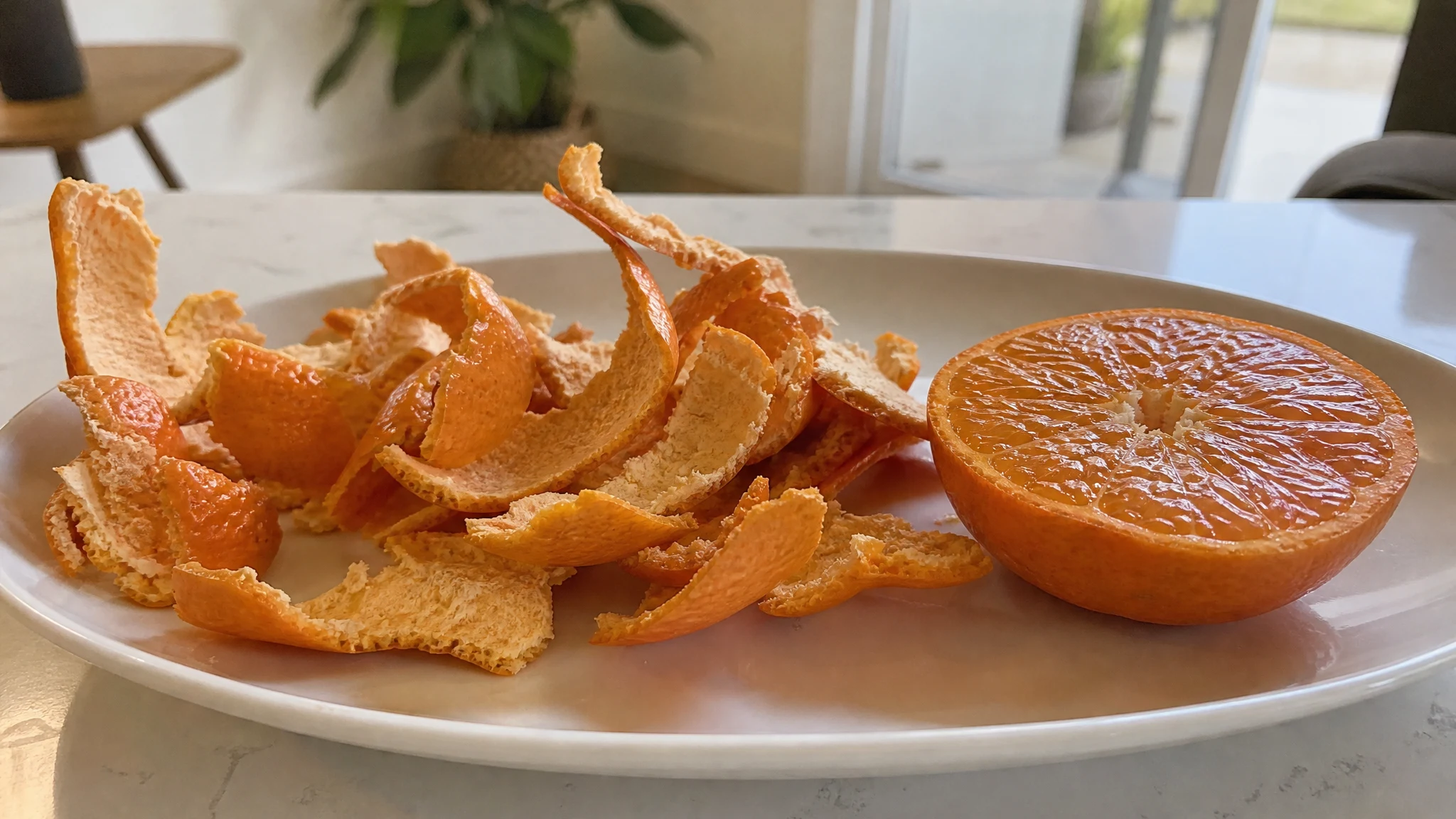
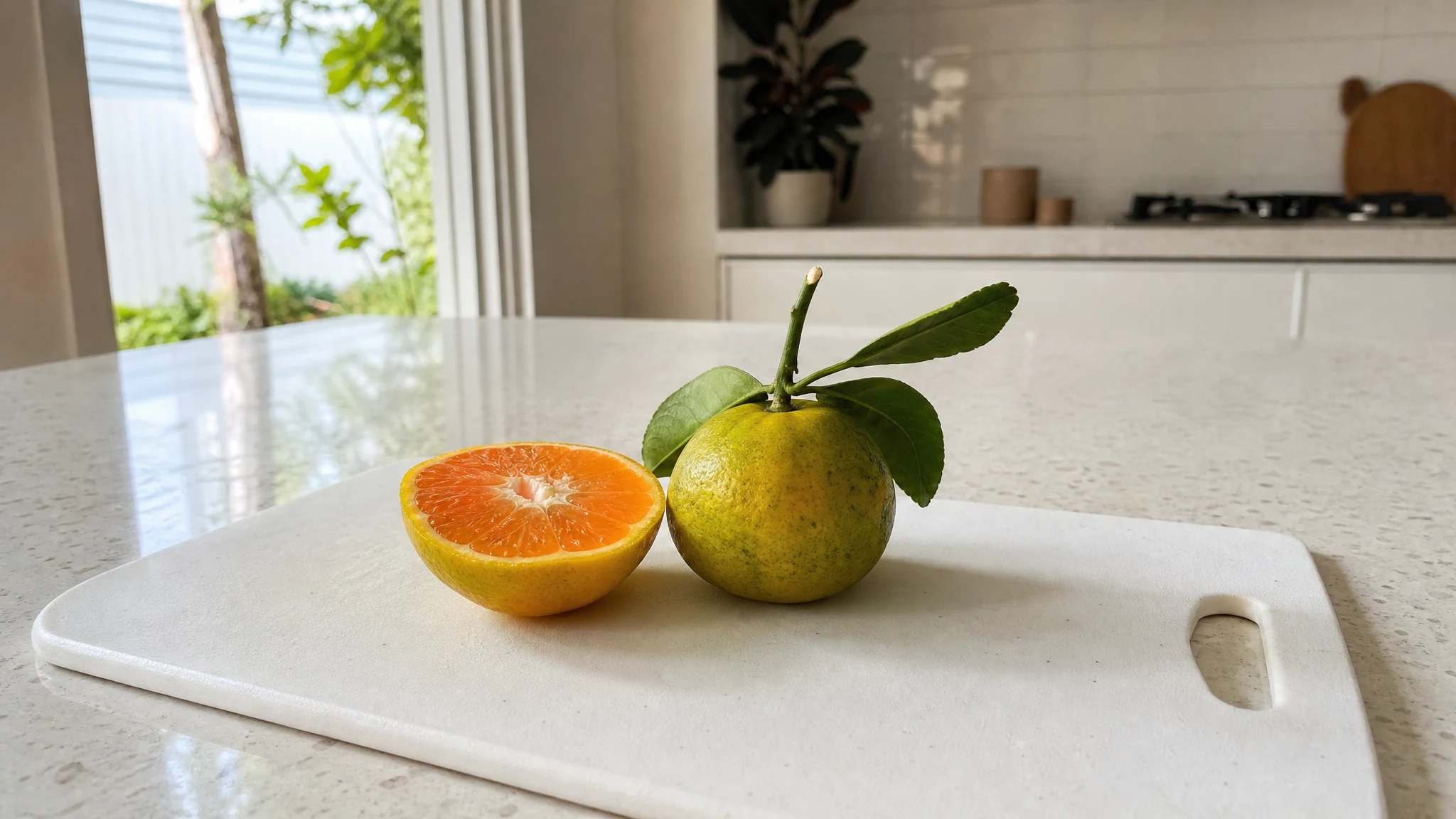
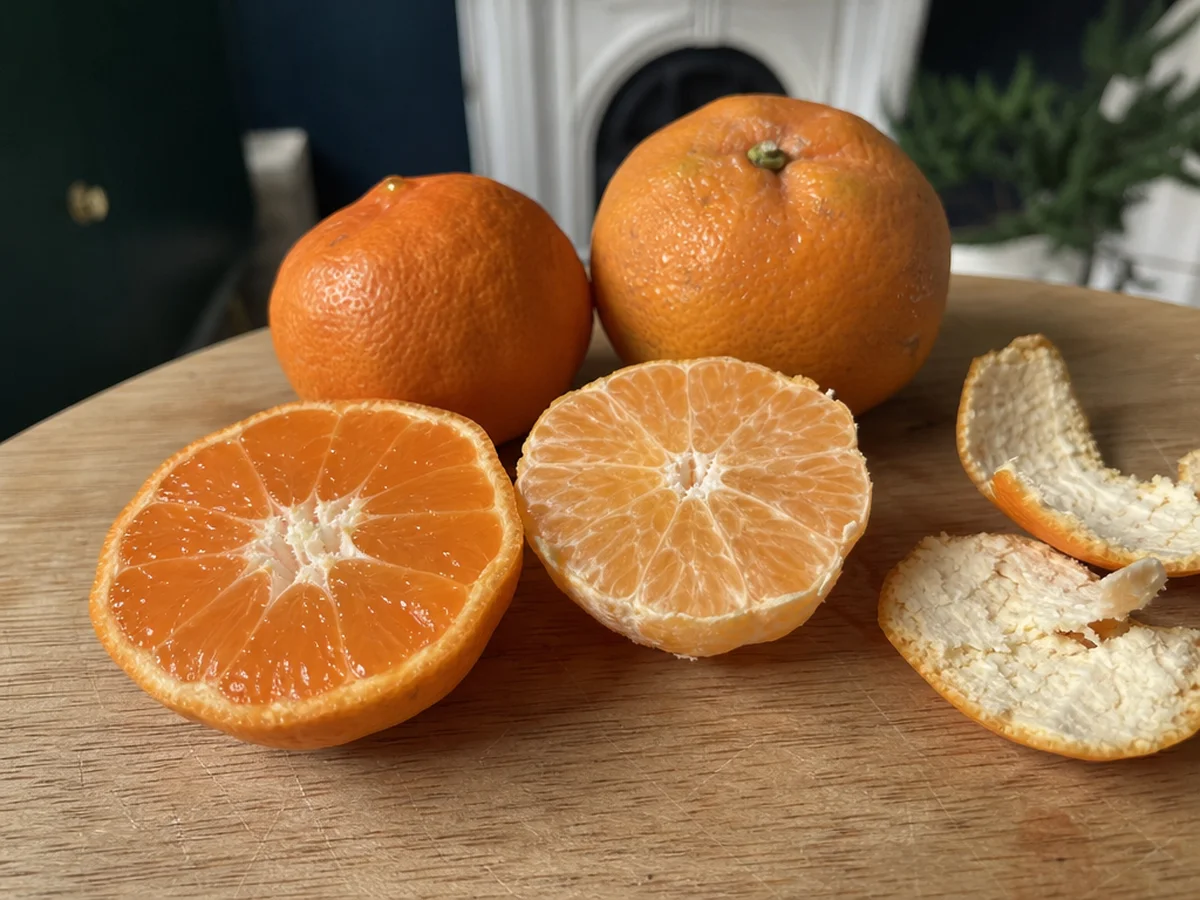
If a bottle says tangerine and ours says mandarin, you are mostly comparing two words and not two plants. Botanists file tangerines inside the mandarin group, and the oils sold under both names come from fruit carrying the same species name, Citrus reticulata, in the papers we read. The differences that actually matter are the cultivar, the extraction method and the lot, and none of those fit on a front label.
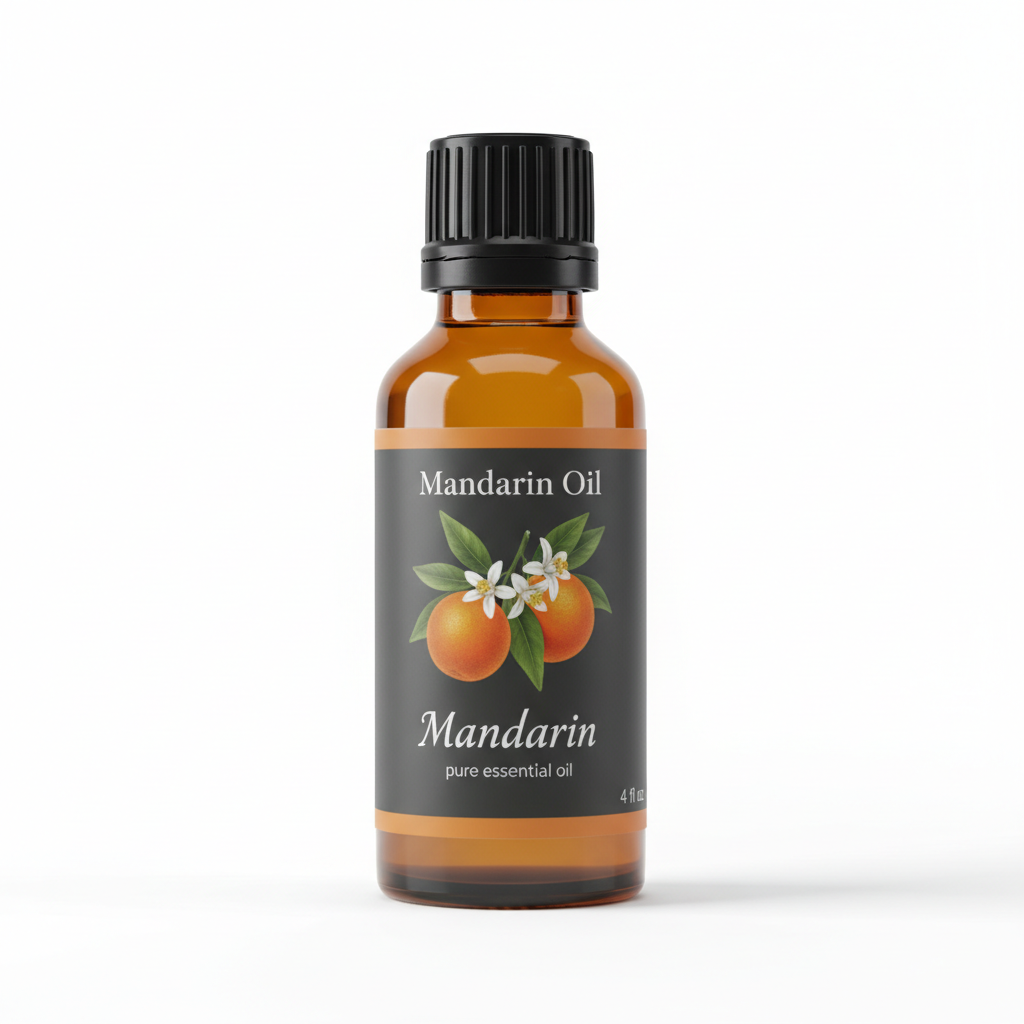
Mandarin Essential Oil
Our own Mandarin Essential Oil, in sizes from 0.5 oz to bulk.
From $12.99
Shop Now →What the names mean in the literature
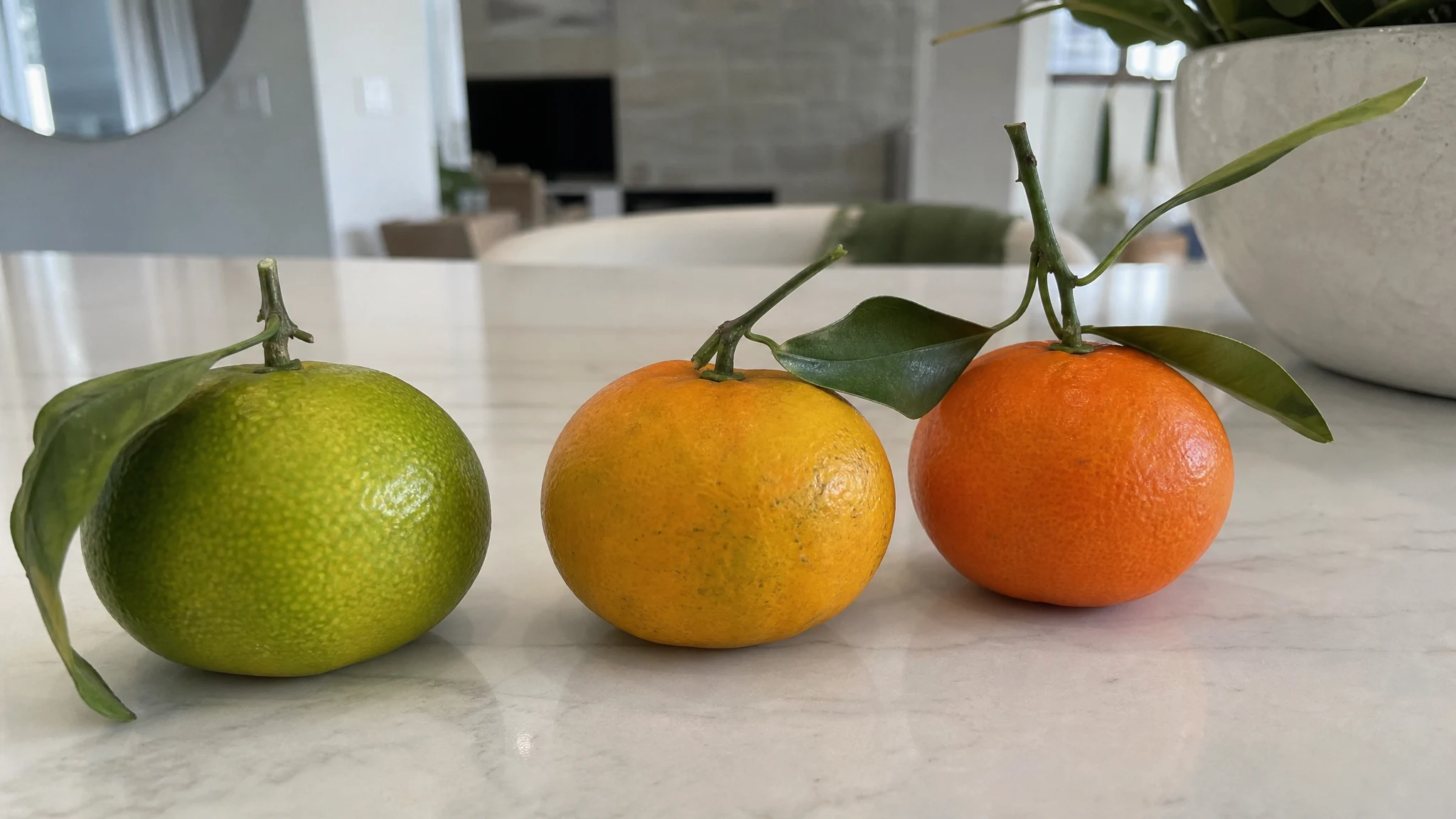
A 2017 paper on citrus diversity explains that "mandarin" is a common name for most small, easy-peeling citrus fruits, and that mandarin germplasm is classified as C. reticulata Blanco. It also reports an older horticultural split by Webber (1943) into four groups: king, satsuma, mandarin and tangerine. So tangerine is a group within the mandarin family and not a separate species. The same paper adds a twist: clementine, often filed with tangerines, is in its words in fact a tangor, a cross between mandarin and sweet orange.
Essential oil research follows the same loose habits. A 2026 composition study lists Yousfy Balady, Ponkan, Murcott, Clementine and Dancy Tangerine together under C. reticulata Blanco, and notes that tangerine oil in the literature has been made from clementine cultivars. The EFSA opinion on mandarin oil covers oil from the peel of C. reticulata Blanco obtained by cold expression, which is how our oil is made and described: cold-pressed from the peel.
Three things "tangerine" might mean on a label
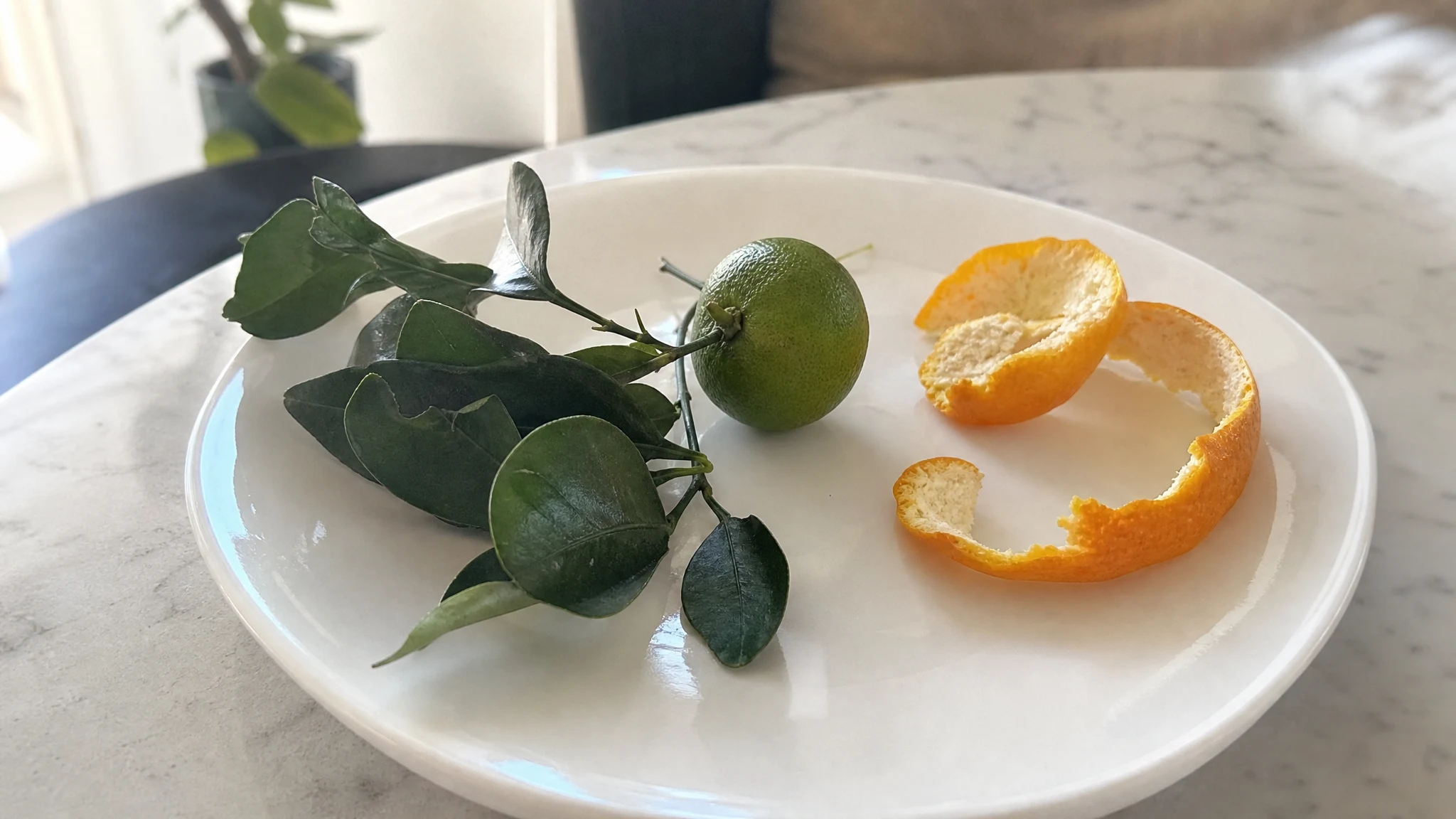
Reasoning from the above, and not from any particular lot, a seller who writes tangerine could mean the same species under a trade name, a specific cultivar group such as Dancy, or a clementine-derived oil, which may be a hybrid. The label alone will not say. A quick question to the seller, covering botanical name, plant part, extraction method, cultivar if known and lot, usually settles it. If nobody can answer, treat the name as marketing.
Same name, very different numbers
The 2026 study hydrodistilled the peels of five fruits it labels C. reticulata and reported limonene in each oil:
| Fruit | Limonene, hydrodistilled peel oil |
|---|---|
| Dancy Tangerine | 32.87% |
| Yousfy Balady | 36.62% |
| Ponkan | 47.42% |
| Clementine | 54.69% |
| Murcott | 81.13% |
These are distilled oils from single fruit samples, so they are not pressed oils and not a specification. What they show is range: with one species name over all five, limonene spans nearly fifty points, and the tangerine sits at the bottom while a mandarin sits at the top. Pressed mandarin oil has its own spread. EFSA's ten batches ran from 56.4% to 68.6% limonene, and a 2019 study that pressed Ponkan found 74.93%. The spread inside one name is wider than the gap between the two names, so lot-level documents are a better basis for choosing than the label. Our composition article compares more sources.
The sun question, worked out
The Tisserand Institute lists tangerine oil at 0.005% bergapten, against around 0.2% for bergamot, and says expressed mandarin and tangerine contain extremely small amounts of furocoumarins, not enough to make them phototoxic. It gives the IFRA and EU maximum for bergapten as 15 ppm (0.0015%). Run the figures. 0.005% is 50 ppm of bergapten in the oil, so an oil used at 2% of a leave-on product contributes about 1 ppm, and at 0.5% about 0.25 ppm, both well under 15 ppm. With the 0.0003% (3 ppm) that EFSA cites from the literature for mandarin oil, 2% oil contributes about 0.06 ppm.
That arithmetic uses published figures for the oil type in general, and says nothing about a specific lot. The Certificate of Analysis we publish for one batch has no furocoumarin figure. For a leave-on product worn in sun, ask us in writing through the contact page before ordering, and add the bergapten from every other citrus oil in the formula before comparing the total with 15 ppm. Our safety basics article covers dilution and patch tests.
What both share
Both are limonene-rich pressed oils, and limonene oxidizes with air. In a six-country patch-test study, air-oxidized R-limonene gave positive reactions in 5.2% of 2,900 consecutive dermatitis patients, with centres ranging from 2.3% to 12.1%. That group had been referred for dermatitis, so it is not a rate for everyone, but it is why a small, tightly capped bottle matters more than the fruit's name. Our dilution guidance for skin is 0.5% to 2% in a carrier oil, roughly 3 to 12 drops per ounce, after a patch test and away from eyes, children and pets.

A friendly shopping note
Do not be put off by the muddle of names. When you see tangerine, mandarin, clementine or satsuma on a label, treat the name as the start of a conversation, not the end of one. Look for the botanical name, the plant part and the way the oil was extracted, then smell the oil before you commit to a big bottle. A small size costs very little and tells you more than a page of descriptions.
Which to reach for
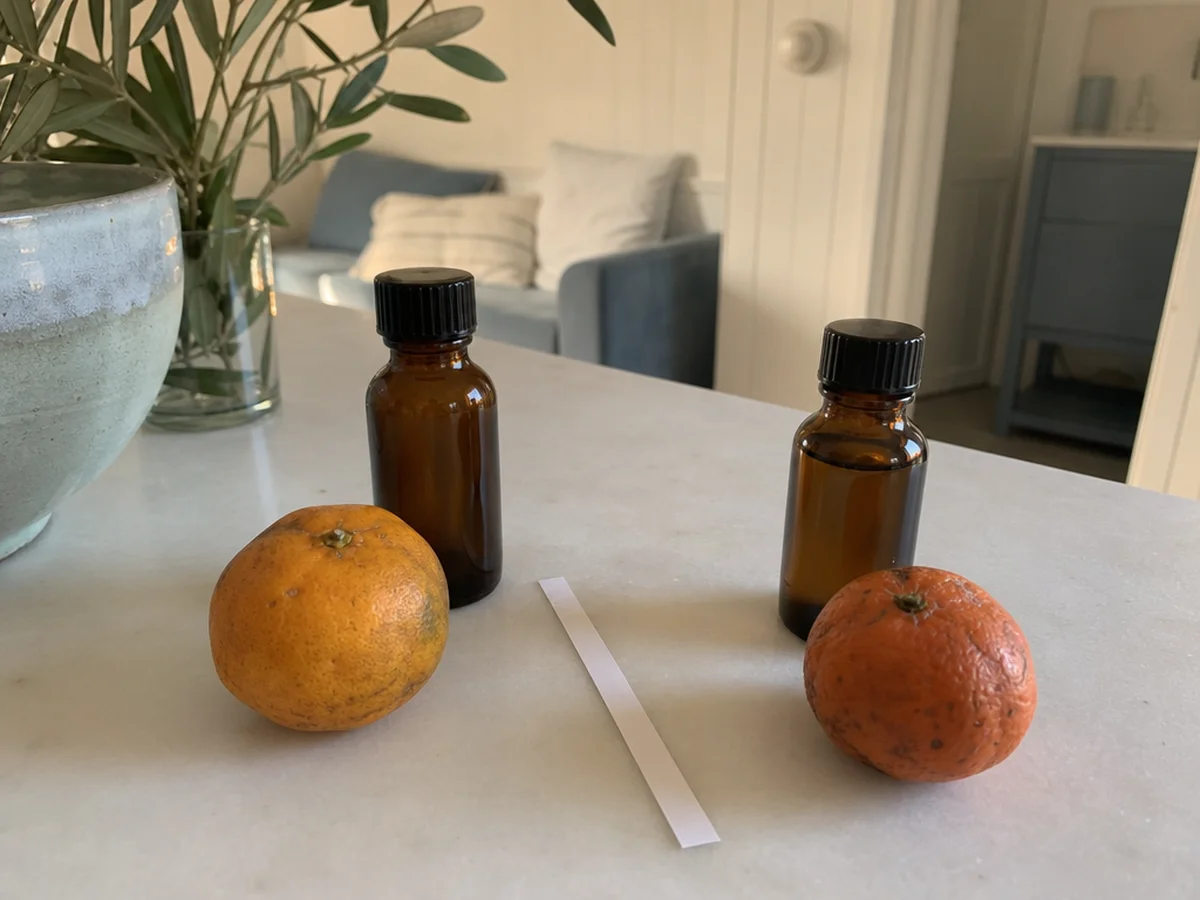
If a recipe says tangerine and you hold mandarin, you are swapping between two labels for the same species name, and any scent difference depends on the lot. That is reasoning, since the papers include no sensory comparison. If you need the exact character of a named tangerine cultivar, buy an oil that states the cultivar and comes with a lot document. If a cold-pressed mandarin from a stated extraction is what you need, ours is sold neat. For another close pair, see mandarin and sweet orange and the citrus comparison.
In the end, the best test is your own nose on a small bottle, with the lot details written down beside it.
Mandarin Essential Oil
Mandarin Essential Oil from our own shop, in sizes from 0.5 oz to bulk.
From $12.99
Shop Now →Sources & Further Reading
- Oueslati et al., 2017. Genotyping by sequencing reveals the interspecific C. maxima / C. reticulata admixture along the genomes of modern citrus varieties of mandarins, tangors, tangelos, orangelos and grapefruits. PLoS One 12(10):e0185618.
- Elmaidomy et al., 2026. Volatile composition of essential oils from major Egyptian Citrus cultivars: a multivariate chemometric approach. Scientific Reports 16:20746.
- EFSA FEEDAP Panel, 2021. Safety and efficacy of a feed additive consisting of expressed mandarin oil from the fruit peels of Citrus reticulata Blanco for use in all animal species (FEFANA asbl). EFSA Journal.
- Lu et al., 2019. Peel oils from three Citrus species: volatile constituents, antioxidant activities and related contributions of individual components. Journal of Food Science and Technology.
- Tisserand Institute. Phototoxicity: essential oils, sun and safety.
- Bråred Christensson et al., 2013. An international multicentre study on the allergenic activity of air-oxidized R-limonene. Contact Dermatitis 68:214-223.