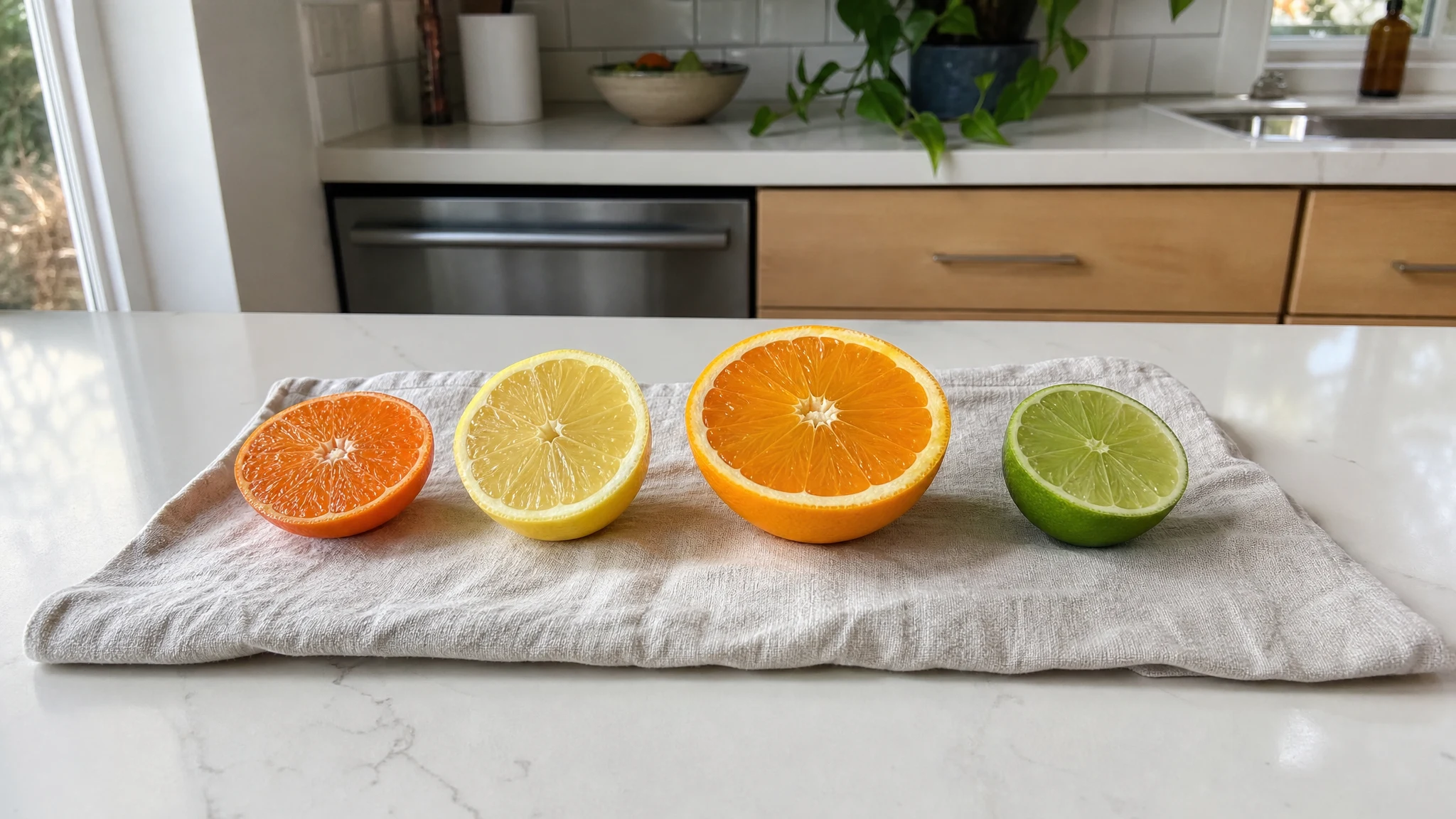
Citrus Oils and Sunlight: Which Ones Need a Rule?
Citrus oils are the cheerful ones of the shelf, and also the ones with the most paperwork about sunlight. Anyone who has gone shopping for lemon, lime, bergamot or grapefruit oil for a skin project has met the warning. The good news is that the rule behind it is quite logical, and once you see it you can work out which citrus oils need it and which simply do not appear on the list.
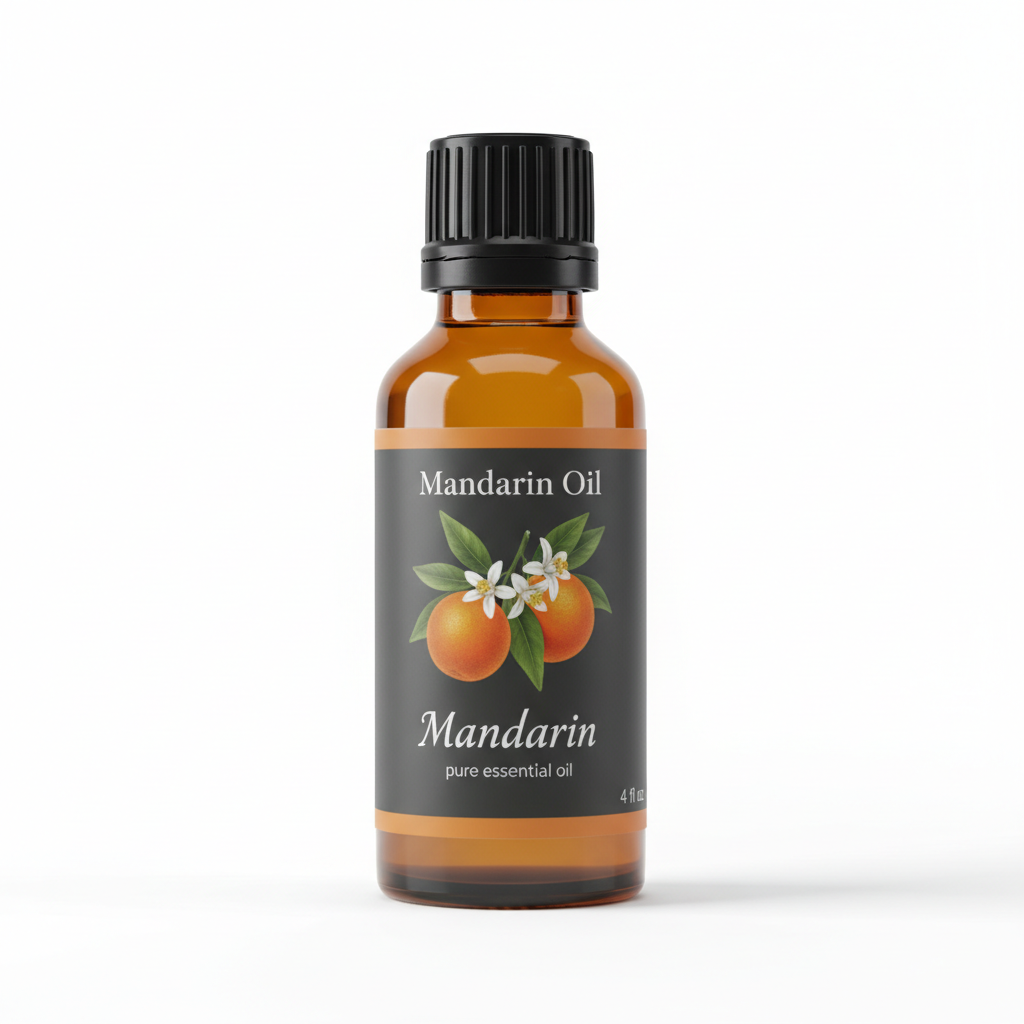
Mandarin Essential Oil
Our own Mandarin Essential Oil, in sizes from 0.5 oz to bulk.
From $12.99
Shop Now →Why pressed citrus oils come with a sun rule
When citrus peel is pressed, the oil carries along furocoumarins, natural compounds such as bergapten that react with UV light on skin. Distilled citrus oils leave them behind. The Tisserand Institute puts it simply: distilled citrus oils contain virtually no furocoumarins, and most phototoxic essential oils are expressed citrus oils. That is why you will see "furocoumarin-free" bergamot on some bottles. It is a version made to sidestep the issue.
IFRA, the fragrance industry's standards body, turns this into numbers. Here is what its 2020 standards (Amendment 49) allow in the finished product for most product categories, with our own arithmetic for what that means in drops per fluid ounce (about 20 drops per ml):
| Pressed oil | IFRA limit, most categories | Drops per 1 oz (arithmetic) |
|---|---|---|
| Bergamot, expressed | 0.40% | about 2 |
| Lime, expressed | 0.70% | about 4 |
| Bitter orange peel, expressed | 1.25% | about 7 |
| Lemon, cold pressed | 2.0% | about 12 |
| Grapefruit, expressed | 4.0% | about 24 |
A few categories, such as 7A and 9, show no restriction, so read the table as a scale and not as a rulebook for your product. Two rules sit alongside it. If the bergapten level of your oil has not been measured, the limit for that oil applies. And when you combine restricted oils, each one counts as a percentage of its own ceiling and the total must stay at or under 100. Half of bergamot's ceiling plus half of lemon's already uses the whole allowance.
Where mandarin sits
Expressed mandarin peel oil is not among the eight oils the standard restricts (angelica root, bergamot, bitter orange, cumin, grapefruit, lemon, lime and rue). The standard does mention two relatives, petitgrain mandarin and cold-pressed tangerine, as having a typical furocoumarin level of 50 ppm, which it calls not high enough to require special restrictions if used alone. If you combine them with the restricted oils, total bergapten in a product for UV-exposed skin should stay under 15 ppm. The Tisserand Institute says expressed mandarin contains extremely small amounts of furocoumarins, not enough to make it phototoxic.
That is a general statement about the oil type. The Certificate of Analysis we publish for one batch lists appearance, smell, density, refractive index and rotation, so it does not carry a bergapten figure. If you are making a leave-on product for sunlit skin, ask us in writing through the contact page before ordering, and bring any numbers to a cosmetic chemist.
What the bottles smell like, in chemistry terms
Most pressed citrus oils are mainly limonene, and the interesting part is what travels with it. In a 2019 study that pressed peel from three citrus fruits, limonene made up 74.93% of Ponkan mandarin oil and 55.47% of Eureka lemon oil, so lemon leaves much more room for other compounds. The same study found lemon richer in beta-pinene and the aldehyde citral. Reasoning from those numbers rather than from any smell panel, that fuller supporting cast is a plausible reason lemon reads sharper and mandarin reads rounder. For a head-to-head, see mandarin vs lemon and mandarin vs bergamot.
The thing every citrus oil shares
Limonene reacts with air, and oxidized limonene is the better-documented skin allergen. In a six-country patch-test study, air-oxidized R-limonene gave positive reactions in 5.2% of 2,900 consecutive dermatitis patients, with results by centre ranging from 2.3% to 12.1%. Those were people already referred for dermatitis, so it is not a rate for everyone. It does explain our advice to buy small, reorder often, keep the cap tight and store the bottle somewhere cool and dark, which applies to every oil in the table, ours included.
Open two bottles and compare
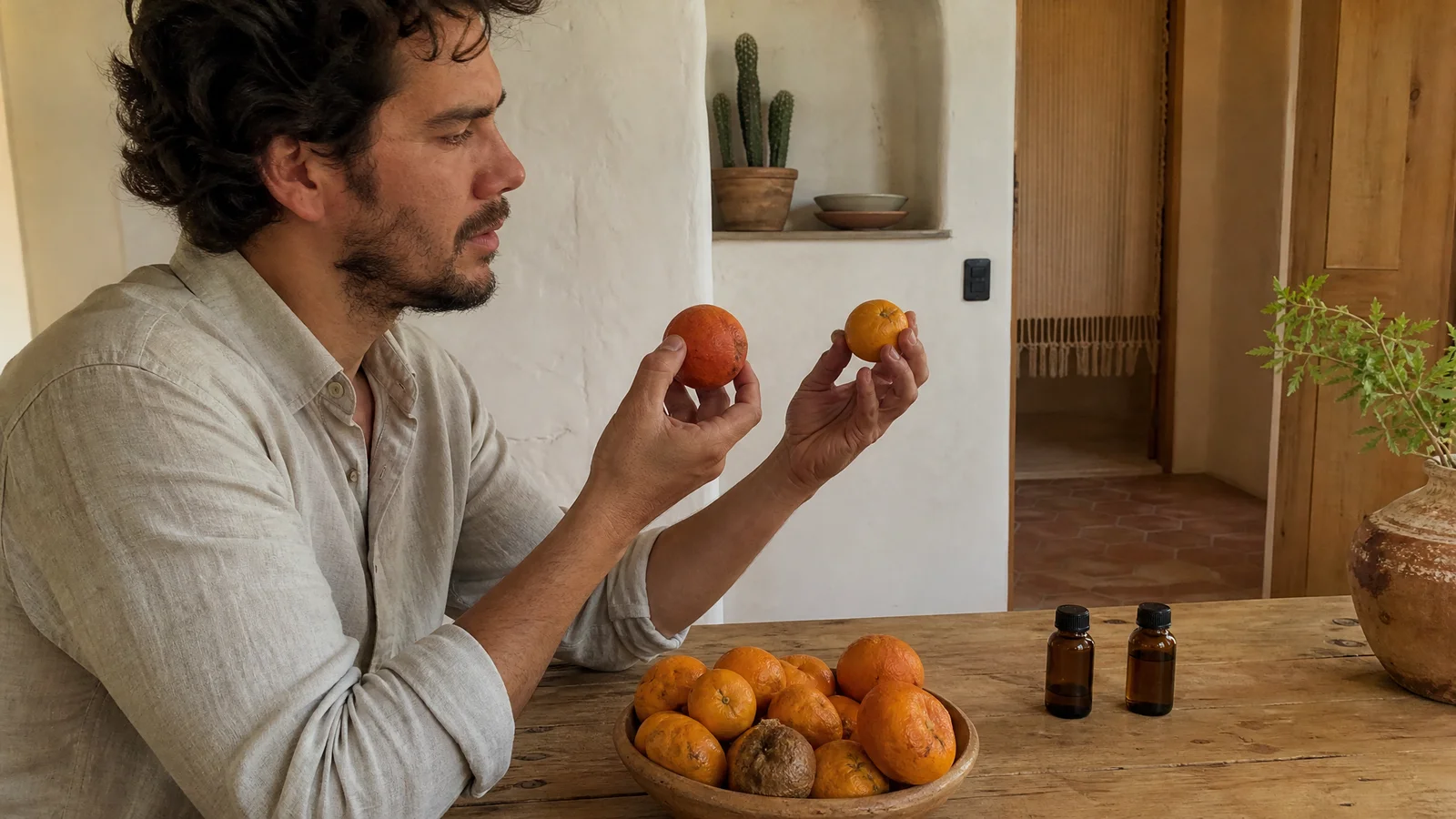
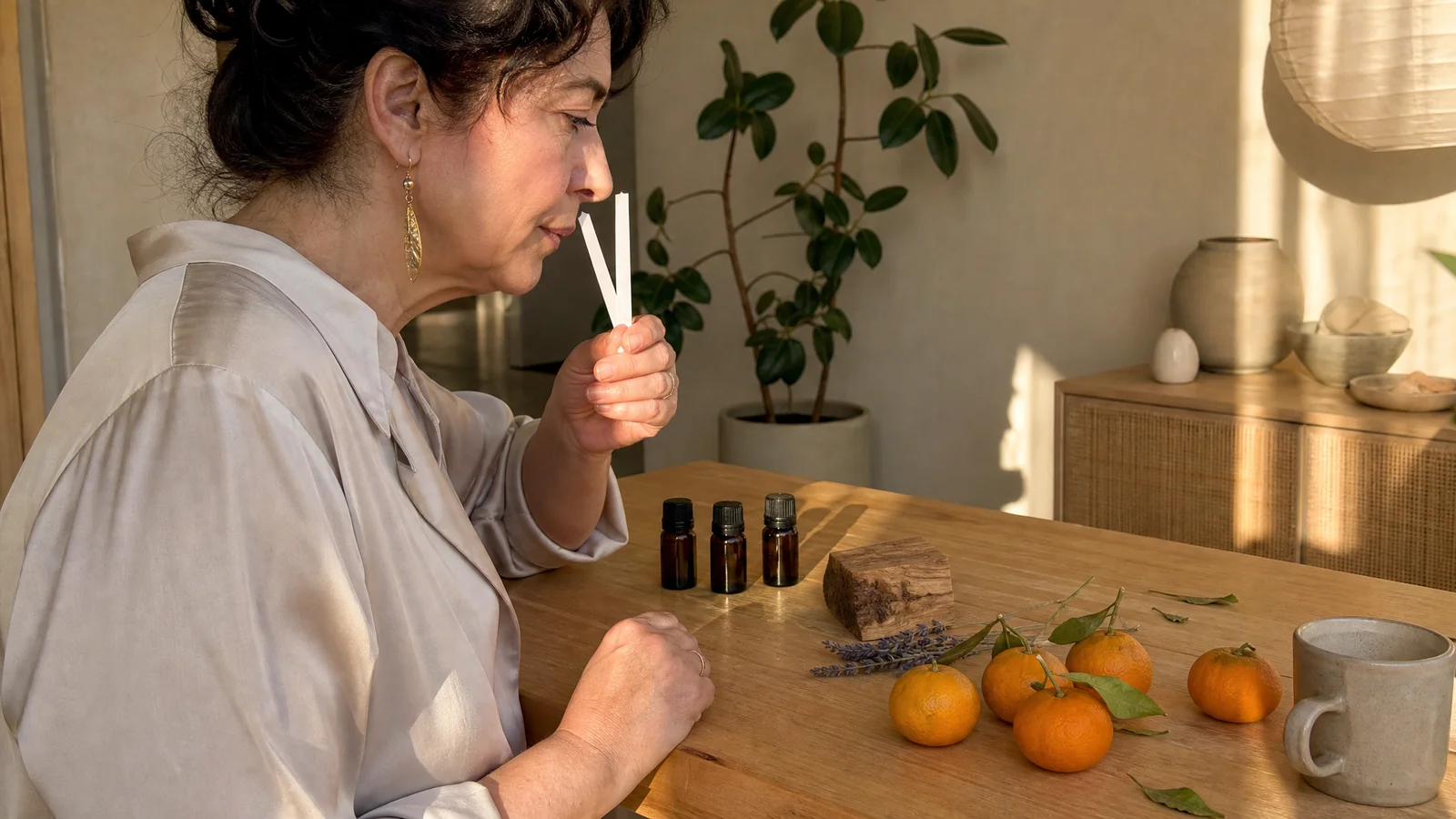
If you ever have a lemon and a mandarin in front of you, smell them one after the other on separate paper strips. You will notice lemon arrives bright, sharp and zesty, while mandarin comes across sweeter, softer and rounder. It is a nice way to see why people reach for them for different jobs, and the sun rules are only one more reason to know which bottle you are holding.
Make the rule easy to remember
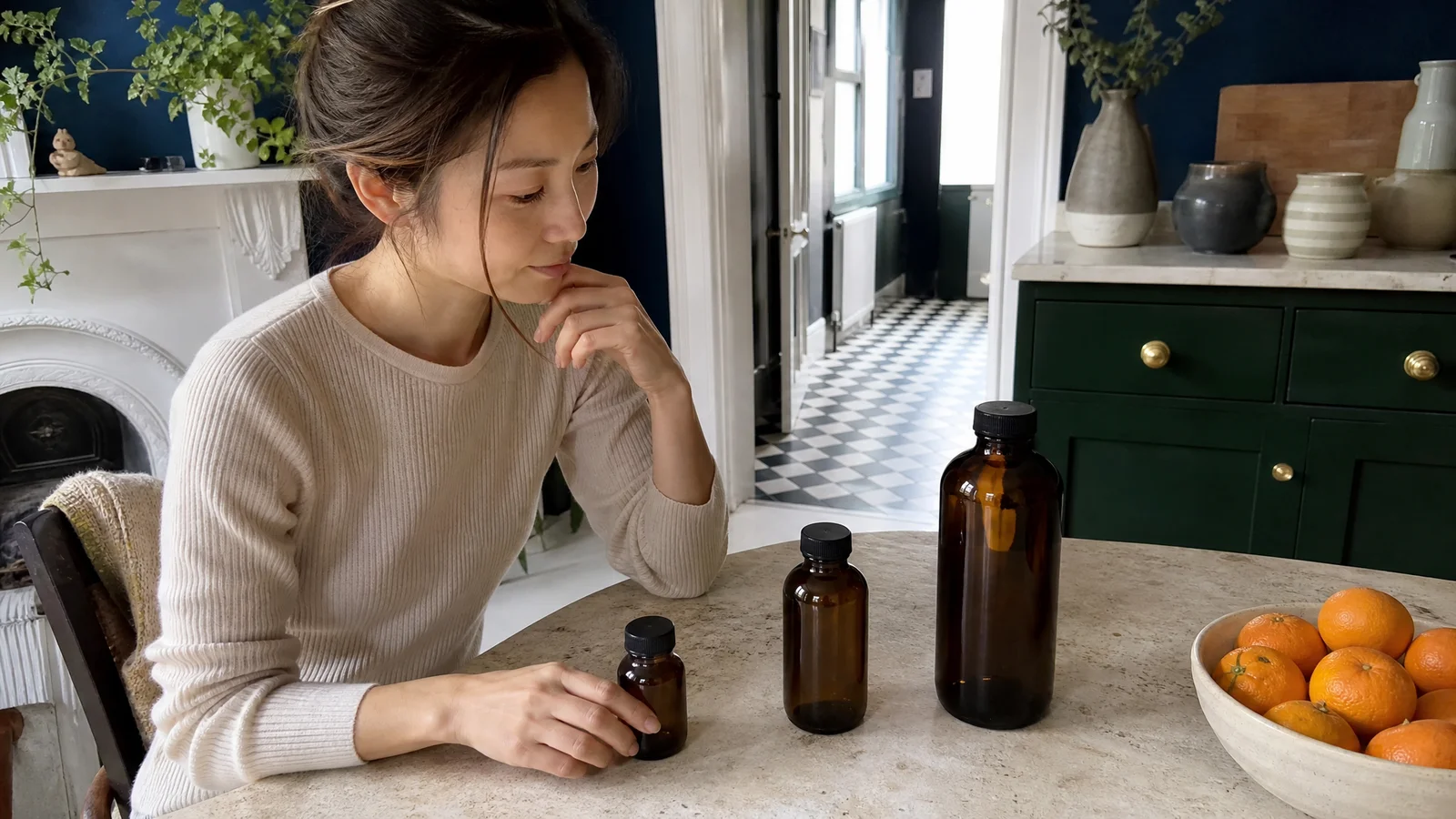
A practical trick is to label every citrus oil you own with its name and whether it is pressed or distilled, the day you open it. Put a note on the lid if it belongs to the sun-rule group. When you pick it up months later for a body oil or a lotion, the label does the remembering for you, and you will not have to hunt for the table.
Choosing in the order we would ask
- Will it sit on skin that sees sun? Then use the table, add up the allowance, and get a bergapten figure for the lot.
- Is it for a candle, diffuser or room spray? The skin limits are not the governing question, since nothing goes on skin.
- Do you want mandarin's soft sweetness or a sharper lift? That is a scent decision, and our guide to mandarin and sweet orange is a good starting place.
We sell mandarin oil, cold-pressed from the peel. For lemon, lime, bergamot or grapefruit, an aromatherapy or soap supply shop is the right stop, and the questions to ask are whether the oil is expressed or furocoumarin-free, and what the bergapten figure is.
Mandarin Essential Oil
Mandarin Essential Oil from our own shop, in sizes from 0.5 oz to bulk.
From $12.99
Shop Now →Sources & Further Reading
- IFRA. Citrus oils and other furocoumarins containing essential oils, 2020 (Amendment 49).
- IFRA. Bergamot oil expressed, 2020 (Amendment 49); likewise Bitter orange peel oil expressed, Grapefruit oil expressed, Lemon oil cold pressed and Lime oil expressed.
- Tisserand Institute. Phototoxicity: essential oils, sun and safety.
- Lu et al., 2019. Peel oils from three Citrus species: volatile constituents, antioxidant activities and related contributions of individual components. Journal of Food Science and Technology.
- Bråred Christensson et al., 2013. An international multicentre study on the allergenic activity of air-oxidized R-limonene. Contact Dermatitis 68:214-223.