Cold-Pressed vs Distilled Mandarin Oil: The Difference
Pick up two bottles that both say "mandarin" and you may be holding two different materials. One was squeezed from the peel without heat; the other was steeped in hot water or steam and collected as vapour. The label words tell you which, and they change what is in the bottle and how the oil behaves near sunlight. The oil we sell is cold-pressed from the peel, so here is what that choice means, using the one side-by-side study we found.
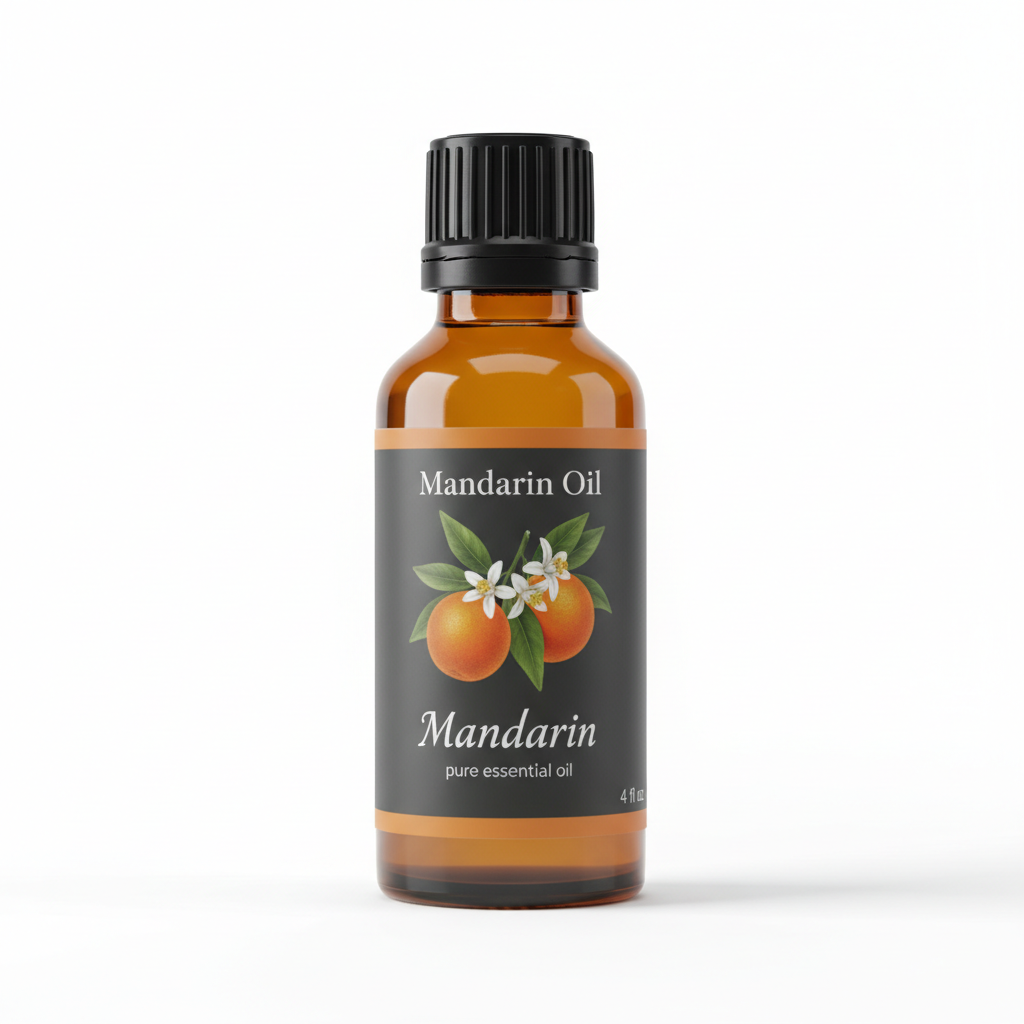
Mandarin Essential Oil
Our own Mandarin Essential Oil, in sizes from 0.5 oz to bulk.
From $12.99
Shop Now →Two routes from the same peel
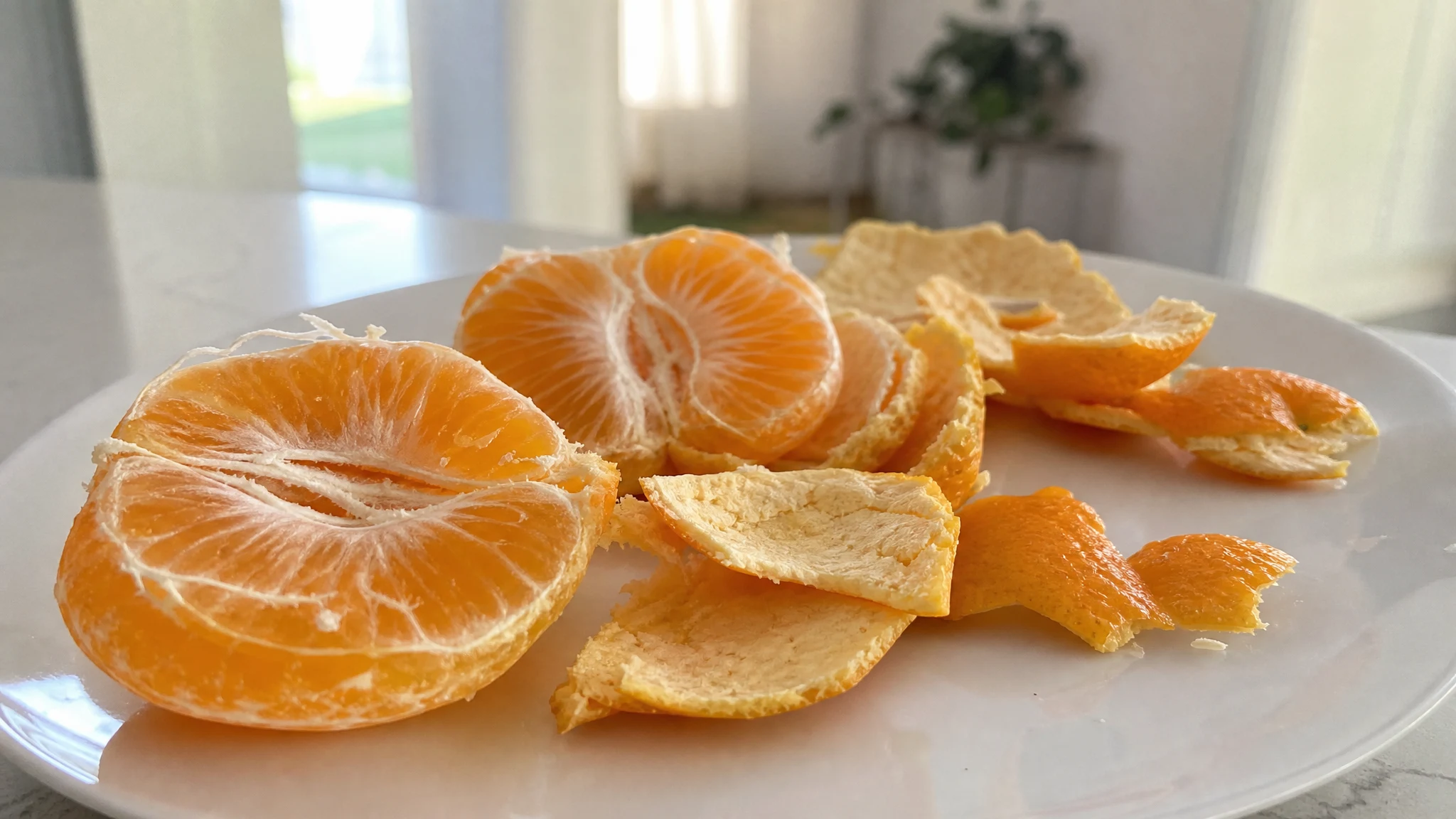
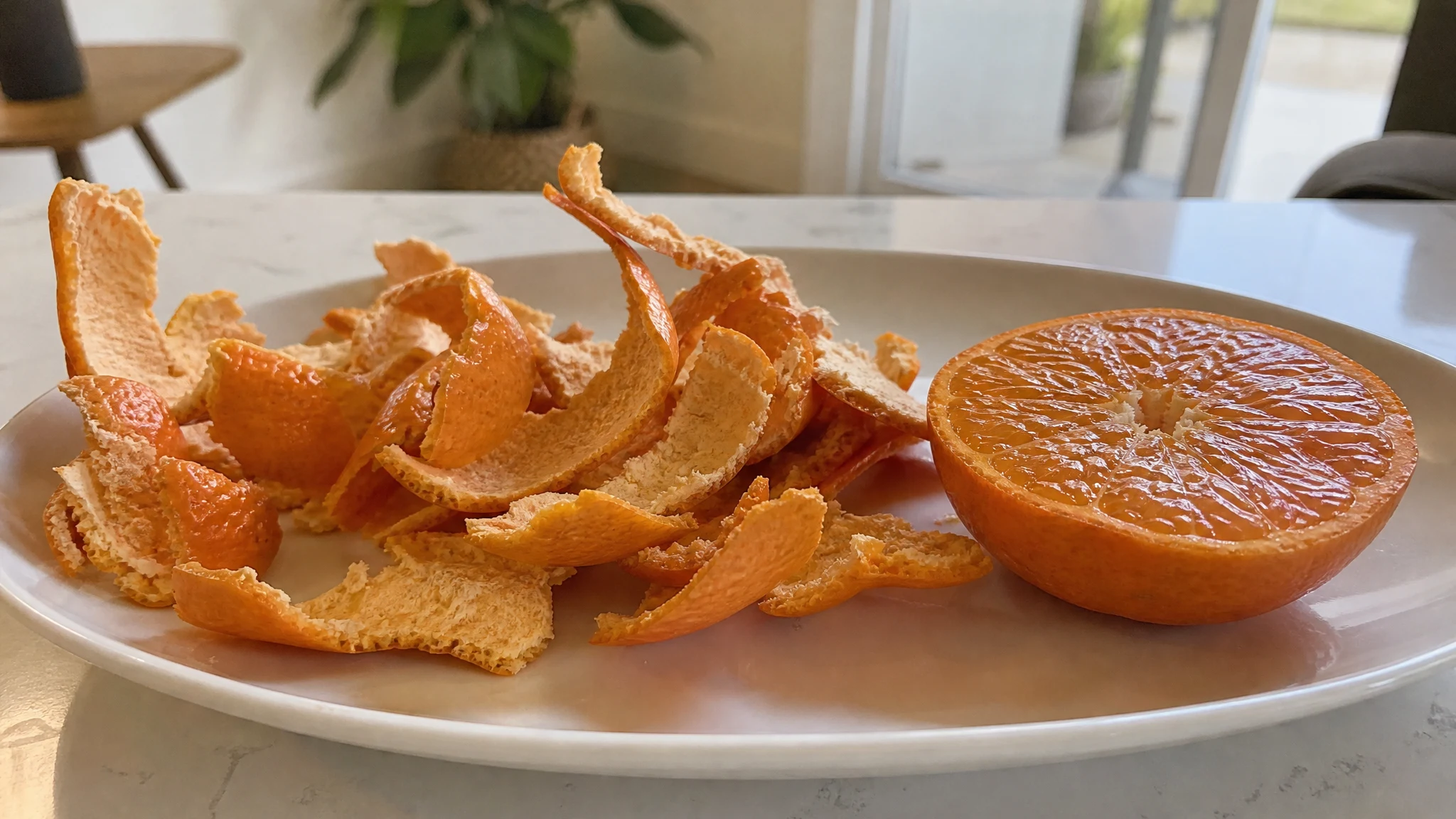
The European Pharmacopoeia definition, as EFSA quotes it, describes expressed mandarin oil as oil obtained without heating, by mechanical treatment of the fresh peel of Citrus reticulata Blanco. Because no heat is involved, the process is often called cold pressing. In a mechanised plant the fruit surface is scarified so the oil glands open, water is sprayed on to carry the oil away, the mixture is filtered and a centrifuge separates oil from water (EFSA Panel, 2021). Distillation is the other family: hydrodistillation and steam distillation are among the most common methods for this species, and cold pressing is generally credited with keeping heat-sensitive aroma compounds intact (Zhang et al., 2026). That second point is a general statement in a review, not a measured mandarin comparison, so for numbers we turn to a laboratory study.
What one careful comparison found
Lu and colleagues took Ponkan mandarin peel and extracted oil two ways: distilled in a Clevenger apparatus, and pressed through a spiral juicer. Both oils went through GC-MS (Lu et al., 2019). Three results are worth keeping:
- Distillation recovered more oil from the same fruit, 0.62% of peel weight against 0.45% for pressing.
- The pressed oil was richer in limonene, 74.93% against 68.16%.
- The distilled oil carried roughly three times the share of oxygen-containing compounds, 6.08% against 1.81%, including alpha-terpineol, which the pressed oil did not show at all.
Those are laboratory methods on one lot of fruit, so read them for direction. The direction is clear enough, though, and it fits what you would expect from time in hot water: the distillate is a slightly different mix, not merely the same oil by another route. That last step is our reasoning, since the paper does not test the mechanism.
"Distilled" is not one recipe
If you do buy a distilled mandarin, ask what the word covers. A 2026 study of Egyptian mandarin and tangerine cultivars hydrodistilled its peel for two hours and found limonene anywhere from about 33% to 81% depending on the cultivar (Elmaidomy et al., 2026). Much of that spread is the fruit rather than the method, which is a fair reminder that the fruit matters as much as the still.
Where the method matters most: sunlight
The Tisserand Institute explains that furanocoumarins, the compounds behind citrus phototoxicity, are heavy and largely stay behind in distillation, so distilled citrus oils contain far less of them. The same page lists expressed mandarin and tangerine among oils with extremely small amounts, not enough to make them phototoxic, and notes the EU limit of 15 ppm bergapten in finished leave-on products for sun-exposed skin (Tisserand Institute). That is category guidance about expressed mandarin in general. The certificate we publish has no furanocoumarin figure, so if a leave-on product for sun-exposed skin is your plan, ask us in writing for the figure you need and check the current IFRA standards for your formula. Our IFRA article shows where to look.
Freshness is about handling, not method
You may hear that a distilled citrus oil keeps better. We did not find a source that tests this for mandarin, and since the distilled Ponkan oil was still about two-thirds limonene, there is no reason to assume the two behave very differently. The Tisserand Institute names heat, light and moisture as the drivers of oxidation (Tisserand Institute), and those you control. Buy small, cap tightly, keep it cool and dark; our storage article has the details.
What you will notice side by side
The nicest way to understand the difference is to compare two bottles yourself. Put a drop of each on its own paper strip, label them, and smell each at the start, after a few minutes and after an hour. Do not expect us to tell you what you will find, because every oil is a little different, and your own nose is the best judge. With ours, expect that sweet, mellow, juicy mandarin with a faint floral hum, which is the character we love about it.
It is worth doing this once with any new supplier. It takes five minutes, costs almost nothing, and gives you something no description can.
Questions to put on your list
- Is the oil expressed (pressed) or distilled, and does the label say so?
- Which part of the plant did it come from: peel, or leaf and twig?
- Can you get a batch document in writing?
Which one suits what
If you want the oil as the peel gives it up, with the heavier compounds a press carries over, expressed oil is the one that matches the pharmacopoeia definition, and it is the character we sell. If a distillate's lighter profile or lower furanocoumarin content is what your project needs, buy it from a supplier who states the process and gives you a batch document. And do not confuse either with petitgrain, which comes from leaf and twig (leaf against peel). For how the pressed oil is produced, see how it is made.
Whichever you choose, the best habit is to ask the seller one plain question: how was it made? The answer shapes everything that follows.
Mandarin Essential Oil
Mandarin Essential Oil from our own shop, in sizes from 0.5 oz to bulk.
From $12.99
Shop Now →Sources & Further Reading
- EFSA Panel on Additives and Products or Substances used in Animal Feed, 2021. Safety and efficacy of a feed additive consisting of expressed mandarin oil from the fruit peels of Citrus reticulata Blanco for use in all animal species (FEFANA asbl). EFSA J. PMC8190682
- Zhang et al., 2026. Citrus reticulata Essential Oil as a Bioactive Food Ingredient: Composition Variability, Extraction, Functional Bioactivities, and Cross-Study Quantitative Analysis. Food Sci Nutr. PMC13594552
- Lu et al., 2019. Peel oils from three Citrus species: volatile constituents, antioxidant activities and related contributions of individual components. J Food Sci Technol. PMC6801276
- Elmaidomy et al., 2026. Volatile composition of essential oils from major Egyptian Citrus cultivars: a multivariate chemometric approach. Sci Rep. PMC13338266
- Tisserand Institute. Phototoxicity: essential oils, sun and safety. tisserandinstitute.org
- Tisserand Institute. Is my bottle of essential oil oxidized or no longer good to use? tisserandinstitute.org