How to Store Mandarin Oil So It Stays Fresh
The most common mistake with a bottle of citrus oil is not leaving it in the sun. It is the half-empty bottle that looks perfectly fine on the shelf. Mandarin oil is mostly limonene, and limonene slowly reacts with oxygen, so the air in the bottle matters as much as the date on the label.
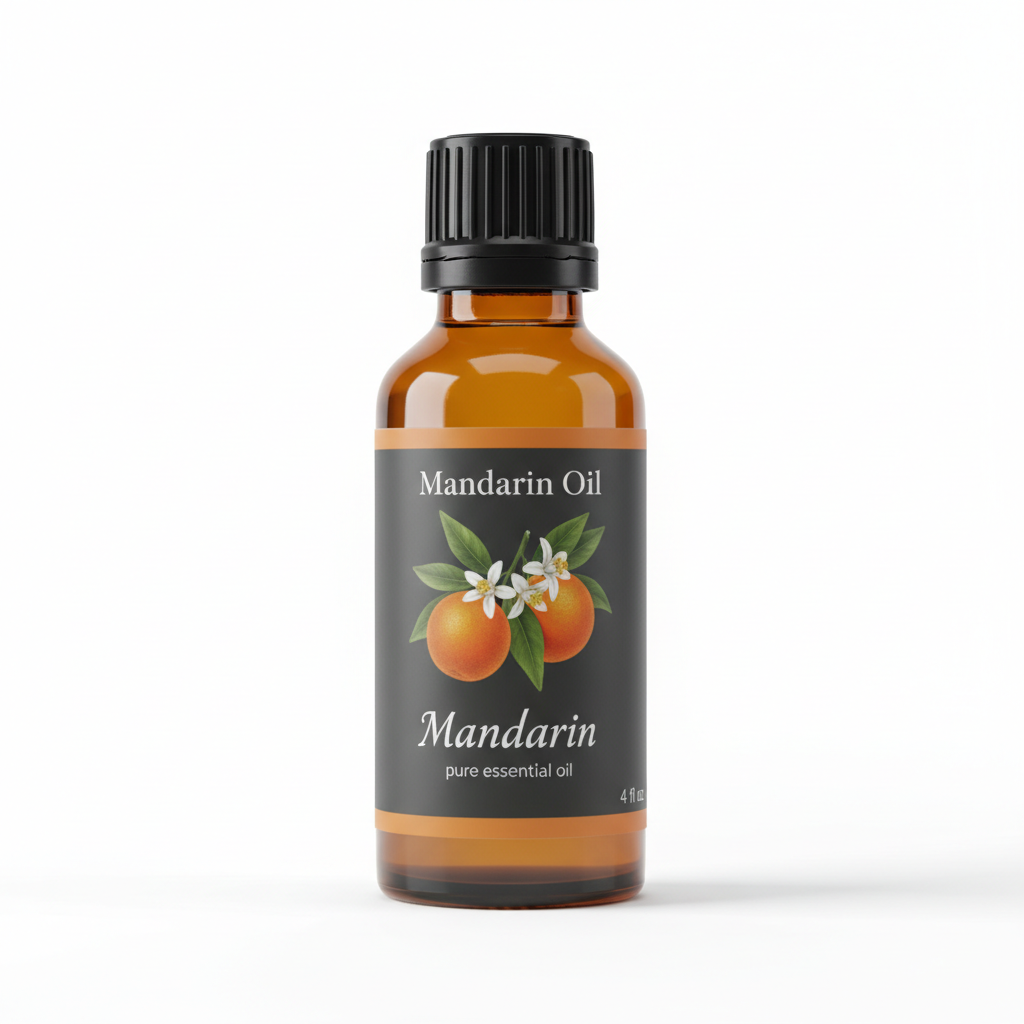
Mandarin Essential Oil
Our own Mandarin Essential Oil, in sizes from 0.5 oz to bulk.
From $12.99
Shop Now →What is actually going on in there
Pressed mandarin oil is rich in limonene; in the ten batches EFSA analysed, it averaged about two thirds of the oil. Limonene on its own is a weak allergen, but when it meets air it oxidises, and the oxidation products are the ones that can cause contact allergy. In an international study of 2,900 dermatitis patients, 5.2% reacted to a standardised air-oxidised limonene preparation, with clinics ranging from 2.3% to 12.1%. Those were people already being tested for dermatitis, so the figure shows the chemistry is real and not the odds for an ordinary shopper. It is, though, a persuasive reason to treat freshness as part of the quality of a citrus oil.
The four things you control
The Tisserand Institute names heat, light, moisture and air as the drivers of oxidation. Here is how we would rank them by how much a home user can do about each, which is our own reasoning and not a published ranking.
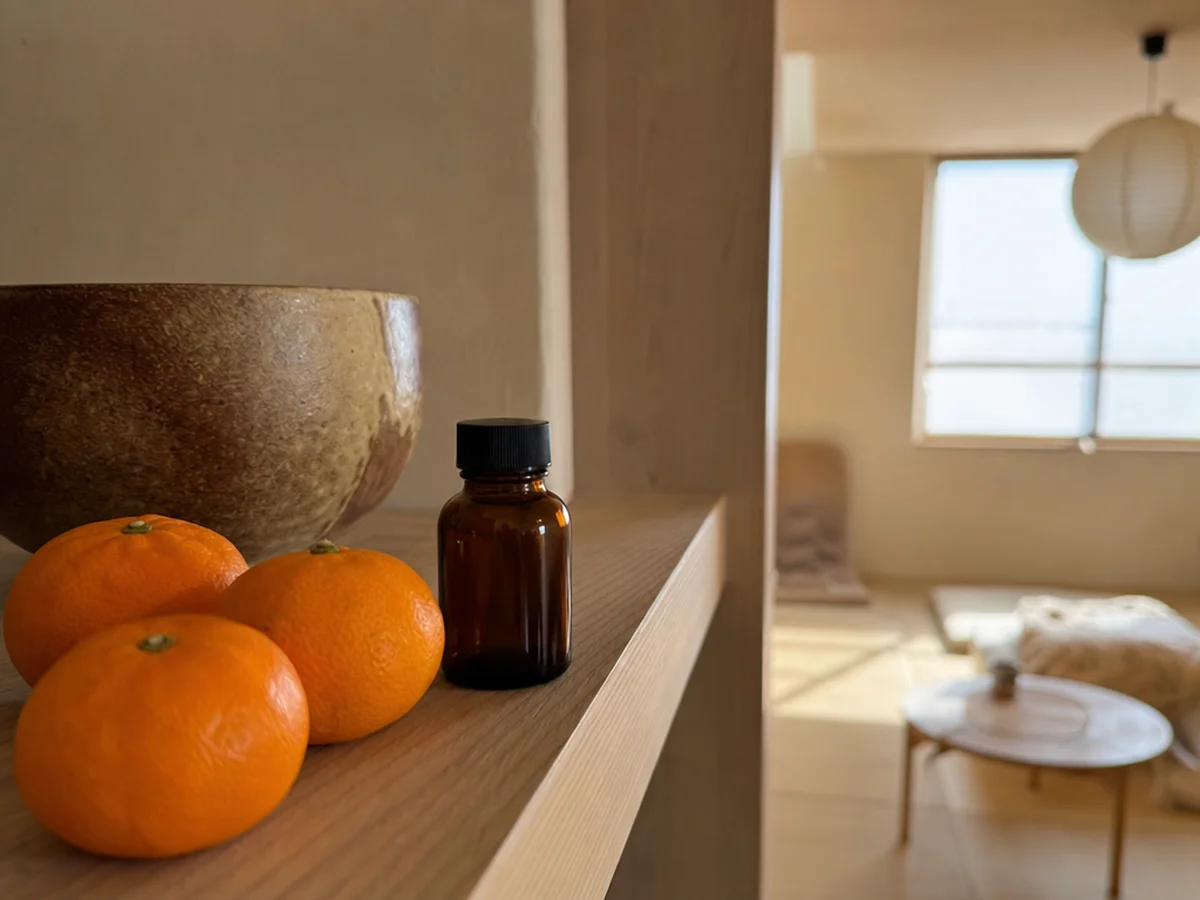
- Air. A 1 oz bottle holds about 29.6 ml. If it is filled to 10 ml, roughly 19.6 ml of it is air, about twice the volume of the oil. Because a skin blend uses only a few drops, a bottle empties slowly and spends most of its life with a growing air space. For larger sizes, we suggest decanting a working amount into a small airtight bottle and keeping the main container sealed, so the main supply is opened rarely.
- Heat. Skip the cupboard beside the stove, the windowsill and the car. Tisserand says keeping oils refrigerated will about double their useful lifespan.
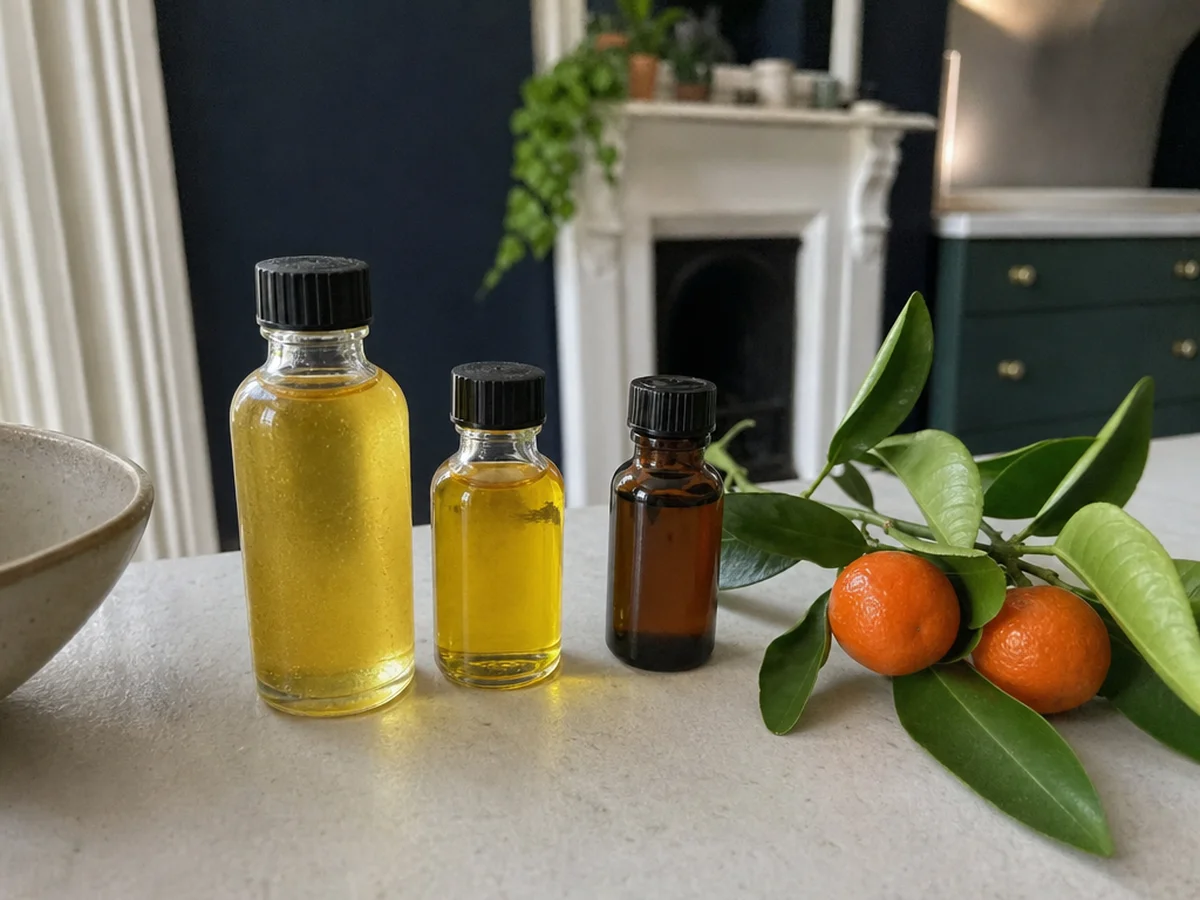
- Light. Our oil comes in amber glass, which helps with light, though it does nothing about heat or air.
- Moisture. Tisserand notes that citrus oils can turn cloudy as they degrade, and reads this as a sign that moisture has entered the bottle.
Picking a spot at home
Walk around your home and look for the coolest, darkest, most boring spot you have. An inside cupboard away from the oven, the dishwasher and any sunny wall is usually a better home for a bottle than a bathroom shelf, since showers add warmth and steam. Choose a spot that is easy to remember and out of reach of children and pets, and put the bottle back in the same place every time.
Do you need the refrigerator?
For a bottle you will use slowly, it is a cheap and sensible choice. One practical note, by our reasoning: let a cold bottle come to room temperature before you open it, so that humid room air does not condense inside, and keep it capped between uses. Put it in a closed box, away from food, because essential oils are never to be swallowed or used in food. Poison Control advises keeping bottles locked up, out of sight and out of reach of children and pets.
Decanting day
If you have bought a bigger size, decant a small working amount once and then leave the big bottle alone. Set out a clean, dry amber bottle, a small clean funnel and a paper towel. Pour slowly, cap the big bottle straight away, and label the small one with the date. Wipe the neck of the large bottle before you reseal it so no oil dries around the cap and glues it shut. From then on you open only the small bottle, and the main supply sits sealed, cool and dark.
Label and date everything
A pencil is a perfumer's best friend. Write the opening date on every bottle, and the dilution on every blend. When you are tidying up months later, a dated label tells you which bottle to use first and which one to move out of skin products, without relying on a memory that will not be as good as you think.
Judging an older bottle
Smell is a poor test on its own. Tisserand says oxidation dulls the freshness of an aroma, but you may not notice without a fresh oil to compare. Cloudiness is an earlier signal, and thickening a late one. Tisserand's own FAQ suggests using oils within a year of opening and is blunt about old ones: they should not be used, because of the risk of irritation or sensitisation. So our habit is to write the opening date on the bottle, and to move any oil that smells flatter or sharper than it did out of skin products.
A note on shelf-life numbers
You will see "one to two years" on many oil pages. Tisserand uses that figure as a rough guide for essential oils in general, and it describes a category, not one bottle. We do not put a number on ours because storage moves the answer more than any label can. Buy the size you will use up, reorder instead of stockpiling, and keep it capped, cool and dark. If you are a maker who needs a retest date or an oxidation figure for your own product, ask us in writing through the contact page before ordering. Our bottle size guide works through drops per bottle, and the carrier oil article covers the other half of any blend, since carriers age as well.
Treat the first week with a new bottle as the habit-forming one, and the rest takes care of itself.
Mandarin Essential Oil
Mandarin Essential Oil from our own shop, in sizes from 0.5 oz to bulk.
From $12.99
Shop Now →Sources & Further Reading
- Is my bottle of essential oil oxidized or no longer good to use? (Tisserand Institute)
- We are here to help answer your frequently asked questions (Tisserand)
- Safety and efficacy of a feed additive consisting of expressed mandarin oil from the fruit peels of Citrus reticulata Blanco for use in all animal species (FEFANA asbl) (EFSA Journal, 2021)
- An international multicentre study on the allergenic activity of air-oxidized R-limonene (Contact Dermatitis, 2013)
- Essential oils: Poisonous when misused (Poison Control)