How to Store Mandarin Oil in Hot Summer Weather
Mandarin oil smells like summer, so it is easy to treat it like a summer accessory: tossed in a tote, parked on a sunny sill, forgotten in the car. Pressed citrus oils are the most delicate of the family, though, and the hottest months are when a little care pays off most.
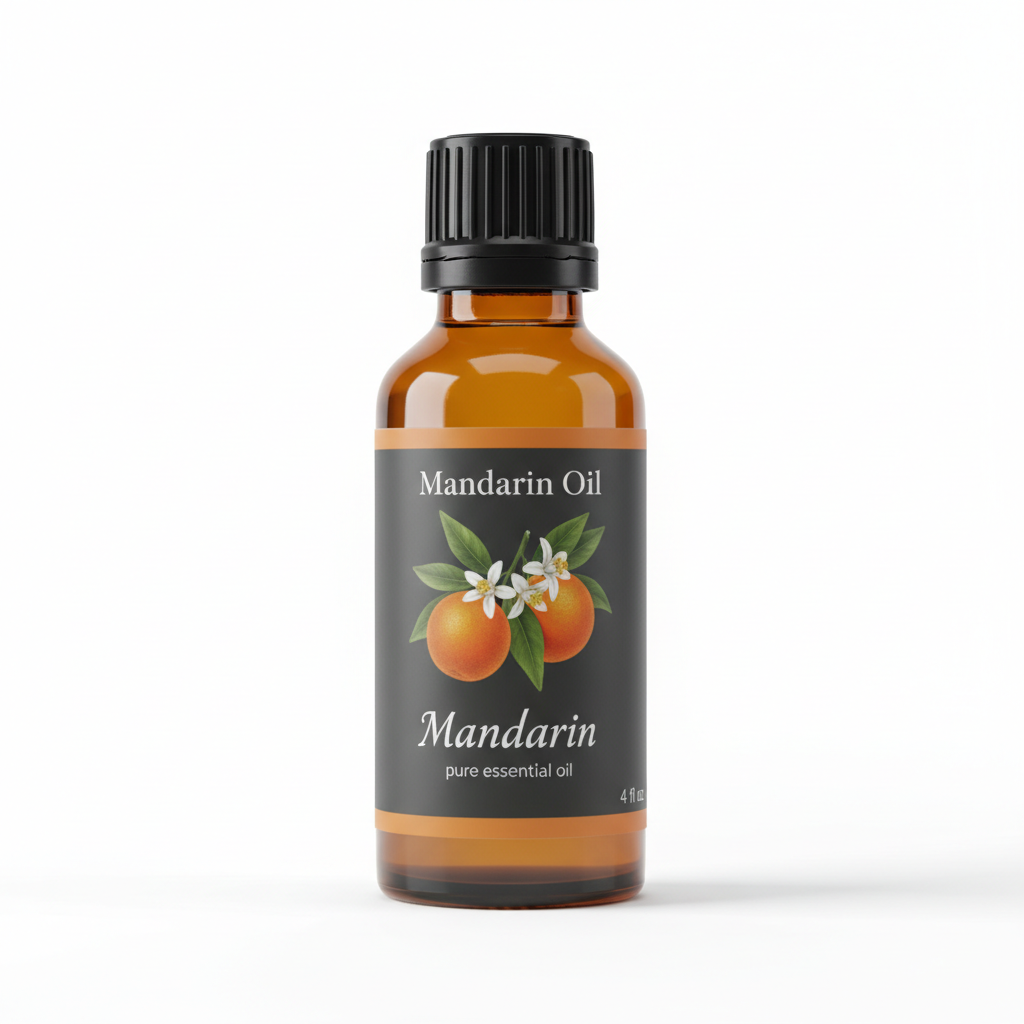
Mandarin Essential Oil
Our own Mandarin Essential Oil, in sizes from 0.5 oz to bulk.
From $12.99
Shop Now →What heat and light do to a bottle
The Tisserand Institute puts it in one line: oxidation is encouraged by three factors, heat, light and moisture. It advises keeping oils away from direct sunlight and says that refrigerating them will about double their useful lifespan. Our own advice is the same in plainer words. We bottle in amber glass, and we recommend keeping the bottle tightly capped in a cool, dark place. We also suggest buying small and reordering often, since heat and sunlight speed up oxidation in citrus oils. If you open a larger bottle often, pour a small working amount into a little airtight bottle and keep the main one sealed.
Why does oxidation matter? The Tisserand Institute notes that oxidised oils tend to increase the risk of adverse skin reactions, and a large multicentre patch-test study led by Bråred Christensson looked at air-oxidised R-limonene, the main component of most citrus peel oils, as a contact allergen. A fresh, well-kept bottle is simply the better one to put near skin.
The parked car
You do not need a thermometer to guess that a car gets hot, but the numbers are striking. In a Pediatrics study of a dark sedan on 16 sunny days, with outside temperatures between 72 and 96 F, the interior climbed by an average of 3.2 F every five minutes, and about 80% of the rise happened within the first 30 minutes. On the coolest day tested, the interior still reached 117 F. Cracking the windows made no meaningful difference. The research was about child safety, not oils, and one dark car is one data point, but the lesson carries over to anything left inside. An hour of errands can give a bottle more heat than a year in a cupboard.
So the summer rule is easy to remember: the bottle lives indoors, in a drawer or cupboard away from windows, and travels in a bag you carry with you, not in a glove box.
A summer shelf
Think about where heat gathers in your home. Windowsills, shelves above a radiator or stove, the top of a fridge, a bathroom after a hot shower: all warmer than they feel. A drawer in a bedroom or a cupboard on an inside wall is usually the coolest, darkest spot you have. Put the bottle there, tightly capped and standing upright, and make that its permanent address.
Taking it with you
If you travel with a small bottle, keep it in a bag you carry rather than in a suitcase in a hot boot. Check the cap before you zip the bag. A bottle that leaks citrus oil into a handbag teaches you the lesson quickly, and the smell, though lovely, is hard to get out of a lining.
A date on every bottle
Write the date you opened the bottle on the label. When autumn arrives, you will know at a glance which bottle is the oldest and should be used first. Smell it before you use it, too: if it smells flatter or sharper than you remember, trust your nose.
A word about sun and skin
Citrus oils have a reputation for sun sensitivity, and it is worth knowing where mandarin sits in that conversation. The Tisserand Institute lists expressed mandarin among oils that contain extremely small amounts of furanocoumarins, not enough to make them phototoxic, and notes that IFRA and the EU cap bergapten at 15 ppm in leave-on products. That is a general statement about pressed mandarin peel oil. The certificate we publish for one batch of our oil covers appearance, smell, relative density, refractive index and optical rotation, and does not include furanocoumarin data. If you are formulating a leave-on product for sun-exposed skin, ask us in writing through the contact page before ordering, and check the standards in our IFRA article. For everyday use, our guidance is to dilute to 0.5% to 2% in a carrier oil and patch test first; for more on how citrus oils compare, see our citrus comparison.
Heat waves and power cuts
On the hottest days, move the bottle to the coolest room in the house, even if that means the cellar or the bottom of a wardrobe. If you have a refrigerator with space, a tightly capped bottle in a small box is a fine home for it, as long as you let it come back to room temperature before opening so moisture does not form on the glass. It is a small habit that pays you back in aroma.

Easy ways to enjoy it in warm weather
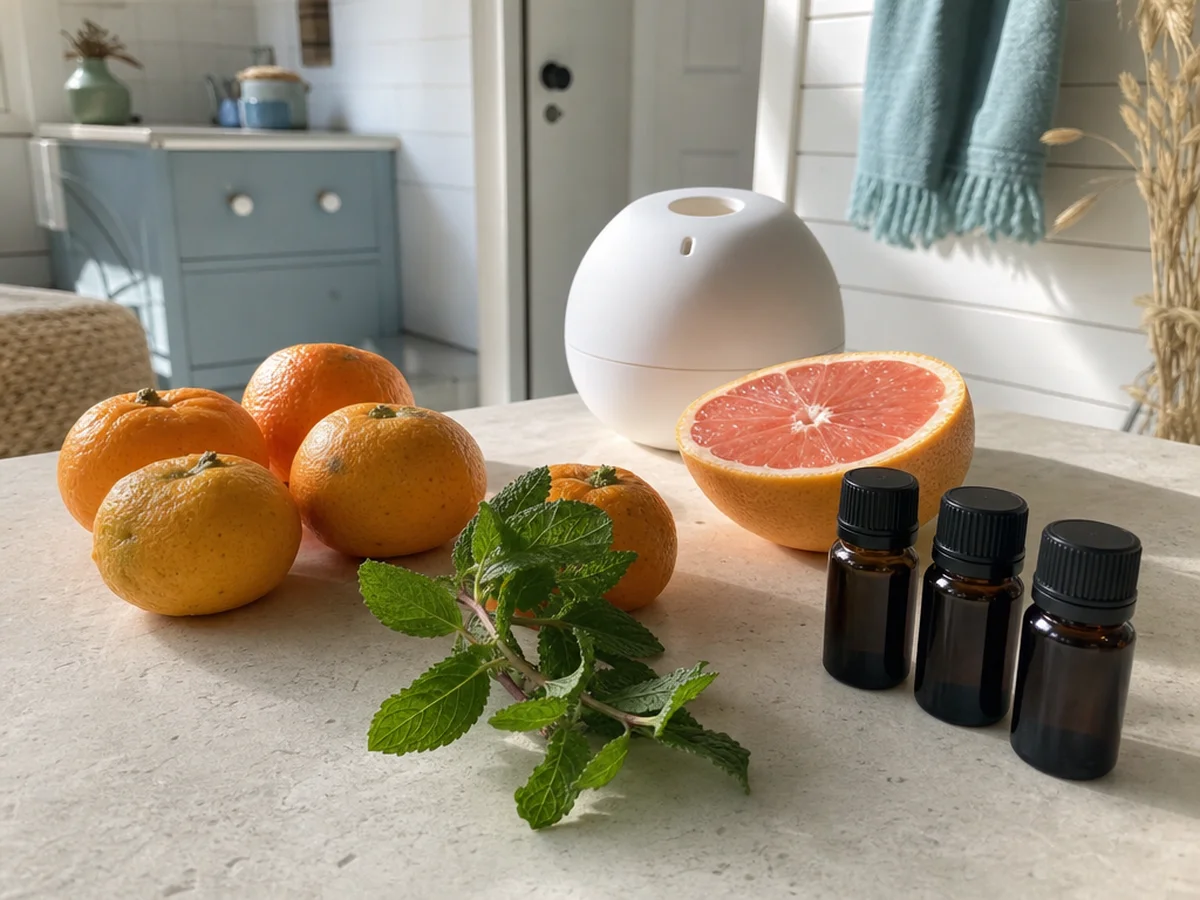
Summer is the season for light scenting: a diffuser in a room with the windows open, or a linen or room spray. The Tisserand FAQ asks for a well-ventilated room when diffusing and suggests keeping sessions short in homes with cats, and it is a good reminder that an airy room needs fewer drops, not more. Our room spray article works through the alcohol and water maths, and the storage article has the full keeping routine.
Treat the bottle like something you would not leave on a hot dashboard, and it will smell as bright in September as it did in June.
Mandarin Essential Oil
Mandarin Essential Oil from our own shop, in sizes from 0.5 oz to bulk.
From $12.99
Shop Now →Sources & Further Reading
- Tisserand Institute, Is my bottle of essential oil oxidized or no longer good to use?
- Tisserand Institute, Phototoxicity: essential oils, sun and safety
- McLaren C, Null J, Quinn J. Heat stress from enclosed vehicles: moderate ambient temperatures cause significant temperature rise in enclosed vehicles. Pediatrics 2005;116(1):e109-12 (Europe PMC record)
- Bråred Christensson J et al. An international multicentre study on the allergenic activity of air-oxidized R-limonene. Contact Dermatitis 2013;68(4):214-223
- Tisserand Aromatherapy FAQ: Tisserand Aromatherapy, We are here to help answer your frequently asked questions.