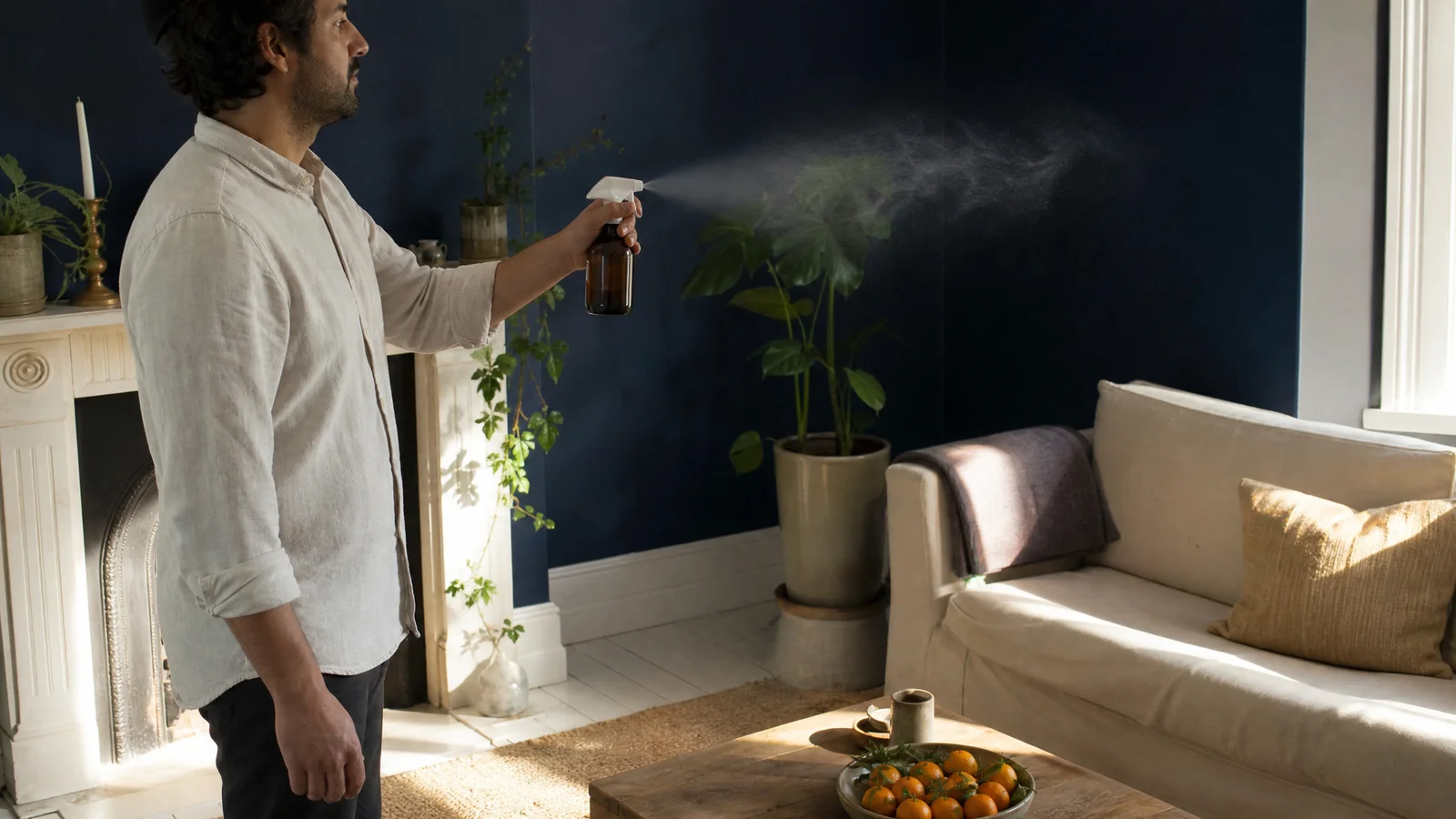
Mandarin Room Spray: Why Alcohol Matters and How Much
The first thing to know about a mandarin room spray is that oil and water simply will not blend. Shake them together and you get blobs first and water later. A good spray carries the oil in alcohol, and once you see why, the whole recipe makes sense.
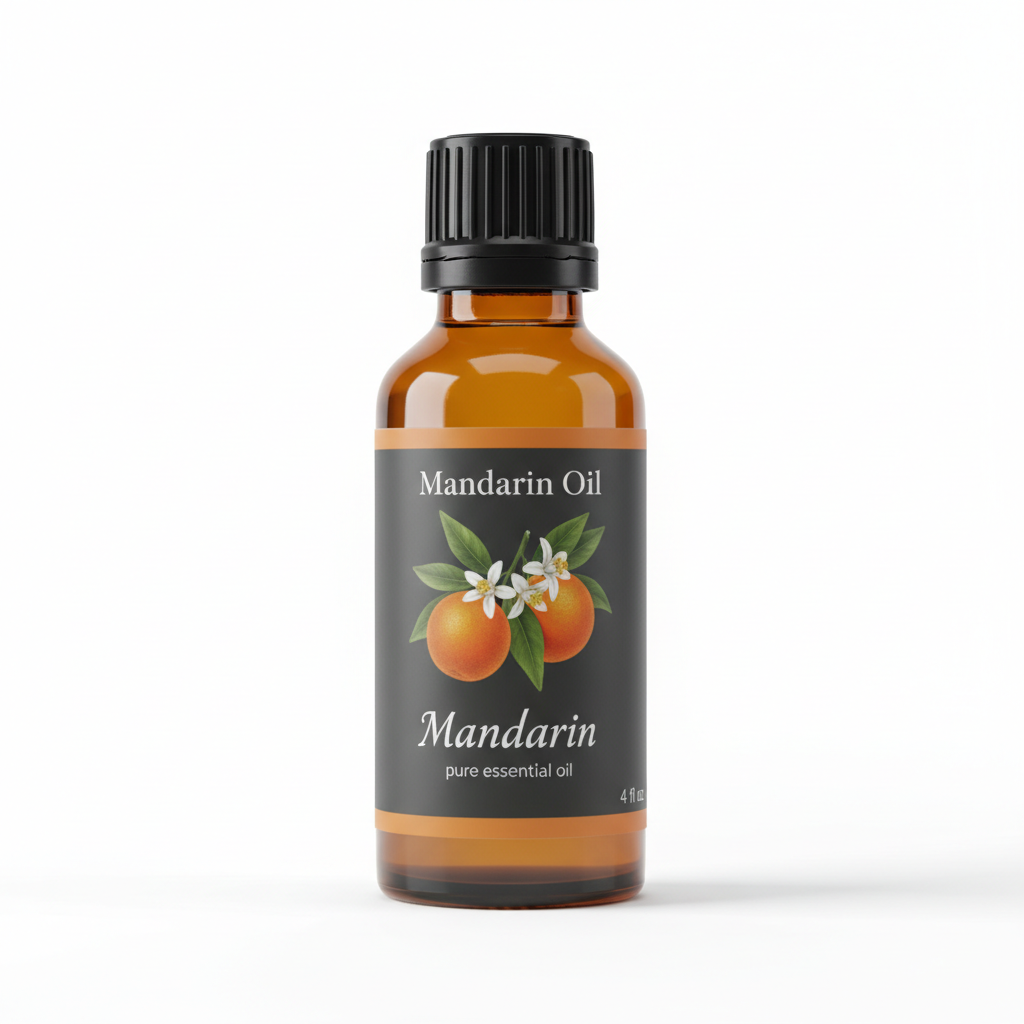
Mandarin Essential Oil
Our own Mandarin Essential Oil, in sizes from 0.5 oz to bulk.
From $12.99
Shop Now →Why alcohol does the carrying
Limonene, the main component of citrus peel oil, is miscible with alcohol, and PubChem lists its water solubility at 7.57 mg per litre at 25 C. A spray at 1% oil by weight carries about 10,000 mg of oil per kilogram of liquid, roughly 1,300 times that figure, so most of it has nowhere to go but the surface. The solubility figure is for limonene, not for our oil, but a peel oil that is mostly limonene behaves broadly the same way.
The Tisserand Institute's article on alcohol in aromatic blending is a good guide here. It says the alcohol should be 95 to 100% ethanol to solubilise the oil, that it should make up a minimum of 20% to 30% of the total formula, with 25% recommended, and it gives an example of 1 oz of 190 proof ethanol with 3 oz of distilled water. It also says alcohol needs to be at least 60% for preservation. That means a spray with 25% alcohol and the rest water is best made in small batches and used up, which is our reasoning from the article's own figures.
A simple formula
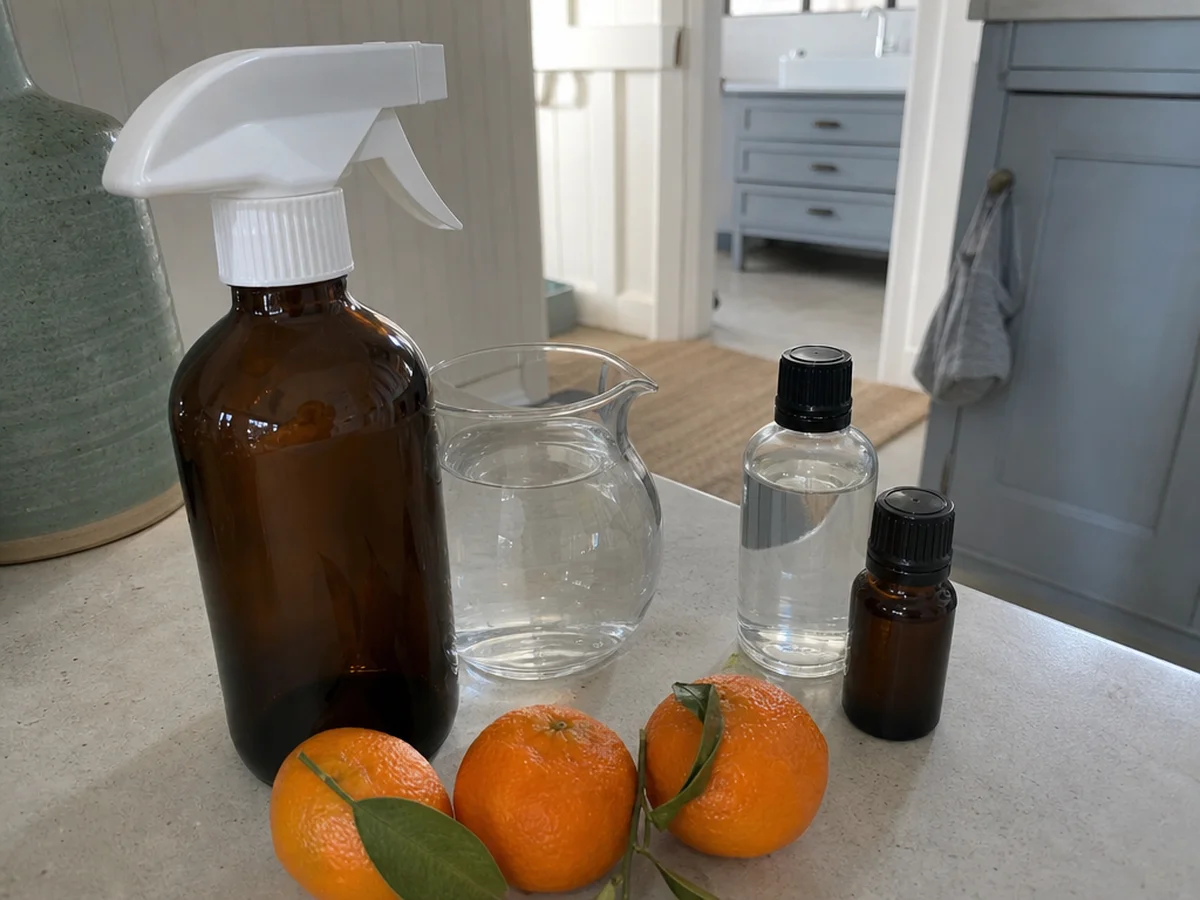
The oil shares below are our own suggestions, set lower than the Institute's 3% example because a room spray also lands on fabric, and fabric touches skin. Formula A uses water and alcohol, and formula B uses alcohol alone.
| Per 100 g | Formula A | Formula B |
|---|---|---|
| Mandarin oil | 1 g (about 1.2 ml, 23 drops) | 2 g (about 2.3 ml, 47 drops) |
| 95% ethanol | 25 g | 98 g |
| Distilled water | 74 g | none |
Drop counts use 20 drops per millilitre and the relative density of 0.852 on our published batch certificate. Droppers vary, so weigh the oil on a scale that reads to 0.01 g. Add the oil to the alcohol first, shake until clear, then add water for formula A. If A turns cloudy, the water has pushed the oil out of solution, so add more alcohol rather than shaking harder. With no water to support microbial growth, formula B is a good first try, which is our reasoning, not a tested result.
We sell neither ethanol nor bottles, only the mandarin oil. A fragrance-supply or craft shop stocks perfumer's alcohol and glass or plastic misters, and a grocery aisle has distilled water.
Choosing a mister
A fine mist bottle makes a better room spray than a trigger sprayer, because it lets you apply a light veil of scent instead of a wet patch. Test the mister with plain water first: squeeze it a few times and check that it makes an even mist, with no dribbling from the nozzle. Citrus oils can be hard on some plastics, so look at the bottle after a week for any softening or cloudiness, and switch to glass if you see it.
Fire comes with alcohol
PubChem lists ethanol's closed-cup flash point at 55 F (13 C), 62 F (17 C) for 96% ethanol and 144 F (62 C) for 5% ethanol. Limonene's is 113 F (45 C). Formula B is therefore a flammable liquid, and formula A, with its water, is better but not safe against a flame. A fine mist burns more readily than liquid in a cup, which is our inference, so keep spraying well away from candles, gas hobs, fireplaces and incense, and store the bottle away from heat. Alcohol can also damage finished wood and countertops, as the Tisserand Institute points out, so spray up and away from furniture and spot-test fabric in a hidden corner.
What you will notice when you spray
The first spritz smells sharp and spirity, because the alcohol evaporates ahead of the oil. Give it a minute and the sweet, mellow mandarin comes through. Since mandarin is a top note, it is also the part of the scent that fades first, so a light spray every so often tends to work better than one heavy one. Wait a minute or two before deciding whether you want more.
Spraying with care
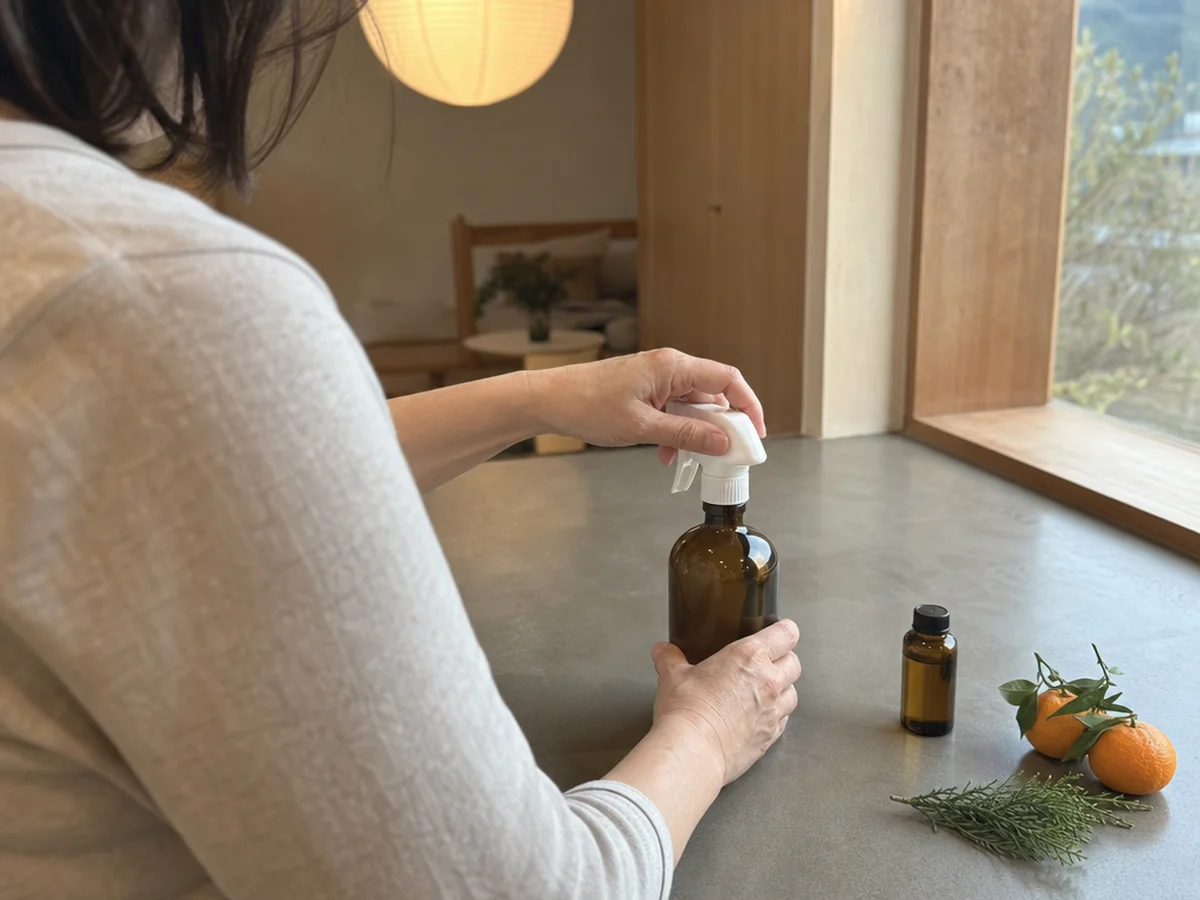
EFSA's panel considers expressed mandarin oil an irritant to skin, eyes and the respiratory tract and a skin sensitiser. That is a classification of the oil, not a measurement of a spray, and it is why we suggest short bursts away from the face, a window open and no spraying at or near animals. Tisserand's guidance for diffusing is a well-ventilated room, caution around pets and minimal diffusing in a home with cats. Keep the bottle where children cannot reach it. The spray is for the air and for fabric, so please do not spritz it on skin. If you want a mandarin scent to wear, our roller bottle article works the dilution out for skin, and the safety basics cover patch testing.
Citrus oils also change as they age, with heat, light and moisture behind it. Use fresh oil, make a small bottle at a time, and keep the main bottle tightly capped in a cool, dark place. A wick-based alternative is our reed diffuser. If you make sprays often, larger sizes are on our bulk page, and because citrus oils age, our guide to buying mandarin essential oil in bulk is worth reading before you pick one.
Make a small bottle, shake it before each use and spray with a light hand, and your living room will smell like a bowl of fresh mandarins.
Mandarin Essential Oil
Mandarin Essential Oil from our own shop, in sizes from 0.5 oz to bulk.
From $12.99
Shop Now →Sources & Further Reading
- Tisserand Institute. Effective Use of Alcohol for Aromatic Blending. tisserandinstitute.org
- PubChem. Ethanol | CH3CH2OH | CID 702, flash point section. pubchem.ncbi.nlm.nih.gov
- PubChem. Limonene | C10H16 | CID 22311, solubility and flash point sections. pubchem.ncbi.nlm.nih.gov
- EFSA Panel on Additives and Products or Substances used in Animal Feed, 2021. Safety and efficacy of a feed additive consisting of expressed mandarin oil from the fruit peels of Citrus reticulata Blanco for use in all animal species (FEFANA asbl). EFSA Journal. PubMed Central