Mandarin Oil in Candles and Wax Melts: What to Know
Mandarin oil has the kind of aroma that makes people think of a sunny kitchen windowsill, so it is no surprise that candle and wax melt makers wonder about it. It can work, and it rewards a careful hand. The reason is a number worth knowing before you pour anything: limonene, which makes up most of a citrus peel oil, has a flash point of about 45 C (113 F).
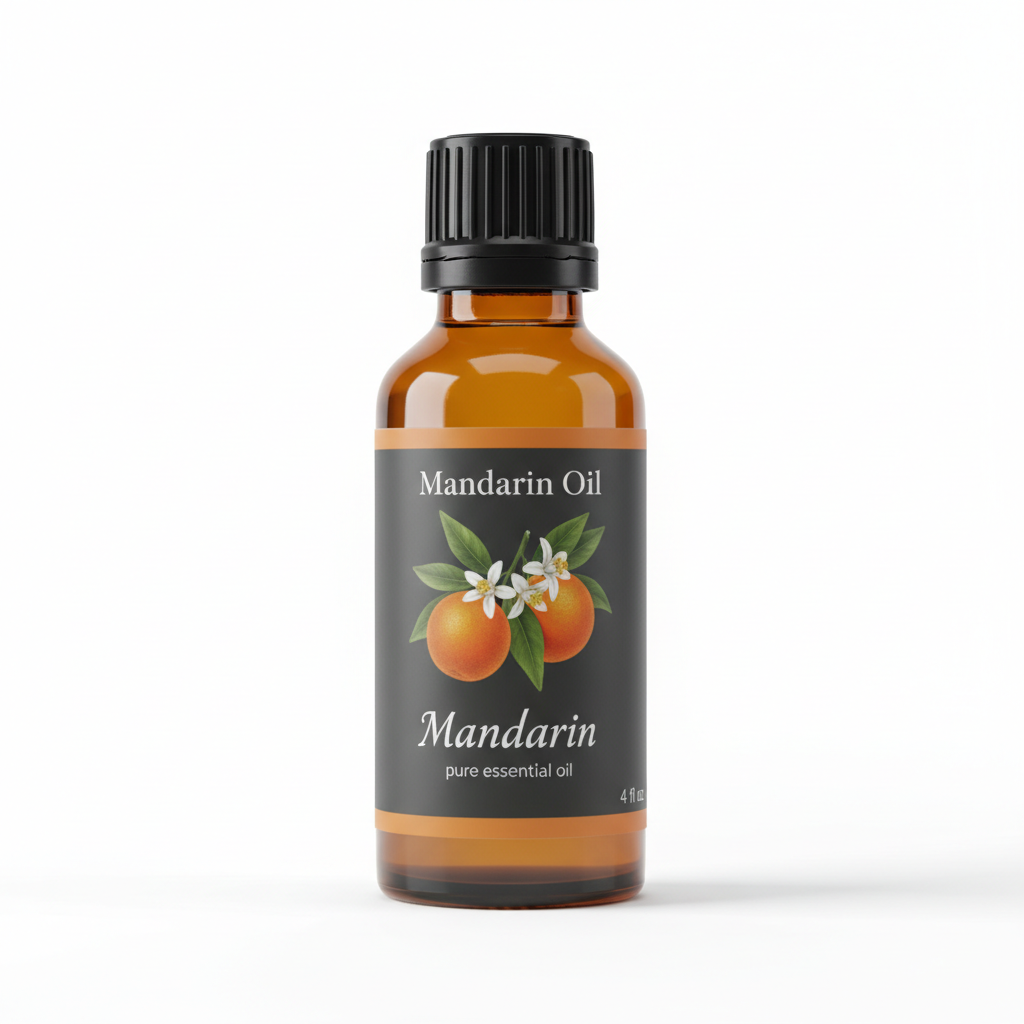
Mandarin Essential Oil
Our own Mandarin Essential Oil, in sizes from 0.5 oz to bulk.
From $12.99
Shop Now →What the flash point means for your pour
EFSA's specification puts limonene at 65% to 80% of expressed mandarin oil, and one laboratory comparison measured a cold-pressed Ponkan mandarin at about 75%. PubChem's hazard compilation lists limonene's closed-cup flash point at 113 F (45 C) in the NFPA guide, 115 F from OSHA, and 45 C from Haz-Map, with a vapour pressure of 1.55 mmHg at 25 C. Those are figures for limonene, not for our oil or for oil mixed into wax, so we would not substitute them for a safety data sheet. If your wax supplier asks for one, ask us in writing before you buy.
What the numbers do support is a sensible handling habit. Warm citrus oil gives off vapour at fairly modest temperatures, so add it when your wax maker's data sheet says to add fragrance, keep a thermometer in the pot, ventilate the room and keep any flame or spark well away from the melting area.
Working out fragrance load
Fragrance load is the weight of oil divided by the weight of wax. Wax makers publish a maximum for each of their waxes, and that figure, not ours, sets your ceiling. To see what a chosen load means in oil, here is the arithmetic for 100 g of wax at three example loads, using the relative density of 0.852 on our batch's certificate and about 20 drops per millilitre:
| Load on 100 g of wax | Oil needed | Volume | Approx. drops |
|---|---|---|---|
| 3% | 3.0 g | 3.5 ml | 70 |
| 5% | 5.0 g | 5.9 ml | 117 |
| 8% | 8.0 g | 9.4 ml | 188 |
The loads are examples to show scale, not recommendations. Check a row: 5.0 g divided by 0.852 is 5.87 ml, and times 20 is about 117 drops. Weigh the oil on a scale, since that is how load is defined. A 0.5 oz bottle holds about 12.6 g, which scents about 420 g of wax at 3%. A pound of wax (453.6 g) at 6% takes 27.2 g, a little more than a full 1 oz bottle at about 25.2 g, which is why makers often buy a larger size; our guide to buying mandarin essential oil in bulk explains how bulk buying works. Candle loads are several times our skin guidance of 0.5% to 2%, which makes sense because the oil is being used to scent a room, not a body.
Keeping the oil fresh in the pot
The Tisserand Institute says oxidation is encouraged by heat, light and moisture. That is a good argument for adding mandarin late in the process, pouring a working amount from the bottle and keeping the main bottle sealed. EFSA's panel considers mandarin oil an irritant to skin, eyes and the respiratory tract and a skin sensitiser, so wear gloves while you pour and keep it off your skin until it is in the wax.
Burning and melting safely
Candle safety rules do not change with the oil. The US Fire Administration advises keeping candles at least 12 inches from anything that burns, using stable holders, blowing them out when you leave the room or go to bed, and not burning them in bedrooms, bathrooms or sleeping areas. It also cites NFPA for an average of 20 home candle fires reported each day. How a given load, wick and wax combination burns and throws scent is something only a supervised test burn with your own materials will show, and your wax maker is the best place to start for guidance.
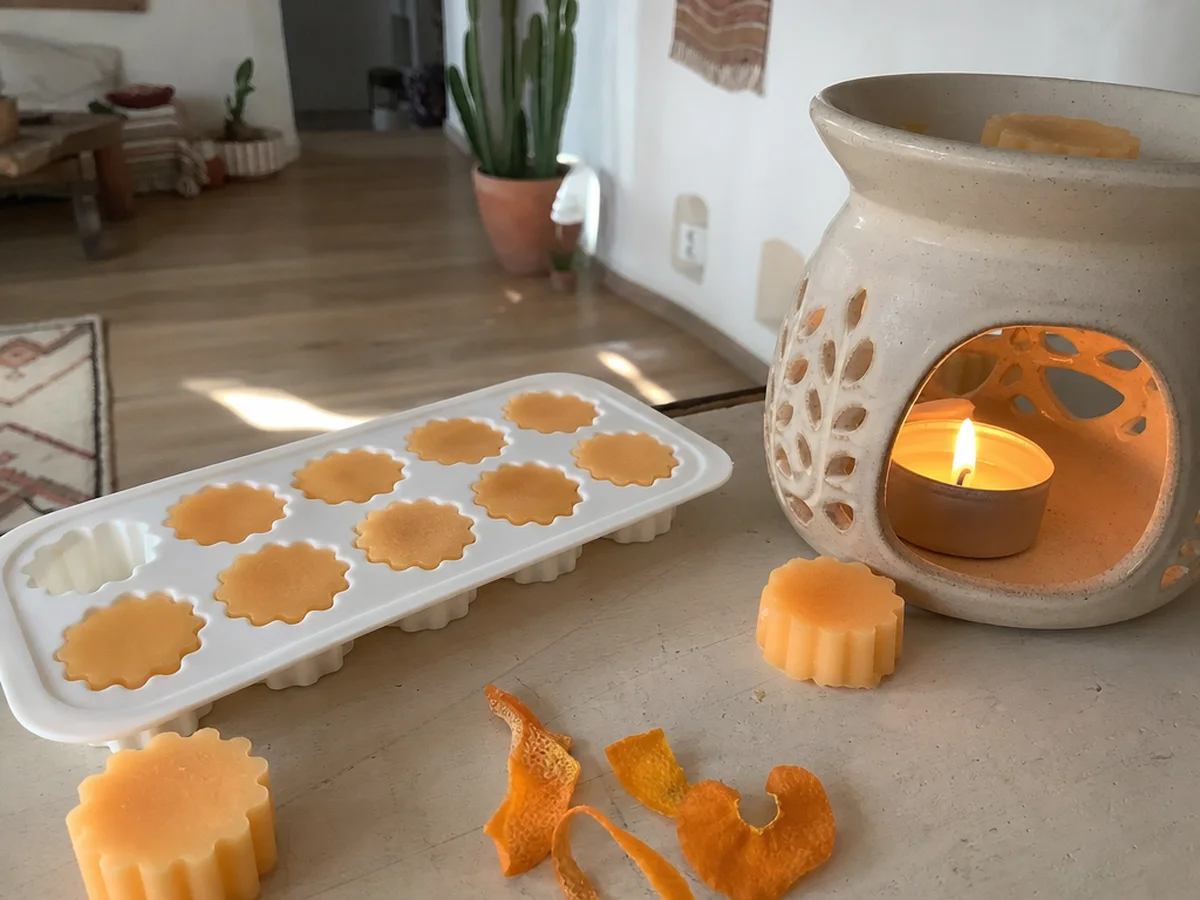
Wax warmers remove the open flame, but the oil is still warm and still volatile. If you have pets, especially cats, Tisserand advises keeping diffusing periods to a minimum in a well-ventilated room, and that sensible approach applies here too.
Cold throw and hot throw, in plain words
Candle makers talk about two kinds of scent. Cold throw is how a candle or melt smells when it is unlit, sitting in the jar, and hot throw is how it smells while it is warm. With a top note like mandarin you may notice the two feel quite different: the unlit wax can smell sweet and juicy right away, while the warm one is brighter and fades faster. Neither is a fault. It is simply how a light citrus behaves, and knowing it helps you judge a pour fairly.
Give yourself a small first pour
Whatever your wax, the friendliest way to begin is one small container, not a whole production run. Label it with the date, the wax, the load and the temperature at which you stirred in the oil. Your wax maker will say whether the wax wants a rest before you light it, so follow that, and let the first candle tell you what to change. A page of notes on a small first pour is worth more than any recipe.
Where mandarin shines
Mandarin is a top note, which means its scent is quick and cheerful at the start but does not hang around forever. That is its charm in a melt you will enjoy for an evening. If you want a scent that lasts through a long burn, a candle-specific fragrance oil from your wax supplier is built for that job. For a flame-free way to enjoy mandarin around the house, try our reed diffuser, and to see why volatility matters so much, read our perfumery article. Wax, wicks, containers and warmers come from a craft or candle supply shop, and our home-use guide covers the other ways to enjoy a bottle from our shop.
Treat mandarin as the bright opening act, pour carefully, and you will be rewarded with a lovely citrus lift.
Mandarin Essential Oil
Mandarin Essential Oil from our own shop, in sizes from 0.5 oz to bulk.
From $12.99
Shop Now →Sources & Further Reading
- PubChem. Limonene | C10H16 | CID 22311. National Library of Medicine, flash point and vapor pressure sections. pubchem.ncbi.nlm.nih.gov
- EFSA Panel on Additives and Products or Substances used in Animal Feed, 2021. Safety and efficacy of a feed additive consisting of expressed mandarin oil from the fruit peels of Citrus reticulata Blanco for use in all animal species (FEFANA asbl). EFSA Journal. PubMed Central
- US Fire Administration. Candle Fire Safety. usfa.fema.gov
- Tisserand Institute. Is my bottle of essential oil oxidized or no longer good to use? tisserandinstitute.org