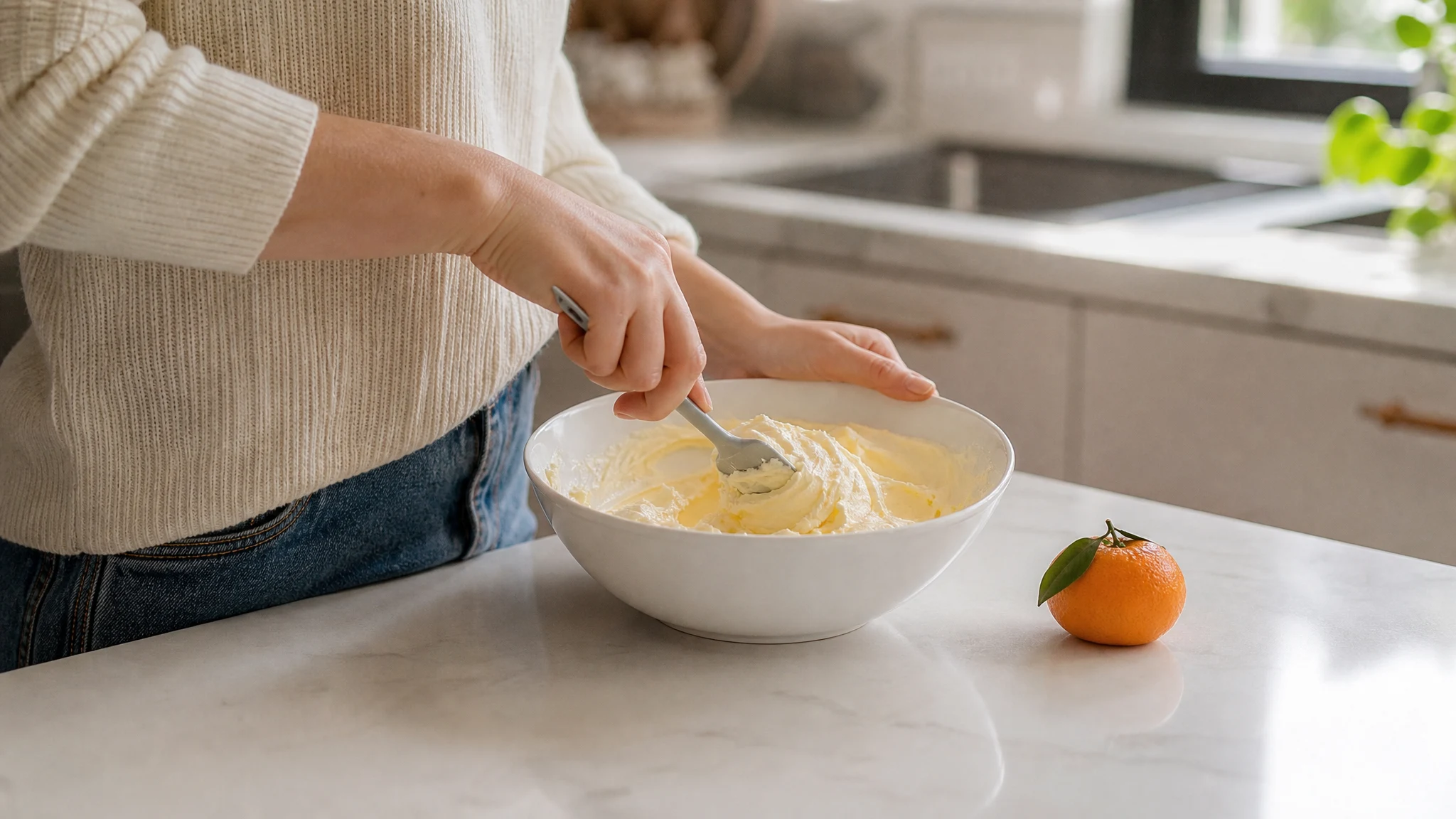
How to Scent Lotion and Body Butter With Mandarin Oil
A jar of body butter that smells like soft, sweet mandarin peel is one of the nicest things you can make at home, and there are two simple ways to get there. You can scent a lotion base that someone else has already preserved, or you can whip a butter with no water in it. The mandarin part is the easy bit: at the low end of our range it is a gram or two per jar. The rest is choosing a sensible base.
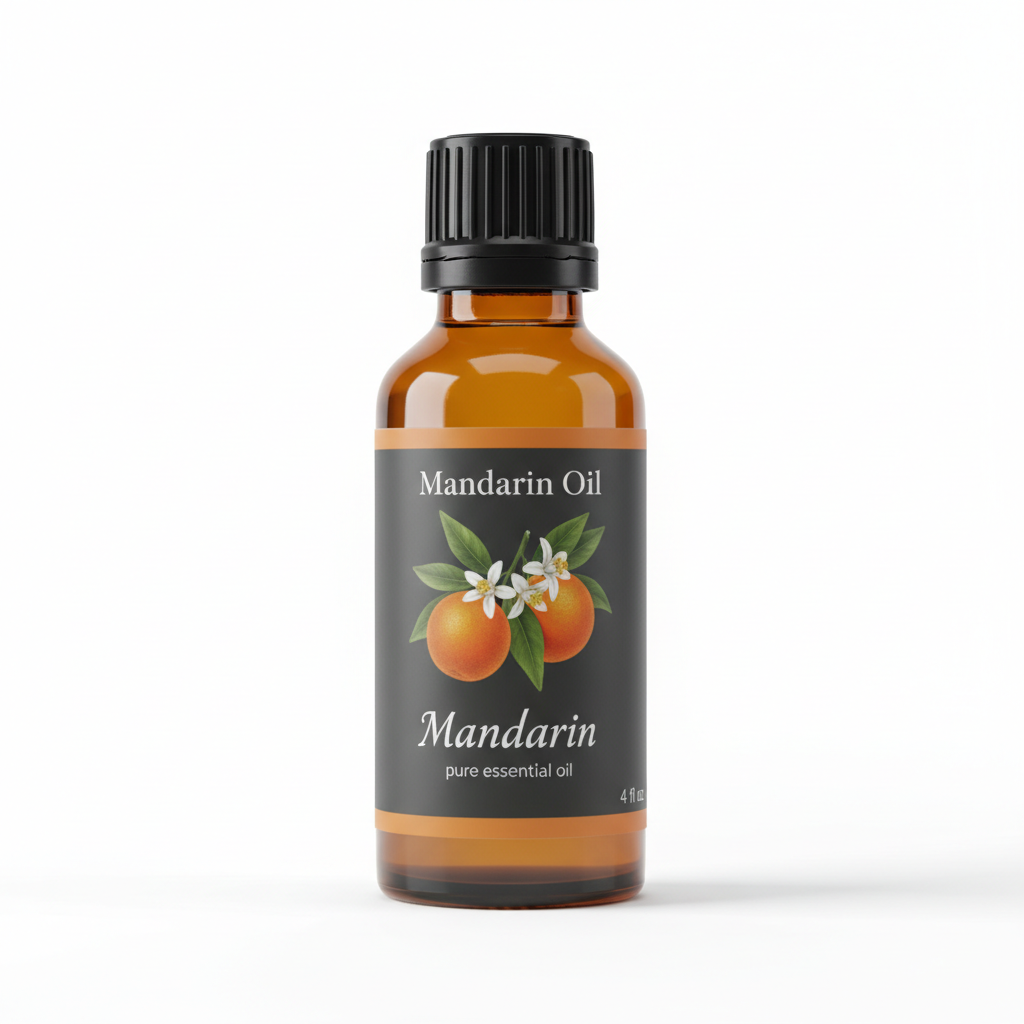
Mandarin Essential Oil
Our own Mandarin Essential Oil, in sizes from 0.5 oz to bulk.
From $12.99
Shop Now →Why we skip the homemade emulsion
There is a third route, building a lotion yourself from water, oil and emulsifier, and we would leave that one to professionals. FDA's page on cosmetics and microbes lists contaminated raw materials and water, and an ineffective preservation system, among the ways microbes get in, and calls microbial contamination a common reason for recalls (FDA). Once you add water, preservation becomes your job, and that is a cosmetic chemist's territory. So we suggest the two routes below.
Route one: scent a preserved base
Buy an unscented lotion base from a cosmetic-ingredient supplier and ask the maker three things: that it is unscented, what fragrance load its preservation work covered, and whether it recommends a ceiling. Their number beats any percentage we give. Our oil is sold neat, so the math is yours. With a relative density of 0.852 (from the batch on our COA) and about 20 drops per ml, a drop weighs about 0.043 g, though droppers vary, so weigh if you can. Per 100 g of base:
- 0.5%: 0.5 g, about 12 drops
- 1%: 1 g, about 23 drops
- 2%: 2 g, about 47 drops
An 8 oz (227 g) jar at 0.5% takes about 1.1 g, around 27 drops. Our skin guidance is 0.5% to 2%, written for carrier oils. Tisserand's dilution guide gives 1% to 3% for body oils and lotions (Tisserand Institute), and since a lotion covers a larger area, we start at 0.5%. Stir the oil into the base at room temperature. Mandarin is a top note, the first part of a scent to leave, so our reasoning is that heating it in costs you scent.
Route two: a water-free whipped butter
As a formulation worked out from simple arithmetic, 60 g of refined shea butter, 39 g of a liquid carrier oil and 1 g of mandarin oil give a 1% butter, about 23 drops. Melt the butter and carrier together gently, let them cool until they start to thicken, stir in the mandarin oil, then whip. Cooling slowly tends to give a grainier butter, which is a general property of fats that set at different temperatures; a quicker chill in the fridge usually helps, and a small first batch will teach you more than we can.
A water-free butter looks safer, and in one sense it is, but a used jar is touched and can pick up moisture. Perry Romanowski, a cosmetic chemist writing for Chemists Corner, says anhydrous formulas should contain a preservative because, over time, even an anhydrous cosmetic product can pick up microbial growth (Chemists Corner). So for your own use, make a small batch, scoop with a dry clean spoon and keep water out of the jar. If you plan to give a butter away or sell it, bring in a cosmetic chemist, because anyone who makes or sells cosmetics is responsible for their safety.
How much oil to buy
Freshness is the quiet factor in a leave-on product. When limonene oxidises in air it forms hydroperoxides, which DermNet describes as much more potent sensitisers than limonene itself, with about 10% of people investigated for suspected contact dermatitis reacting to them (DermNet). That is a clinic population, so read it as a reason for care rather than a rate for everyone.
It also makes the case for buying small. A 227 g jar at 1% uses 2.27 g of oil. A 0.5 oz bottle holds about 12.6 g, enough for about five jars at that strength, and a 1 oz bottle about eleven. If you make a jar a month, a half-ounce bottle will outlast your batches. We recommend decanting a small working amount into an airtight bottle and keeping the main one tightly capped in a cool, dark place; our storage article has more.
Make the jar a pleasure to use
A homemade jar feels better when you treat it kindly. Smell your unscented base on its own first, so you know what you are starting from. Choose a small, clean, dry jar with a good lid, and add a little scoop or a clean spoon you keep just for it. Label it with the date and the oil share, and keep it somewhere cool, not on a sunny bathroom shelf.
When you open a fresh jar scented with mandarin you will notice a soft, sweet citrus, bright at first and then settling. If you want more, make the next jar a little stronger rather than the same jar again. A small first batch costs little and teaches you how you like it.
Before the first full jar
Patch test the finished product on your inner forearm, using the steps in Mandarin Oil Safety Basics. We do not publish an IFRA certificate for our oil, and our IFRA article explains how the standards apply to formulators. Shea butter, carrier oil, bases and preservatives come from a cosmetic-ingredient supplier, and our carrier oil guide helps you choose a carrier. If you want a simpler leave-on project, see the sugar scrub and body oil recipes.
A small jar of butter at 0.5% to 1% is a gentle, sweet-smelling place to begin.
Mandarin Essential Oil
Mandarin Essential Oil from our own shop, in sizes from 0.5 oz to bulk.
From $12.99
Shop Now →Sources & Further Reading
- FDA. Microbiological Safety and Cosmetics. www.fda.gov/cosmetics/potential-contaminants-cosmetics/microbiological-safety-and-cosmetics
- Tisserand Institute. Dilution for essential oils. tisserandinstitute.org/dilution-essential-oils
- Romanowski P. Vitamin E is not a preservative - and other cosmetic preservation misconceptions. Chemists Corner. chemistscorner.com/vitamin-e-is-not-a-preservative-and-other-cosmetic-preservation-misconceptions
- DermNet. Contact allergy to hydroperoxides of limonene and linalool. dermnetnz.org/topics/contact-allergy-to-limonene-and-linalool