Mandarin Reed Diffuser: Where to Stand It and How to Mix
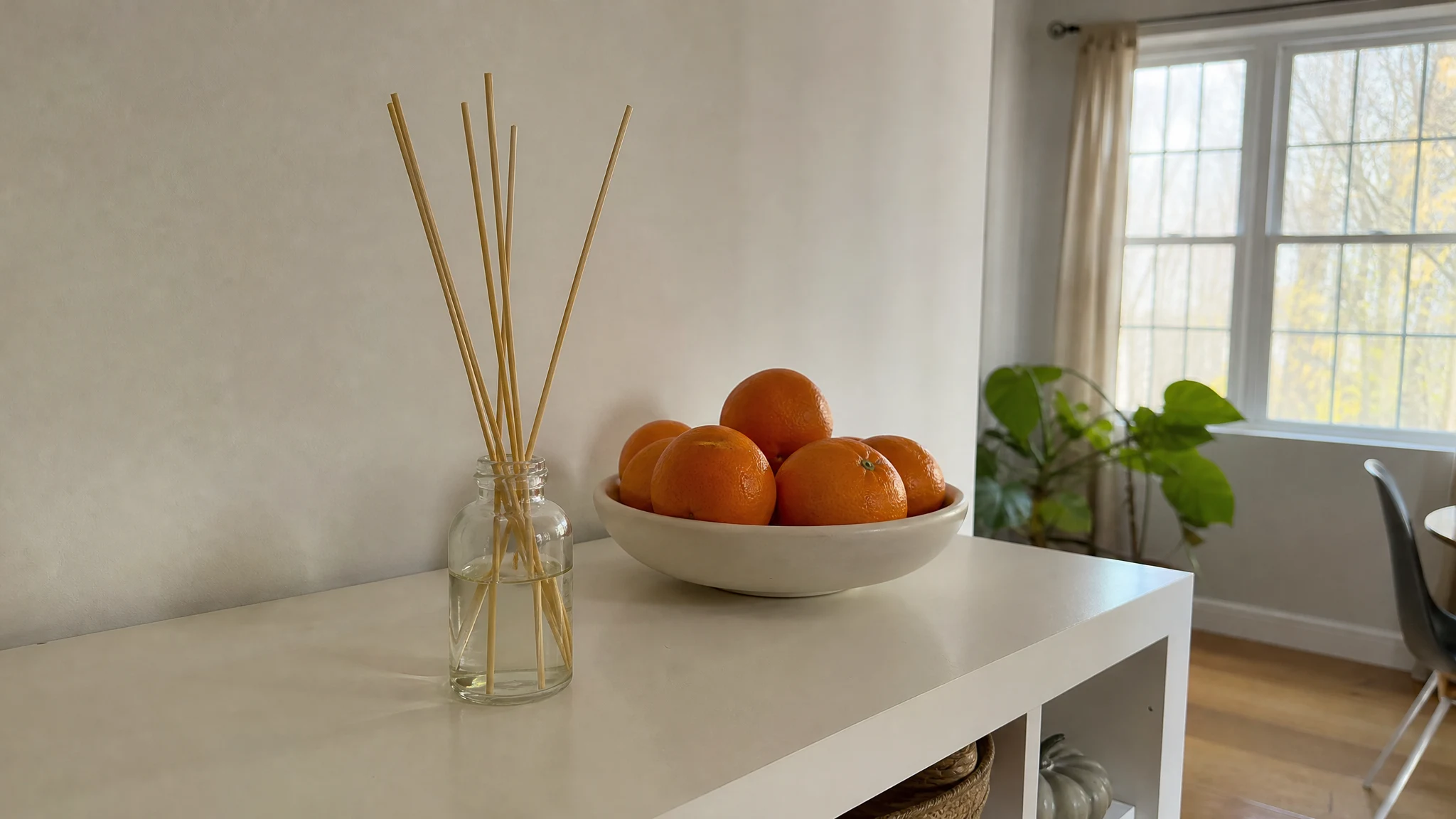
A reed diffuser is wonderfully simple: a bottle of scented liquid and a handful of sticks that carry the aroma into the room, no plug required. The most important choice you will make is not the recipe. It is where the bottle stands. Put it somewhere that small hands and curious pets cannot reach, and then enjoy the fun part.
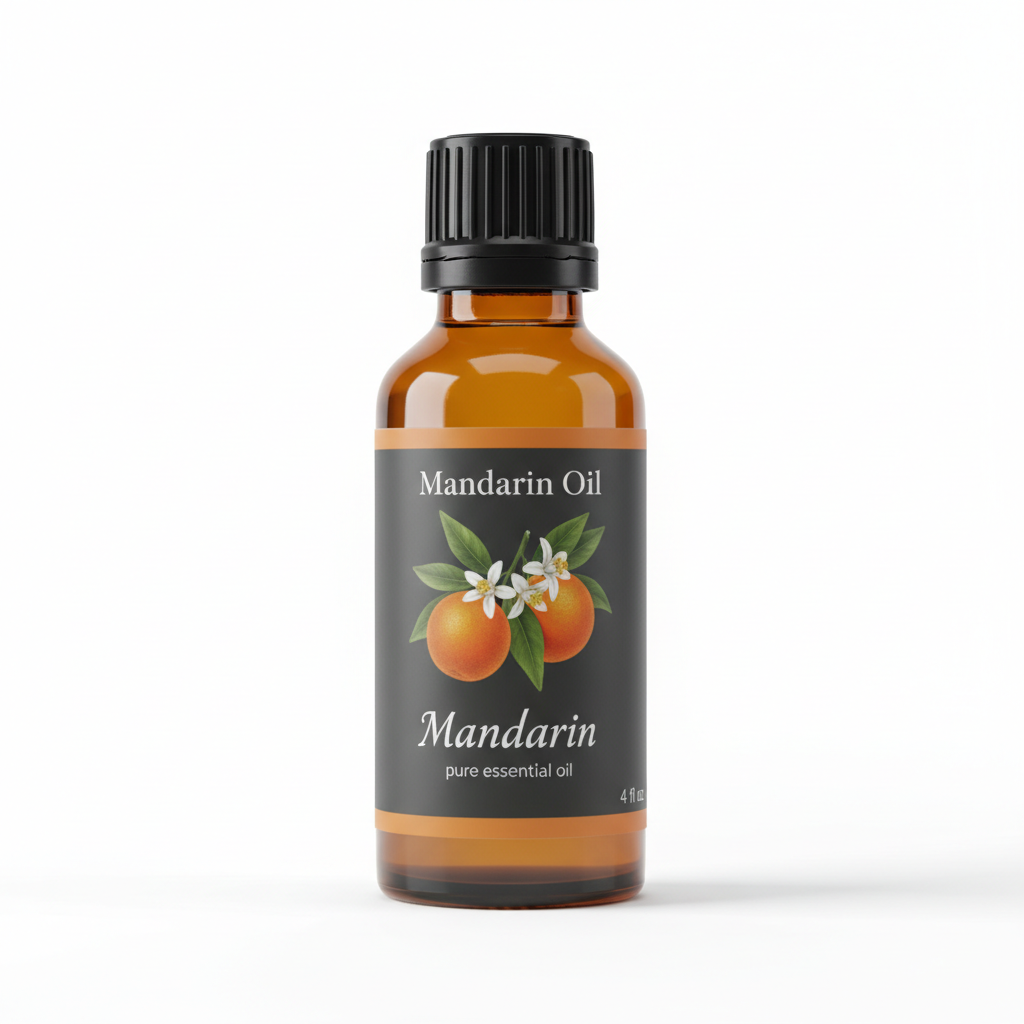
Mandarin Essential Oil
Our own Mandarin Essential Oil, in sizes from 0.5 oz to bulk.
From $12.99
Shop Now →Pick the shelf first
America's Poison Centers notes that some commercial reed diffuser liquids contain up to 70 percent isopropyl alcohol, and that swallowed essential oils can cause drowsiness, tremors or seizures, stomach upset and mouth irritation. It describes toddlers who got into the liquid and were referred to hospital because of the risk of aspiration. A New Zealand Medical Journal review found 94 reed diffuser exposures reported to the national poisons centre in 2019, and 77 of them (82%) involved children aged 0 to 2.
Those reports describe commercial products, but the lesson carries over to a home mix. Place the diffuser high, on a surface that is out of reach, and if anyone swallows any, call poison control (1-800-222-1222 in the US) or your local equivalent. We keep our own oil away from eyes, children and pets, and it is for external use only.
What goes in the bottle
A reed diffuser liquid is a thin carrier that climbs the reeds plus the scent. We sell only the mandarin oil, so the base is something to pick up at a craft or candle supplier, sold as ready-made reed diffuser base. Ask the seller for its safety data sheet and read it. Rubbing alcohol is not a good base given the isopropyl figure above, and thick cooking oils tend to move slowly up reeds, which is why diffuser bases are thin liquids (that last point is our reasoning from how wicking works).
The numbers
One candle supplier's how-to uses a fragrance oil it describes as usable in diffusers up to 25%, filling a bottle to 6 oz and adding 6 to 8 rattan reeds. That 25% belongs to one fragrance oil that the supplier has assessed, so it tells you what that product allows, not what mandarin essential oil should be. Our own skin guidance of 0.5% to 2% is for skin, not air, so it does not carry over either. As a starting point we suggest 10% oil by weight, chosen as well under the supplier's figure. It is a reasoned suggestion, not a tested formula, and a small batch is the right way to begin.
| Oil share per 100 g liquid | Oil by weight | Volume at 0.852 | Drops (20 per ml) |
|---|---|---|---|
| 5% | 5 g | 5.9 ml | about 117 |
| 10% | 10 g | 11.7 ml | about 235 |
| 15% | 15 g | 17.6 ml | about 352 |
The volume column uses the relative density of 0.852 on the certificate for our published batch. A 0.5 oz bottle holds about 12.6 g, so a 10% mix of 100 g uses most of one bottle. Weigh it: tare the jar, add 90 g of base and then 10 g of oil.
Choosing the bottle and the reeds
Pick a glass bottle with a narrow neck, so there is less open surface for the scent to escape and the reeds stand upright without tipping the bottle over. A heavier base is a good idea on a high shelf, because the reeds make the whole thing top-heavy. Reeds are sold in craft and candle shops, and you want a handful of straight, clean ones; a bent or cracked reed does not stand properly in the neck.
Mixing and setting up
Stir or swirl the oil into the base until the liquid is clear. Pour it into a narrow-necked glass bottle, add about six reeds for a 6 oz fill, and flip them after a day so the top ends are wet. More reeds give more scent and use the liquid up faster, which follows from how a wick works. If the scent seems to fade while the bottle is still full, the likely reasons are a base that is too thick, too much oil or reeds that are clogged. New reeds and a lighter oil share are the first fixes. Reeds from an old fragrance carry that scent, so use fresh ones. Because we cannot promise a duration for a home mix, write a date on the bottle and judge by nose.
What you will notice in the first days
On the first day you may notice very little, because the liquid takes time to climb the reeds. By the second or third day a soft citrus note should drift into the room, strongest when you walk in from another room and weakest when you have been sitting beside it for an hour; noses adapt quickly. If you want to check it is working, step out for a few minutes and come back. That fresh first breath tells you more than a long sniff does.
Why a small batch is best
Mandarin is a limonene-rich oil, and the Tisserand Institute says oxidation is encouraged by heat, light and moisture. A reed diffuser is an open surface by design, so it is the format that sees the most air. That is another reason to mix a small batch you will use up and to keep the main bottle tightly capped in a cool, dark place. Keep the diffuser out of direct sun and away from heaters.
If it spills, wipe it up at once. Citrus oils can mark some finishes, so stand the diffuser on a surface you do not mind and test a hidden corner first. If liquid touches skin, rinse with running water, and for eyes, America's Poison Centers advises at least 15 minutes under running water and then seeking help.
For other ways to scent a room, see how to use mandarin oil around the home, the room spray formula, or the candle and wax melt notes.
Put it on a high shelf, give it a day to start climbing the reeds, and a quiet citrus note will drift through the room.
Mandarin Essential Oil
Mandarin Essential Oil from our own shop, in sizes from 0.5 oz to bulk.
From $12.99
Shop Now →Sources & Further Reading
- America's Poison Centers. Reed diffusers: Household risk. poison.org
- Cressey P., 2026. Reed diffusers: a potential cause of poisoning in young children in New Zealand. The New Zealand Medical Journal 139(1637). nzmj.org.nz
- CandleScience. How to make a reed diffuser. candlescience.com
- Tisserand Institute. Is my bottle of essential oil oxidized or no longer good to use? tisserandinstitute.org