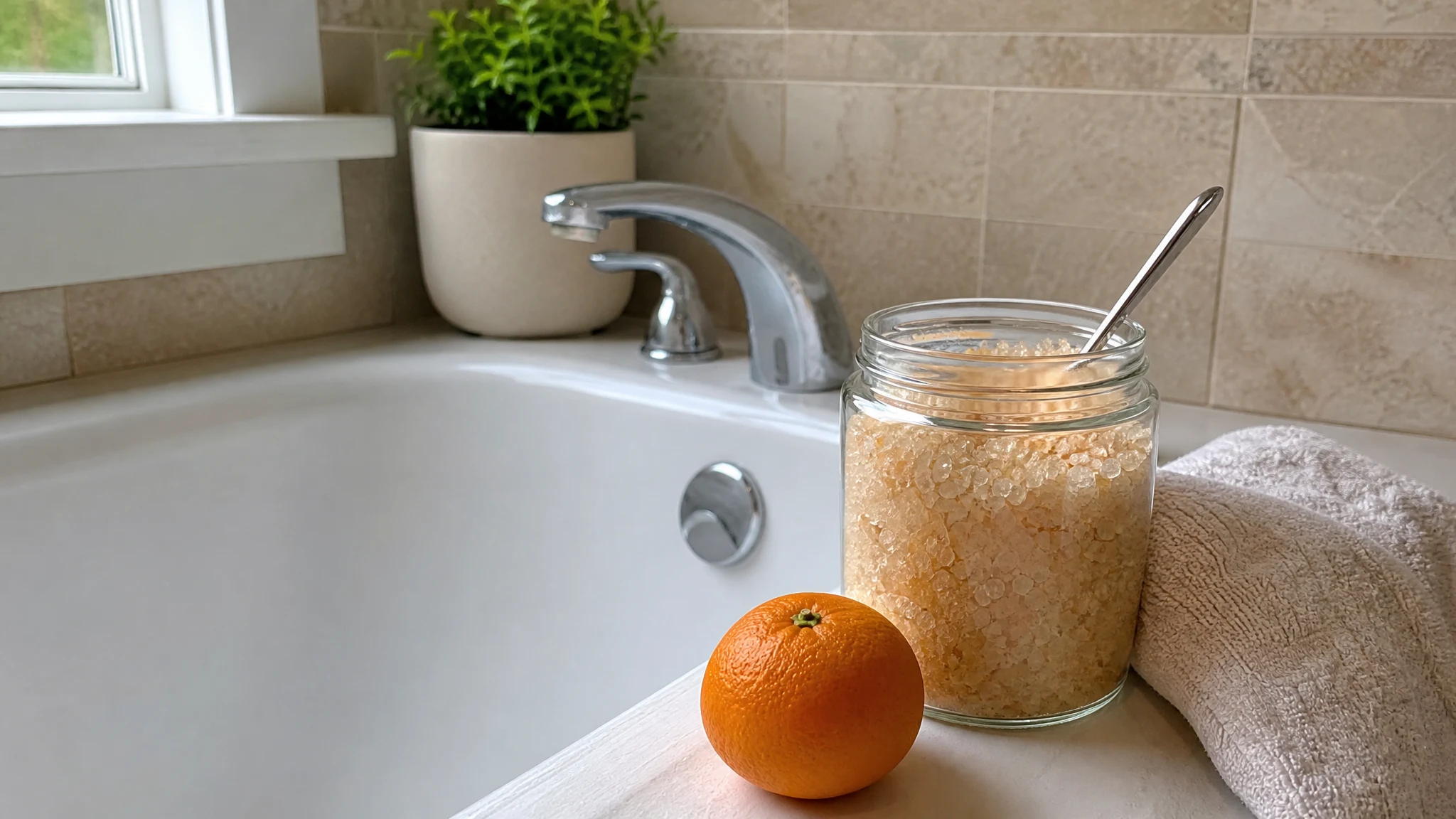
Mandarin Bath Salts and Bath Oil: Getting It to Mix
Drip mandarin oil straight into a full tub and you will watch it bead up and drift across the surface. Oil and water do not mix, and our oil is lighter than water (the batch on our COA has a relative density of 0.852), so it floats. The first thing to break the surface, which is you, picks it up. Everything in this post is a way around that.
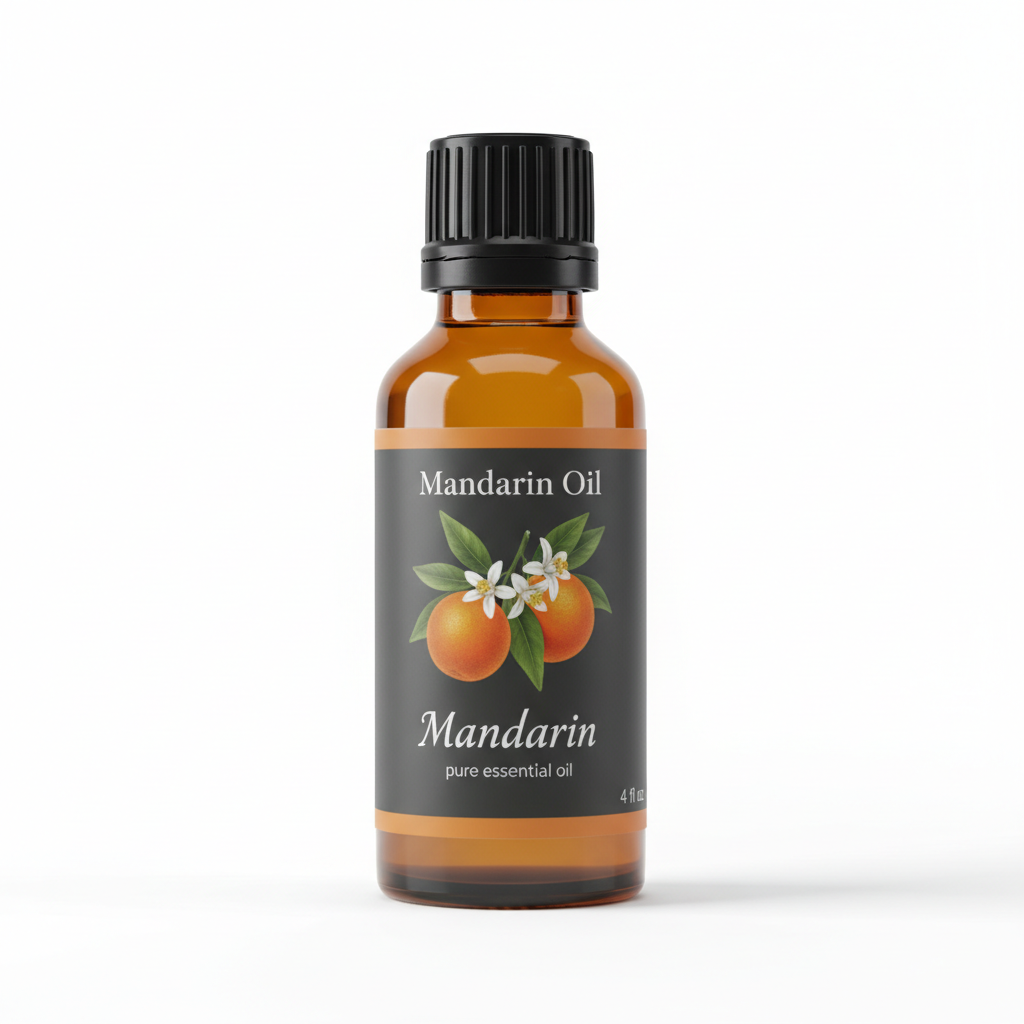
Mandarin Essential Oil
Our own Mandarin Essential Oil, in sizes from 0.5 oz to bulk.
From $12.99
Shop Now →Salts first: the easy route
Bath salts work as a carrier. The oil coats the crystals, and as the salt dissolves the oil is released into the water. You will not find salts in our shop, because we sell only mandarin oil. Epsom salt from a pharmacy, sea salt from the grocery or a craft supplier all work. Keep the load low and the salts dry.
Because our oil is sold neat, we suggest calculating the share against the total weight of the mix. For a 300 g jar, by arithmetic at about 20 drops per ml:
- 0.5%: 1.5 g of oil, about 35 drops
- 1%: 3 g, about 70 drops
- 2%: 6 g, about 141 drops
We would start at 0.5% to 1%. Tisserand's dilution guide gives 2% to 4% for bath products, noting the oil is spread through a lot of water (Tisserand Institute). Our own skin guidance is 0.5% to 2% in a carrier. Since a floating oil does not dilute itself evenly, we prefer to stay at the gentle end of our range and let the salts do the spreading.
Making them
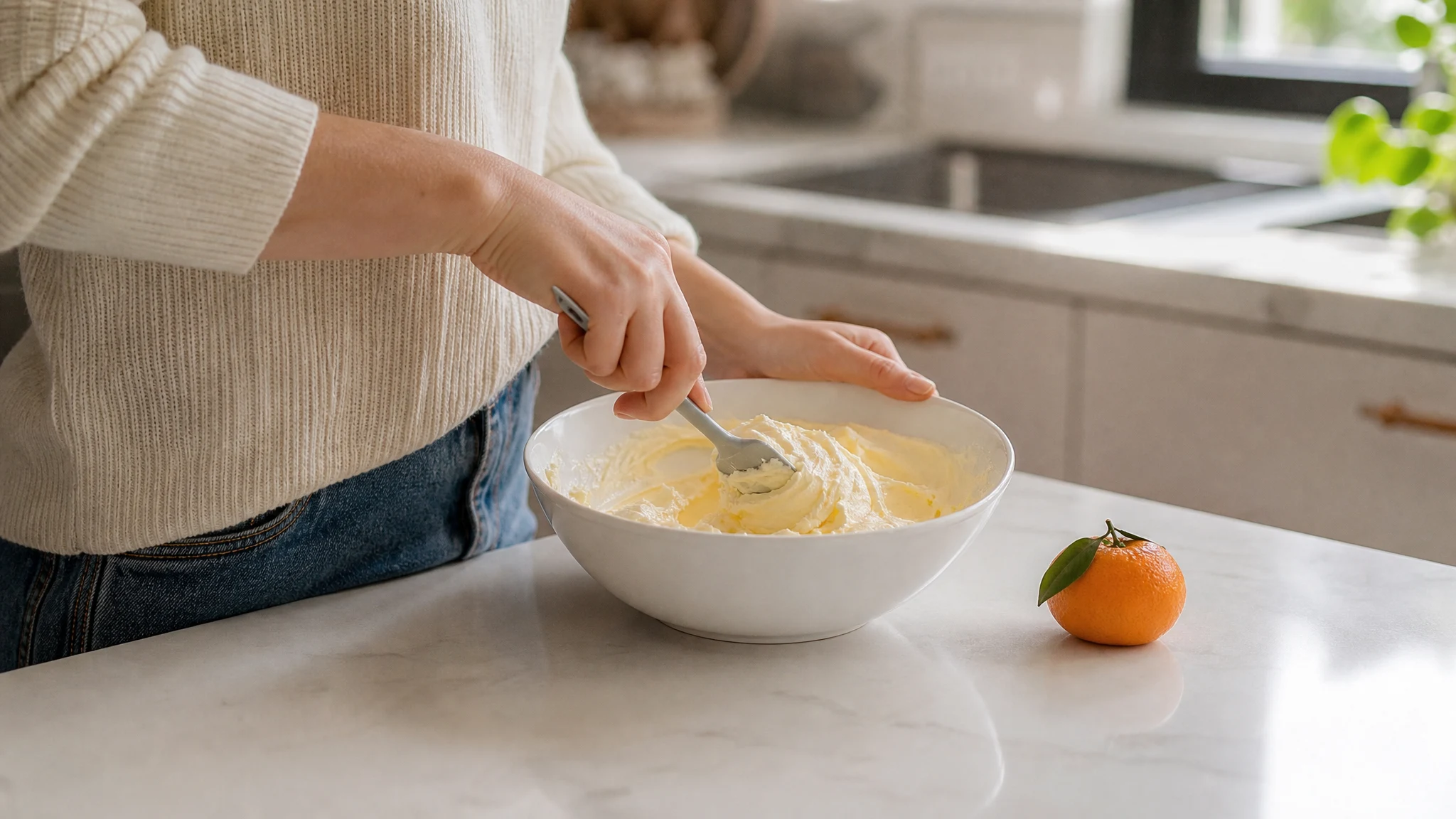
Use a glass or stainless bowl and weigh the salts. Weigh the oil into a small cup, drizzle it over the salts while stirring, and keep stirring for a couple of minutes so no clump holds most of the oil. Spread the mix on a tray for a few minutes to even out, then pour it into a clean, dry glass jar with a tight lid. Fine salts hold oil more evenly than coarse crystals, which is simple surface-area reasoning.
Keep the jar dry, since a wet spoon starts the salts dissolving where you do not want them to. Store it away from heat and sun, because heat and sunlight speed oxidation in citrus oils. Label the jar with the date and the oil share. If you want a measured scoop, a 100 g scoop at 0.5% carries 0.5 g of oil, about 12 drops, per bath. That is arithmetic from an assumed scoop size, so adjust it to your own jar.
A bath oil, with a dispersant
A bath oil of carrier and mandarin alone floats as a slick, so it needs a dispersant, usually a polysorbate from a craft or soap supplier. Take the ratio from the supplier's own usage sheet, since it depends on the product. Fix the mandarin share first: in 100 g of finished bath oil, 1% is 1 g (about 1.2 ml, 23 drops) and 2% is 2 g (about 2.3 ml, 47 drops). Stir the mandarin oil into the dispersant first, then add the carrier. Our carrier oil guide covers what to look for in the carrier. Make a small amount and patch test the finished blend on your inner forearm before it goes near a bath.
Make it a small ritual
Bath salts are a lovely thing to give or to keep for yourself, and a little presentation goes a long way. Use a clean glass jar with a cork or a tight lid, tie a piece of string around the neck, and add a small wooden scoop so nobody has to use a wet spoon. Write the date and the oil share on a label, and you have something that looks as good on the shelf as it smells in the tub.
Let the warmth help
Warm water lifts scent quickly, so you will notice mandarin as soon as the salts begin to dissolve, bright and sweet and then softer as the steam fills the room. That is a reason to start low. You can always add a little more to the next batch, but you cannot take it back out of a jar that is already mixed.
Mind the tub
Oil makes tubs slippery. A CDC report estimated 234,094 bathroom injuries among people aged 15 and over treated in US emergency departments in 2008, 81.1% of them from falls, and the report recommends simple changes such as grab bars (CDC, 2011). It did not study oils, so the practical step is our own reasoning: rinse the tub after an oil bath, use a mat, and step out slowly.
Who should skip it
If you have eczema or other broken or inflamed skin, a fragrance allergy, or a history of reacting to citrus, ask a dermatologist before bathing in any essential oil. If you are pregnant, ask a physician or midwife first. Keep the oil away from children's baths and out of reach of children and pets.
Freshness matters here too. Limonene exposed to air forms hydroperoxides, and DermNet reports that about 10% of people investigated for suspected contact dermatitis reacted to them, a clinic population rather than the public at large (DermNet). We suggest buying small, reordering often, and keeping the bottle capped, cool and dark.
For scrubs, see our sugar scrub and body oil post, and for patch tests and dilution, Mandarin Oil Safety Basics. Our skin guide is the broader read.
Start with salts, a bowl and a scale, and save the bath oil for when the salts have become a habit.
Mandarin Essential Oil
Mandarin Essential Oil from our own shop, in sizes from 0.5 oz to bulk.
From $12.99
Shop Now →Sources & Further Reading
- Tisserand Institute. Dilution for essential oils. tisserandinstitute.org/dilution-essential-oils
- CDC, 2011. Nonfatal Bathroom Injuries Among Persons Aged ≥15 Years - United States, 2008. MMWR. www.cdc.gov/mmwr/preview/mmwrhtml/mm6022a1.htm
- DermNet. Contact allergy to hydroperoxides of limonene and linalool. dermnetnz.org/topics/contact-allergy-to-limonene-and-linalool