Mandarin Sugar Scrub and Body Oil: Two Spa-Night Recipes
Mandarin makes a lovely spa-night oil: sweet, soft and a little floral, the citrus you can stand to smell for an hour. Here are two ways to use it, a sugar scrub that goes down the drain in minutes and a body oil that stays on skin for hours. They share an oil, but they behave differently, and that shapes how we would make each one.
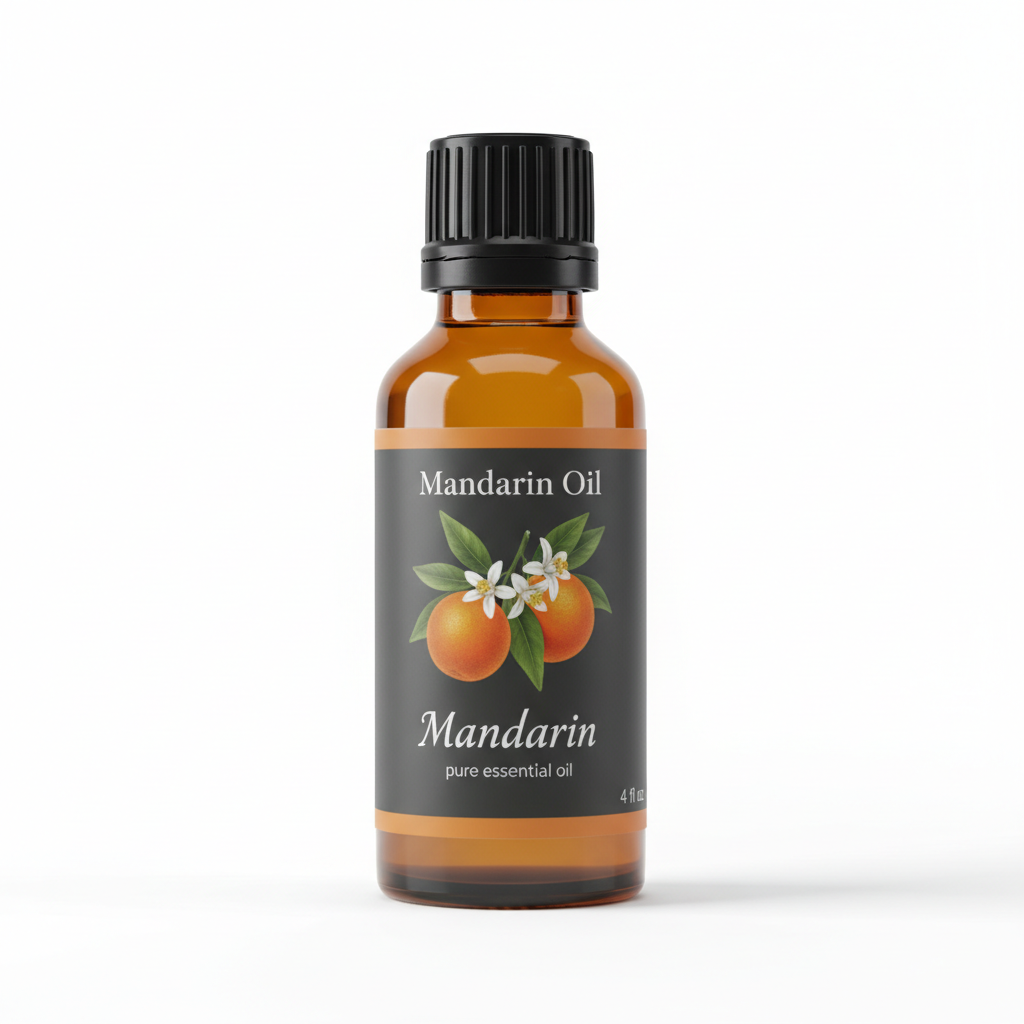
Mandarin Essential Oil
Our own Mandarin Essential Oil, in sizes from 0.5 oz to bulk.
From $12.99
Shop Now →The body oil is the one to think about before going outside
Citrus peel oils have a reputation for sun trouble, mostly because of bergamot and lemon. Mandarin sits in a gentler place. The Tisserand Institute lists expressed mandarin and expressed tangerine among oils with extremely small amounts of furanocoumarins, too little to make them phototoxic, and notes that IFRA and the EU cap bergapten at 15 ppm in finished leave-on products used on skin likely to see sun (Tisserand Institute). EFSA's review of expressed mandarin oil found 8-methoxypsoralen below its detection limit in the batches it examined (EFSA, 2021).
Both statements describe expressed mandarin oil in general, and the Certificate of Analysis we publish for one batch covers density, refractive index and optical rotation rather than furanocoumarins. So we treat the general picture as encouraging and keep our habits sensible: tangerine oil is cited at about 0.005% bergapten, and at a 1% body oil that works out, by simple arithmetic, to roughly 0.5 ppm in the finished product, far under 15 ppm. Still, if you plan a long day outdoors, wear the oil in the evening or on skin that stays covered.
Picking a dilution
We recommend diluting our mandarin oil to 0.5% to 2% in a carrier oil and patch testing first. Tisserand's guide gives 1% to 3% for body oils and lotions, 2% to 4% for wash-off products, and 0.2% to 1% for sensitive or reactive skin (Tisserand Institute). Those ranges overlap with ours at 1% to 2%. We would begin lower than either ceiling, around 0.5% to 1%, because citrus oils are the ones that ask for a gentle start. Our IFRA article explains how the formal standards fit in.
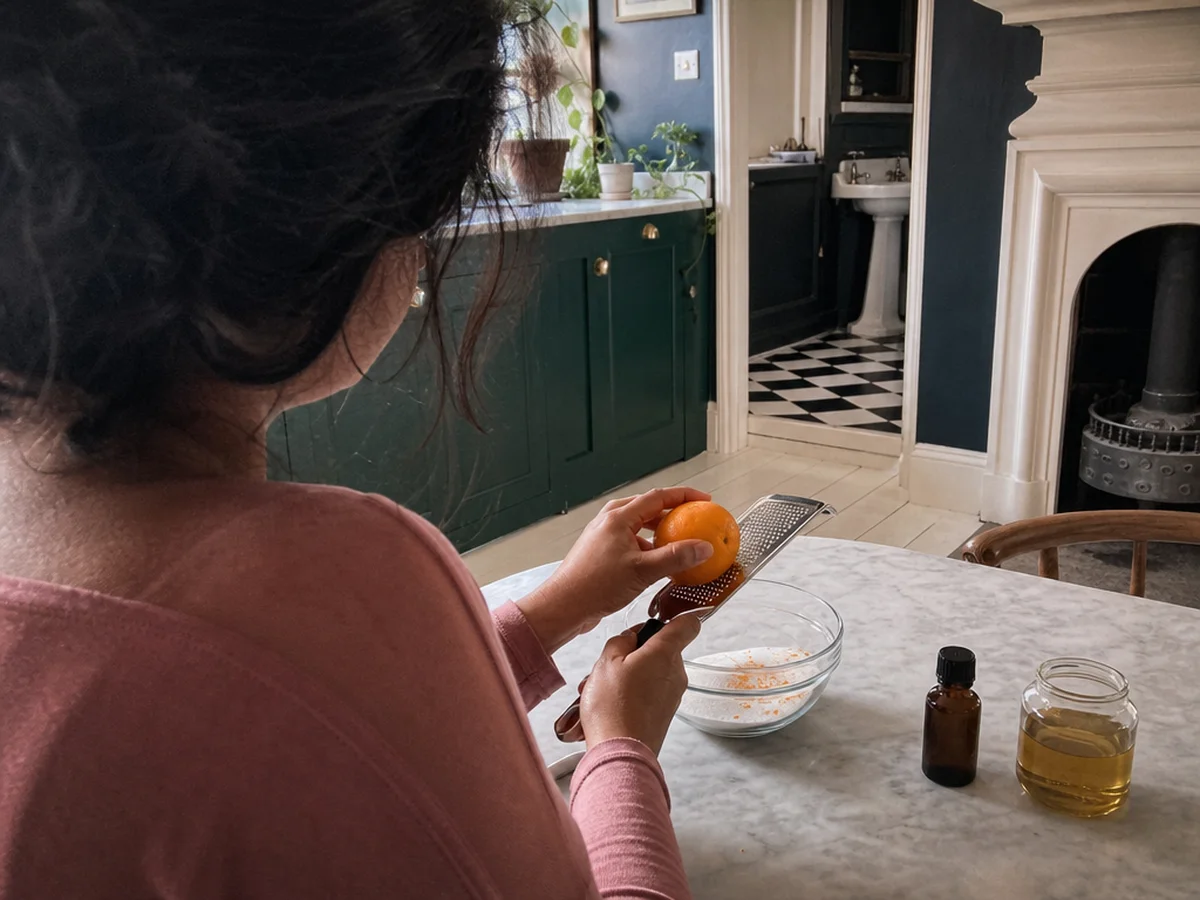
Our oil is sold neat, so the math is yours. At roughly 20 drops per millilitre and a relative density of 0.852 (from the batch on our COA), here is what the numbers look like per 100 g of finished product:
- Body oil at 0.5%: 99.5 g carrier oil and 0.5 g mandarin oil, about 12 drops
- Body oil at 1%: 99 g carrier oil and 1 g mandarin oil, about 23 drops
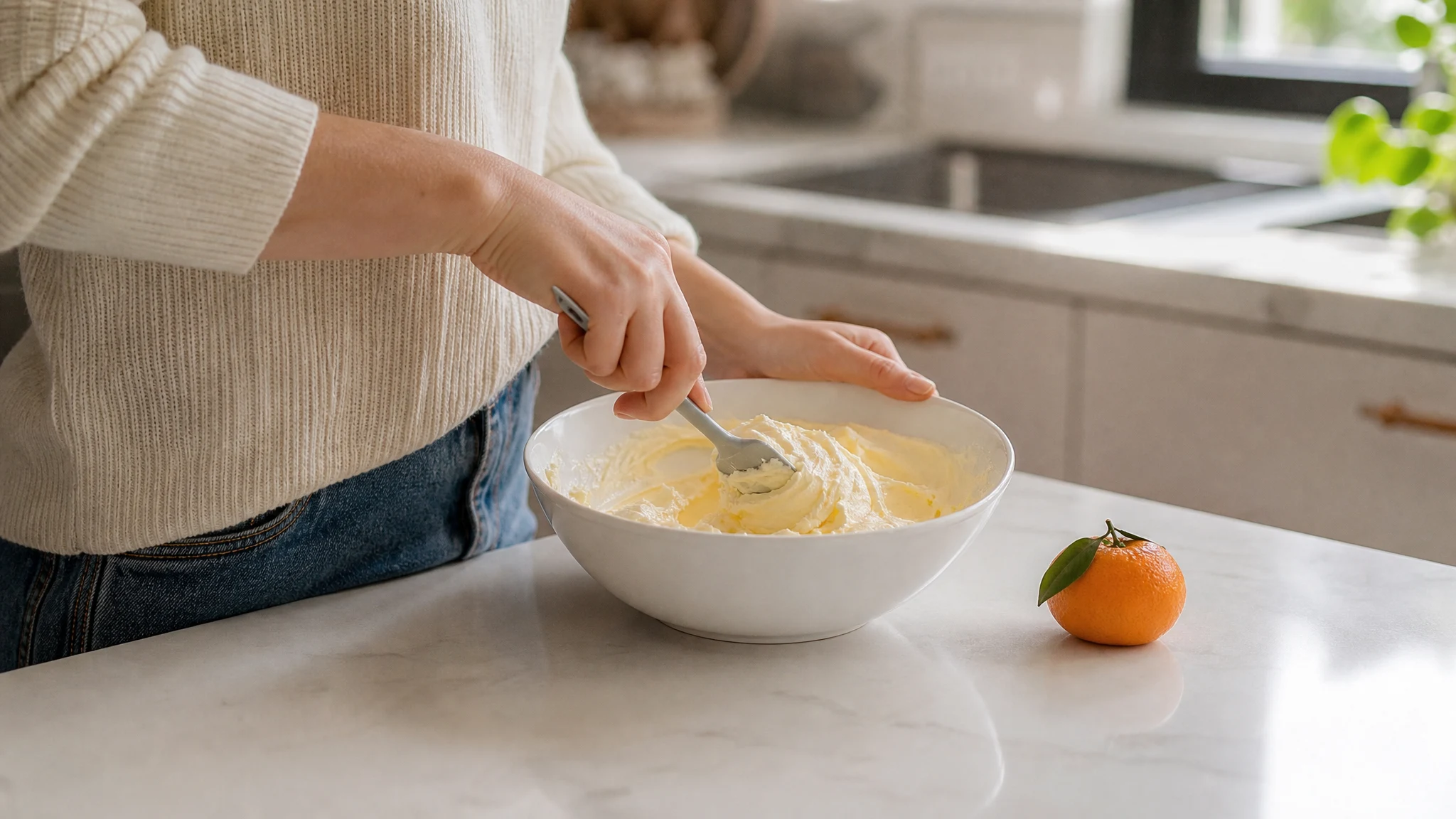
- Sugar scrub at 1%: 70 g sugar, 29 g carrier oil and 1 g mandarin oil, about 23 drops
The sugar-to-oil split is a texture suggestion, so adjust it until the scrub feels the way you like. For small jars, weigh the oil: at 30 g of body oil, 1% is 0.3 g, which a dropper cannot hit reliably.
The scrub: keep it dry, keep it small
A scrub is a short-contact product, which is the reasoning behind the higher wash-off ranges in the guides. It is also rubbed in and often rinsed under warm water, so we suggest the same 1% line and a patch test on the inner forearm before the first full use. Keep it off broken, sunburned or irritated skin.
The one house rule for a sugar scrub is to keep water out of the jar. Sugar dissolves in water, so wet fingers or a damp spoon let moisture in and the mix then needs a preservative. Use a dry spoon, make a small jar at a time, and let go of any scrub that smells off or shows mould. Sugar, carrier oil and jars are easy to find at a grocery or craft shop, because we sell only the mandarin oil.
Setting up the evening
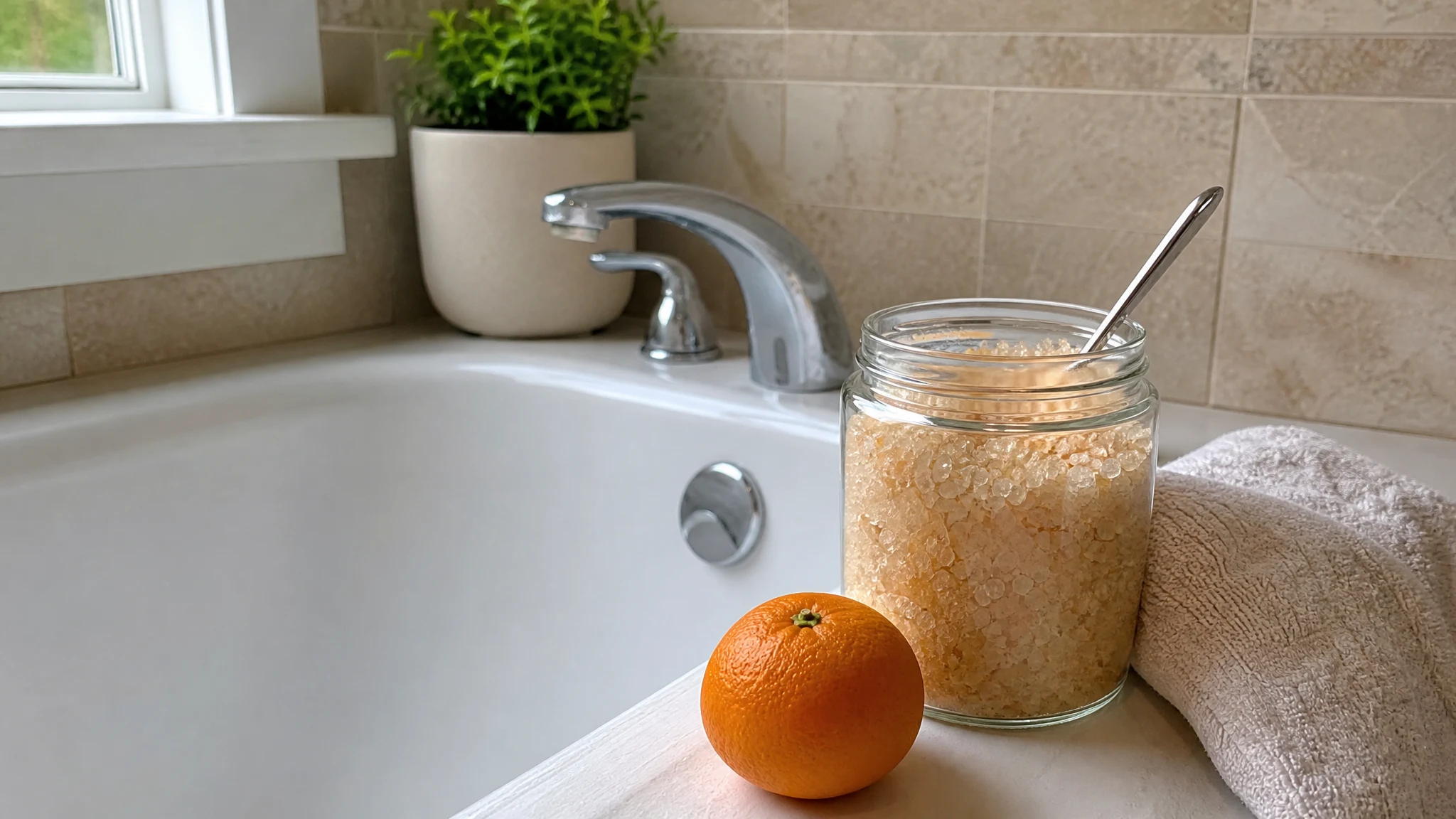
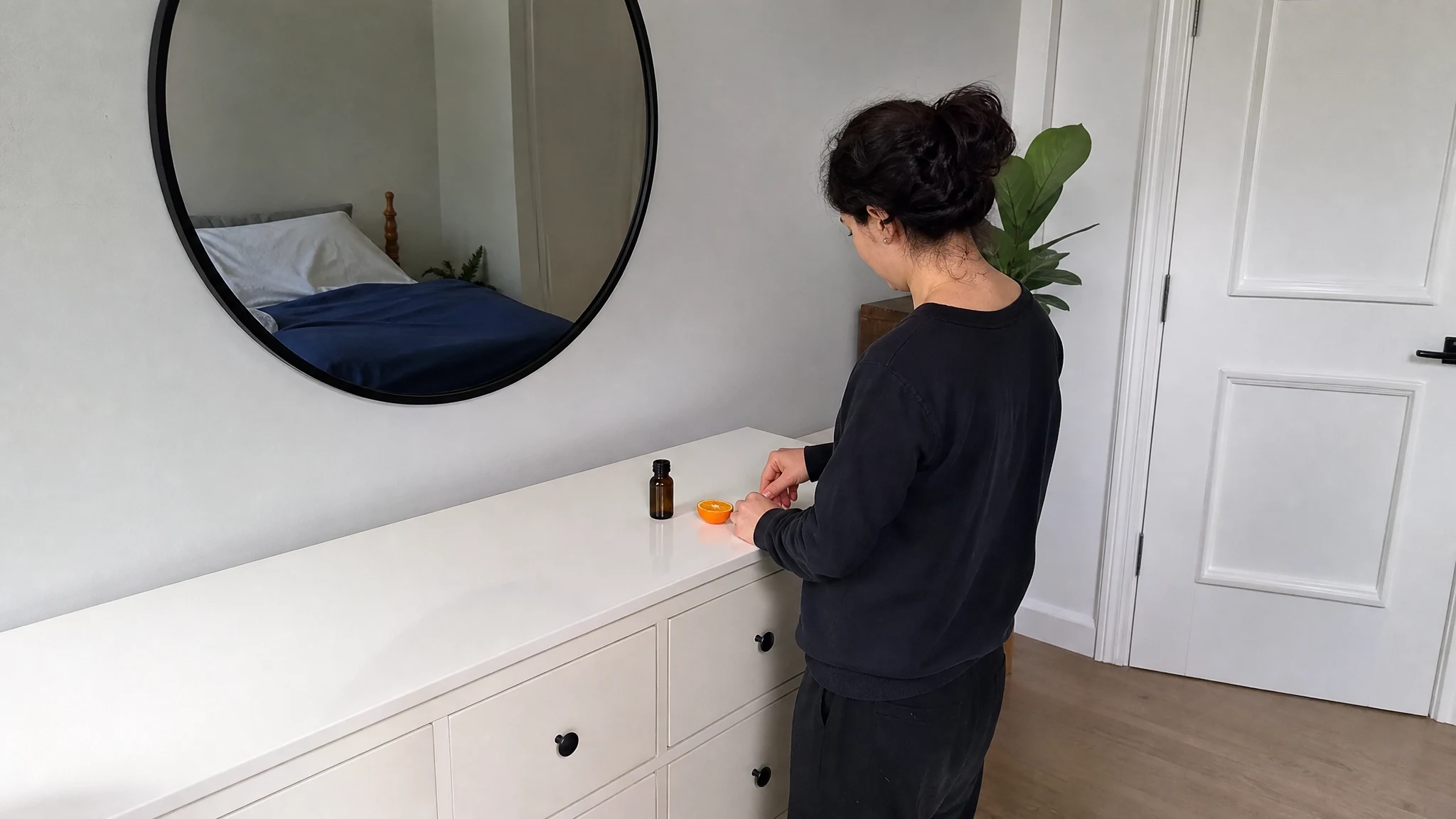
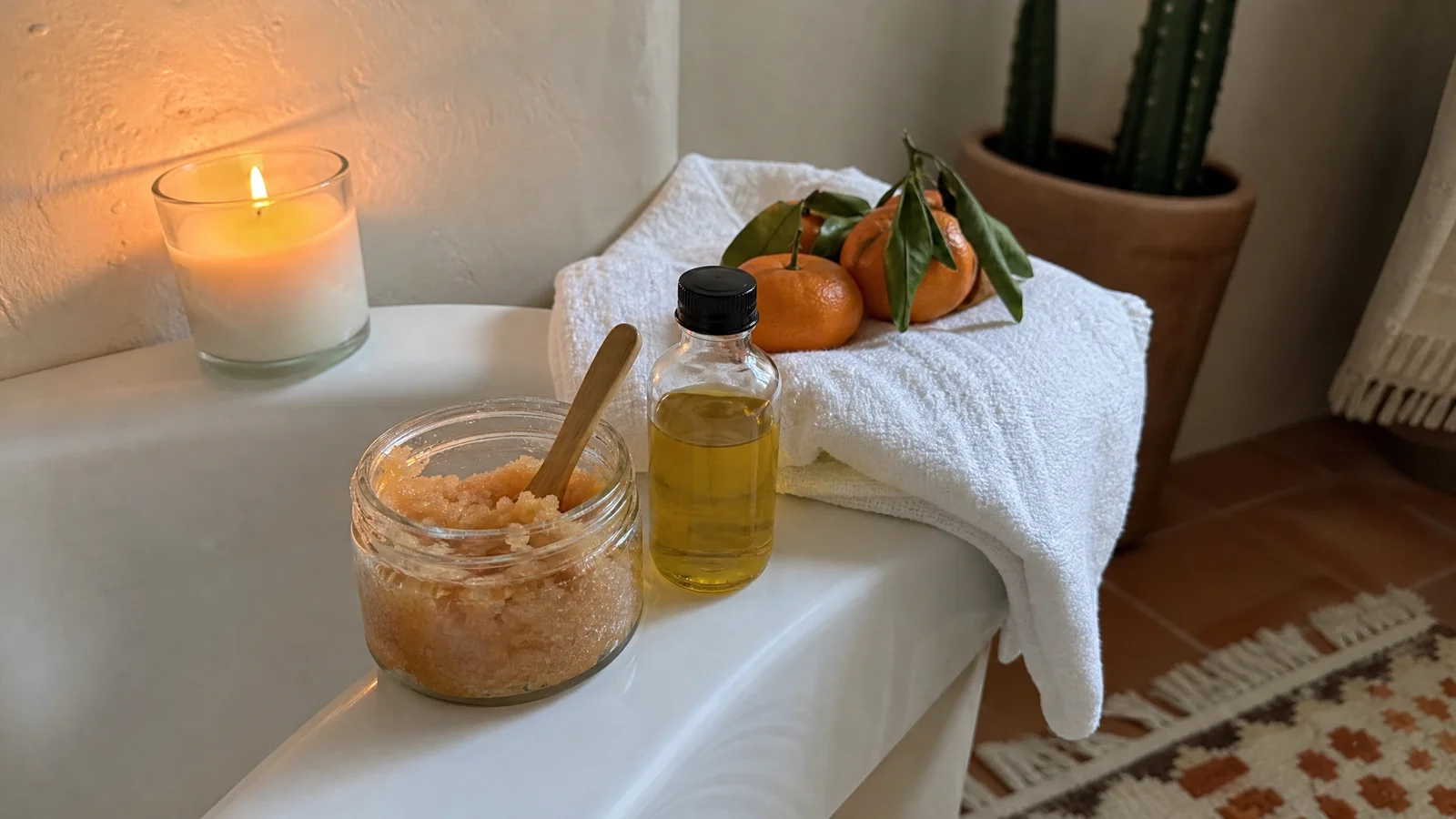
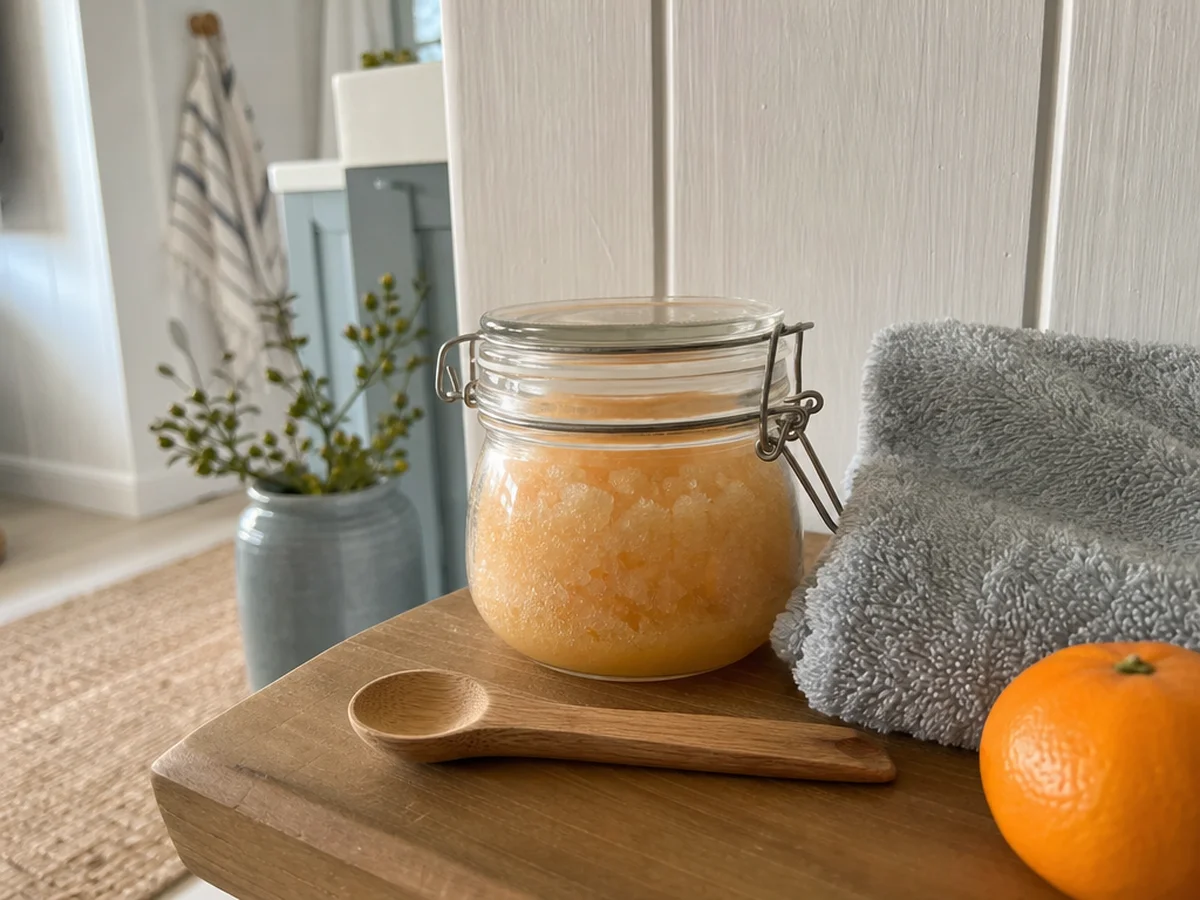
Part of the fun is the setup. Make the scrub in a clean glass jar with a lid, put a small towel on the floor of the shower so you do not slip on an oily tile, and keep a spoon by the jar so wet fingers never go in. Mandarin's scent comes up as the scrub meets warm water, a sweet, juicy opening that fills a small bathroom quickly, so a little goes a long way.
The body oil: your carrier sets the shelf life
A body oil is two oils in one bottle, and the one that ages faster decides how long it lasts. Our carrier oil comparison ranks carriers by stability. On the citrus side, limonene reacts with air to form hydroperoxides, and DermNet describes these as much more potent sensitisers than limonene itself, with about 10% of people investigated for suspected contact dermatitis reacting to them (DermNet). That figure comes from people already referred to a clinic, so it is not a rate for everyone, but it is a good reason to be generous with freshness.
The Tisserand Institute says heat, light and moisture speed oxidation (Tisserand Institute). So make body oil in small amounts, store it in a dark, closed bottle, and retire it when the scent turns flat. Our own advice for the oil itself is to buy small, reorder often and keep the bottle tightly capped in a cool, dark place; more in how to store mandarin oil.
Who should sit this one out
If you have a known citrus or fragrance allergy or a skin condition, ask a dermatologist before putting any essential oil on skin. If you are pregnant or nursing, ask your physician first; the sources are gathered in our pregnancy article. EFSA classes the oil as an irritant and skin sensitiser, so keep it away from eyes, children and pets, and follow the patch test steps in Mandarin Oil Safety Basics. We sell a cosmetic aroma oil and make no claims about skin conditions.
A good first evening is the body oil at 0.5%, patch tested, with the scrub saved for the shower once you know how your skin likes mandarin.
Mandarin Essential Oil
Mandarin Essential Oil from our own shop, in sizes from 0.5 oz to bulk.
From $12.99
Shop Now →Sources & Further Reading
- Tisserand Institute. Phototoxicity: essential oils, sun and safety. tisserandinstitute.org/phototoxicity-essential-oils-sun-and-safety
- EFSA FEEDAP Panel, 2021. Safety and efficacy of a feed additive consisting of expressed mandarin oil from the fruit peels of Citrus reticulata Blanco for use in all animal species (FEFANA asbl). pmc.ncbi.nlm.nih.gov/articles/PMC8190682
- Tisserand Institute. Dilution for essential oils. tisserandinstitute.org/dilution-essential-oils
- DermNet. Contact allergy to hydroperoxides of limonene and linalool. dermnetnz.org/topics/contact-allergy-to-limonene-and-linalool
- Tisserand Institute. Is my bottle of essential oil oxidized or no longer good to use? tisserandinstitute.org/learn-more/oxidized