Mandarin Cleaning Spray: A Light-Duty Citrus Recipe
A bottle of something that smells like mandarin peel makes a kitchen counter feel like a better place to be. That is the whole appeal of a scented spray, and it is a nice one: sweet, soft citrus where you would normally smell cleaner. This is a simple spray built around that scent, with the math for each bottle size and a few habits that keep it useful.
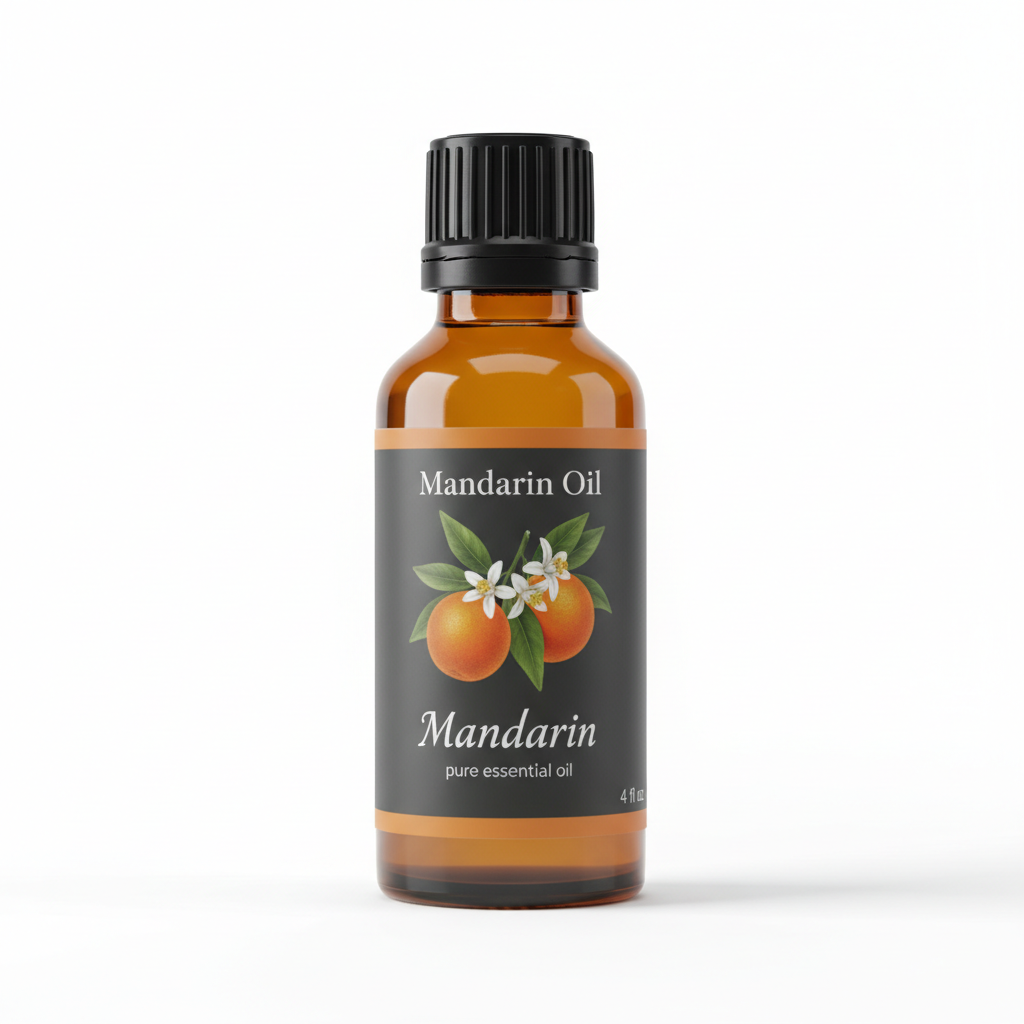
Mandarin Essential Oil
Our own Mandarin Essential Oil, in sizes from 0.5 oz to bulk.
From $12.99
Shop Now →What the oil brings to the bottle
Citrus peel oils are rich in hydrocarbons, and fats and oils dissolve in other oils, which is the usual reason citrus scents turn up in kitchen cleaners. Treat that as reasoning rather than a measured result: we have no data on our oil's composition beyond the batch on our COA, which lists a relative density of 0.852, a refractive index of 1.471 and an optical rotation of +69.80 degrees. So we think of mandarin here mainly as a fragrance with a possible helping hand on light grime.
The same density figure explains the main practical issue. Our oil is lighter than water, so it floats. Shake plain oil and water together and you get a slick that sprays out in blobs at first and little by the tenth pump. A drop or two of an unscented liquid dish soap, stirred with the oil before the water goes in, gives it something to hold on to. That is a starting point from reasoning rather than a tested ratio, and it is worth shaking the bottle before every use, since this is a loose mix that will separate.
Cleaning is not disinfecting
This spray is for scent and everyday grime. It is not a disinfectant. In the United States, products that make germ-control claims are treated as pesticides and must be registered with EPA, and public health claims can only be made for products that have been properly tested and registered (EPA). An essential oil in a spray bottle carries no such registration, so if a surface needs to be disinfected, such as a cutting board after raw meat, use a product whose label shows an EPA registration number for that use and follow the label.
Mixing it: three decisions
The load. We suggest 1% by weight as a modest first batch. It sits inside the 0.5% to 2% our skin guidance gives, which is not about cleaners but keeps the number low. By arithmetic, at about 20 drops per ml:
- 100 ml bottle: 1 g of oil, about 23 drops
- 250 ml bottle: 2.5 g, about 59 drops
- 500 ml bottle: 5 g, about 117 drops
Droppers vary, so tare the bottle on a kitchen scale and add the oil by grams. Start with 100 ml.
The helper. Dish soap or another surfactant, as above. Soap, sprayers and bottles come from the grocery or hardware aisle, because we sell only the mandarin oil.
What stays out. Leave vinegar out if you have natural stone, since acids can dull it. Test any spray on a hidden corner first, and be especially cautious with waxed or oiled wood, plastics and coated surfaces, because a solvent-like oil can affect some finishes. Wait a day and look before using it more widely.
Making it pleasant to use
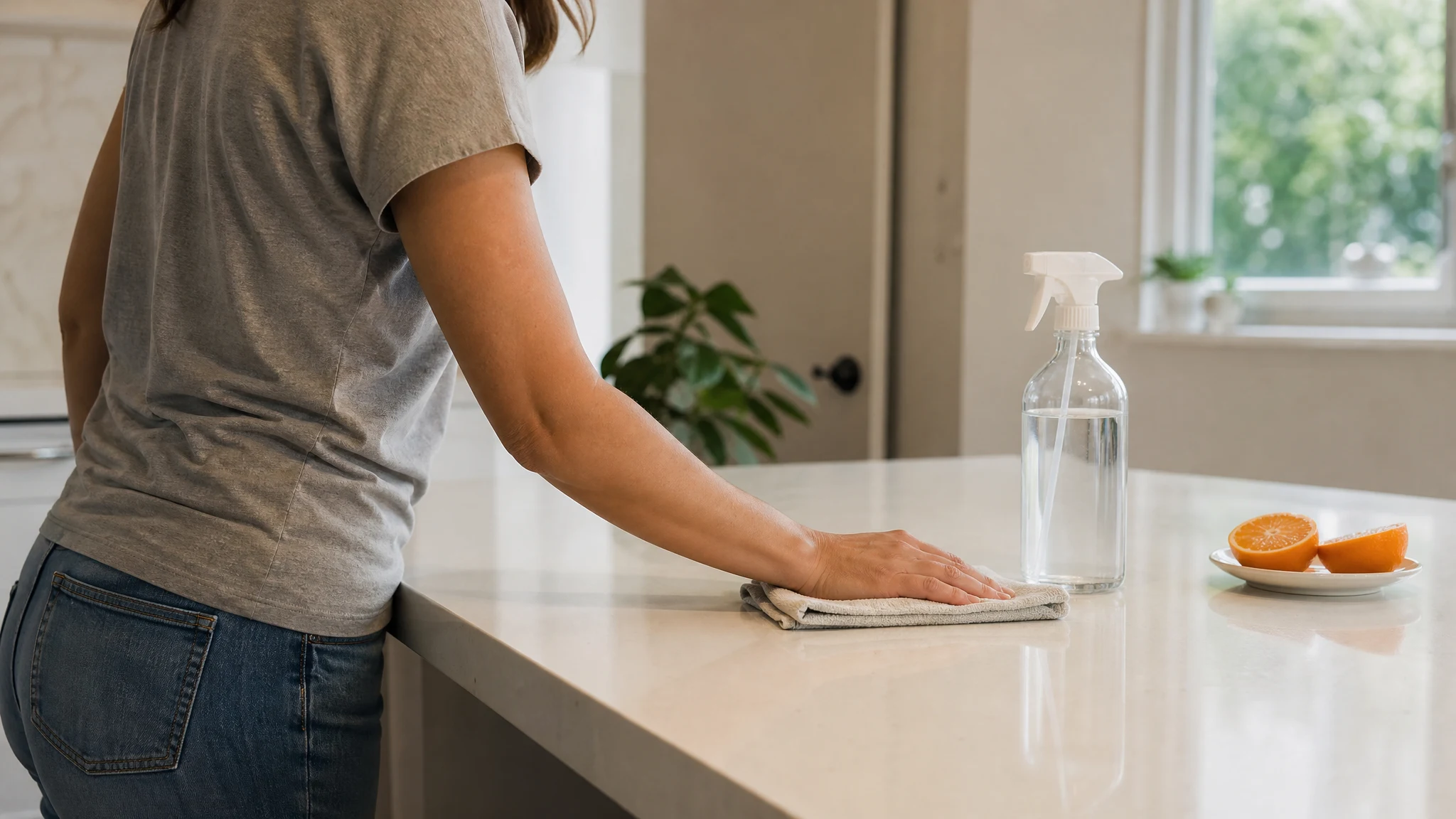
The fun of a scented spray is the first spritz on a clean counter. Mandarin gives you that sweet, soft, juicy citrus note with none of lemon's sharp edge, and a damp microfibre cloth carries it across the surface as you wipe. Keep the bottle by the sink where you will actually reach for it, and shake it each time, since the oil and water will drift apart between uses.
Label the bottle clearly with what is in it and the date you mixed it, and keep it high and out of reach of children and pets, as you would any cleaner. A clear label also stops anyone in the house from mistaking it for something else.
Start small and smell as you go
Make the 100 ml size first. Spray it once on a hidden corner, wait, and smell the room an hour later. If you would like it a little stronger, adjust the next batch by a few drops instead of the whole bottle at once.
The one rule to follow exactly
Never add the oil to, or follow this spray with, a bleach or ammonia product. A CDC survey of 502 US adults in May 2020 found that only 35% knew bleach should not be mixed with vinegar and 58% knew it should not be mixed with ammonia, and the authors note such mixing "can generate chlorine and chloramine gases that might result in severe lung tissue damage when inhaled" (CDC, 2020). That was an opt-in internet panel, so the percentages describe those respondents. If a surface was just cleaned with bleach, leave it alone and ventilate.
Fresh oil, small batches
Limonene that has sat in air forms hydroperoxides, which DermNet describes as much more potent sensitisers than limonene itself, found in products ranging from personal care to washing-up liquids and detergents. About 10% of people investigated for suspected contact dermatitis were allergic to them, a clinic population rather than everyone (DermNet). So mix a bottle you will use up, not a litre that sits under the sink. We recommend buying small, reordering often, keeping the bottle tightly capped in a cool, dark place, and decanting a working amount. If you have hand dermatitis or a fragrance allergy, ask a dermatologist before putting citrus oil in a cleaner, and wear gloves if your hands will be wet with it for long. Keep the oil away from eyes, children and pets.
If scent is all you want, the room spray recipes take it in a different direction. For more around-the-house ideas see using mandarin oil at home, and for keeping the bottle fresh, how to store mandarin oil. Handling tips are in Mandarin Oil Safety Basics.
Think of it as a pleasant-smelling spray for light jobs, mixed small and used soon.
Mandarin Essential Oil
Mandarin Essential Oil from our own shop, in sizes from 0.5 oz to bulk.
From $12.99
Shop Now →Sources & Further Reading
- US EPA. News release on products sold with sterilizing claims. www.epa.gov/node/284954
- CDC, 2020. Knowledge and Practices Regarding Safe Household Cleaning and Disinfection for COVID-19 Prevention - United States, May 2020. MMWR. www.cdc.gov/mmwr/volumes/69/wr/mm6923e2.htm
- DermNet. Contact allergy to hydroperoxides of limonene and linalool. dermnetnz.org/topics/contact-allergy-to-limonene-and-linalool