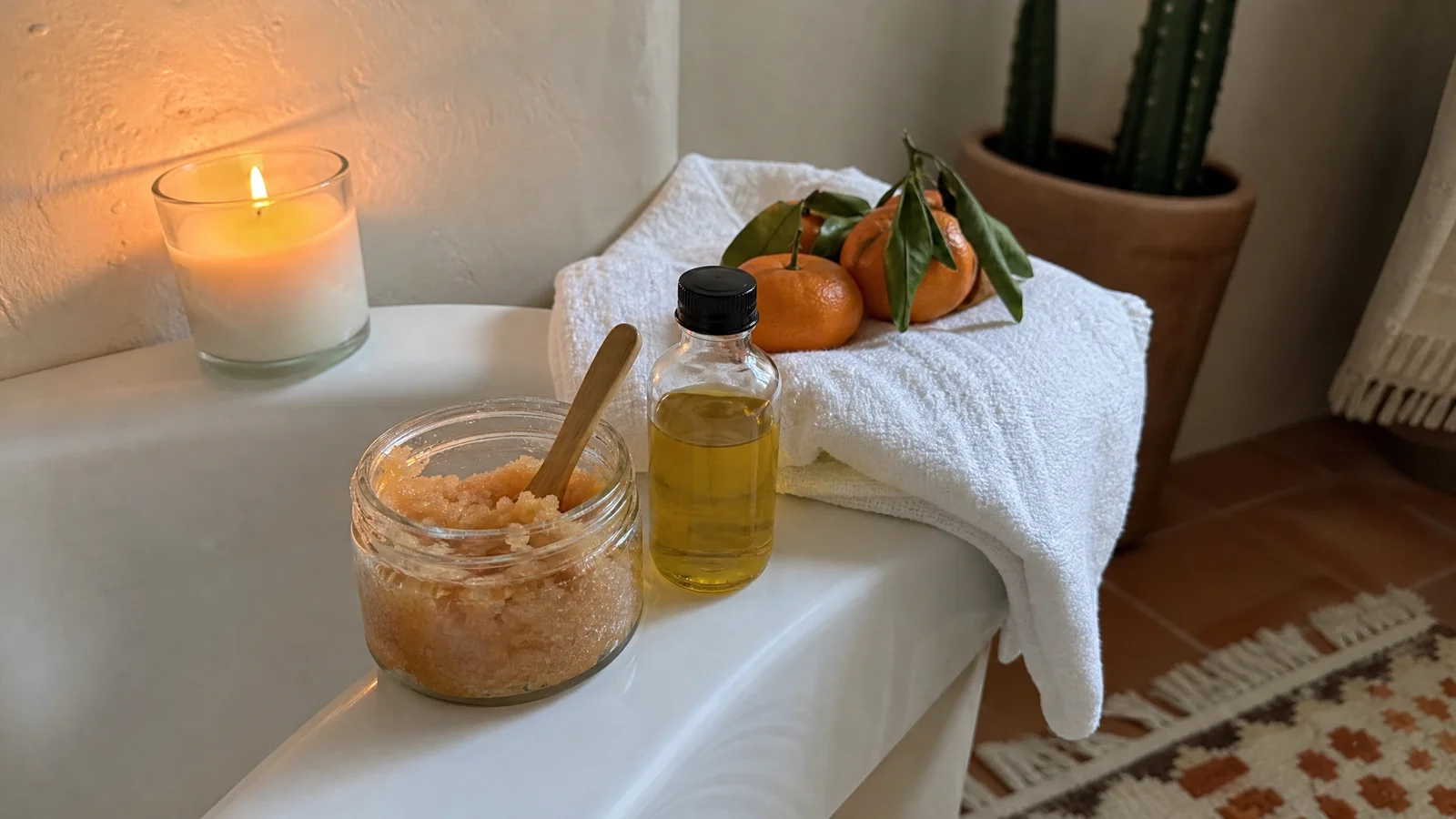
Mandarin Hair Oil: A Light Scent and a Careful Start
There is something pleasant about catching a faint citrus scent from your own hair at the end of the day. That is what we offer mandarin oil for here: scent, nothing more. We make no claims about changing hair or scalp, and the one thing worth understanding before you try it is how citrus oils and sensitive skin interact, because the answer shapes how we would make it.
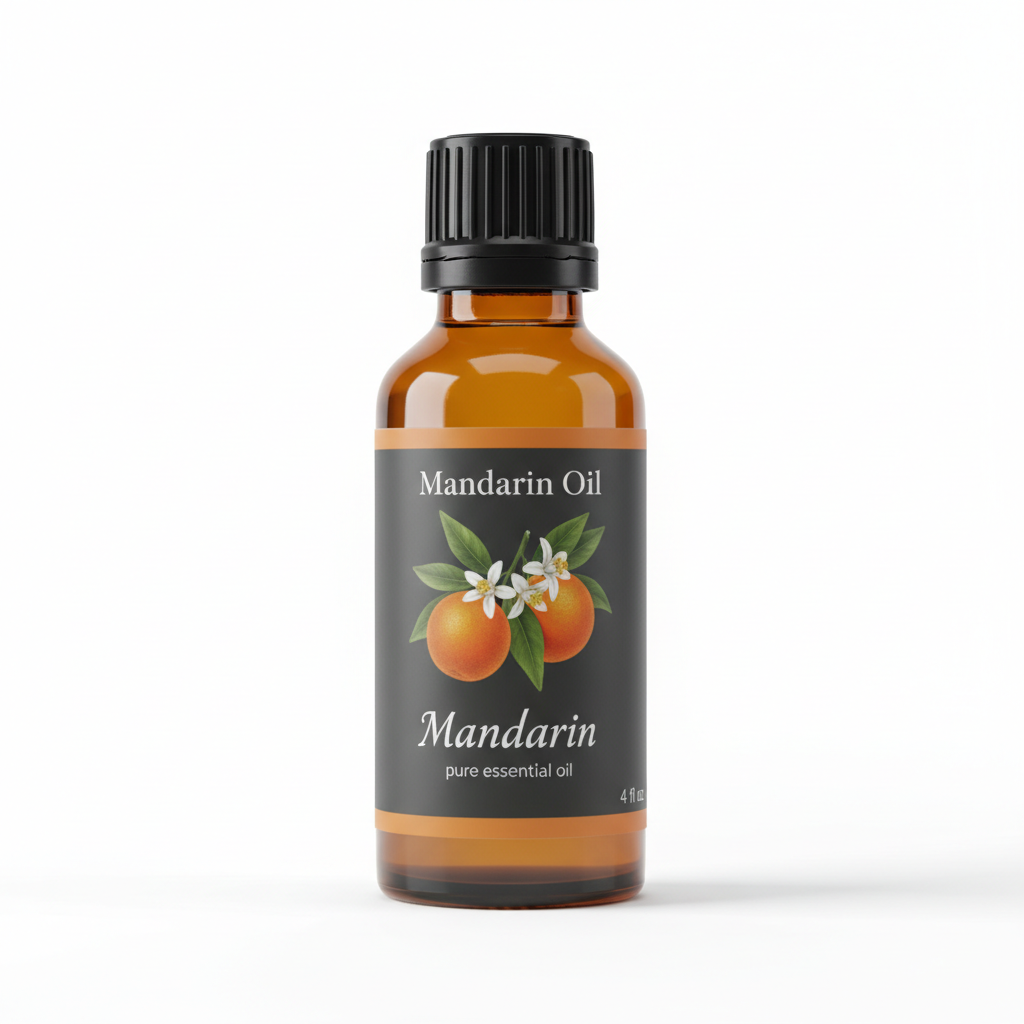
Mandarin Essential Oil
Our own Mandarin Essential Oil, in sizes from 0.5 oz to bulk.
From $12.99
Shop Now →A scent, not a treatment
FDA decides whether a product is a cosmetic or a drug by its intended use, judged from labels, advertising and other promotion; a cosmetic is something rubbed, poured, sprinkled or sprayed on the body to cleanse or beautify it (FDA). Our oil is sold for fragrance and skin use, so a lightly scented hair oil sits comfortably there. If you have a concern about your hair or scalp, a board-certified dermatologist is the right person to ask, since a bottle of oil will not sort out what is going on.
Where scalp reactions show up
A 2024 review in the International Journal of Women's Dermatology on allergic contact dermatitis of the scalp makes a point worth knowing for anyone using scented products on their head: typical red patches are uncommon on the scalp itself. Reactions more often appear where products run off, around the ears, along the hairline, on the face and on the neck, and the condition is often mistaken for seborrheic dermatitis. The review names fragrance mix I, fragrance mix II and balsam of Peru among frequent scalp allergens (Hwang et al., 2024). It does not discuss essential oils specifically, but the practical lesson carries over: if a rash appears at the hairline, ears or neck, suspect the new product even if the scalp feels fine.
That pattern is why we like to keep contact low when trying any new scented hair product. A pre-shampoo oil that is washed out has less time on skin than one left in, and an oil worked into the ends touches less scalp than one massaged in. That is our reasoning rather than a tested ranking, but it makes a sensible first step.
Keeping the oil fresh matters
Citrus oils have a particular quirk. Limonene is only an occasional sensitiser on its own, but as it oxidises in air it forms hydroperoxides, which DermNet describes as much more potent sensitisers. About 10% of people investigated for suspected contact dermatitis were allergic to them, a clinic population rather than the general public, and DermNet notes that someone sensitised may tolerate a newly opened product but react to an older, opened one (DermNet). A multicentre study that patch tested 2,900 consecutive dermatitis patients found 5.2% positive to air-oxidised R-limonene (Bråred Christensson et al., 2013).
That fits how we already suggest handling the bottle: buy small, reorder often, keep it tightly capped in a cool, dark place and decant a small working amount. Our 0.5% to 2% guidance applies to a fresh bottle, and it is the number we start from at the low end for something as leave-on as a hair oil.
What you will notice
A hair oil at this strength smells faint by design. You will notice the sweet, juicy citrus when you first apply it, and then mostly in the air around you when you turn your head. Because mandarin is a top note, that bright opening is also the part that fades first, so do not be surprised if the scent seems quieter an hour later. If you find yourself wanting to add more drops because you cannot smell it, wait a day, since your nose adapts quickly to a scent you are wearing.
The arithmetic for 30 ml
Thirty millilitres is a hair over 1 oz (29.57 ml), so the 1 oz figures apply. At about 20 drops per ml, and since 1 ml of our oil weighs about 0.852 g, here is how it works out:
- 0.5%: about 3 drops, or 0.13 g
- 1%: about 6 drops, or 0.25 g
- 2%: about 12 drops, or 0.5 g
For hair we would begin at 0.5%. Weigh the oil if you can, because droppers vary.
Applying it lightly
If you try it, warm a very small amount between your palms, then run it over the ends of dry hair rather than near the roots. Keep it away from your face and eyes, and wash your hands afterwards. Oils can mark pillowcases, collars and towels, so pick a day when a little residue does not matter, and keep the hair oil off anything you cannot wash.
A simple formulation
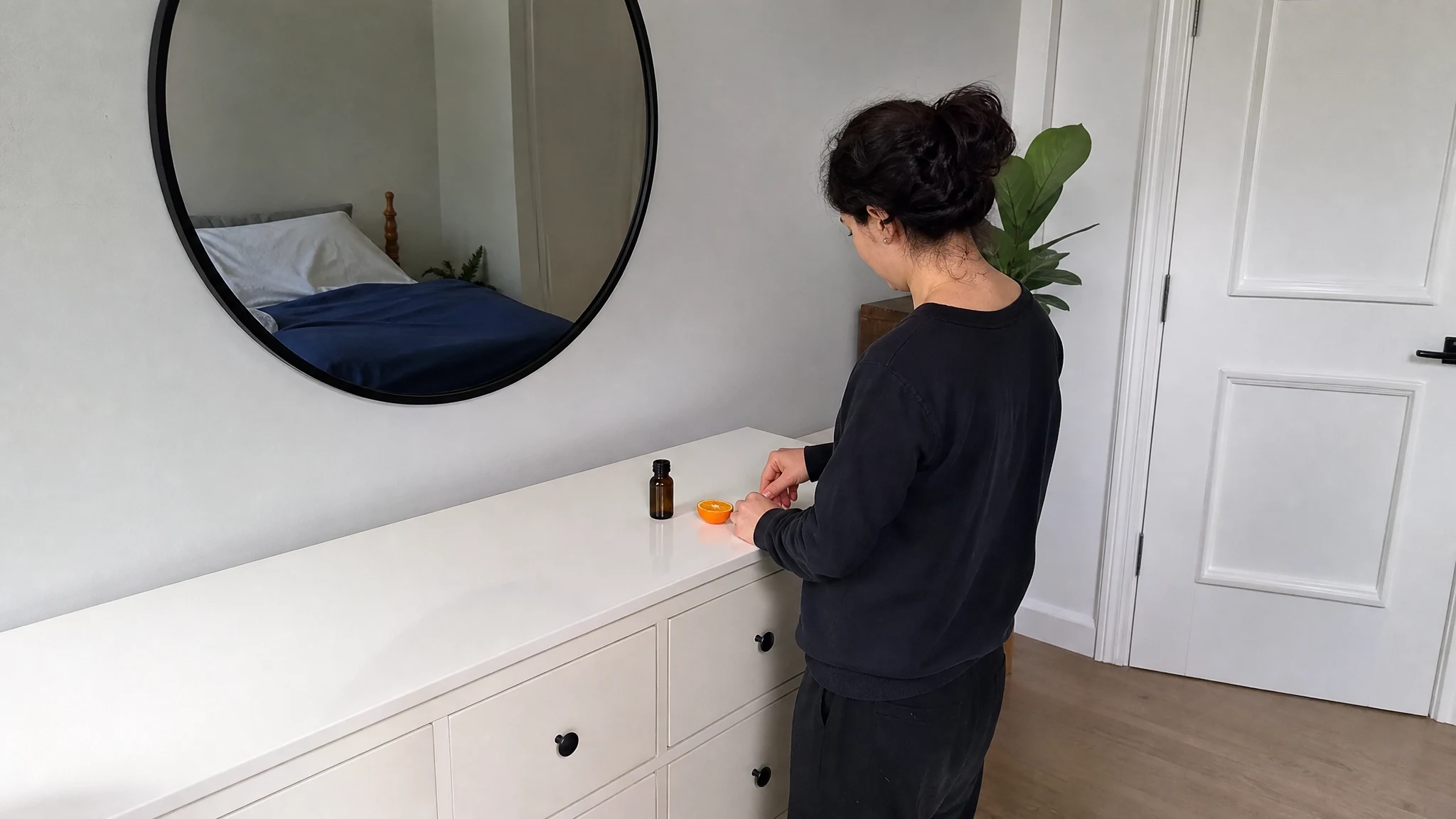
Choose a carrier oil you already use and tolerate; we do not sell carriers, so look for one at a grocery or supply shop, and our carrier oil guide compares options. Put the carrier and 3 drops of mandarin oil into a clean 30 ml amber bottle, cap it and shake. Make only a small batch. Patch test first using the steps in the safety basics post, then try a few damp ends, wash it out, and stop at the first sign of itching, redness or a rash along the hairline, ears or neck.
Skip it if you have a scalp condition or a known fragrance or citrus allergy, and ask your clinician first if you are pregnant (see our pregnancy page). Keep it away from eyes, children and pets, and never swallow it. The skin background is in our skin guide.
A few drops, a small bottle and a patient first try is a fine way to find out whether mandarin belongs in your hair routine.
Mandarin Essential Oil
Mandarin Essential Oil from our own shop, in sizes from 0.5 oz to bulk.
From $12.99
Shop Now →Sources & Further Reading
- US FDA. Is It a Cosmetic, a Drug, or Both? (Or Is It Soap?) www.fda.gov/cosmetics/cosmetics-laws-regulations/it-cosmetic-drug-or-both-or-it-soap
- Hwang JC et al., 2024. Allergic contact dermatitis of the scalp: a review of an underdiagnosed entity. Int J Womens Dermatol. pmc.ncbi.nlm.nih.gov/articles/PMC11286252
- DermNet. Contact allergy to hydroperoxides of limonene and linalool. dermnetnz.org/topics/contact-allergy-to-limonene-and-linalool
- Bråred Christensson J et al., 2013. An international multicentre study on the allergenic activity of air-oxidized R-limonene. Contact Dermatitis. europepmc.org/article/MED/23510342