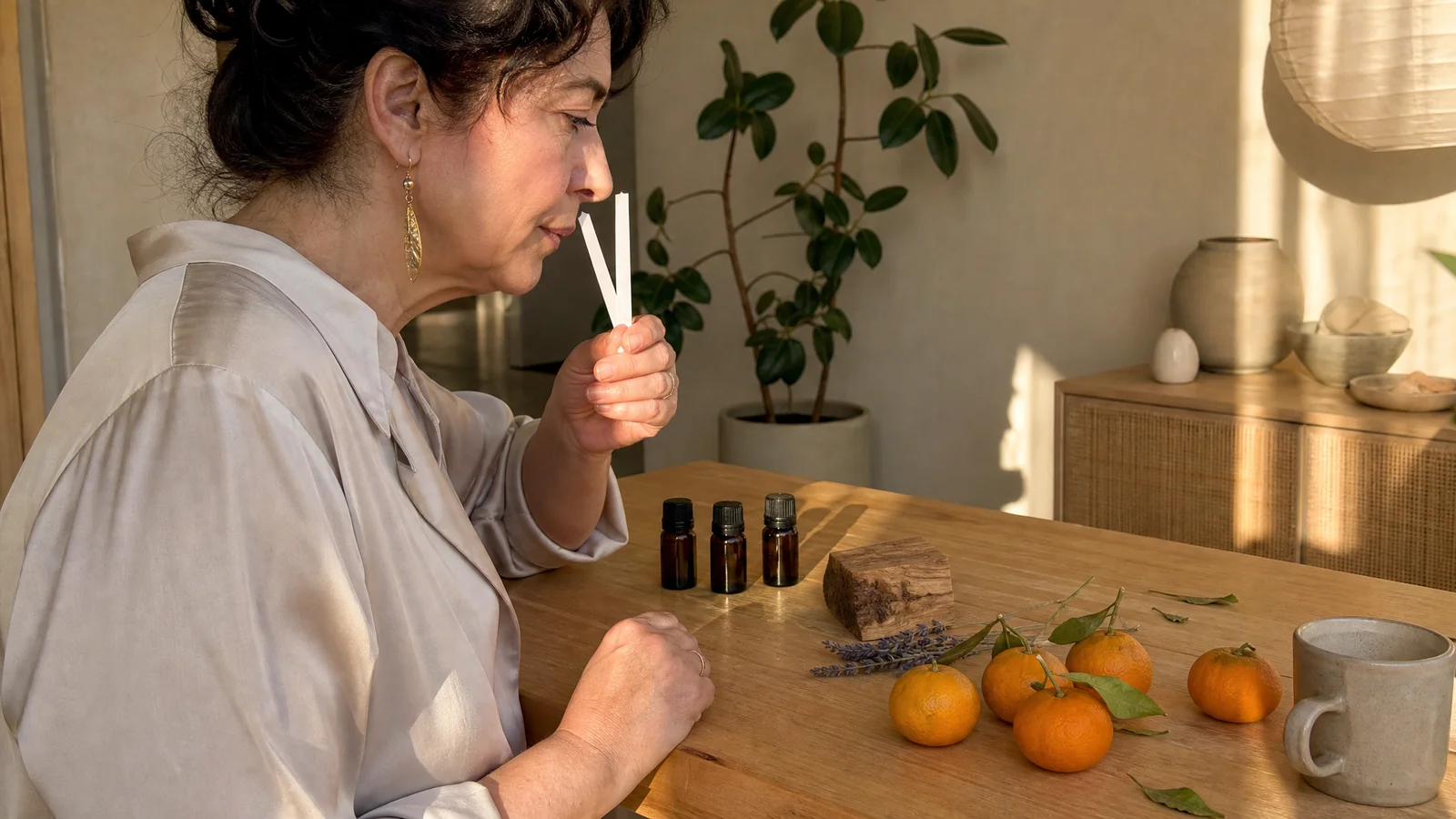
Using Mandarin Oil on Skin: Dilution and Patch Tests
Mandarin oil is chosen for how it smells, and that is the best reason to put it in a skin product: a sweet, mellow citrus note in your own body oil or balm. We do not promise results from it on skin. What we can offer is a straightforward way to use it well, which comes down to three habits: dilute, test, and think about sunlight.
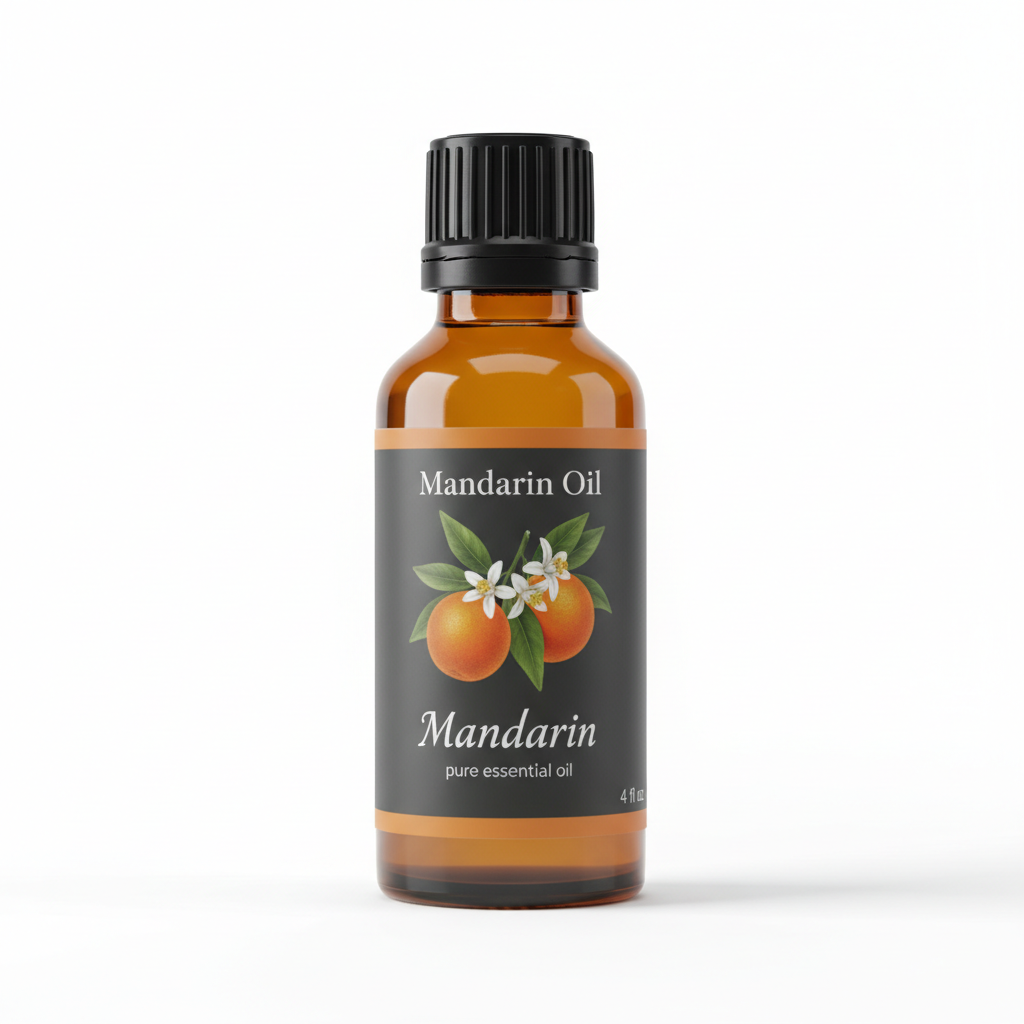
Mandarin Essential Oil
Our own Mandarin Essential Oil, in sizes from 0.5 oz to bulk.
From $12.99
Shop Now →Dilute to a number you chose
We sell the oil neat, so the maths is yours. Our guidance is 0.5% to 2% in a carrier oil with a patch test first, roughly 3 to 12 drops per ounce, and we would begin at the low end if citrus oils are new to you. The Tisserand Institute offers finer ranges, which it describes as guidelines and not rules. Putting the two side by side, with drops worked out by us at about 20 drops per ml and 29.57 ml to the ounce:
| Use | Tisserand range | Drops per 1 oz carrier |
|---|---|---|
| Face | 0.5 to 1.2% | about 3 to 7 |
| Body oils and lotions | 1 to 3% | about 6 to 18 |
| Reaction-prone skin | 0.2 to 1% | about 1 to 6 |
Our 2% sits inside the body range and above the face range, so for the face, or for skin that tends to react, the lower end is the sensible reading of both. Droppers differ, so if precision matters, weigh the oil; our certificate lists a relative density of 0.852 for one batch, which makes 1 ml about 0.85 g. We do not call any percentage universally comfortable, and the way to find yours is to start small. Our dilution and patch test guide has more, and the carrier oil article helps with the base.
Patch test, then wait longer than you think
Citrus peel oil is mostly limonene, and aged, air-exposed limonene is the usual source of reactions. In a Dutch series of 821 patients tested for limonene hydroperoxides, readings taken at day 7 picked up reactions that a day-3 reading had missed. Those were clinic patients tested with laboratory preparations, so they are not odds for a shopper, but they make a fair point: a reaction can arrive late.
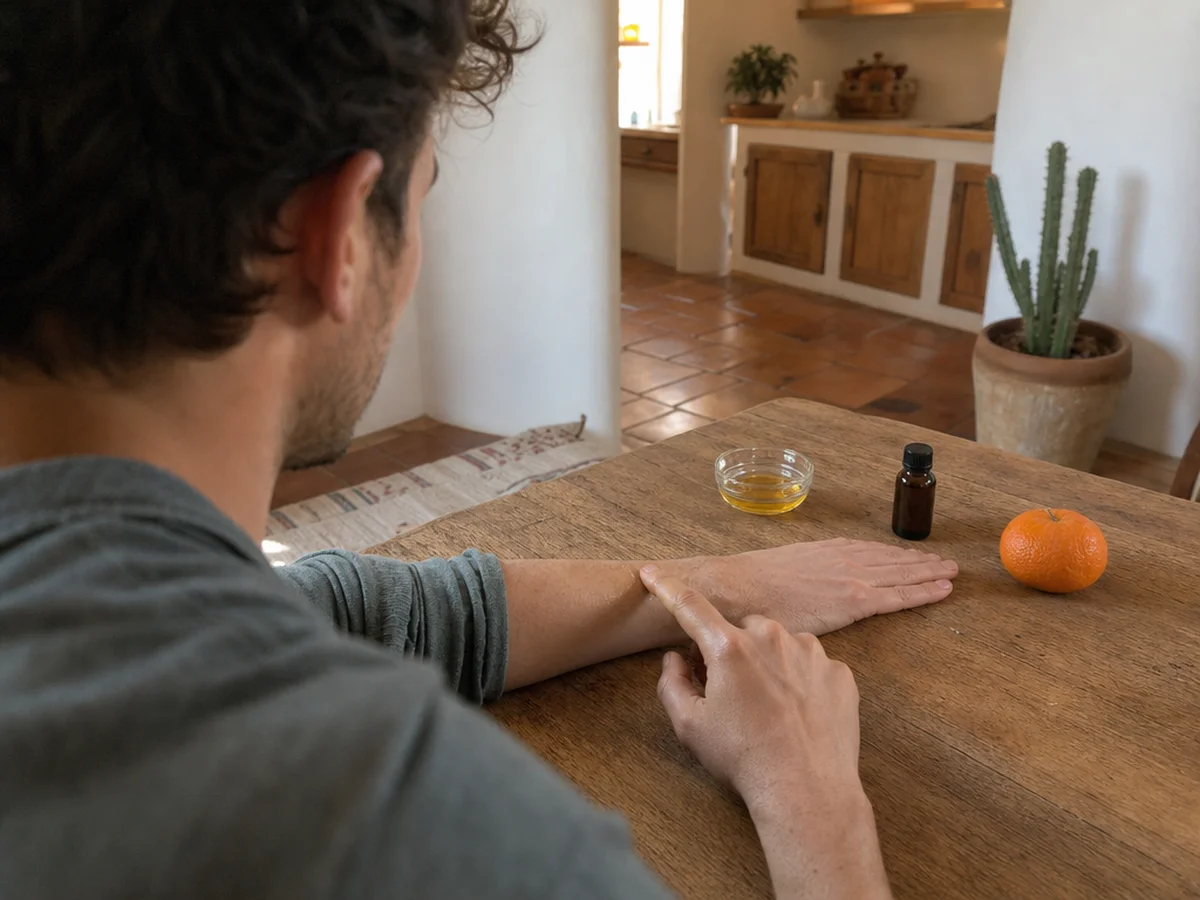
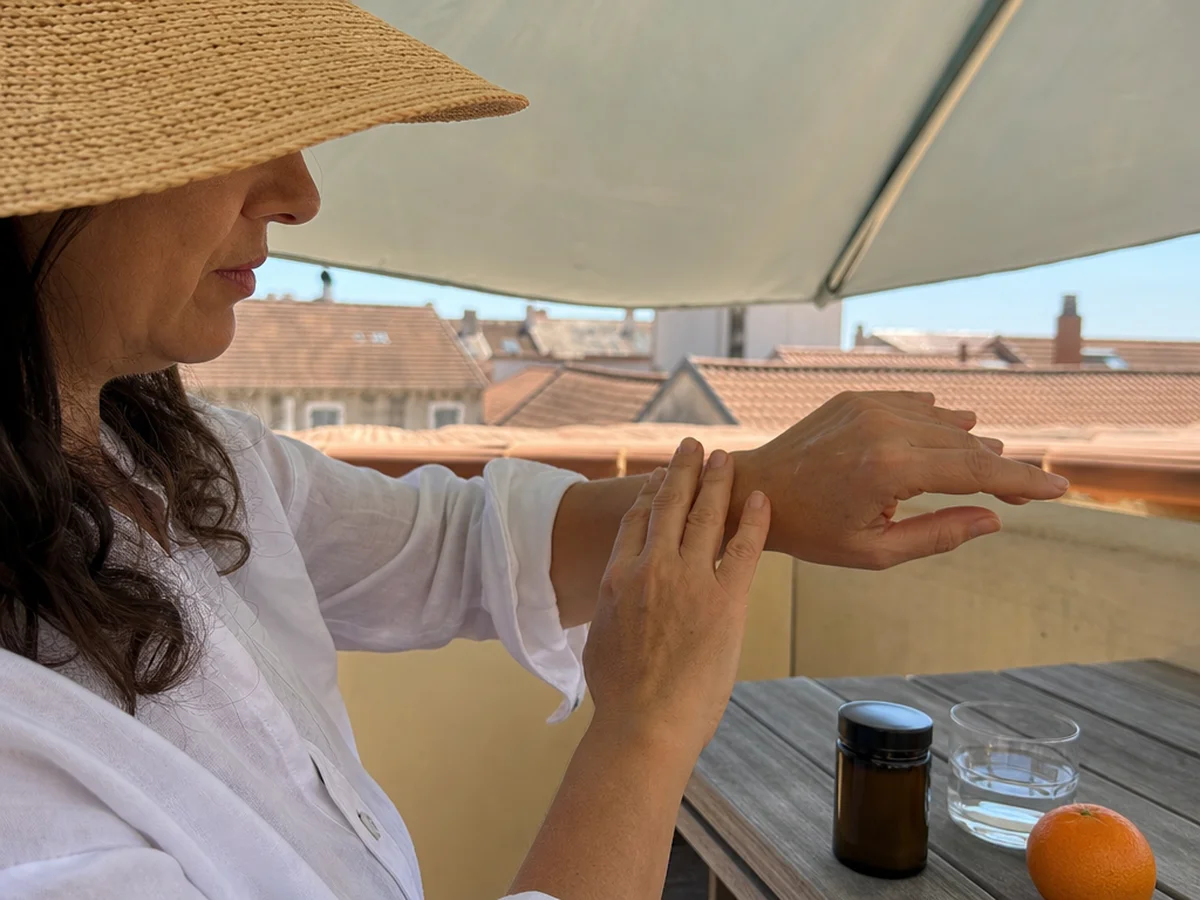
So here is our suggestion, reasoned from that finding and not drawn from a published protocol: put a little of your finished blend on the inner forearm, leave it alone, and look at it over the following several days. Redness, itching, blistering or swelling means stop and speak to a dermatologist. A home test is a rough screen and does not clear you for good. Poison Control adds two rules worth following: do not use essential oils on damaged skin, and wash off at once if a rash appears. Fresh oil helps too, which is why our storage guide pairs well with this one.
Children and other special cases
Tisserand does not recommend essential oils on children under 5, and for ages 5 to 12 it gives no more than 2 drops per 10 ml of blending oil. If you are pregnant, nursing, or managing eczema or another skin condition, ask your clinician before using any essential oil on skin; our pregnancy article lays out what the sources say.
A note on texture and scent
Mandarin is a light, sweet scent, so it tends to sit comfortably inside a plain carrier oil without taking it over. Give the finished blend a day to settle, then smell it again. You'll often find the scent has softened a little, and that is your cue to decide whether the dilution is right before you make a bigger batch. Small adjustments are cheap; wasted oil is not.
Sun
This is where reading the category helps. The Tisserand Institute lists expressed mandarin and tangerine oils among citrus oils with extremely small amounts of furanocoumarins, not enough to make them phototoxic, and gives tangerine at about 0.005% bergapten against roughly 0.2% for bergamot. It gives the IFRA and EU limit for bergapten in leave-on products as 15 ppm. As an illustration of scale, if an oil carried 0.005% (50 ppm) and you used it at 2%, the finished product would hold about 1 ppm. That is arithmetic from one published figure and not a measurement of our bottle, because the certificate we publish has no furanocoumarin data.
So we keep it simple: if you expect strong sun or a sunbed, use mandarin in a wash-off product or in the evening, and leave exposed skin alone that day.
Mixing a small blend, step by step
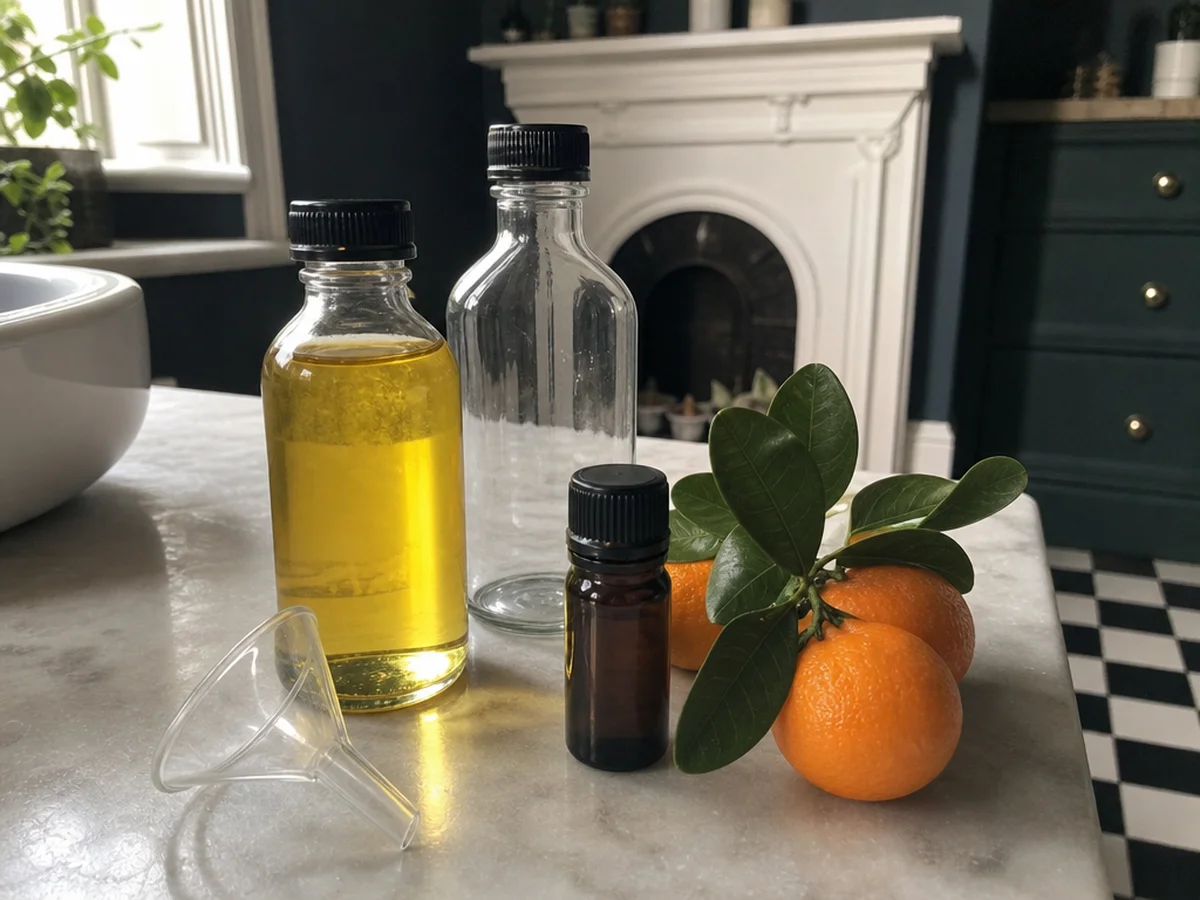
- Choose a clean bottle and a carrier oil you already like the feel of.
- Measure the carrier first, an ounce is easy to work with.
- Add the mandarin drop by drop, counting as you go, and stay near the low end if citrus is new to you.
- Cap it, swirl gently, and write the date and the dilution on the label.
- Patch test, wait, and only then use it more widely.
Keep the batch small. A small blend gets used while the oil is fresh, and if you decide you want a little more scent next time you can adjust a tiny batch without waste. The scent is the point here, so smell the finished blend before you use it and see whether it is as sweet and mellow as you hoped.
Where it fits
Body oil, a light massage blend, a bath oil or a scrub are all natural homes for a citrus note; our scrub and body oil piece has worked examples. Carrier oils, butters and bases come from your craft or supply shop, since we sell the mandarin alone.
A small blend, a calm patch test and a pleasant scent are a good place to start.
Mandarin Essential Oil
Mandarin Essential Oil from our own shop, in sizes from 0.5 oz to bulk.
From $12.99
Shop Now →Sources & Further Reading
- Dilution for essential oils (Tisserand Institute)
- Phototoxicity: essential oils, sun and safety (Tisserand Institute)
- We are here to help answer your frequently asked questions (Tisserand)
- Contact sensitization to hydroperoxides of limonene and linalool: Results of consecutive patch testing and clinical relevance (Contact Dermatitis, 2019)
- Essential oils: Poisonous when misused (Poison Control)