Mandarin Perfume Balm: A Solid Recipe Made by Weight
A solid perfume balm is three things: wax, a soft carrier oil and a little scent. Mandarin is a happy fit for the scent because it opens bright and juicy, though it is also one of the first notes to fade, which shapes how you build the balm. This formulation is worked out from published dilution guidance and arithmetic. We sell the mandarin oil; the wax, carrier and tins come from a craft or soap supply shop.
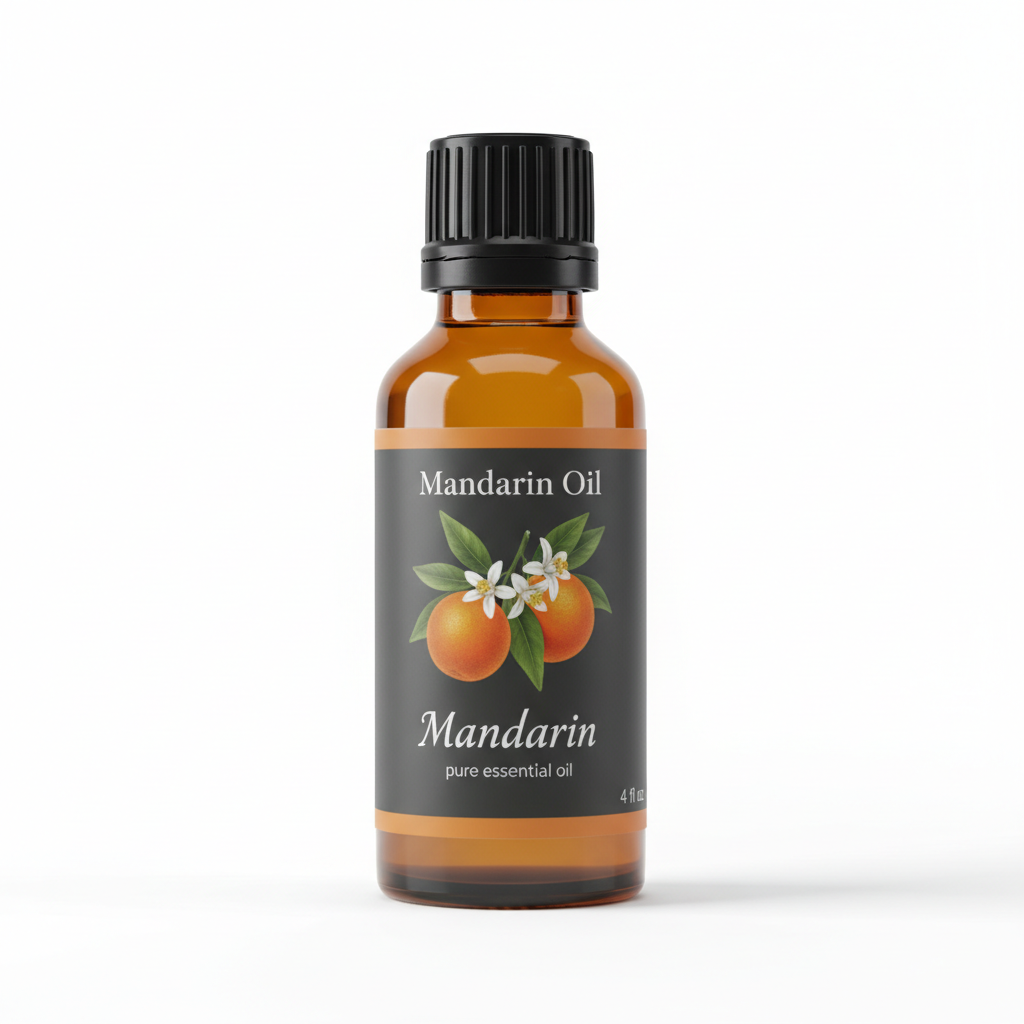
Mandarin Essential Oil
Our own Mandarin Essential Oil, in sizes from 0.5 oz to bulk.
From $12.99
Shop Now →Start with the dose
Our skin guidance is 0.5% to 2% in a carrier, with a patch test first. For context, the Tisserand Institute's dilution table gives 0.5 to 1.2% for facial cosmetics, 1 to 3% for body oils and lotions, and 0.2 to 1% for sensitive or impaired skin. It has no separate figure for a perfume balm (Tisserand Institute, Dilution for essential oils). Neither number is a mandarin-specific limit, so we do not call 2% safe. Putting the two together, we would start at 1%, keep to about 1.2% on the neck and behind the ears because they sit near the face, and drop to the sensitive range if your skin reacts to fragrance. If you plan to sell the balm, our article on IFRA and mandarin oil shows where to look first.
The arithmetic for a 100 g batch uses the relative density of 0.852 on our published certificate (so 1 ml weighs about 0.852 g) and a rough 20 drops per ml, which varies by dropper:
| Oil in the balm | Grams | Millilitres | Drops (approx.) |
|---|---|---|---|
| 0.5% | 0.5 g | 0.59 ml | 12 |
| 1% | 1.0 g | 1.17 ml | 23 |
| 1.2% | 1.2 g | 1.41 ml | 28 |
| 2% | 2.0 g | 2.35 ml | 47 |
We use 100 g because a kitchen scale cannot weigh the tiny amount a 30 g batch needs. Make the full batch and fill several small tins.
A starting formula
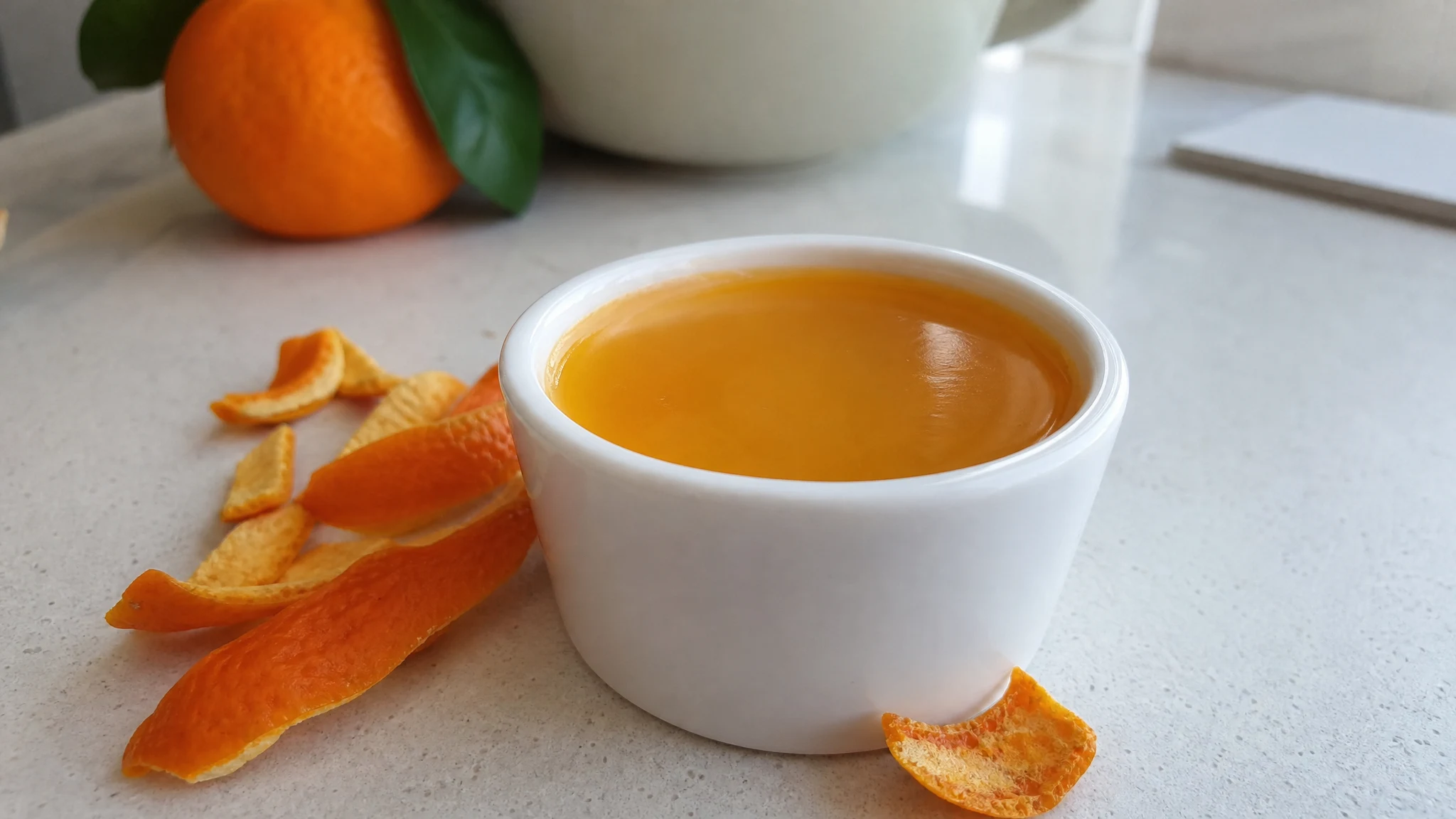
By weight, per 100 g: 20 g beeswax, 79 g liquid carrier oil and 1 g mandarin oil. A wax-to-oil ratio of about 1 to 4 is a common starting point rather than a tested result: more wax makes a firmer balm, more oil a softer one, so adjust next time. This formula contains no water, which is why it needs no preservative; adding anything water-based changes that. For picking a carrier that resists going rancid, see our carrier-oil article.
Method, and why the oil goes in last
- Melt the wax and carrier together in a heat-safe jar set in a hot water bath, never over a flame.
- Lift the jar off the heat and stir until clear.
- Let it cool until it is still pourable but no longer hot, then stir in the mandarin oil.
- Pour into tins right away and leave undisturbed until set.
- Write the date on each tin and keep the lid on.
Step three is plain physics. Limonene, the main component of mandarin peel oil, has a closed-cup flash point of 113 F (45 C) and a vapour pressure of about 1.55 mmHg at 25 C according to PubChem. It evaporates readily, so stirring it into very hot wax sends part of it into the air first.
Why mandarin opens bright and then settles
Vanillin, a classic base-note material, has a vapour pressure of about 0.000118 mmHg at 25 C in the same database. Dividing the two gives roughly 13,000, so on this one measure limonene is thousands of times more volatile. Vapour pressure is not a wear time, but it explains why mandarin is treated as a top note in perfumery and why a mandarin balm is lovely in the first minutes. If you want it to linger, pair it with something slower-moving from your own supplies, and check that oil's own limits. Our perfumery article and the roller-bottle blends article take the pairing question further.
Pouring, setting and sniffing
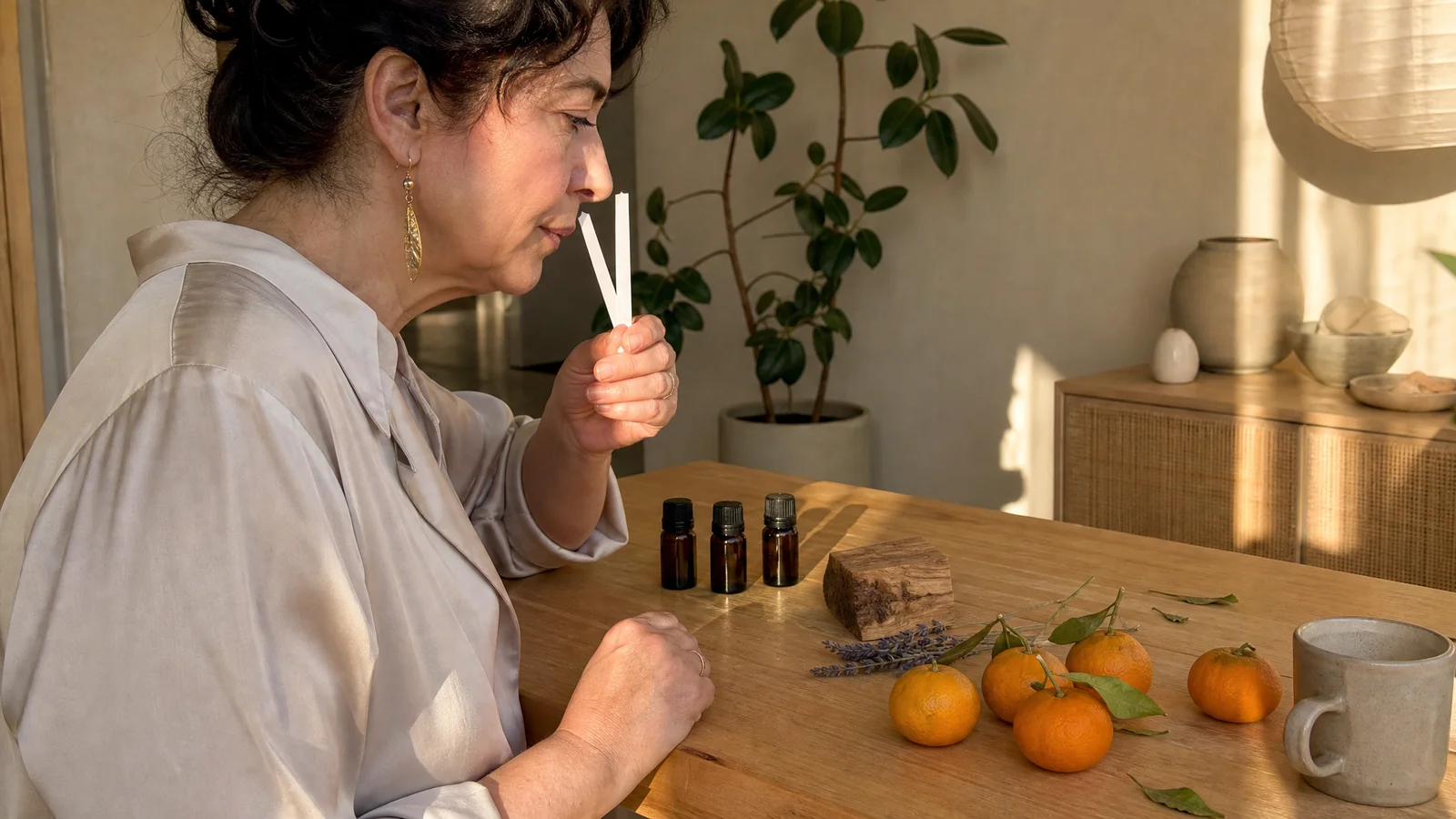
Pour slowly and keep the tins level while the balm sets, because a balm that cools on a tilt sets on a tilt. Once it is firm, open a tin and give it a sniff: the scent you notice right away is the bright, juicy top of the mandarin, and it softens as the wax settles over the next day or two. If you plan to give the balm as a gift, let it sit for a few days before you decide whether you like the strength of the scent.
Skin, sun and freshness
A balm on wrists and neck goes on skin that sees daylight. The Tisserand Institute says expressed mandarin contains extremely small amounts of furanocoumarins, not enough to be phototoxic, and notes the EU limit of 15 ppm bergapten in finished products on sun-exposed skin (Tisserand Institute, Phototoxicity: essential oils, sun and safety). That is general guidance for the category. If you add bergamot or any other phototoxic oil, its limit governs the whole balm.
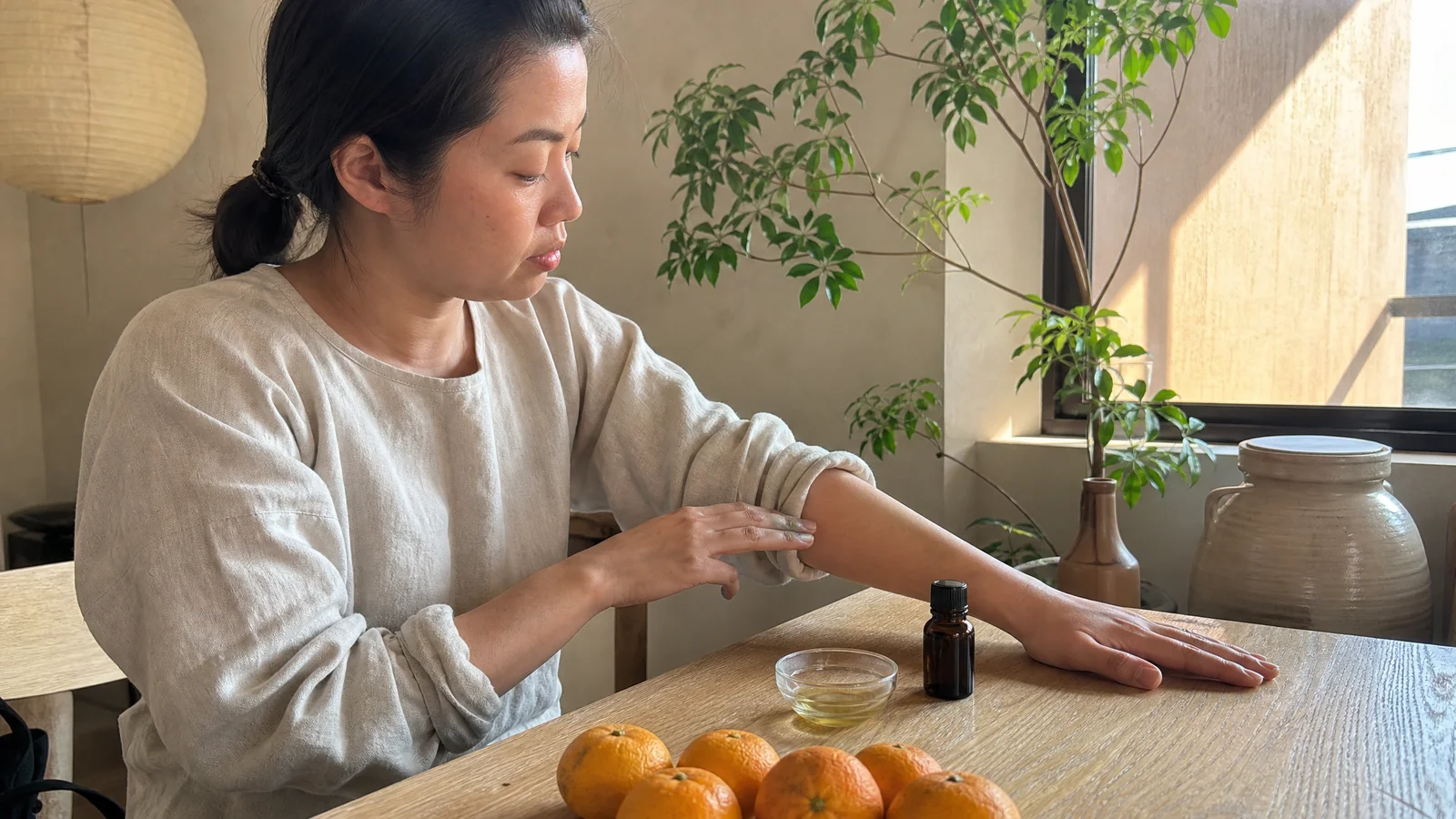
Limonene also oxidises in air; in a six-country patch-test study of 2,900 dermatitis patients, 5.2% reacted to oxidised R-limonene (Bråred Christensson et al., 2013). Those were patients, not the general public, but it is a good reason to use fresh oil, make a small tin you will finish, and date the lid. Patch test on the inner forearm first. If skin reacts, stop and see a dermatologist.
Who should skip it
Keep the oil away from eyes, children and pets, and never take it internally. Anyone pregnant or nursing, with a medical condition, or with a known fragrance or citrus allergy should check with a physician or allergist first, because dilution lowers the dose but does not remove an allergen. If you sell the balm, the FDA sorts products by intended use, so a fragrance balm that claims to relax or relieve anything starts to look like a drug (FDA, Aromatherapy).
When the tins are done, keep one on a desk or in a bag and use a fingertip, not the whole palm. A little balm warmed between two fingers goes a long way, and the gentlest way to learn a new scent is to start small.
Once you have the first tin, a fair way to learn what this oil does in your wax is to make two small batches that differ only in dose, label them with letters and have a friend choose blind. Your nose will tell you more than any chart.
Mandarin Essential Oil
Mandarin Essential Oil from our own shop, in sizes from 0.5 oz to bulk.
From $12.99
Shop Now →Sources & Further Reading
- Tisserand Institute. Dilution for essential oils. tisserandinstitute.org
- Tisserand Institute. Phototoxicity: essential oils, sun and safety. tisserandinstitute.org
- PubChem record for limonene (CID 22311, titled 1-Methyl-4-Prop-1-En-2-Ylcyclohexene), flash point and vapor pressure entries. pubchem.ncbi.nlm.nih.gov
- PubChem record for Vanillin (CID 1183), vapor pressure entry. pubchem.ncbi.nlm.nih.gov
- Bråred Christensson et al., 2013. An international multicentre study on the allergenic activity of air-oxidized R-limonene. Contact Dermatitis. Europe PMC
- US FDA. Aromatherapy. fda.gov