How to Buy Mandarin Oil: What to Check First
Mandarin oil is one of the friendliest citrus oils to shop for, because the questions that matter are short ones. It helps to know that it is a pressed citrus peel oil, which means it is at its best when it is fresh. Keep that in mind and the rest of the buying decision falls into place.
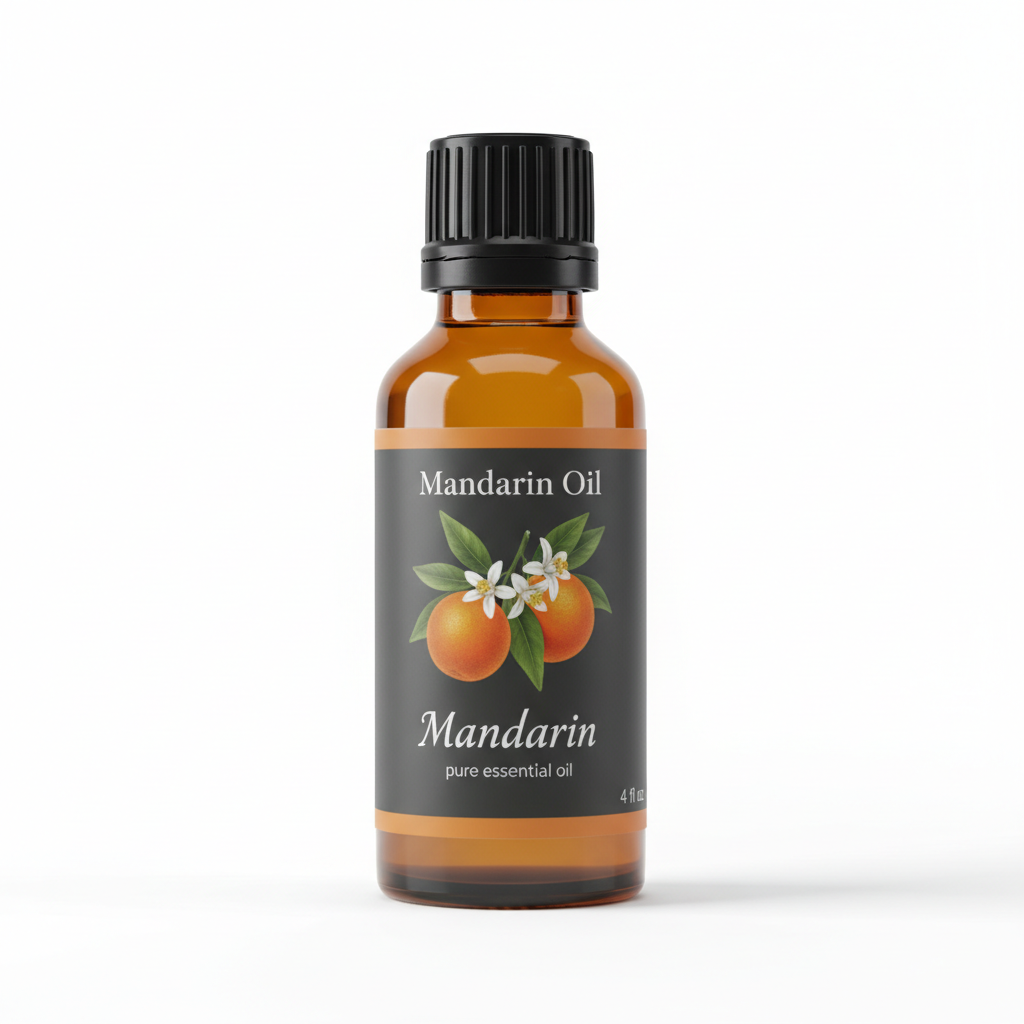
Mandarin Essential Oil
Our own Mandarin Essential Oil, in sizes from 0.5 oz to bulk.
From $12.99
Shop Now →Start with what you plan to make
A scented room or a candle needs less paperwork than a leave-on product you plan to sell. If the oil is going on skin, you will want dilution guidance and a patch-test plan. And since we sell ours as an external cosmetic oil, it is not for eating. The expert panel at EFSA that reviewed expressed mandarin oil concluded that it should be considered an irritant to skin, eyes and the respiratory tract and a skin sensitiser, which is a good reason to dilute, keep it away from eyes and ventilate your workspace. Our ingestion article explains what regulatory listings do and do not cover.
Read the label for four things
A good label gives you the botanical name (Citrus reticulata Blanco), the plant part, the extraction method and a lot code. EFSA describes the oil it assessed as obtained by cold expression from the fruit peel. That wording matters because "mandarin" can describe different materials. Our oil is cold-pressed from the peel, sold neat in amber glass. The label-reading guide goes through the wording line by line.
Let your nose have a say
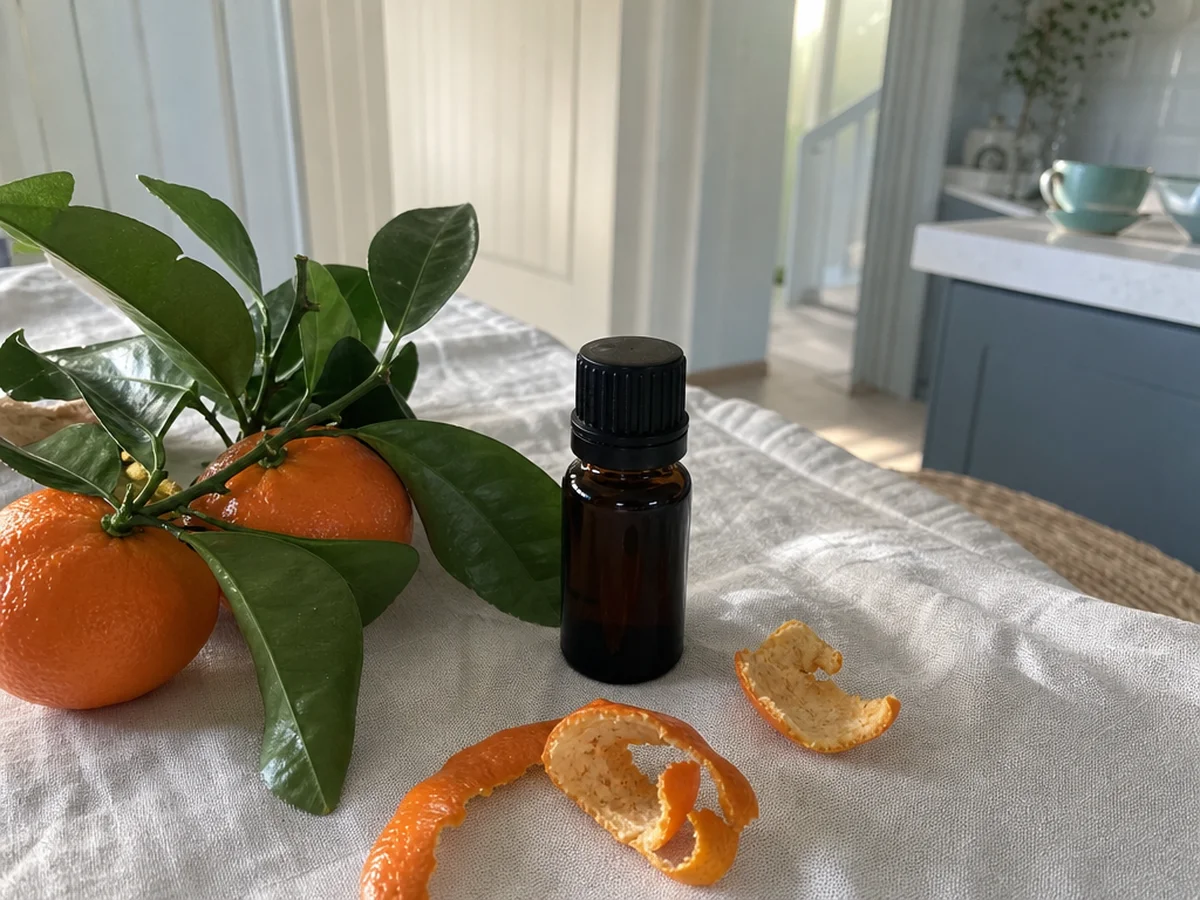
Paperwork is only half of choosing an oil. When your bottle arrives, open it, hold it a little below your nose and breathe in gently. We describe our mandarin as sweet, mellow and juicy, with a faint floral hum, a little like orange blossom, and softer than lemon, without the sharp edge. That is what you are looking for: a rounded, friendly citrus that smells like the fruit's skin and not like candy or cleaning fluid.
A good habit is to smell it again whenever you reach for it. A bottle that has been kept cool and capped should smell the same in a month as it did on day one, and if you ever find it duller or flatter than you remember, that is a nudge to order a fresh, smaller bottle.
Freshness is the quiet quality factor
Limonene, the main component of mandarin peel oil, reacts with air. The Tisserand Institute says most essential oils keep well for at least one to two years before oxidation takes effect, that refrigeration about doubles the useful life, and that citrus oils sometimes go cloudy as they oxidise. Oxidised limonene is also a recognised skin allergen: in a European multicentre study, air-oxidised R-limonene gave positive patch tests in 5.2% of 2,900 patients who had been referred for dermatitis. Those patients are not the general public, so the figure shows the issue is real, not how likely any one person is to react.
Our advice follows from that. Buy small, reorder often, keep the bottle tightly capped in a cool, dark place, and decant a working amount into a small airtight bottle if you buy bigger. When you order, ask us in writing for the date information that goes with your lot.
Know what a report can and cannot tell you
The Certificate of Analysis we publish for one batch lists appearance, smell, a relative density of 0.852, a refractive index of 1.471 and an optical rotation of +69.80 degrees. EFSA's specification for expressed mandarin oil gives ranges for the same three measures: density 0.844 to 0.859, refractive index 1.470 to 1.480, and rotation +61.5 to +81.5 degrees. Our figures sit inside all three, which is consistent with a mandarin-type oil.
These are bulk properties, so they confirm the oil's general character without breaking it into components. If you need a limonene share or a full profile by GC-MS, ask us in writing through the contact page before you order and keep the answer on file. Our walkthrough, how to read a mandarin oil COA, covers each line.
Choose a size by drops, not by bargain
Compare offers by cost per millilitre: price divided by size (1 oz is 29.57 ml and 0.5 oz is 14.79 ml). Check the shop page for the current price per size. Then think about how much you will really use. Our skin guidance of 0.5% to 2% in a carrier works out to roughly 3 to 12 drops per ounce of carrier. A 0.5 oz bottle holds about 12.6 g at our batch's relative density, which is several hundred drops, enough for many small blends. That is the case for starting small, and our bottle size guide goes deeper. A bigger size pays off if you will use it while it is fresh. We offer sizes from 0.5 oz to 400 lb, and our wholesale page covers samples and larger orders.

Who it is for
It suits anyone who enjoys a sweet, mellow, juicy citrus aroma in blends, scrubs, bath oils and room scents. We make no medical claims for mandarin oil, and anyone who is pregnant, nursing or managing a medical condition should check with their physician before using it.
One last small habit: keep the box or a note of what you ordered, with the date, next to the bottle. When you come back to reorder, you will know exactly how long a bottle lasted you, and that makes the next choice of size easy.
Do those few checks, ask for anything you need in writing, and you will end up with a bottle that smells just as bright when you open it as the day it arrived.
Mandarin Essential Oil
Mandarin Essential Oil from our own shop, in sizes from 0.5 oz to bulk.
From $12.99
Shop Now →Sources & Further Reading
- EFSA Panel on Additives and Products or Substances used in Animal Feed, 2021. Safety and efficacy of a feed additive consisting of expressed mandarin oil from the fruit peels of Citrus reticulata Blanco for use in all animal species (FEFANA asbl). EFSA Journal. PubMed Central
- Tisserand Institute. Is my bottle of essential oil oxidized or no longer good to use? tisserandinstitute.org
- Bråred Christensson J. and colleagues, 2013. An international multicentre study on the allergenic activity of air-oxidized R-limonene. Contact Dermatitis 68:214. Europe PMC