Where to Buy Mandarin Oil: Questions to Ask First
What a seller can put in writing about the bottle you will receive matters more than where you buy it. A pharmacy shelf, a craft supplier, a marketplace listing and a maker's own shop can each sell a lovely mandarin oil, and the same short list of questions works on all of them. We sell one mandarin oil ourselves, so we will also say plainly where our shop fits and when you are better off elsewhere.
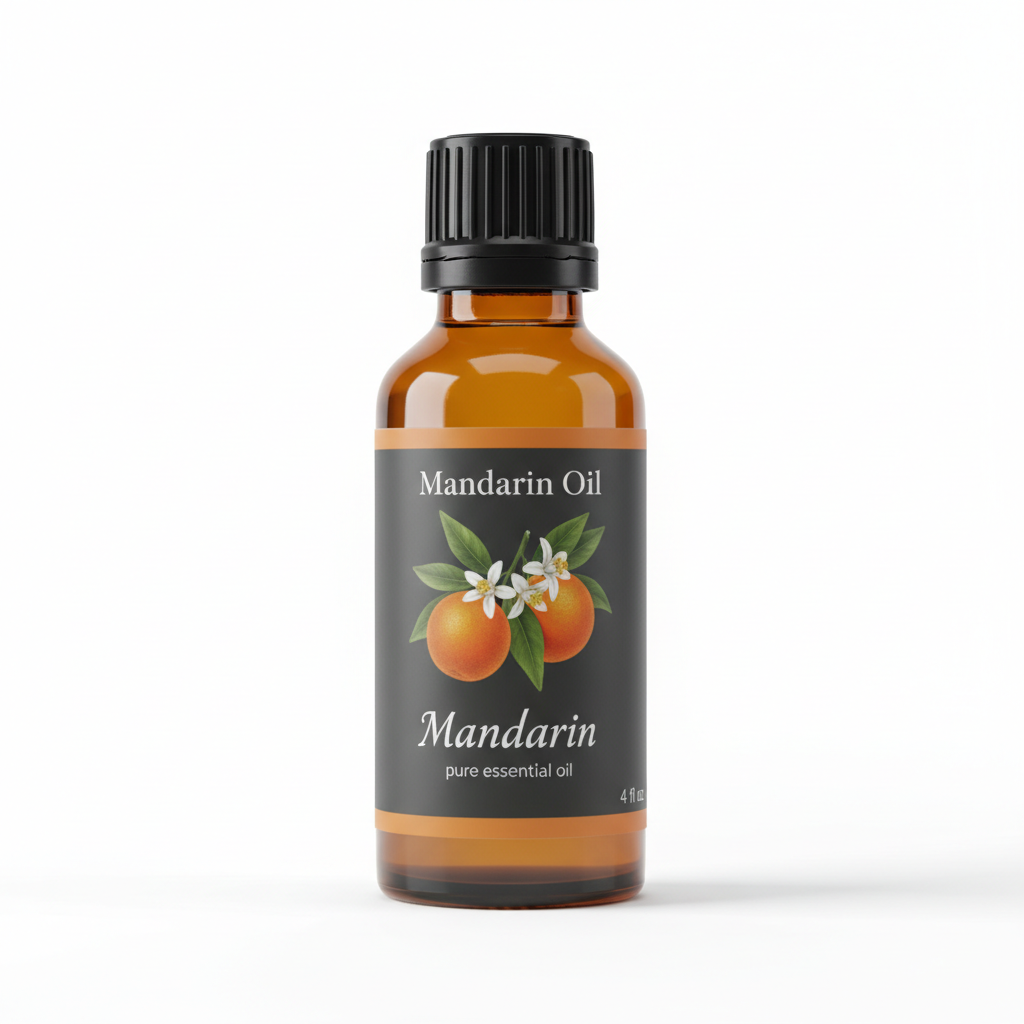
Mandarin Essential Oil
Our own Mandarin Essential Oil, in sizes from 0.5 oz to bulk.
From $12.99
Shop Now →Start with what you are making
The job decides how much paperwork you need. Scenting a room, candle or diffuser for yourself needs a recognisable oil, a recent date and a seller you can reach. A skin product for yourself adds the dilution question; our guidance is 0.5% to 2% in a carrier oil with a patch test first, and our label guide covers sun considerations. Products you will sell need lot-specific documents, because you are making claims to other people. The FDA decides whether a product is a cosmetic or a drug by its intended use, including what you say in labelling, on websites and in advertising (FDA, Aromatherapy), so the listing you write matters as much as the oil.
Five questions that work anywhere
- Does the listing give the botanical name, the plant part and the extraction? Ours reads Citrus reticulata, peel, cold pressed. Anything missing is your first filter, and petitgrain is a leaf-and-twig oil, not the same product.
- Is there a lot code, and will the seller send the document for that lot? A document you cannot match to your bottle is about someone else's bottle.
- What is the date? The Tisserand Institute says most essential oils keep well for at least 1-2 years, that heat, light and moisture speed oxidation, and that refrigeration about doubles useful life (Tisserand Institute). Those are general guidelines, but a seller who cannot give a date is giving you less information than the label implies.
- Who packed it, and how do you reach them? The FDA's cosmetic labelling guide expects the name and place of business of the manufacturer, packer or distributor (FDA, Cosmetics Labeling Guide).
- Can you start small? A small size or a sample costs little; a wrong 16 oz costs more.
You do not need to guess quality from price or smell. A Tisserand Institute article on GC-MS says the method is of considerable help in detecting adulteration but is not enough on its own in some cases (The Highs and Lows of GC-MS in Essential Oil Analysis), and a 2024 review treats adulteration of high-value oils as common enough to call for layered testing methods (Yang et al., 2024). A seller who offers a document trail has done the part of the work that is theirs. Our quality-check article carries the rest.
What a good reply looks like
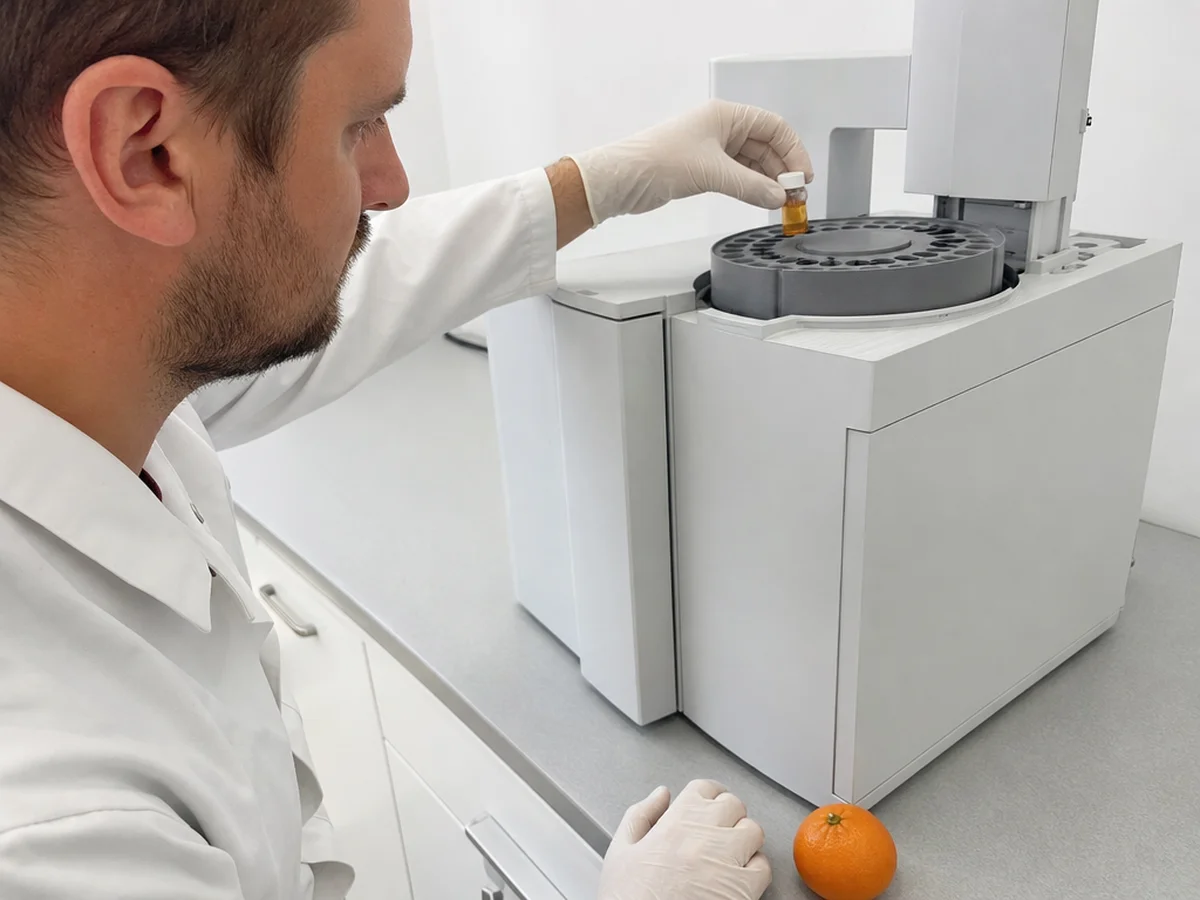
When you ask for lot documents, a useful reply names the lot code on your container, gives the date, says what was tested and by which method, and says what was not covered. That last point is the one buyers tend to skip. The same Tisserand article notes that classical GC-MS cannot find pesticides, so a composition report and a residue screen are different documents. A PDF whose lot code is not on your bottle, or a screenshot with no laboratory named, will not tell you much however official it looks. That is our reasoning from what a lot document is for, not a measured failure rate.
Where you can shop, and what each does well
- A maker or importer's own shop usually lets you reach whoever packed the oil and ask for lot documents before you order. Ask for the reply in writing.
- A craft or soap-making supplier sells the carrier oil, wax, bottles and droppers beside the oil, in maker-sized quantities.
- A pharmacy or natural-food store lets you see the bottle, the date and the cap. Check that the label states the botanical name.
- A marketplace listing offers choice; confirm who packed it and whether the seller will send lot documents.
Buying in person gives you three things a listing cannot: the label wording, a tight cap and a dark bottle, and a sense of how the oil is kept. A bottle that has sat near a window or a heater has used up part of its life before you carry it home.
A tip for your first order
Whoever you order from, begin with the smallest size you can. When it arrives, check that the label matches the listing, that the cap is tight, and that the bottle is dark glass. Smell it, write the date on the label, and keep a note of the lot code. Only then decide whether to go bigger. A first order is a cheap way to learn how a seller packs, answers questions and ships.
Where our shop fits
We sell one product, Mandarin Essential Oil, cold-pressed from the peel and sold neat with no additives or fillers, in sizes from 0.5 oz to 400 lb. We sell no other oil, no carrier, no bottles or droppers and no blends, so a first-time maker should pick up carrier oil and glass from a craft or soap supplier. Our wholesale page offers a sample bottle so you can evaluate the oil in your own product, a consultation form and private-label filling; orders ship in 1 to 2 business days, with extra handling for 5 lb and up, from a US-based facility.
The certificate we publish covers one batch and lists density, refractive index and optical rotation. If you need more for a product you will sell, such as GC-MS or residue data, ask in writing and keep our reply with your own records. Whatever you buy, start small and reorder: our own advice for pressed citrus oils is to keep the bottle tightly capped in a cool, dark place. Our bottle-size article works out the arithmetic, and the price article shows how to compare offers by the gram.
A good seller is easy to recognise: they answer the plain questions plainly.
Mandarin Essential Oil
Mandarin Essential Oil from our own shop, in sizes from 0.5 oz to bulk.
From $12.99
Shop Now →Sources & Further Reading
- US FDA. Aromatherapy. fda.gov
- US FDA. Cosmetics Labeling Guide. fda.gov
- Tisserand Institute. Is my bottle of essential oil oxidized or no longer good to use? tisserandinstitute.org
- Tisserand Institute. The Highs and Lows of GC-MS in Essential Oil Analysis. tisserandinstitute.org
- Yang et al., 2024. Advanced analytical techniques for authenticity identification and quality evaluation in Essential oils: A review. Food Chem. Europe PMC