Mandarin Essential Oil FAQ: Your Questions Answered
Ask five people what mandarin oil is and you will hear five answers: it is tangerine, it is orange, it is the one in the kids' room, it is basically lemon with the volume turned down. Here are the questions that sit behind most of those answers, with the plain version first and the source where one matters.
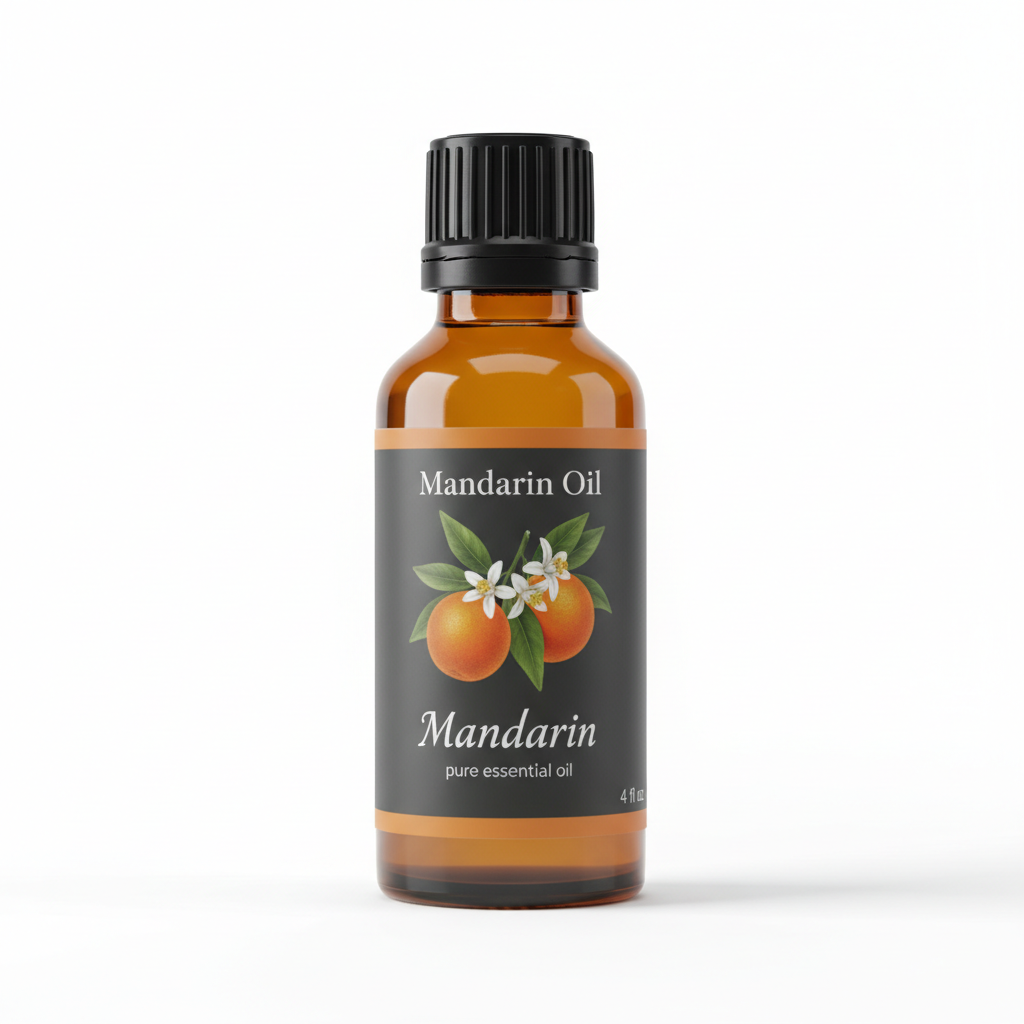
Mandarin Essential Oil
Our own Mandarin Essential Oil, in sizes from 0.5 oz to bulk.
From $12.99
Shop Now →Is it the same as tangerine or sweet orange oil?
Mandarin and tangerine are close relatives. Citrus researchers have long grouped the mandarin family into subgroups (king, satsuma, mandarin and tangerine), and both oils carry the botanical name Citrus reticulata. Sweet orange is a different story: it is a hybrid with a good deal of pummelo in its ancestry. Our guide to mandarin versus tangerine goes through the overlap.
How is it made?
Ours is cold-pressed from the peel, not distilled. The oil sits in tiny glands in the outer skin of the fruit, and mechanical pressing releases it without steam. We buy it from the extractors that do the pressing, so what we do is select it, and we sell it neat and unblended. The full walk-through is in how mandarin oil is made.
What does it smell like?
Sweet, mellow and juicy, with a faint floral hum and an orange-blossom tinge. It is the softest of the common citrus oils, without the sharp edge of lemon. If you want the full tour, the scent profile has it.
How much goes on skin?
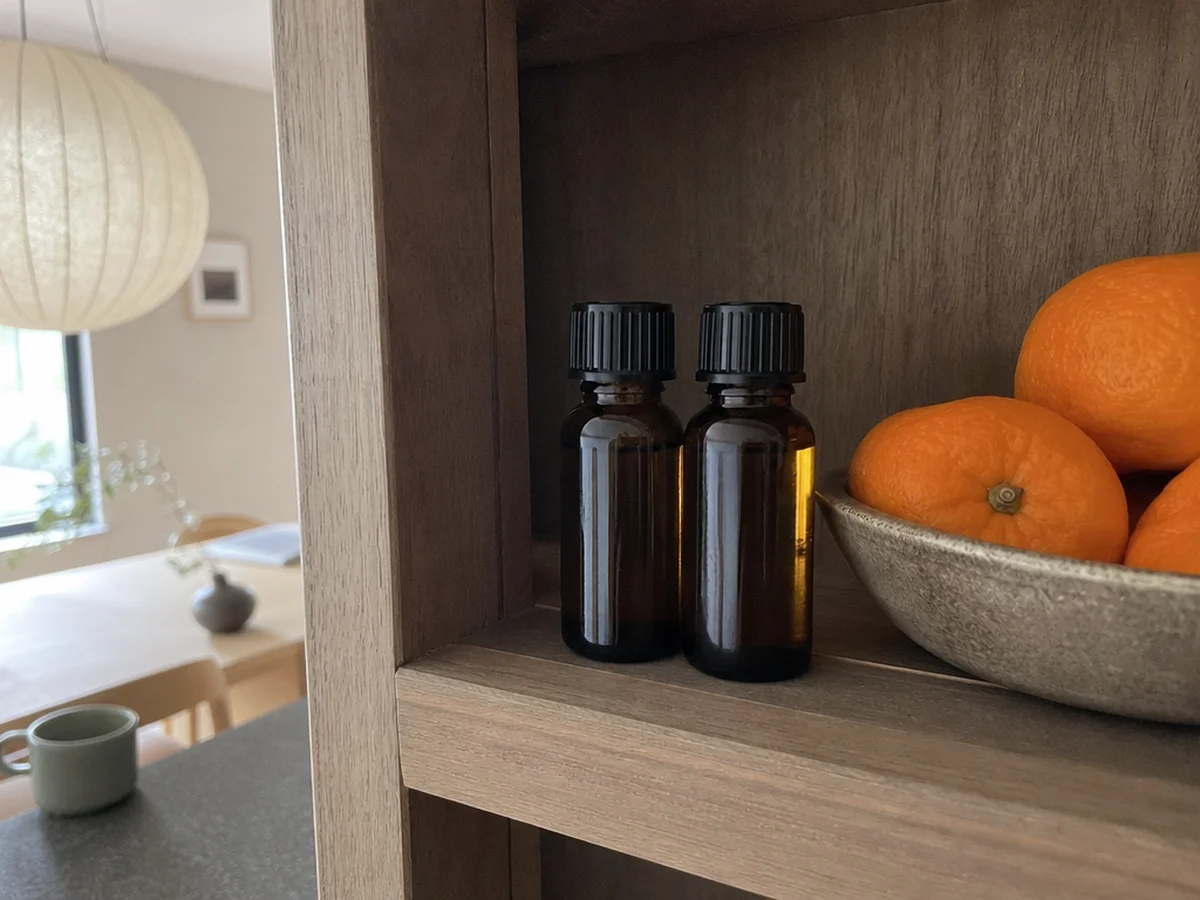
Our guidance is to dilute to 0.5% to 2% in a carrier oil and patch test first, which works out to roughly 3 to 12 drops per ounce of carrier. We start at the low end, and we would stay there for the face. For comparison, the Tisserand Institute lists 1 to 3% for body oils and lotions and 0.2 to 1% for reaction-prone skin. Nobody should treat 2% as a universal green light, so begin small and build only if you want to. The details are in our dilution and patch test guide.
What about sun?
Expressed (pressed) mandarin and tangerine oils are listed by the Tisserand Institute among citrus oils with extremely small amounts of furanocoumarins, not enough to make them phototoxic. That is a statement about the category. We do not have furanocoumarin data for our own bottle, so if you will be in strong sun or on a sunbed, a wash-off product or an evening routine is the easy choice.
Can I use it in pregnancy, around children or pets?
That is a conversation for your midwife, pediatrician or veterinarian, because the published guidance is thin and varies by situation. We sell an external cosmetic oil, keep it out of reach of children and pets, and have written up what authorities say in our pregnancy article.
Can I swallow it?
No. It is a concentrated aromatic material for external and aroma use, and Tisserand says essential oils should never be swallowed or used in food. The ingestion article explains what an ingestion listing does and does not cover.
How long does it keep?
Pressed citrus oils are mostly limonene, which reacts with air, so freshness matters more than a number on a label. Tisserand says most essential oils keep well for at least one to two years and that refrigeration about doubles that. Our habit is simple: buy a size you will finish, keep it tightly capped, cool and dark, and reorder when you are low.
How should I smell it before I use it?
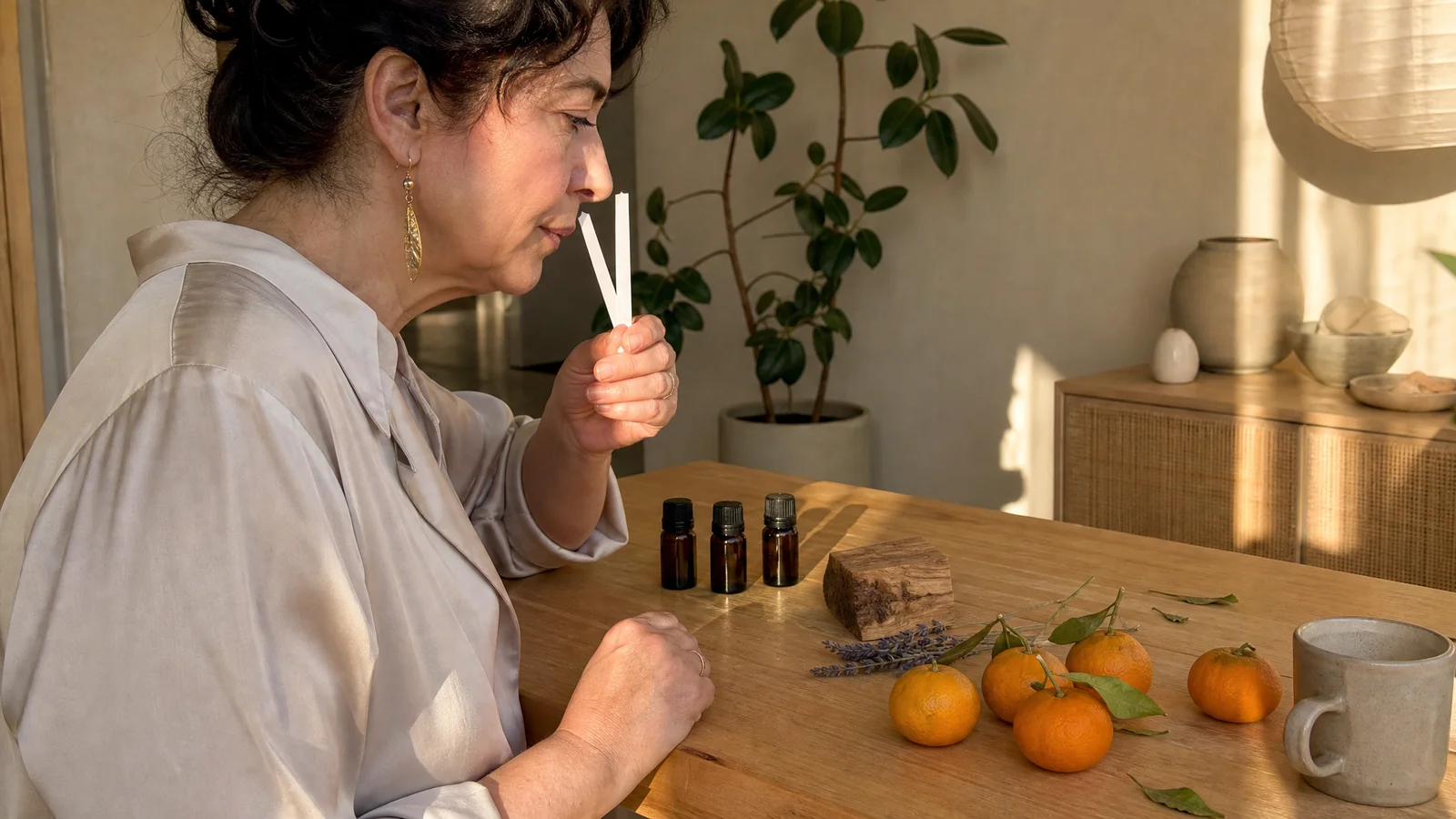
Put a drop on a paper strip rather than sniffing straight from the bottle. Hold it at arm's length and bring it closer slowly. You'll notice the first impression is sweet and juicy, and that a floral shading shows up a little later as the brightness fades. Smelling it this way tells you far more than a quick whiff from the neck of the bottle.
What is a good first project?
Something small. A few drops in a diffuser, or a little linen spray, is an easy way to meet the scent without committing to anything. If you would like to try a diluted body oil or a bath oil, mix a small amount and patch test first. We sell the mandarin only, so a carrier oil, a spray bottle or a diffuser comes from a craft shop, pharmacy or grocery.
Does the colour matter?
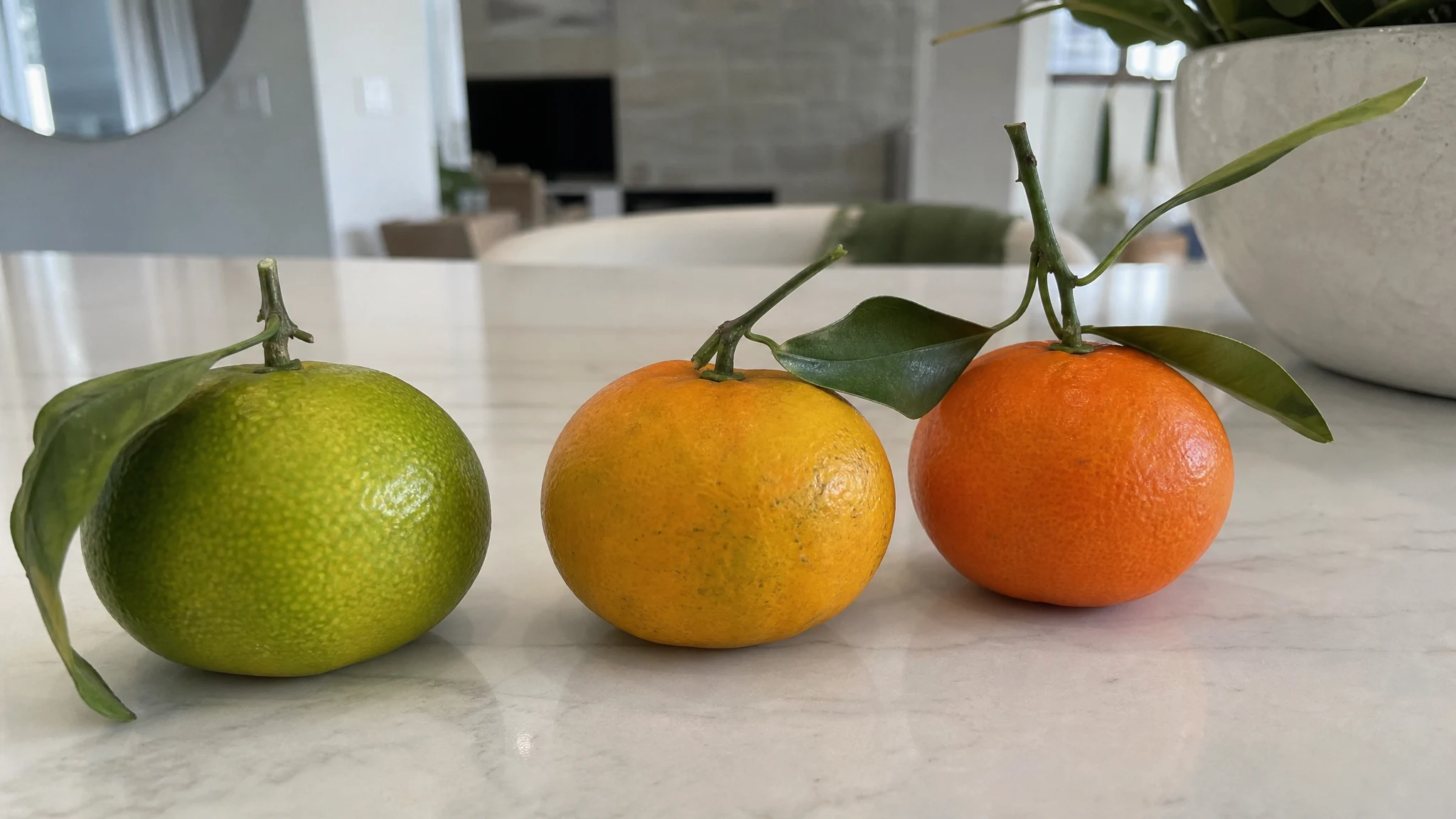
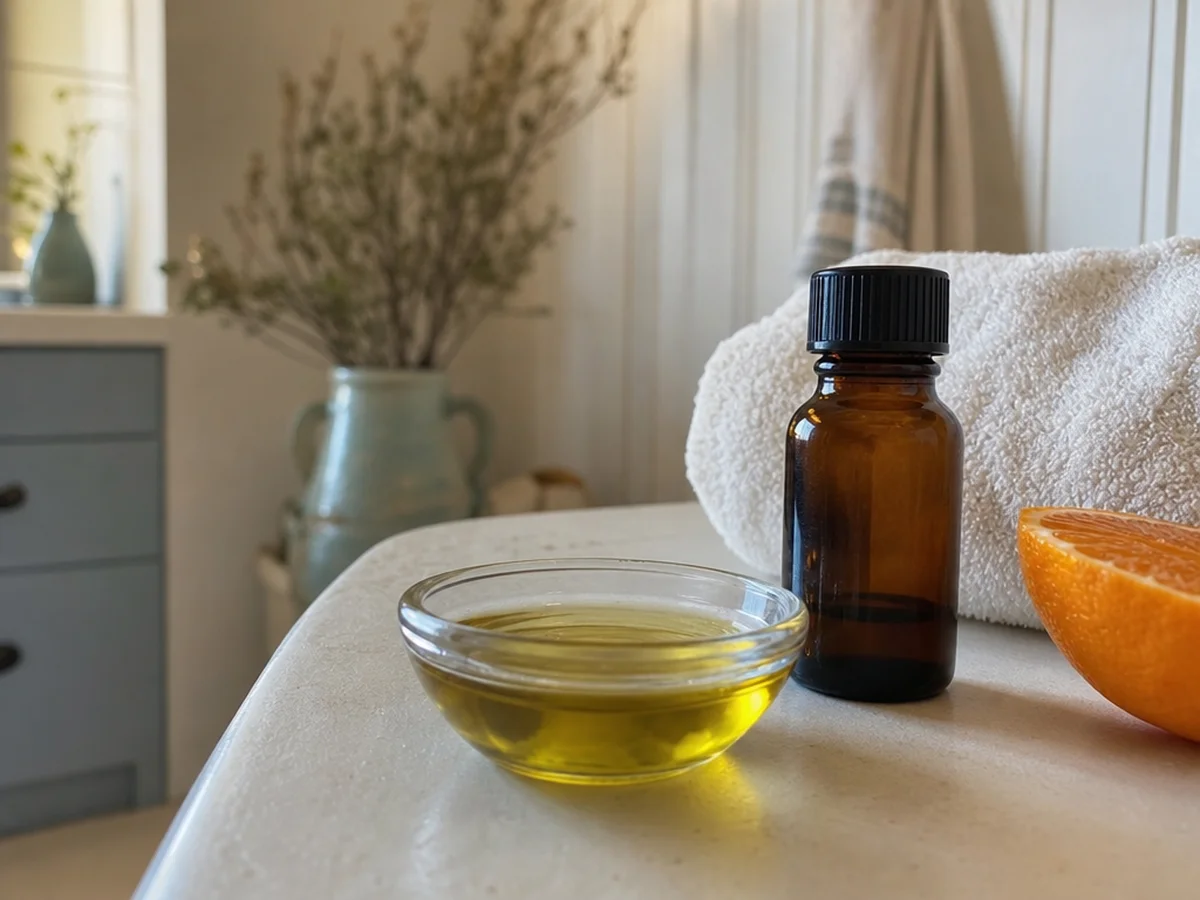
Mandarin oils come in different shades, and the certificate we publish describes our batch as a green liquid. A shade is a type label rather than a score, so if a bottle looks different from one you had before, treat it as a reason to ask a question and not as a verdict.
Does it have health benefits?
We make no medical claims. A 2026 review of the oil describes research that is mostly laboratory and animal work, which is interesting chemistry but not a promise about what a bottle does for you. We sell it for its aroma and for scenting your own cosmetic projects.
What does your certificate of analysis show?
The certificate we publish covers one batch: relative density 0.852, refractive index 1.471 and optical rotation +69.80 degrees at 20 C, with the oil described as a green liquid with a mandarin aroma. If you need a GC-MS report for your own formulation, ask us in writing through the contact page before ordering. Our COA guide reads it line by line.
Whatever you came to find out, a small bottle, a clean carrier and a patch test will answer most of the rest.
Mandarin Essential Oil
Mandarin Essential Oil from our own shop, in sizes from 0.5 oz to bulk.
From $12.99
Shop Now →Sources & Further Reading
- Genotyping by sequencing reveals the interspecific C. maxima / C. reticulata admixture along the genomes of modern citrus varieties of mandarins, tangors, tangelos, orangelos and grapefruits (PLoS One, 2017)
- Dilution for essential oils (Tisserand Institute)
- Phototoxicity: essential oils, sun and safety (Tisserand Institute)
- Is my bottle of essential oil oxidized or no longer good to use? (Tisserand Institute)
- We are here to help answer your frequently asked questions (Tisserand)
- Citrus reticulata Blanco: A Review on Chemical Composition and Biological Activities (Chem Biodivers, 2026)