What Does Mandarin Oil Smell Like? A Closer Sniff
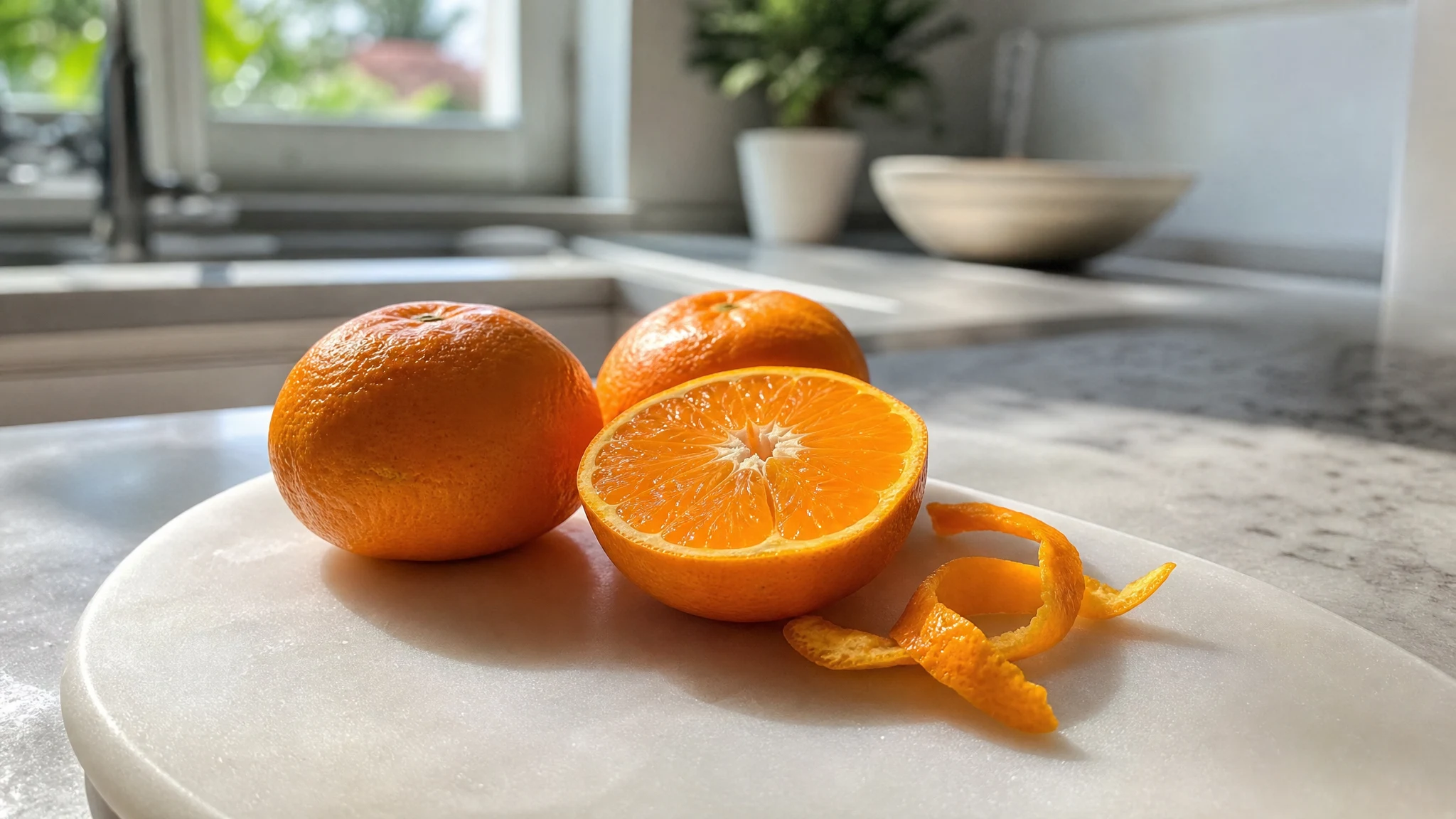
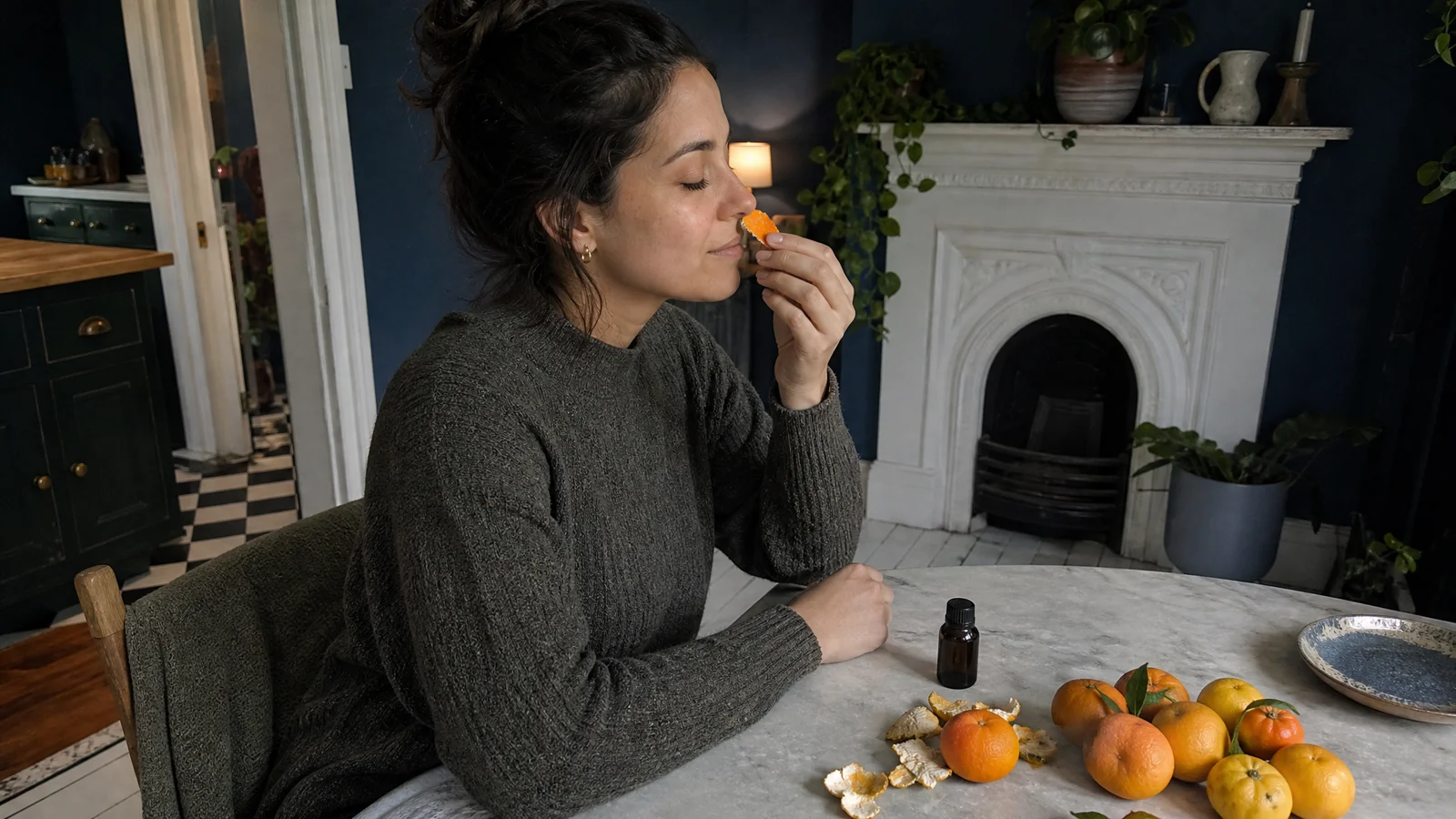
Open a bottle of mandarin oil and the first thing you meet is sweet, juicy citrus, softer than lemon and rounder than a plain orange peel. We describe our oil as sweet, mellow and juicy with a faint floral hum, and it is a top note, the first thing you smell and the first to fade. The interesting question is where that character comes from, and the answer is a nice surprise: most of the oil is one citrus molecule, and most of the personality hides in a few percent of everything else.
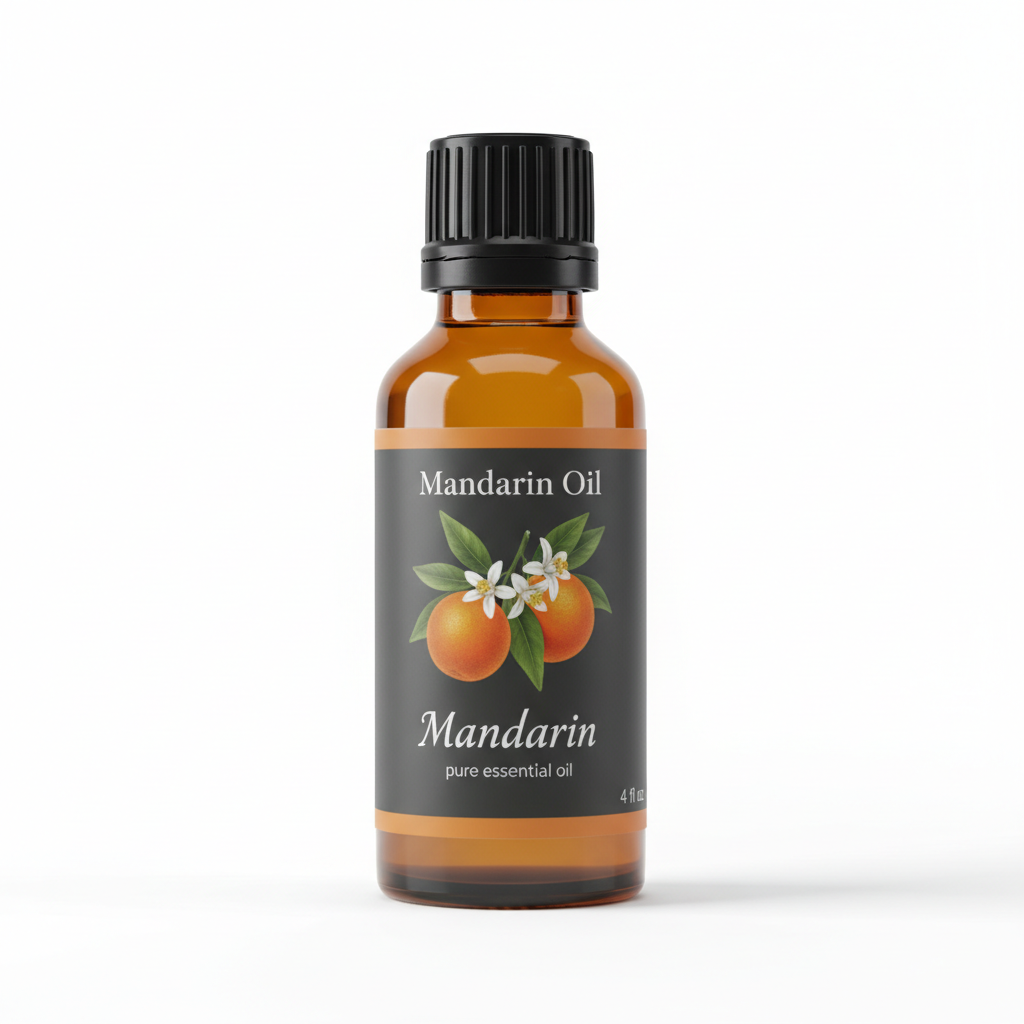
Mandarin Essential Oil
Our own Mandarin Essential Oil, in sizes from 0.5 oz to bulk.
From $12.99
Shop Now →Limonene is the citrus, and the rest is the mandarin
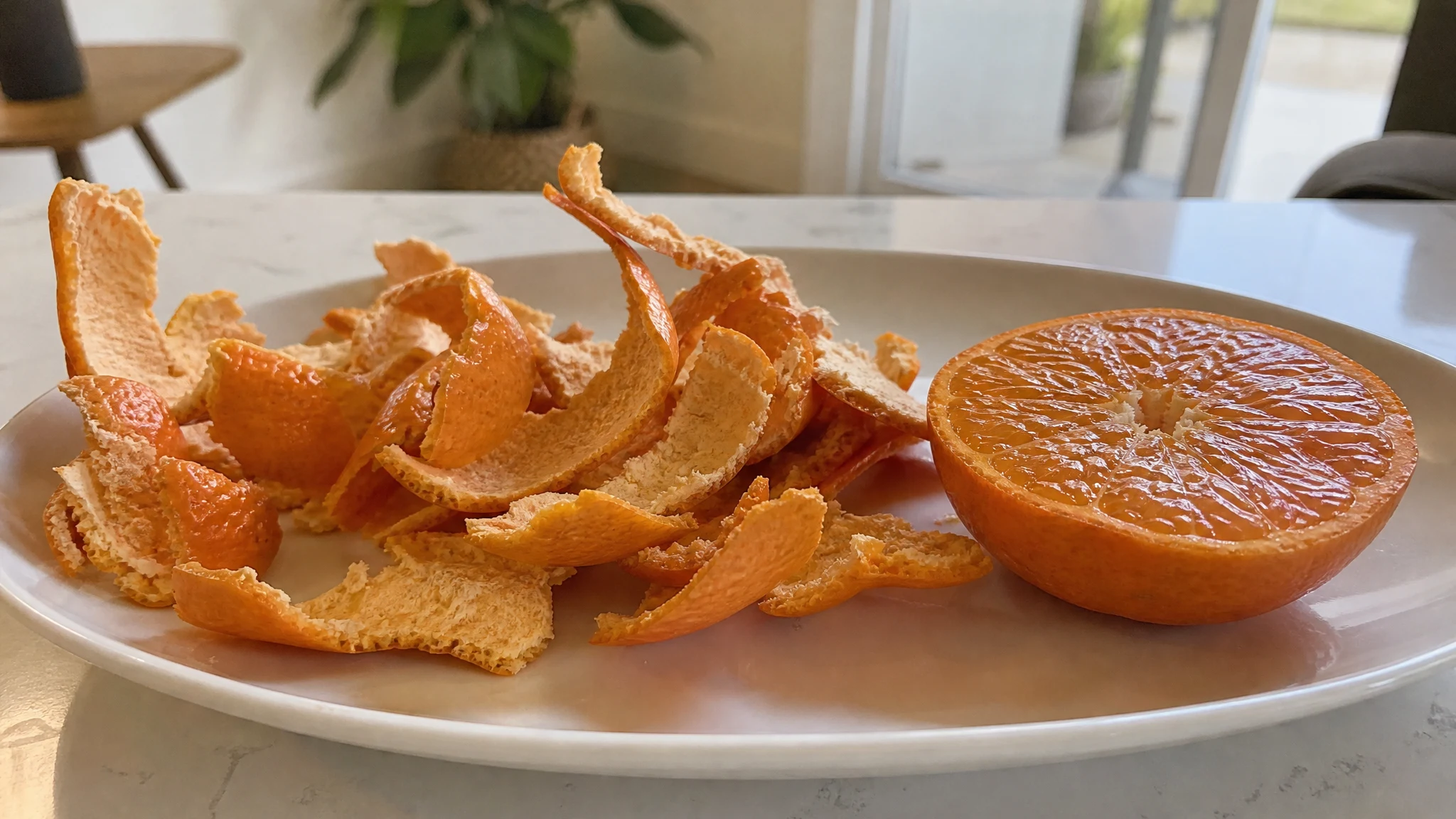
When EFSA measured ten batches of expressed mandarin oil, d-limonene averaged about 66% of the oil and gamma-terpinene about 22% (EFSA Panel, 2021). Together that is close to nine parts in ten. Limonene is the bright, clean, lemon-peel note that sweet orange oil shares, which is why the two can smell alike at a glance. So what makes a bottle read as mandarin rather than orange has to live in the smaller components.
The small molecules that carry the identity
One of them is methyl N-methylanthranilate, about 1% of the oil in EFSA's batches. PubChem's record for it quotes a handbook describing an "orange and mandarin-peel-like odor", and it is the marker compound EFSA tracks in its mandarin specification. Another is linalool, a floral compound present at only a fraction of a percent, which would be a sensible candidate for that faint floral hum. A third is alpha-sinensal, a citrus aldehyde: a review of citrus oils reports it above 0.7% in some mandarins, while sweet orange does not exceed 0.05% (González-Mas et al., 2019). The same review notes that traces of aldehydes under 0.1% may still influence the final aroma.
Matching molecules to smells is partly our reasoning: the descriptors come from handbook entries on the pure compounds, and a compound's smell on its own is not the same as its contribution inside a mixture. But the overall picture is consistent, and it gives you a good way to think about mandarin. The loud part is limonene; the part that says "mandarin" is a quiet few percent.
Many molecules, one smell
Scent researchers who studied five tangerine hybrids found 49 aroma-active compounds, with aldehydes the biggest group, and concluded that no single compound defines the flavour (Miyazaki et al., 2012). Tangerine is not our oil, but it shows how a citrus smell is built: by an orchestra rather than a soloist.
Why two bottles of mandarin can smell different
Variety and growing conditions come first. The citrus review notes that composition can vary within a species, with limonene running from about 95% down to 60% in studies of mandarin. Then there is authenticity. A 2021 study bought mandarin oils online and compared them with the ISO 3528 standard; only one of the eleven samples met every chromatographic specification, and two looked like sweet orange oil (Pierson et al., 2021). The authors also say some failures were marginal and could be natural variability. For your nose the lesson is practical: a "mandarin" that smells like plain orange deserves a question to the seller.
Age matters too. Oxidation is encouraged by heat, light and moisture, according to the Tisserand Institute, and an oil that has gone flat or sharp is worth retiring rather than using (Tisserand Institute). Our storage article shows how to protect the aroma.
What you'll notice, in order
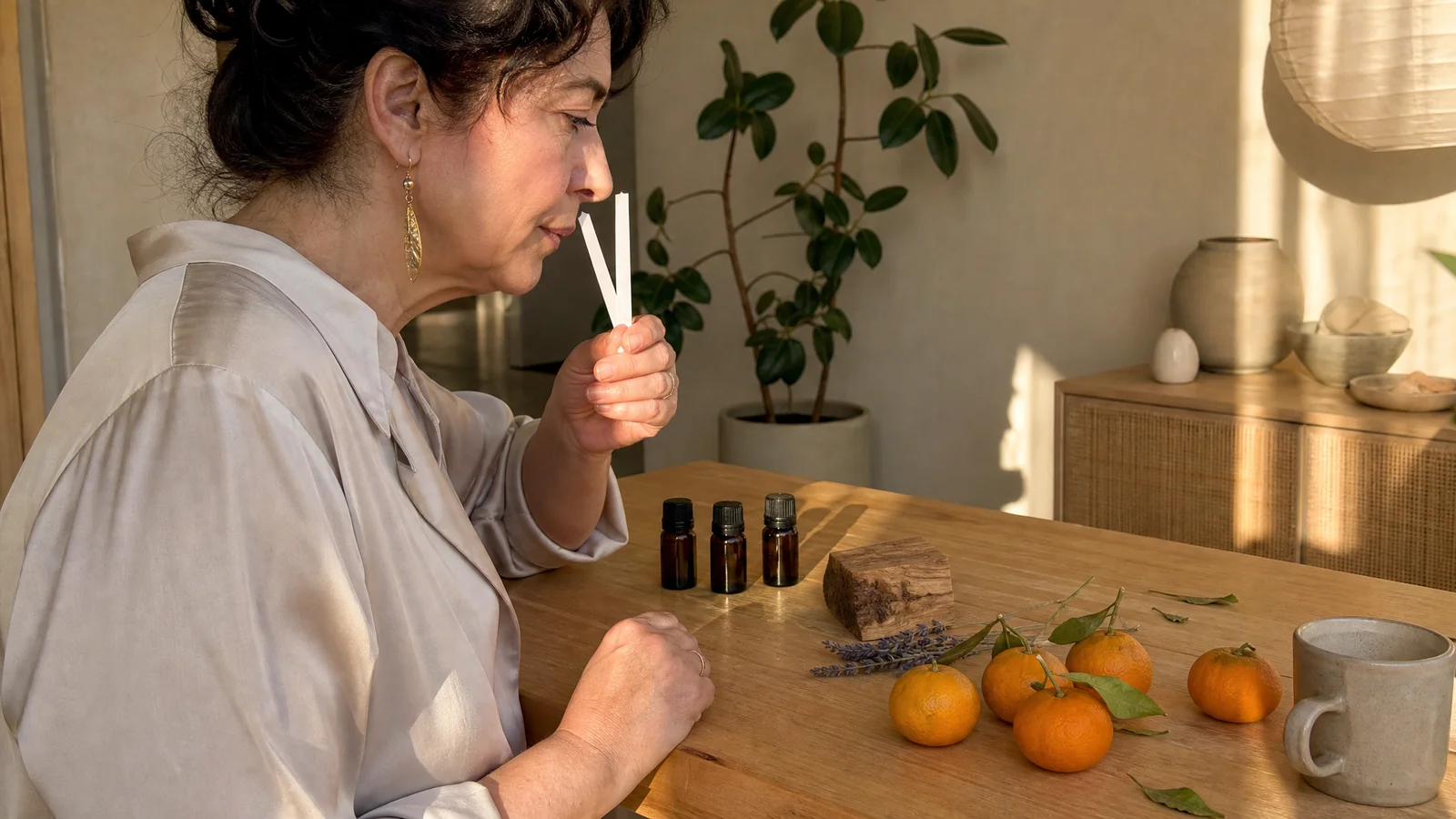
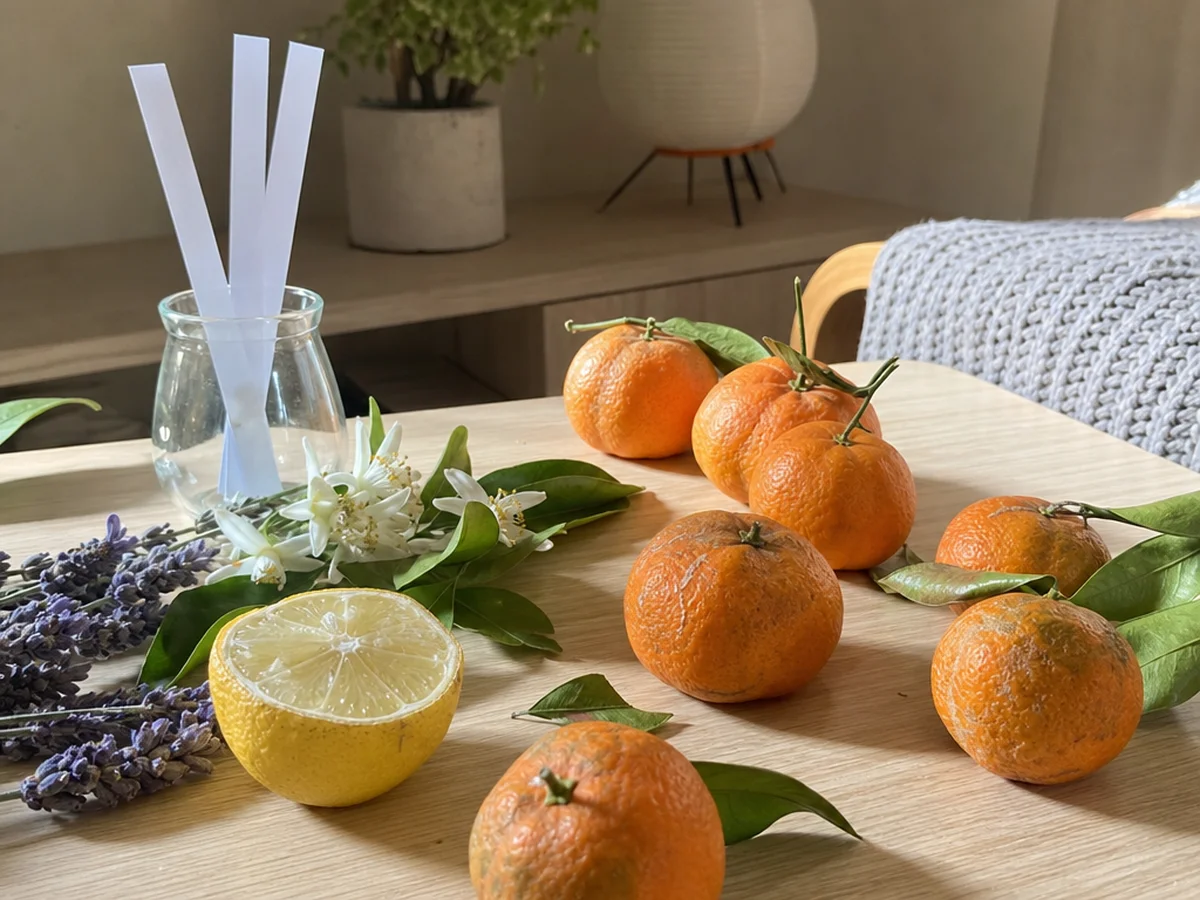
Take a paper strip, add a drop, and wave it gently. The first thing you'll catch is sweet, juicy citrus, the kind that makes you think of peeling fruit at a kitchen table. Within a minute a softer layer appears, a faint floral hum that sits under the orange like a thin ribbon. After several minutes the brightness thins out and what is left is mellow and quiet.
That fade is the top-note character we keep mentioning, and it is part of the charm. It is why mandarin feels welcoming and never pushy.
Where it sits among the citrus oils
Next to lemon, mandarin is rounder and sweeter, with none of the sharp edge. Next to a plain orange peel it often seems softer and a touch more floral. If you enjoy easy, everyday scenting, a diffuser or a linen spray, that softness is exactly what you want from it.
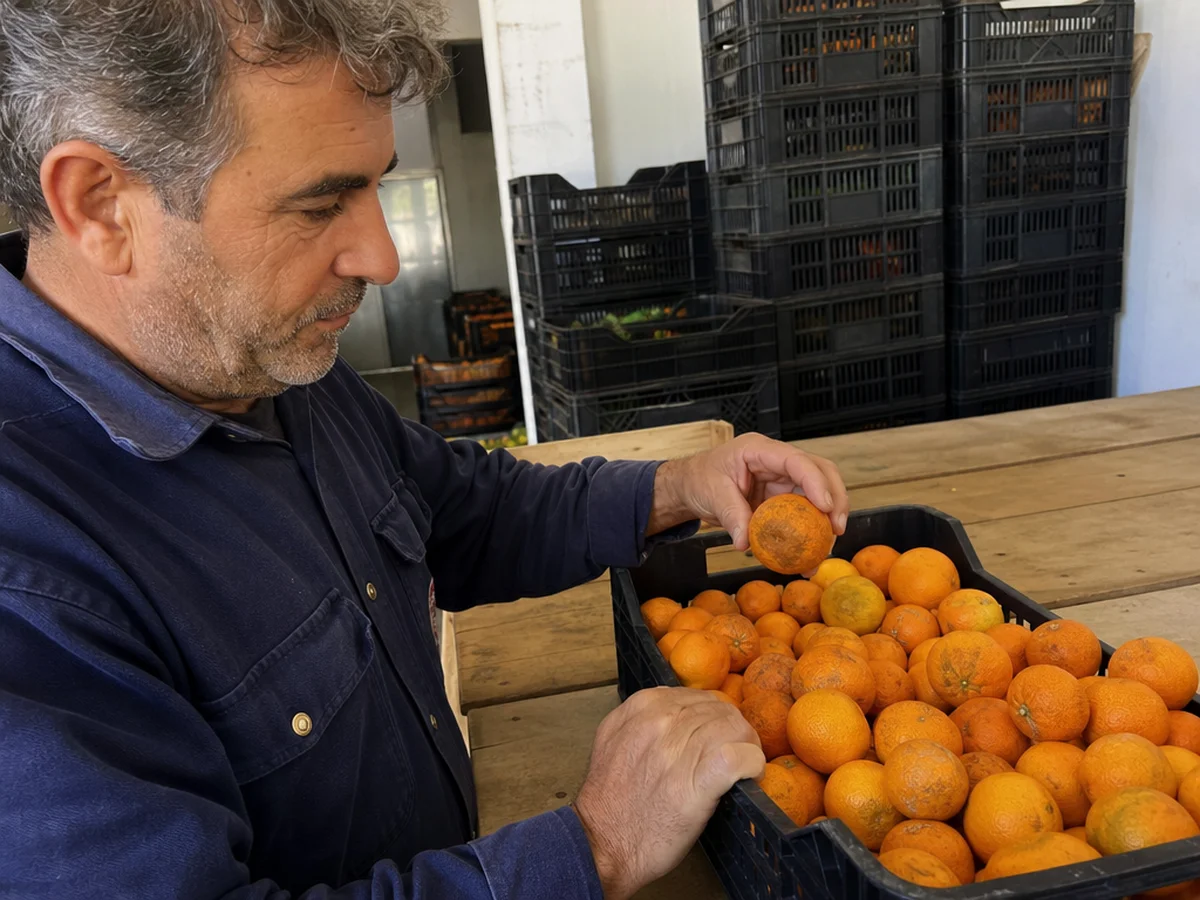
Smelling a bottle with intent
A simple way to judge a bottle is to smell it at arm's length, then again after a few minutes on a paper blotter. Expect the opening to be bright and the heart to be softer; that fade is the top-note behaviour you can read about in our perfumery piece. If you have a sweet orange oil, compare the two side by side. Keep the oil off your skin while you test, since our guidance for skin is 0.5% to 2% in a carrier with a patch test first.
The certificate we publish for one batch prints "Unique aroma of mandarin" as both its standard and its result, which is a pass line rather than a profile. If you want to see the trace compounds behind the scent for your own lot, ask us in writing for a GC-MS report; our COA guide explains what the certificate does show. For how mandarin compares with its closest neighbour, see mandarin and sweet orange, and for ripeness see green and red types.
Mandarin rewards a slow sniff: sweet citrus first, then, if you wait, that gentle floral shading underneath.
Mandarin Essential Oil
Mandarin Essential Oil from our own shop, in sizes from 0.5 oz to bulk.
From $12.99
Shop Now →Sources & Further Reading
- EFSA Panel on Additives and Products or Substances used in Animal Feed, 2021. Safety and efficacy of a feed additive consisting of expressed mandarin oil from the fruit peels of Citrus reticulata Blanco for use in all animal species (FEFANA asbl). EFSA J. PMC8190682
- González-Mas et al., 2019. Volatile Compounds in Citrus Essential Oils: A Comprehensive Review. Front Plant Sci. PMC6370709
- Miyazaki et al., 2012. Aroma characterization of tangerine hybrids by gas-chromatography-olfactometry and sensory evaluation. J Sci Food Agric. Europe PMC
- Pierson et al., 2021. Type and magnitude of non-compliance and adulteration in neroli, mandarin and bergamot essential oils purchased on-line: potential consumer vulnerability. Sci Rep. PMC8160360
- PubChem record for Methyl N-methylanthranilate (CID 6826), odor entry. pubchem.ncbi.nlm.nih.gov
- Tisserand Institute. Is my bottle of essential oil oxidized or no longer good to use? tisserandinstitute.org