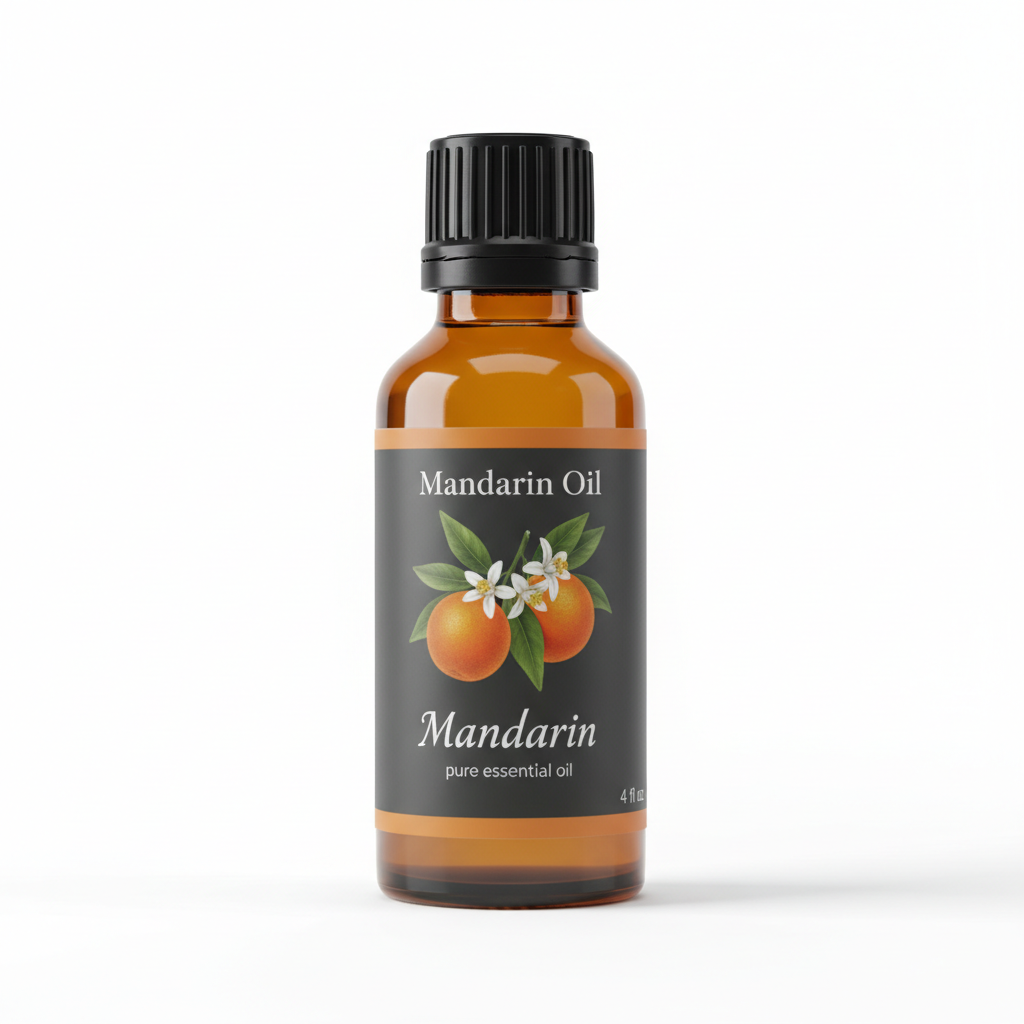
Selection, not a still.

Our Sourcing

On the oils we distil, the promise is that we run the still. Mandarin has no still, so the promise has to be a different one.

2 Named Origins
Days Cold-Settled Before Filtering
Every Drum Analysed On Arrival
Not Phototoxic, Unlike Lemon

The Claim We Cannot Make Here

There is no mandarin distillery in this story, because mandarin oil is not distilled. It is pressed, and it is pressed at juice scale in the country where the fruit grew.

The oil is a co-product. The fruit is going in for juice either way and the peel gives up its oil on the same pass. Purpose-pressing citrus for oil alone does exist, in the Italian sfumatrice tradition, and it costs several times as much for material sold as a specialty rather than as ordinary mandarin. Anyone describing commodity mandarin as purpose-pressed is describing one or the other, and charging for neither.

So we do the thing that is actually available to us. We write a specification, buy from extractors we can name in regions we can name, and analyse what arrives before any of it reaches a bottle.

Selection is less romantic than copper. For this category it is also the only honest lever anybody has.

Two Countries, Both Named

Split between two southern hemisphere origins, and neither of them a mystery.

Brazil

The largest citrus processing complex in the world, which is why mandarin is a dependable article rather than an occasional one. Volume on that scale makes knowing your extractor the whole game, and we insist on knowing ours.

Argentina

The other half of our sourcing, with a mature processing sector and laboratories attached to the plants. Two origins also mean a difficult year in one is not automatically an empty shelf.

Country of origin is printed on every bottle, and if you want to know which extractor a lot came from, ask and we will tell you.

From Emulsion to Bright Oil

Whole fruit enters an in-line extractor and the peel oil leaves it as an oil-in-water emulsion, not as oil. Almost everything separating a good mandarin from a dull one happens after that moment.

The emulsion is desludged to drop solids, then parted from the water on a high-speed polishing centrifuge. The oil is held close to freezing for days or weeks so the natural waxes fall out of it, and finally polish filtered. Cutting that cold hold short is the common economy, and it shows up as haze.

None of this is exotic. It is the difference between an extractor who finishes the job and one who passes the emulsion's problems down the line.
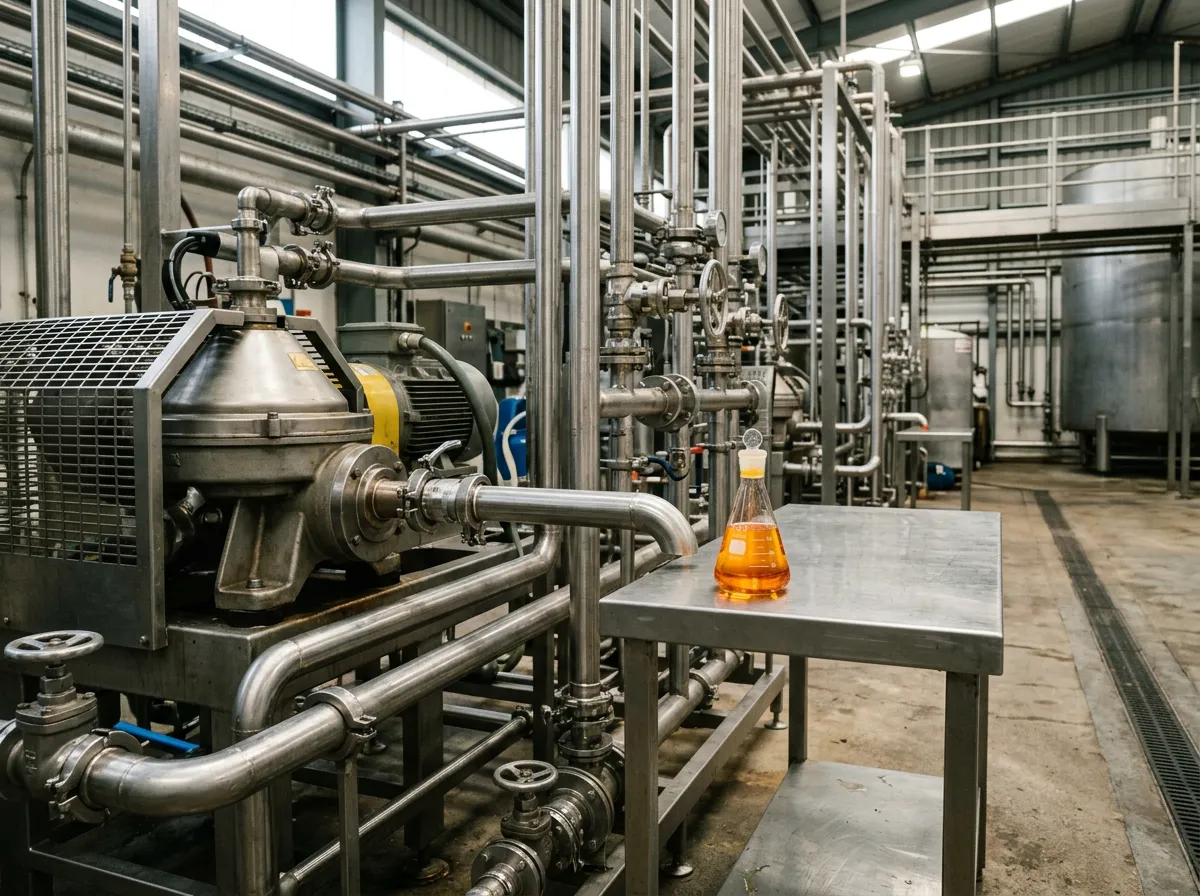
High-speed polishing centrifuge and stainless pipework in a citrus processing plant
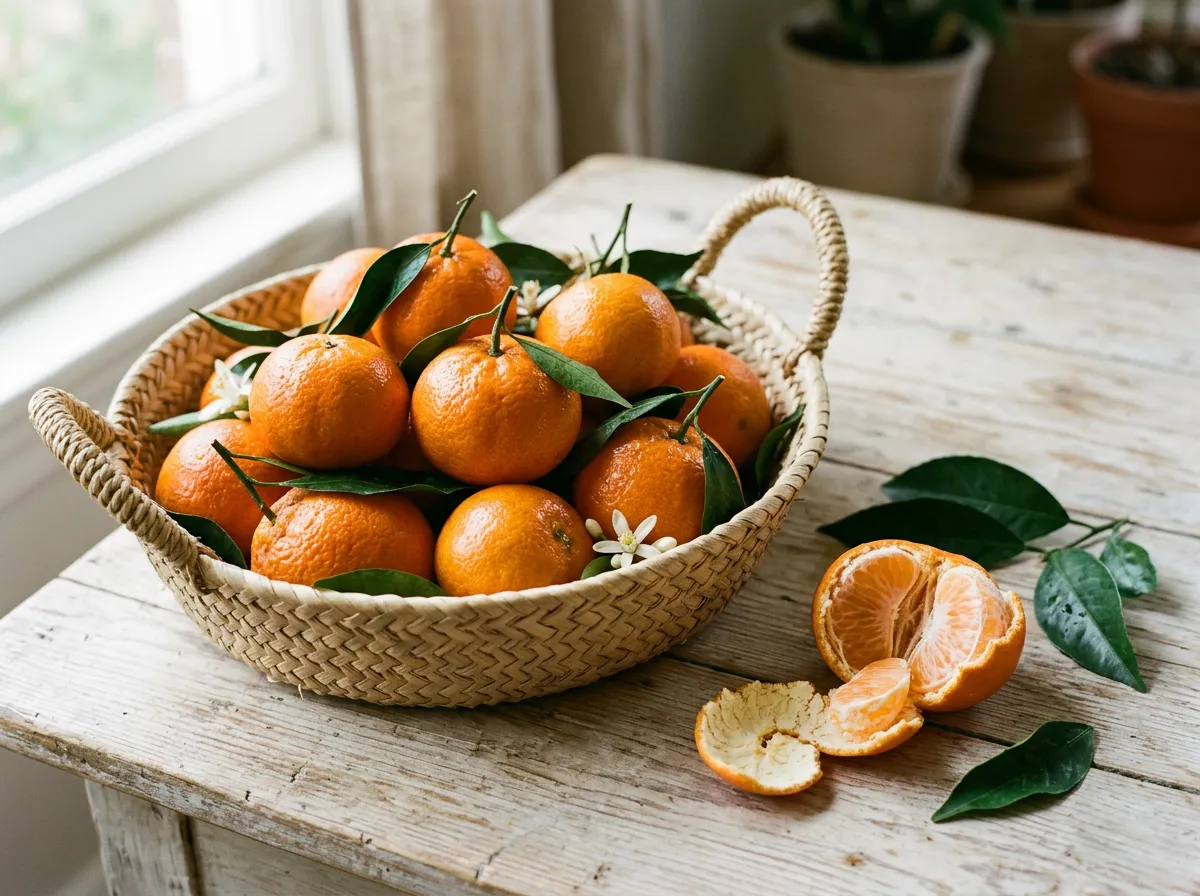
Ripe mandarins with glossy peel and attached leaves in a shallow basket

Softest of the Citrus Oils

Mandarin sits at the gentle end of the rack: sweet, rounded, faintly floral, without lemon's bite. That softness is why it turns up in evening diffuser blends and in family rooms rather than in cleaning sprays.

It is also why adulteration hides well here. A mandarin stretched with orange terpenes still reads as broadly correct to most noses, so the profile matters more than the sniff test.

The composition report settles it before anyone smells anything: the limonene share and the minor markers either sit where pressed Citrus reticulata sits, or they do not.

What We Ask the Laboratory For

Independent laboratories, and the same three questions of every arriving lot.

Composition by GC/MS

Confirms pressed Citrus reticulata, and exposes a terpene fraction added to stretch a lot.

Residue screening

A panel running to several hundred compounds, on both the gas and the liquid side with tandem mass spectrometry. Peel oil is a surface extract, so this weighs more here than on a root or a resin.

Pressing date and lot

Every drum lands dated, and that date travels through to the bottle instead of stopping at our door.

Ask and you will get the report for your lot. We keep no certificates on the site for browsing, since the only one that counts is the one behind the bottle in your hand.

Origin On the Label

Brazil or Argentina, named, rather than blurred into the word imported.

Amber Throughout

The same glass at the half ounce as at four hundred pounds.

Single Strength

Never folded, never terpene-reduced, nothing stirred in to slow it down.

Not the Phototoxic One

Mandarin is classified as non-phototoxic, and we are not going to borrow lemon's sun warning to look careful. Blanketing a category in warnings teaches people to skip all of them, including the one that matters.

The real limits are ordinary. Take it down in a carrier before it goes near skin, prove it on a patch first, store it closed and cold, and count oxidation as the thing that genuinely ages it. Eighteen months from pressing is the working life we quote, and refrigeration stretches it meaningfully.

We make no medical claims for mandarin oil. When a season disappoints we go out of stock rather than filling the gap with a lot we cannot trace.

Chosen Well, Then Checked

Peel oil off named juice lines in Brazil and Argentina, cold-settled and polish filtered, analysed on arrival, sold at single strength with its origin printed on the label.

The still is not the story here.

Shop Mandarin Oil
These statements have not been evaluated by the FDA. Products are not intended to diagnose, treat, cure, or prevent any disease.