The Mandarin's Family Tree: Where the Fruit Began
The mandarin has a shorter written history than its reputation suggests and a much longer genetic one. In the last few years, researchers have sequenced the genomes of mandarins, oranges and their wild relatives, and the picture that has emerged is more interesting than the tales that usually come attached to the fruit. It also explains something that confuses many oil buyers: why "Citrus reticulata" on a label covers so much ground.
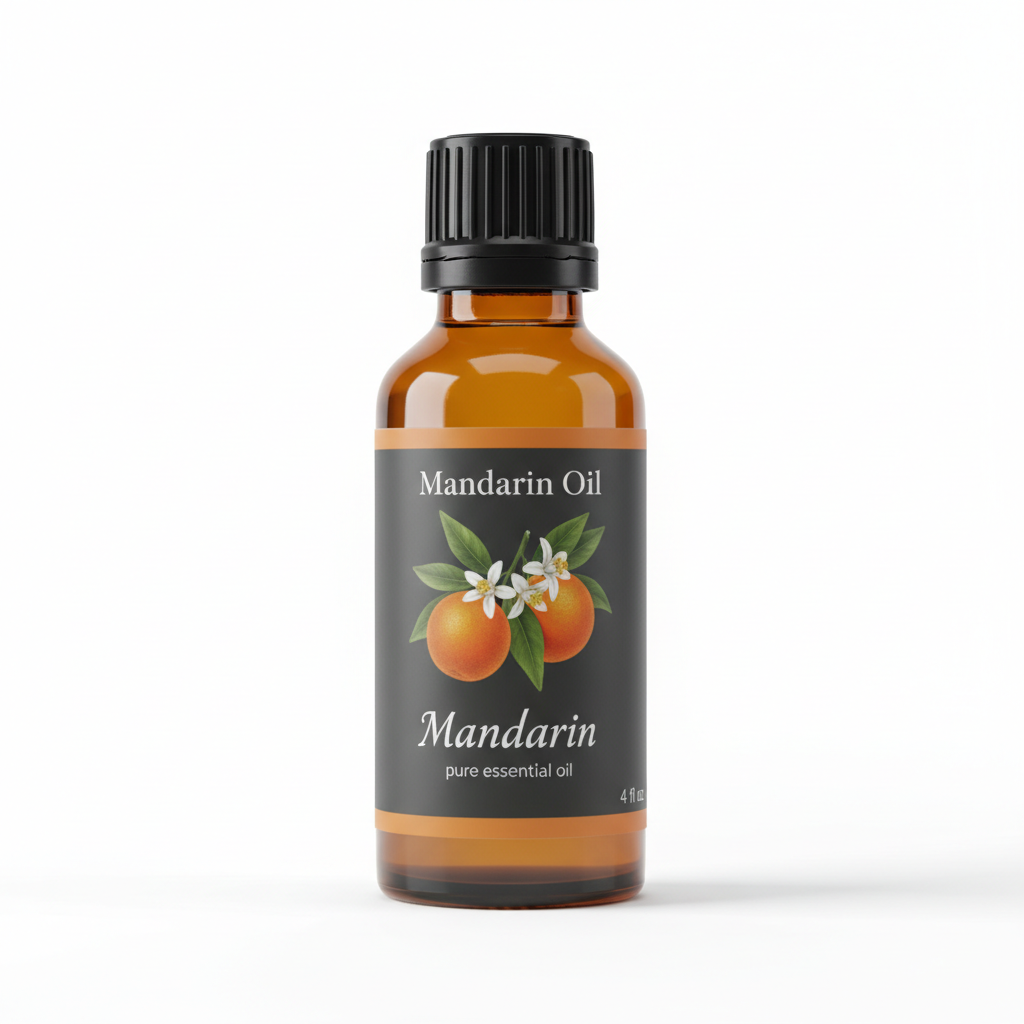
Mandarin Essential Oil
Our own Mandarin Essential Oil, in sizes from 0.5 oz to bulk.
From $12.99
Shop Now →One name, a lot of fruit
"Mandarin" is a common name for many small, easy-peeling citrus fruits. Botanists have grouped them in different ways. One scheme sorts them into four groups, king, satsuma, mandarin and tangerine, and another once divided them into 36 species on appearance alone. Modern naming lumps the lot under Citrus reticulata Blanco.
A 2017 study that sequenced 55 citrus varieties found that mandarins are not purely mandarin. King and satsuma carry the most pummelo (C. maxima) in their genomes, around 22% and 21%, clementine is described as "in fact a tangor", and sweet orange carries about 41%. So the Latin name on a bottle is a convenient classification that covers a lot of diversity.
Where it began
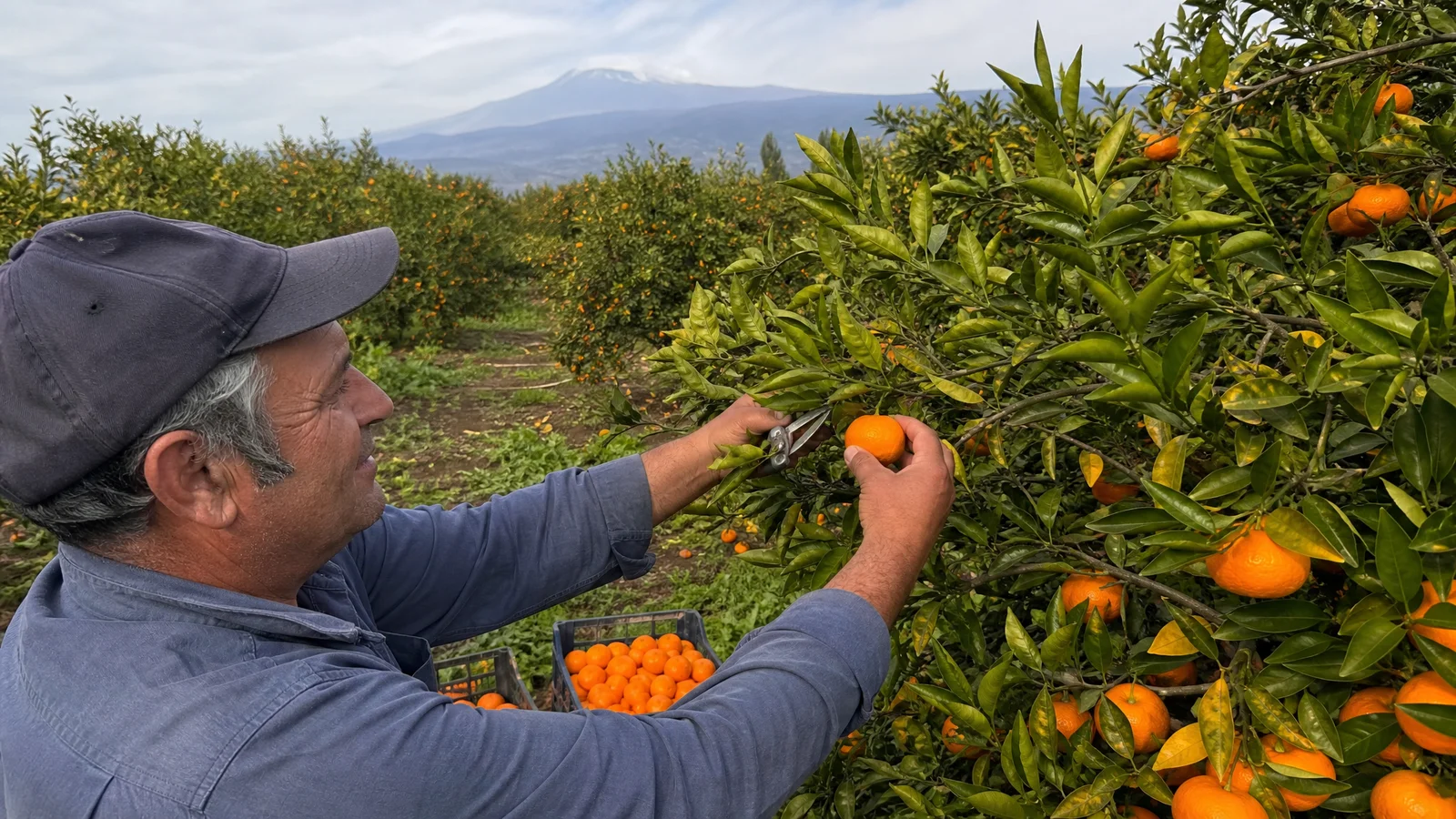
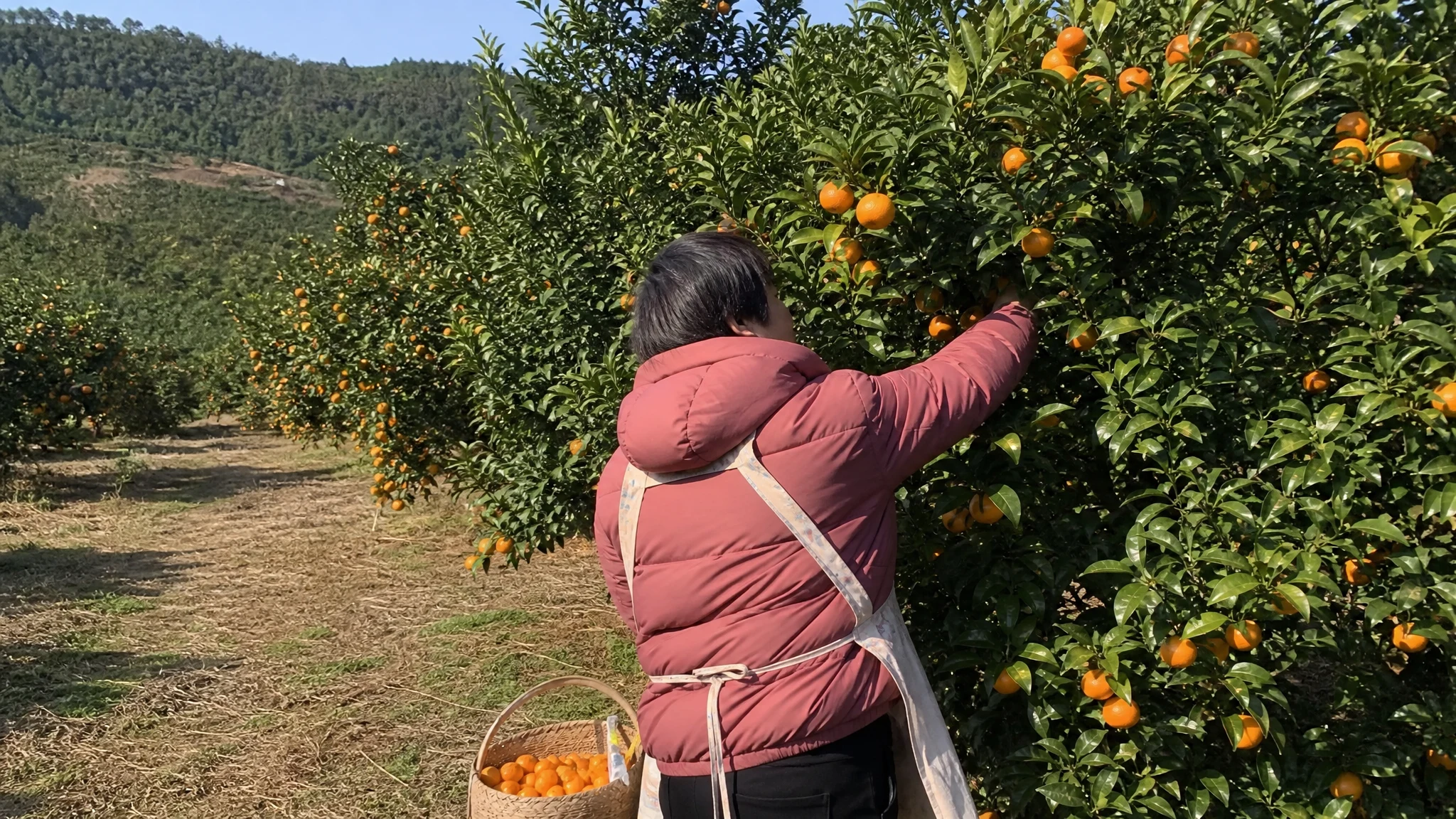
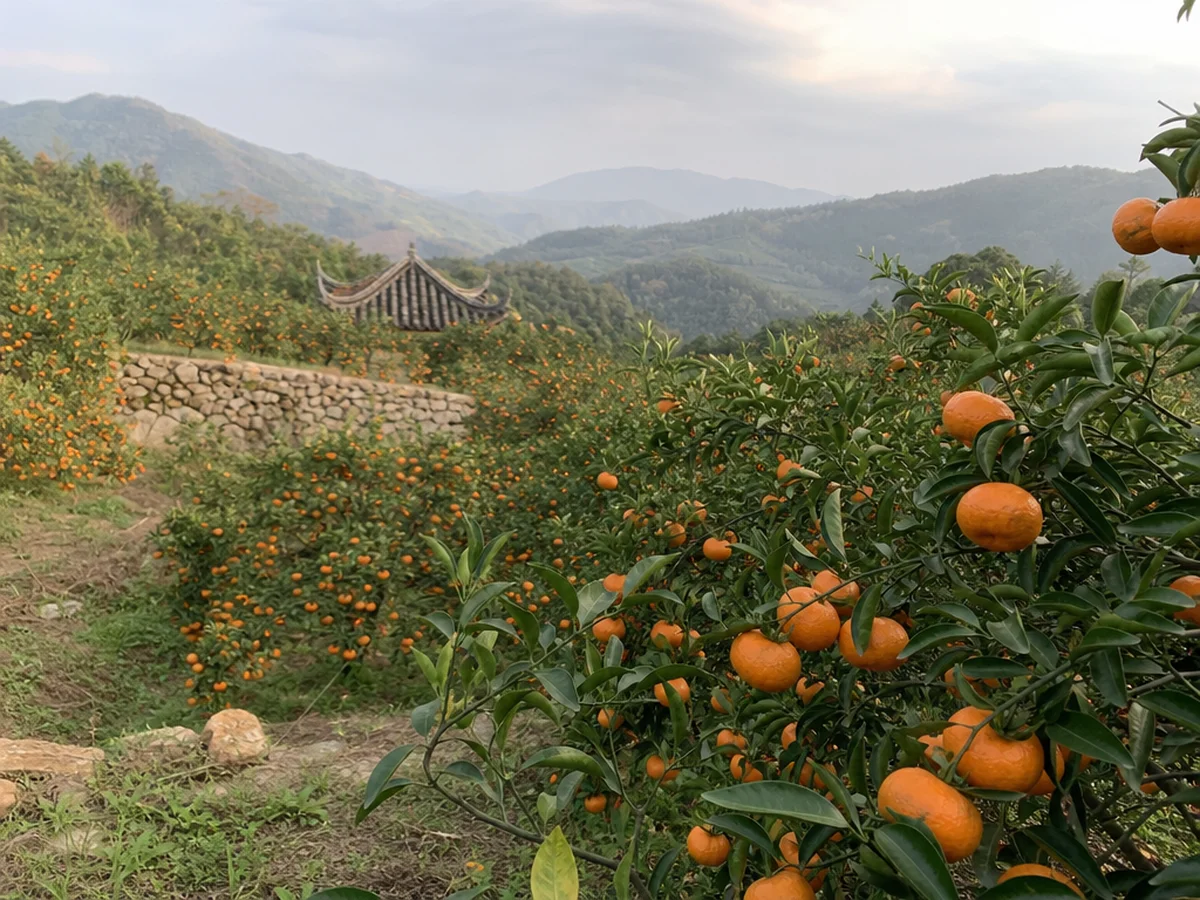
A 2025 genome study of an ancient Chinese tangerine variety, Nanfengmiju, compared it with well over a hundred other citrus genomes. The authors infer that the ancestors of today's cultivated mandarins split from wild mandarins in Daoxian, in southern China, roughly half a million years ago, and were later domesticated in the Yangtze and Pearl River basins. Nanfengmiju itself has been grown in China for more than 1,300 years. An earlier analysis of 60 citrus accessions placed the diversification of the whole genus in a rapid burst across southeast Asia in the late Miocene, and noted that mandarins are widely mixed with pummelo. These are DNA inferences, and the dates carry wide uncertainty, so read them as a direction of travel rather than a calendar.
The parent of oranges
One of the nicest findings comes from a 2025 study of 226 citrus accessions: the sweet orange arose from a cross between a sour orange and a mandarin. In other words, the orange that most people think of as the standard citrus has a mandarin for a parent. Whether the two oils resemble each other is a separate, measured question, and we look at it in mandarin against sweet orange and in mandarin against tangerine.
The trip to Japan
For the satsuma, a 2025 genome study inferred a cross between two cultivars, "Ruju" and "Bendiguang", most probably in eastern Zhejiang Province, where similar cultivars still grow. The authors link the spread of mandarins to trade and cultural exchange between China and Japan from the Tang dynasty onward, noting that Japan's Kojiki records mandarins arriving from China in 712. We repeat that date as the paper reports it. Satsuma is now the most widely grown mandarin in the world, with over 300 varieties, most of them arising from natural mutations of a few original trees, so they share a narrow genetic background.
What scientists still argue about
Scholars still debate details. The satsuma paper opens by saying the fruit's origin "has long been a matter of debate", and an earlier DNA-marker study proposed a different parentage. Other researchers have placed the cradle of loose-skin mandarins in the Nanling Mountains, with a wild mandarin from Mangshan as a possible ancestor, while a major 2018 analysis named three sources of mandarin diversity. With careful papers disagreeing on specifics, a tidy single-sentence history would be overreach. What they agree on is the heart of the story: the mandarin was domesticated in China, and it passed its genes into oranges, tangors and many other hybrids. EFSA's opinion on the oil describes the species as originating in a wider region covering south China, Vietnam and Japan, which fits.
A fruit in your own kitchen
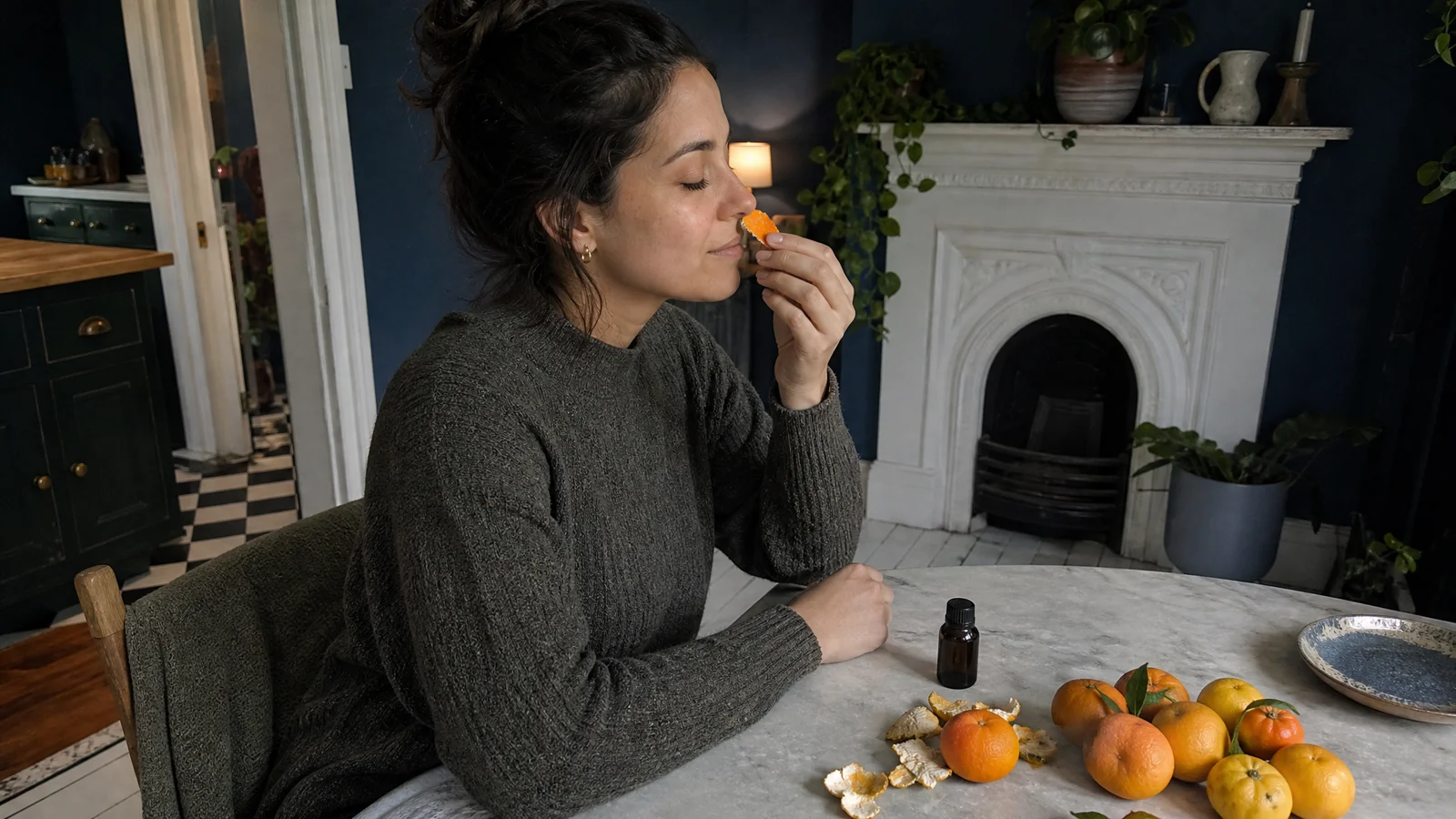
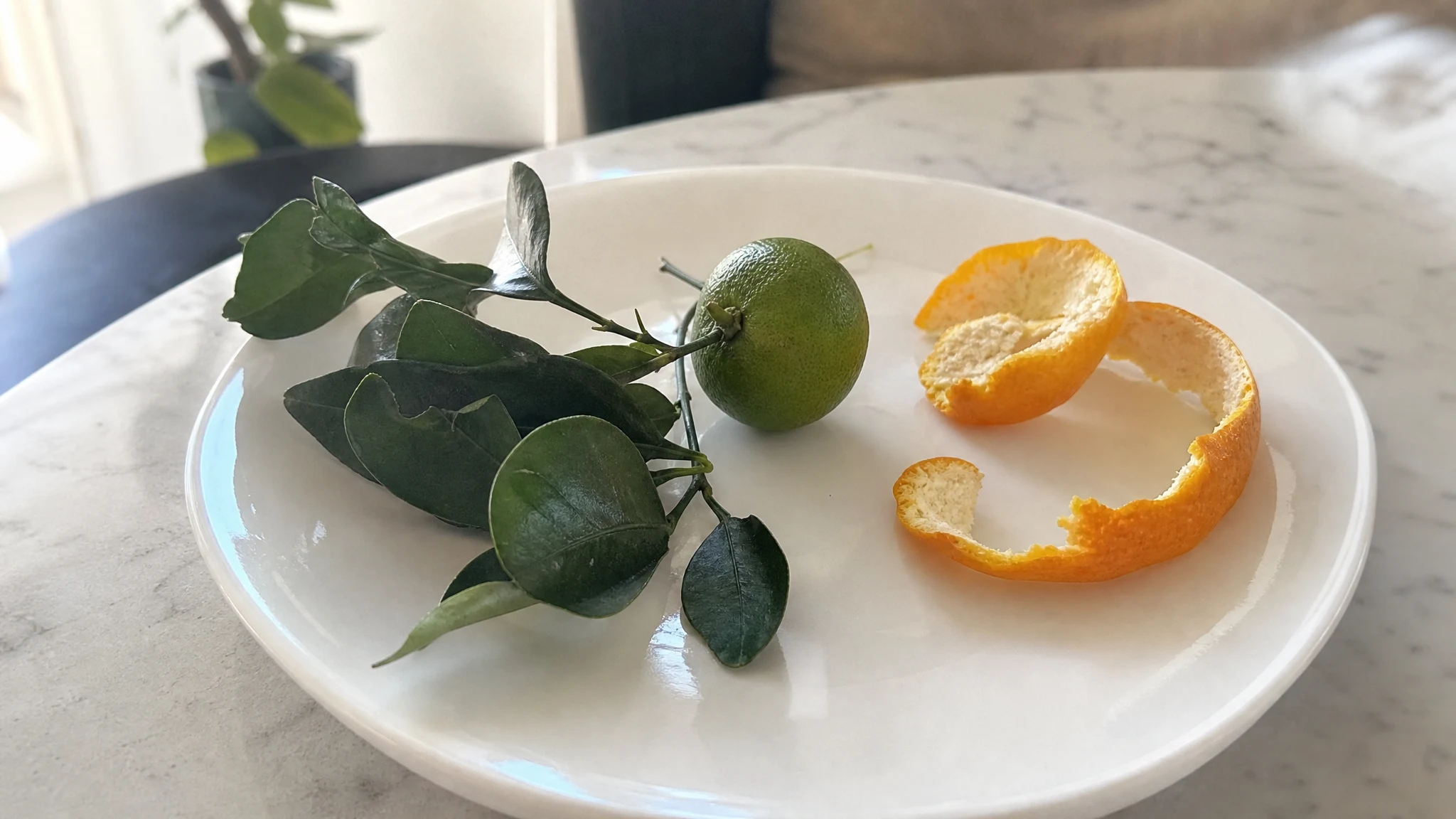
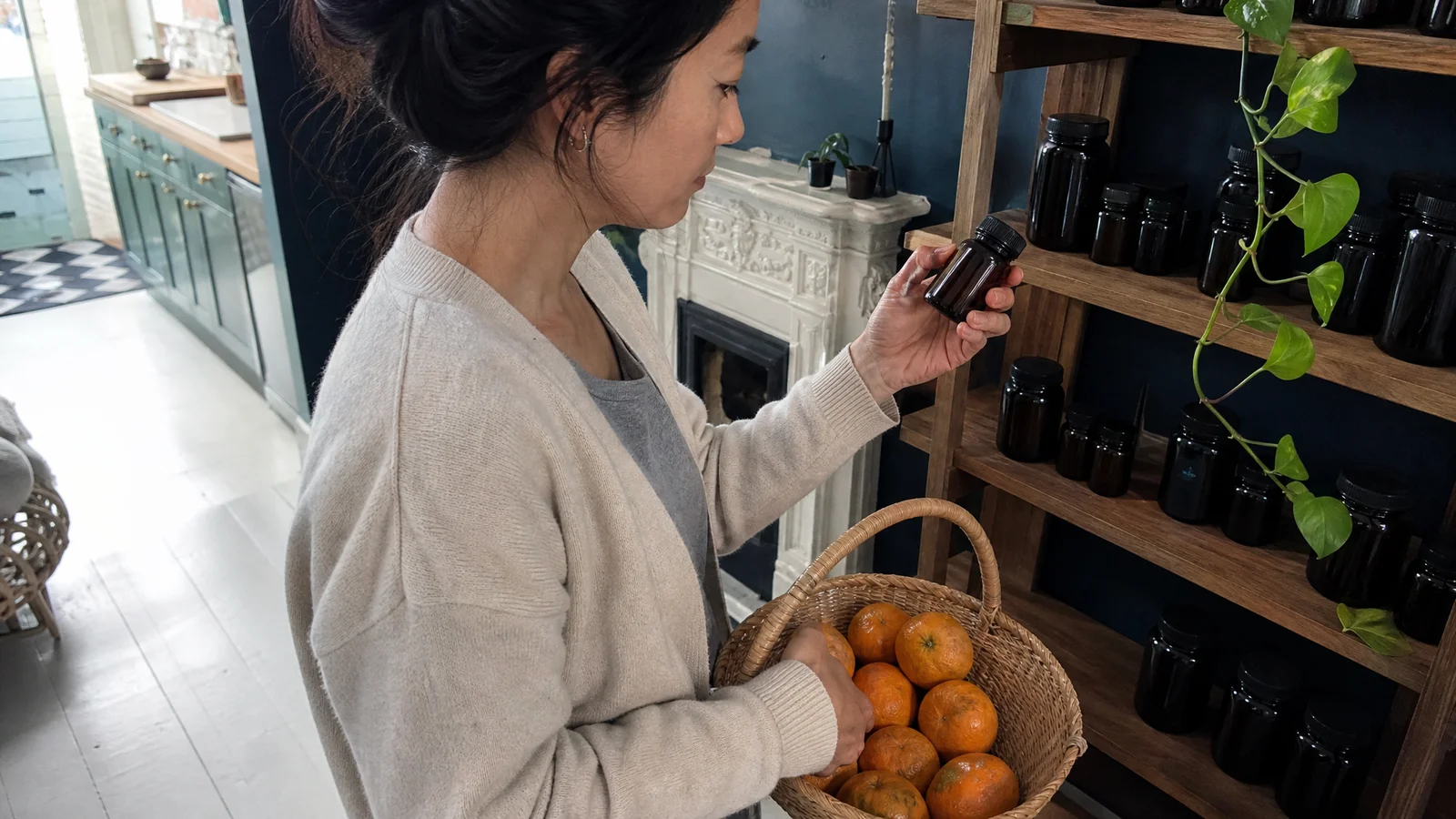
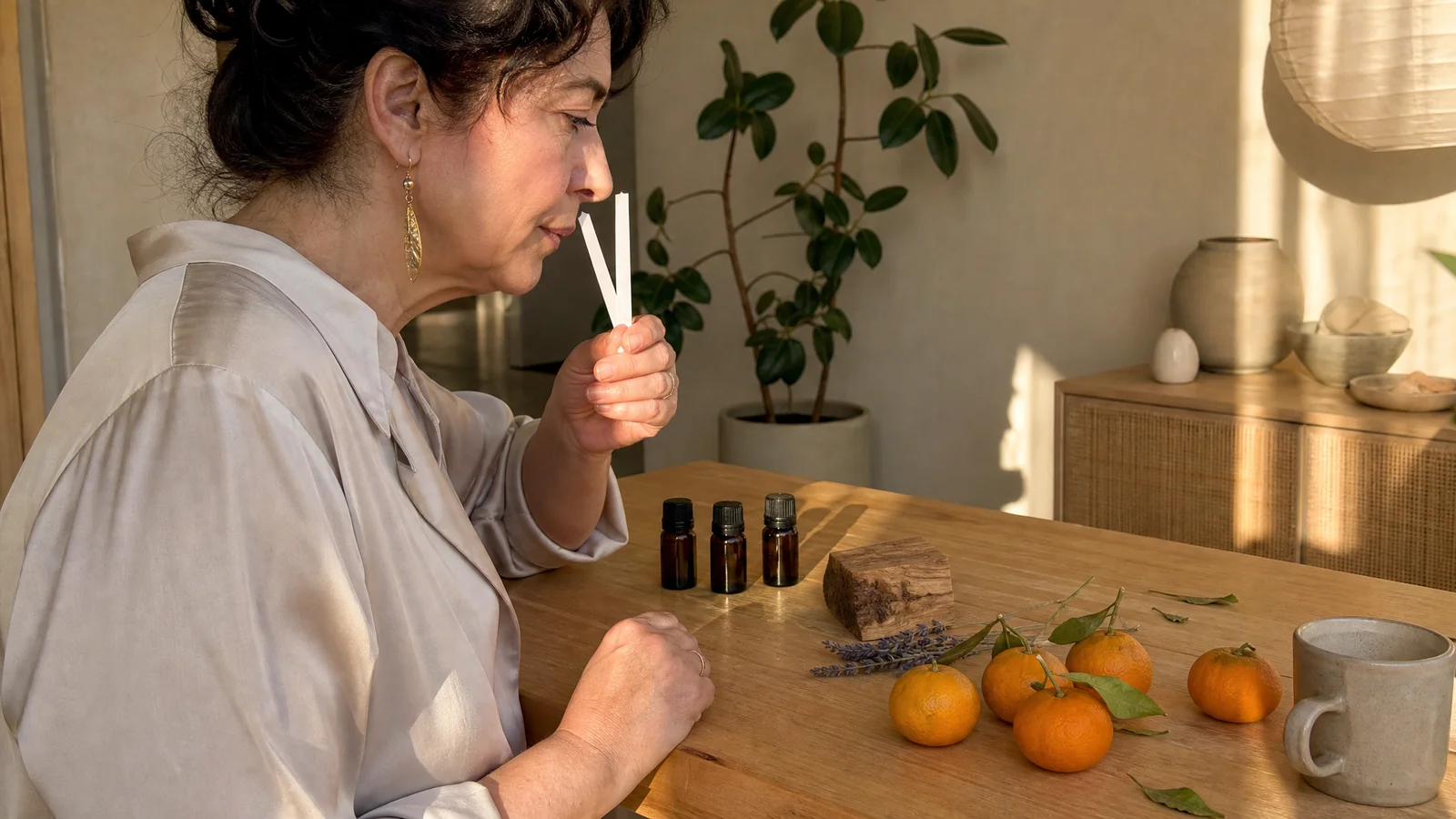
You do not need a laboratory to feel some of this history. In the winter market the same family turns up under many names: mandarin, tangerine, satsuma, clementine. Pick two different ones up, scratch the peel of each, and smell your fingers. You may notice one is sweeter, one a little sharper, one more floral. That small difference in the fruit is exactly the kind of variety the genetics are describing.
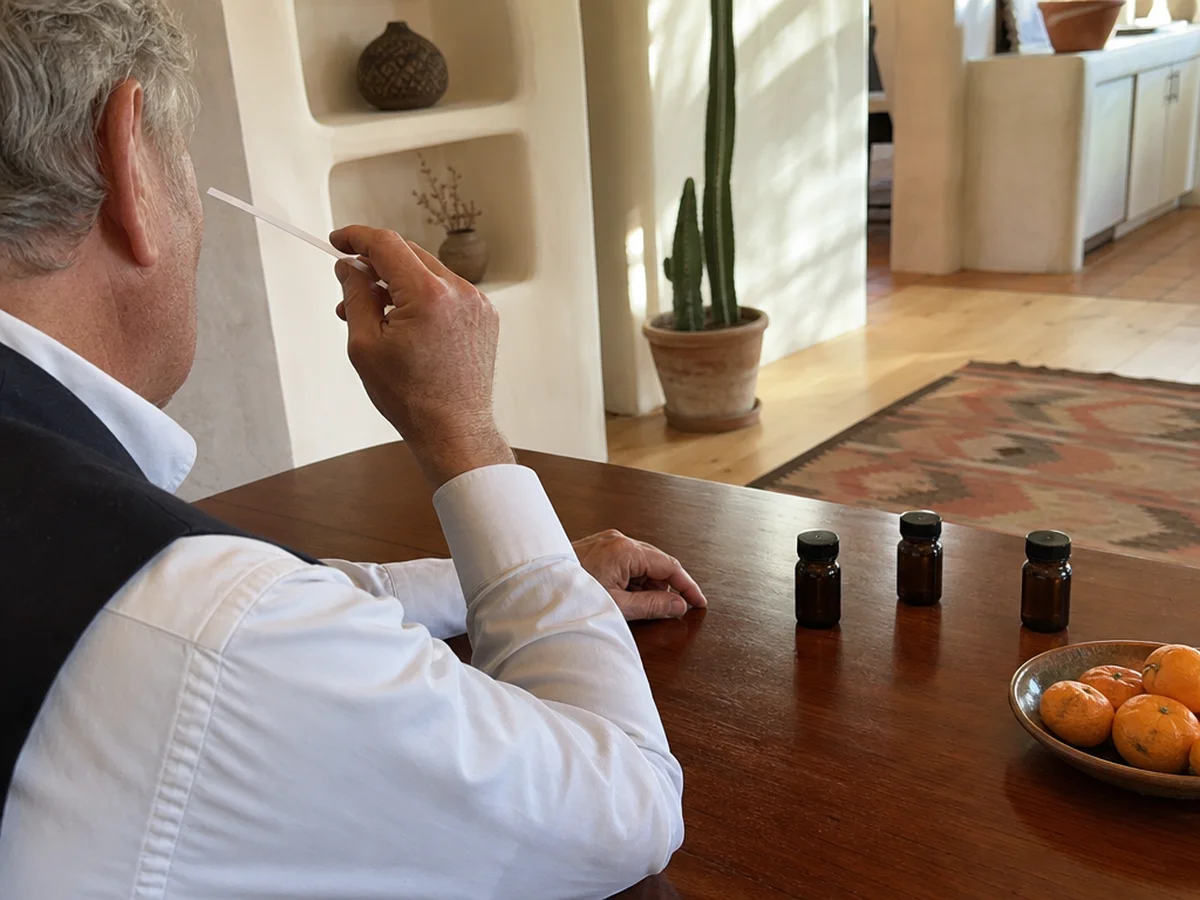
It is a lovely thing to do with children or friends on a cold afternoon, and it makes a bottle of mandarin oil feel less like a product and more like a piece of that story. The fruit is easy to peel because people have loved it for a very long time, and the oil is simply that peel, kept in a bottle.
Why this matters for a bottle of oil
Because "mandarin" spans cultivars with different parentage, the chemistry of the oil follows the cultivar. In a 2026 study, five mandarin and tangerine cultivars grown in Egypt were distilled the same way and the limonene share ranged from 32.87% to 81.13%. That is one oil per cultivar, so it shows a range rather than a rule, but the lesson is clear: the species name tells you less about an oil than the cultivar, origin and extraction method do. Our composition article compares the sources, and the green and red oil article explains how the colour words are used.
We sell one mandarin oil, cold-pressed from the peel and listed under the botanical name Citrus reticulata. Our certificate gives no cultivar or country, so this article is about the fruit, not a claim about ours. For the cultural side of the fruit, see mandarins and Lunar New Year, and for the oil's basics, our guide to mandarin oil.
It is rather lovely that a fruit so easy to peel on the sofa has a story reaching back through the Tang dynasty and well beyond.
Mandarin Essential Oil
Mandarin Essential Oil from our own shop, in sizes from 0.5 oz to bulk.
From $12.99
Shop Now →Sources & Further Reading
- Oueslati A et al., 2017. Genotyping by sequencing reveals the interspecific C. maxima / C. reticulata admixture along the genomes of modern citrus varieties of mandarins, tangors, tangelos, orangelos and grapefruits. PLoS One. https://pmc.ncbi.nlm.nih.gov/articles/PMC5628881/
- Genome Biology, 2025. The haplotype-resolved genome assembly of an ancient citrus variety provides insights into the domestication history and fruit trait formation of loose-skin mandarins. https://pmc.ncbi.nlm.nih.gov/articles/PMC11912795/
- Wu GA et al., 2018. Genomics of the origin and evolution of Citrus. Nature. https://europepmc.org/article/MED/29414943
- Nature Genetics, 2025. Origin and de novo domestication of sweet orange. https://pmc.ncbi.nlm.nih.gov/articles/PMC11906365/
- Horticulture Research, 2025. Genomic origin of Citrus reticulata "Unshiu". https://pmc.ncbi.nlm.nih.gov/articles/PMC11966385/
- Elmaidomy et al., 2026. Volatile composition of essential oils from major Egyptian Citrus cultivars: a multivariate chemometric approach. Sci Rep. https://pmc.ncbi.nlm.nih.gov/articles/PMC13338266/
- EFSA FEEDAP Panel, 2021. Safety and efficacy of a feed additive consisting of expressed mandarin oil from the fruit peels of Citrus reticulata Blanco for use in all animal species (FEFANA asbl). https://pmc.ncbi.nlm.nih.gov/articles/PMC8190682/