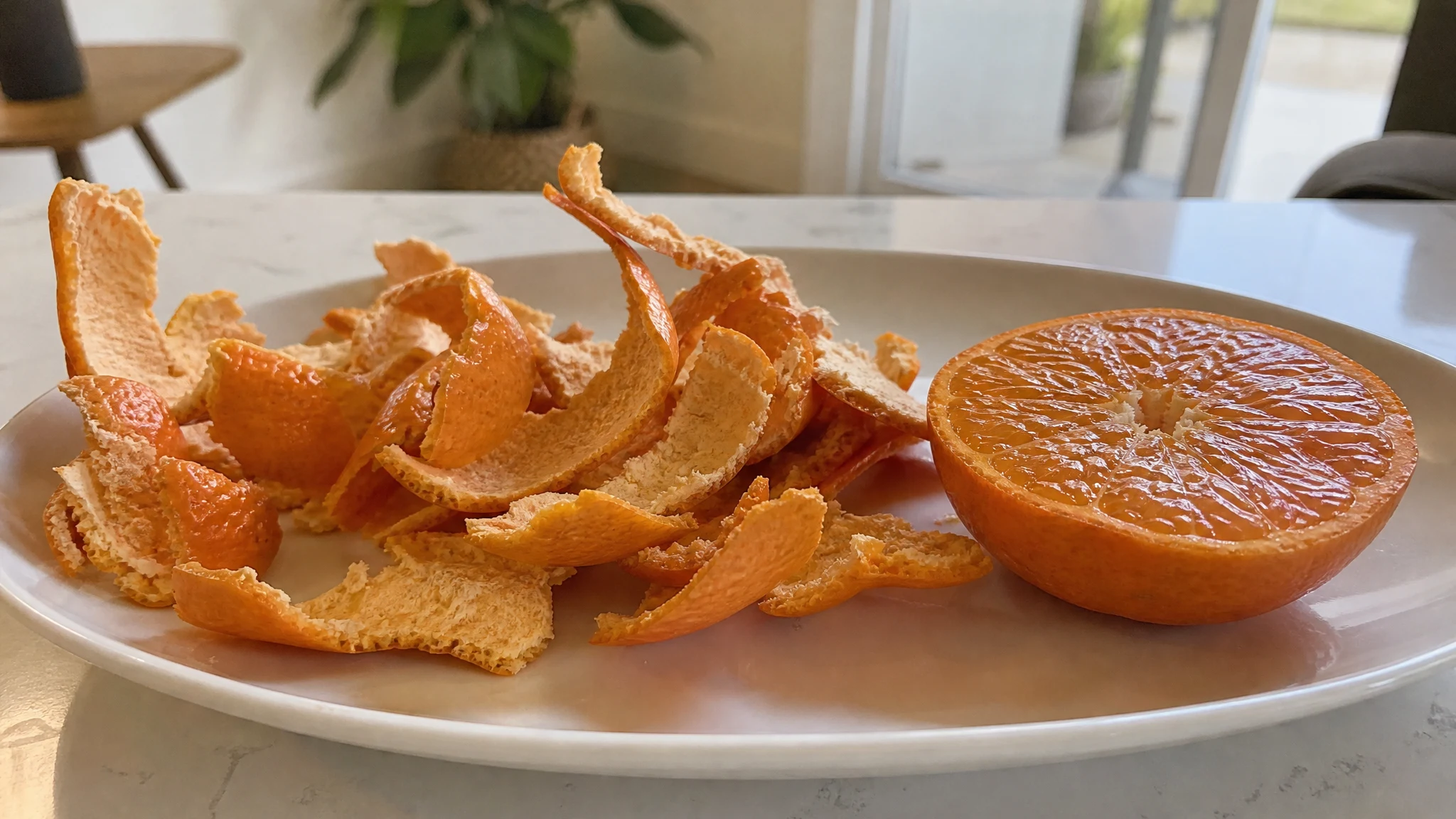
Mandarin Oil for Stretch Marks: What Research Shows
Mandarin oil often turns up in belly oil blends because it smells so good, and people understandably wonder whether it does anything for stretch marks. We could find no study that tested it, and the broader evidence for any oil, cream or butter is modest. So we describe a mandarin body oil as a pleasantly scented body oil, and we make no claim that it prevents, fades or repairs stretch marks.
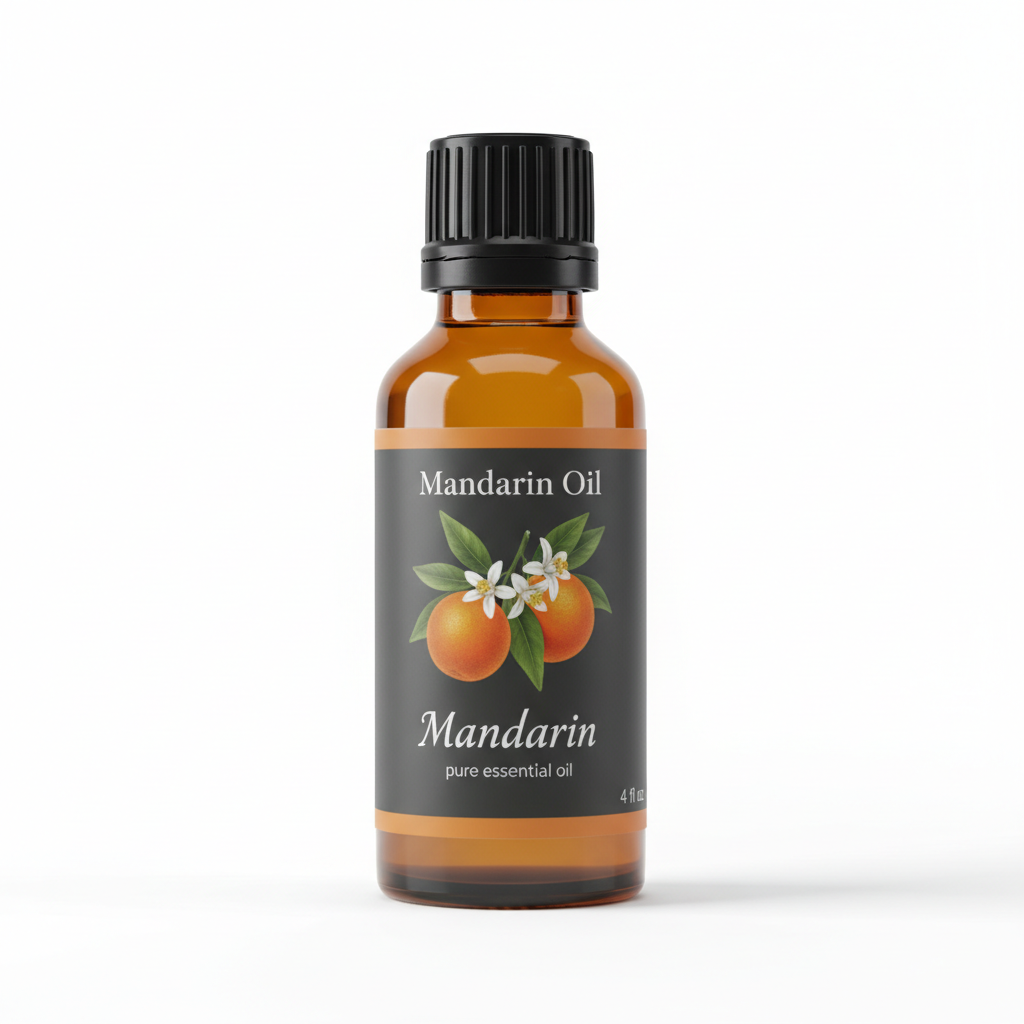
Mandarin Essential Oil
Our own Mandarin Essential Oil, in sizes from 0.5 oz to bulk.
From $12.99
Shop Now →What the main review found
The Cochrane review of topical preparations for preventing stretch marks in pregnancy pooled six trials with 800 women. The preparations tested were three branded creams containing vitamin E (two with hyaluronic acid), olive oil and cocoa butter. None was a citrus oil. Compared with placebo or no treatment, the average risk ratio for developing stretch marks was 0.74, with a 95% confidence interval of 0.53 to 1.03. A ratio below 1 points toward fewer stretch marks, but an interval reaching 1.03 is compatible with no effect, and the authors did not call it significant. They concluded there was no high-quality evidence for any topical preparation and asked for larger, better-designed trials.
The American Academy of Dermatology says something similar in plainer words: in studies, almond oil, cocoa butter, olive oil and vitamin E did not prevent stretch marks. It adds that stretch marks are permanent but treatment can make them less noticeable, mentions prescription options a dermatologist can discuss, and tells people who are pregnant or breastfeeding to check with a doctor before trying new ingredients.
The oil study people cite, and what it suggests
The study most often quoted for oils is a 2012 Turkish trial of bitter almond oil in 141 first-time mothers. It was not randomised. Stretch marks appeared in 20% of women who had the oil with massage, 38.8% of those who used the oil without massage, and 41.2% of the control group. Look at the middle figure: oil without massage landed within a few points of no treatment. If the result means anything, the signal came from the massage, not the oil, and the oil was almond, not mandarin. A single non-randomised study also sits beside a Cochrane review that found no clear effect, and of the two the review is the stronger design.
That leads to a reasonable conclusion, which is our own reasoning: if gentle rubbing is the useful step, a body oil's main job is to make the rubbing pleasant, and any oil your skin tolerates will do that. Adding mandarin changes the scent, and it adds a possible allergen to skin that is already stretched and may itch. It does not add a documented benefit.
Why we keep this page honest
We could easily write a cheerful page promising smooth skin, and plenty of sellers do. We would rather tell you plainly what the research covers and then let you enjoy the oil for what it is: a sweet, mellow citrus scent. If a product ever promises more than the evidence, you can trust your own caution over the label.
A quick way to read any label
When a bottle or an ad says an oil prevents or fades stretch marks, ask the three questions the Cochrane authors asked. Was it a randomised trial with a placebo or no-treatment group? How many women developed marks in each group, and how many women were in it? Was severity scored by someone who did not know which group she was in? A testimonial, or "it contains vitamin E", answers none of them.
What we would say instead
If you want a body oil because you enjoy the ritual, that is reason enough. Choose a carrier you like the feel of, take your time with it, and decide whether you want scent in it at all. Some people prefer an unscented oil for sensitive skin, and there is no shame in that. Mandarin is there for people who like the smell, and that is the only thing we would put on its label.
Questions to take to an appointment
- Is there a product you would suggest, or one to avoid, for my skin?
- Would you rather I skip added fragrance for now?
- If stretch marks bother me, what are my options?
A short list like this makes the appointment more useful, and it keeps the decision with the person who knows your history.
Pregnancy is a question for your clinician
If you are pregnant, a daily belly application is repeated use over a large area, which is the situation where you ask first. Your midwife or obstetric clinician decides, and they may suggest no added scent at all. We bring together what the sources say in our pregnancy article. If you do scent a body oil, our safety guide and skin guide cover dilution and patch testing, and the carrier oil article helps with the base. We sell the mandarin only, so a carrier comes from a supply shop or grocery.
For stretch marks that bother you, a dermatologist is the person with options the evidence at least partly supports. The FDA looks at a product's intended use, judged from its labelling and advertising, to decide whether it is a cosmetic or a drug, which is part of why we say nothing about stretch marks on our products.
A lovely-smelling body oil can make a daily massage something to look forward to, and that is the whole of what we would promise.
Mandarin Essential Oil
Mandarin Essential Oil from our own shop, in sizes from 0.5 oz to bulk.
From $12.99
Shop Now →Sources & Further Reading
- Brennan M, Young G, Devane D. Topical preparations for preventing stretch marks in pregnancy. Cochrane. https://www.cochrane.org/CD000066
- American Academy of Dermatology. Stretch marks: Why they appear and how to get rid of them. https://www.aad.org/public/skin-hair-nails/skin-care/stretch-marks
- Timur Tasan S, Kafkasli A, 2012. The effect of bitter almond oil and massaging on striae gravidarum in primiparaous women. J Clin Nurs. https://pubmed.ncbi.nlm.nih.gov/22594386/
- US FDA. Is It a Cosmetic, a Drug, or Both? (Or Is It Soap?) https://www.fda.gov/cosmetics/cosmetics-laws-regulations/it-cosmetic-drug-or-both-or-it-soap