Best Carrier Oil for Mandarin Oil Blends: How to Choose
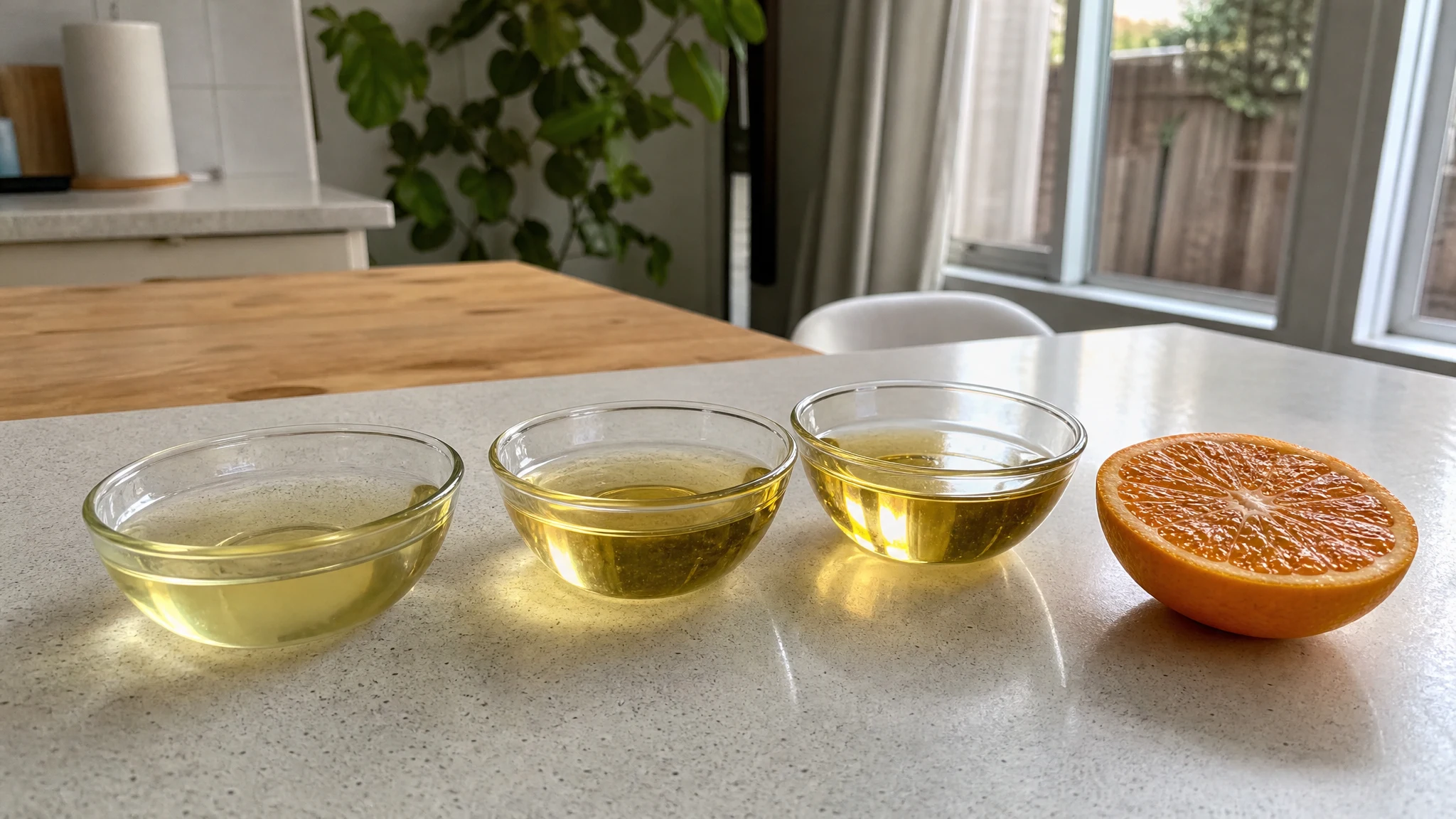
Open any mandarin blend recipe and the oil gets all the attention, yet a few drops of it share an ounce bottle with roughly 98% carrier. That carrier decides how the blend feels on your hands, how long it keeps, and whether everyone in the house can use it. Picking it well is the most useful thing you can do after choosing the mandarin.
Mandarin Essential Oil
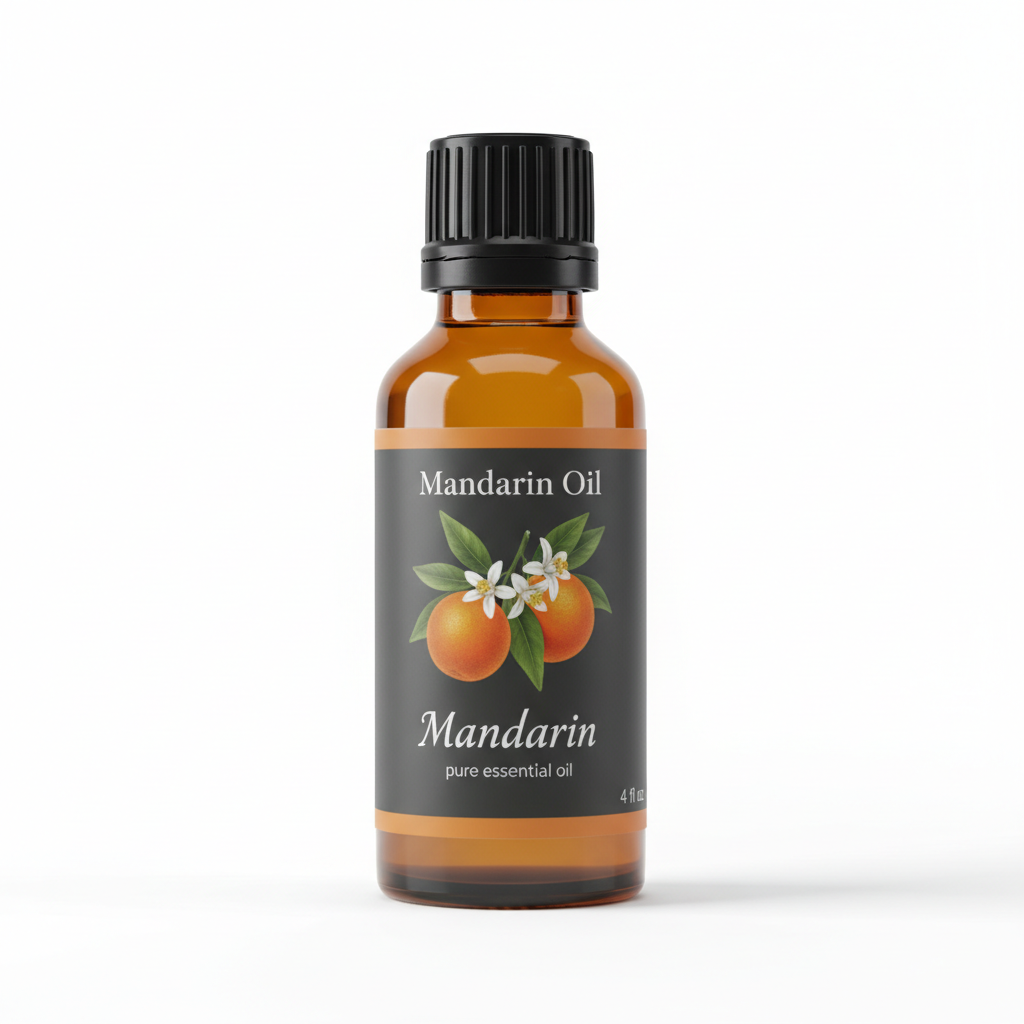
Our own Mandarin Essential Oil, in sizes from 0.5 oz to bulk.
From $12.99
Shop Now →Start with the mandarin side of the maths
We sell mandarin oil neat, so the dilution is yours to work out. Our guidance is 0.5% to 2% in a carrier, with a patch test first and the low end if citrus oils are new to you, which is roughly 3 to 12 drops per ounce. For wider context, the Tisserand Institute suggests 1 to 3% for body oils and lotions, 0.5 to 1.2% for facial products and 0.2 to 1% for reaction-prone skin. Putting those together, we would begin around 1% for the body and lower for the face.
A worked example, as arithmetic and not a tested recipe: 4 oz of carrier is about 118 ml, and 1% of that is 1.18 ml of mandarin oil, or about 24 drops at 20 drops per ml. Droppers vary, so if you make blends regularly, a small scale that reads to 0.01 g gives you the same result every time. Our safety basics guide has the full table.
Stability: the carrier should outlast the citrus
Pressed citrus oil is mostly limonene, and limonene reacts with air. Its oxidation products, the hydroperoxides, are, according to DermNet, much more potent sensitisers than limonene itself. That is a good reason to keep mandarin blends small and fresh, and it makes a slow-ageing carrier a real advantage, because a carrier that turns rancid first spoils the blend in a different way.
Direct comparisons are rare. One useful experiment heated crude jojoba oil, olive oil and squalene at 60 C for 60 days and found jojoba had the lowest peroxide and carbonyl values and an unchanged acid value, so the authors judged it the most stable of the three. Jojoba is a liquid wax rather than a typical plant fat, which fits that result. It is a single paper on crude jojoba, so we read it as a good reason to start there, not as a ranking of every carrier you could buy.
If anyone has a nut allergy
Sweet almond oil is a popular body-oil base, and it brings a question with it. An allergist's answer from the American Academy of Allergy, Asthma and Immunology explains that refined nut oils are generally low in protein, while unrefined, cold-pressed nut oils still contain it, and that people with nut allergy should ask the maker whether a nut oil is refined. Topical exposure is not well studied. The practical move is to choose a non-nut carrier for anyone with a nut allergy, or to get the seller's answer in writing and check with the person's allergist.
Feel and fit
Thin, quick-absorbing oils suit light body oils and roller bottles; richer oils suit massage and dry hands. Jojoba, fractionated coconut oil, sweet almond and grapeseed are the common candidates, and any craft supplier, pharmacy or grocery will have several. We do not sell carriers, so we will not pretend to rank them for you.
What to ask whoever sells you the carrier
- Is it refined or unrefined, and does the label say so?
- Is there a bottling or best-by date?
- How should it be stored once opened? Choose the smallest size you will finish.
Those are the same questions you can ask us about the mandarin. Our published certificate covers one batch and lists density, refractive index and optical rotation, so if you need more for your own product, ask in writing through the contact page before ordering.
Let your hands choose
Before you commit to a big bottle of carrier, put a few drops of it on the back of your hand and rub them in. Notice how fast it sinks, whether it leaves a slick or a soft finish, and whether it has a smell of its own. Mandarin is sweet, mellow and juicy, with a faint floral hum, and a carrier with a strong scent of its own will compete with it. A quiet carrier lets the citrus be the star.
Small bottles, clear labels
Whichever you pick, decant it into a clean bottle you will finish soon, and write the date on it. A little label on both the carrier and the finished blend means you will always know how old each is, and that makes it easy to decide when to start fresh.
Our recommendation
For a blend you plan to keep for a while, jojoba is where we would begin, and it sidesteps the nut question. Make a small batch, date the label, keep it capped away from heat and light (our storage guide explains why), and patch test the finished blend, not just the carrier. For ideas on what to make, body butter and lotion and scrub and body oil are good next stops.
It also helps to match the carrier to the job. A light, fast-sinking oil suits a roller you will carry in a bag, and a richer one suits a body oil for after the shower. Thinking about where the blend will live makes the choice easier than any list.
A good carrier is quiet work: you only notice it when it is not right, and mandarin deserves a base that lets it smell like itself.
Mandarin Essential Oil
Mandarin Essential Oil from our own shop, in sizes from 0.5 oz to bulk.
From $12.99
Shop Now →Sources & Further Reading
- Dilution for essential oils (Tisserand Institute)
- Contact allergy to hydroperoxides of limonene and linalool (DermNet)
- Oxidative Stability and Antioxidant Activity of Crude Jojoba Oil (BPB Reports, 2022)
- Food allergy: nut oils in topical products (American Academy of Allergy, Asthma and Immunology)