How to Check Mandarin Oil Quality in 4 Steps
Nobody can open a bottle of mandarin oil, sniff it and announce with certainty what is inside, and a good perfumer would be the first to say so. What you can do is run through four checks, from the cheapest to the most thorough, and know what each one is able to tell you. Think of it as a ladder: every rung catches something the one below it misses.
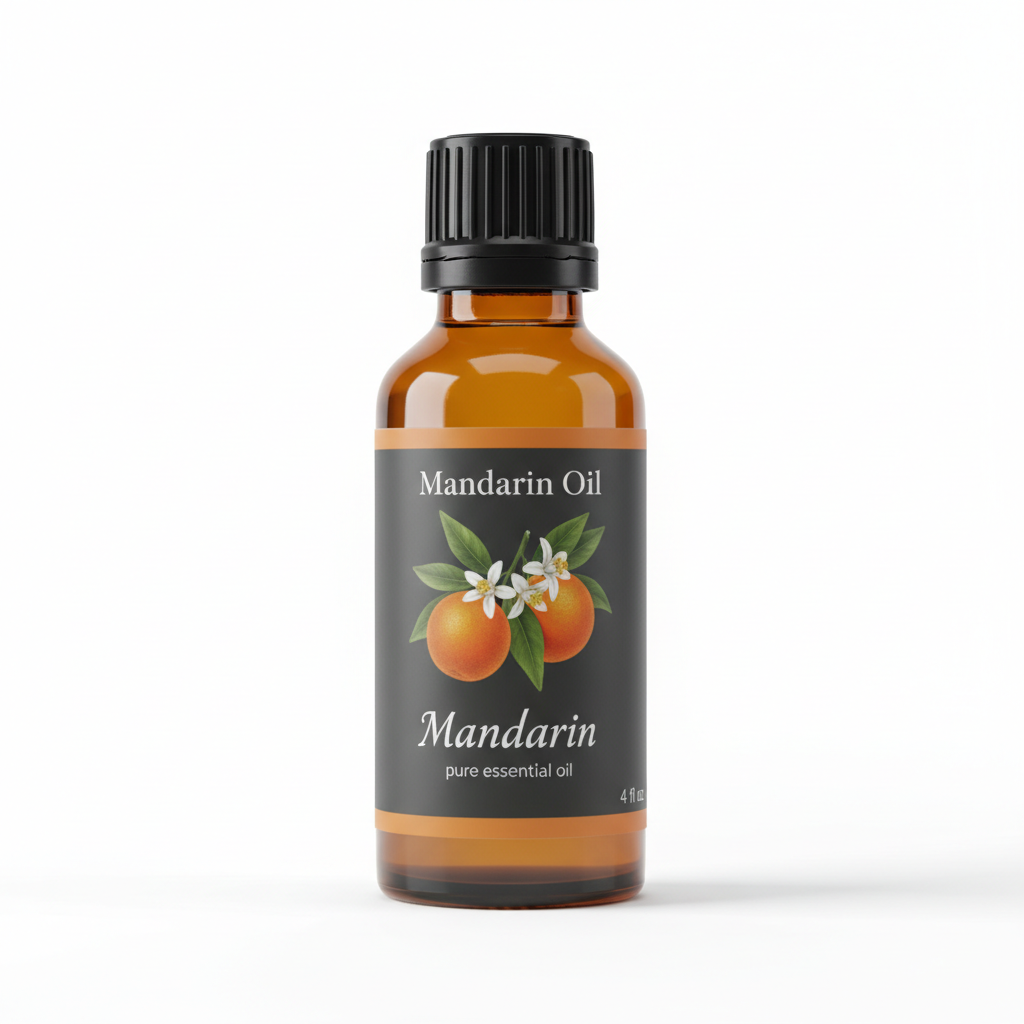
Mandarin Essential Oil
Our own Mandarin Essential Oil, in sizes from 0.5 oz to bulk.
From $12.99
Shop Now →Before the rungs: look at the bottle
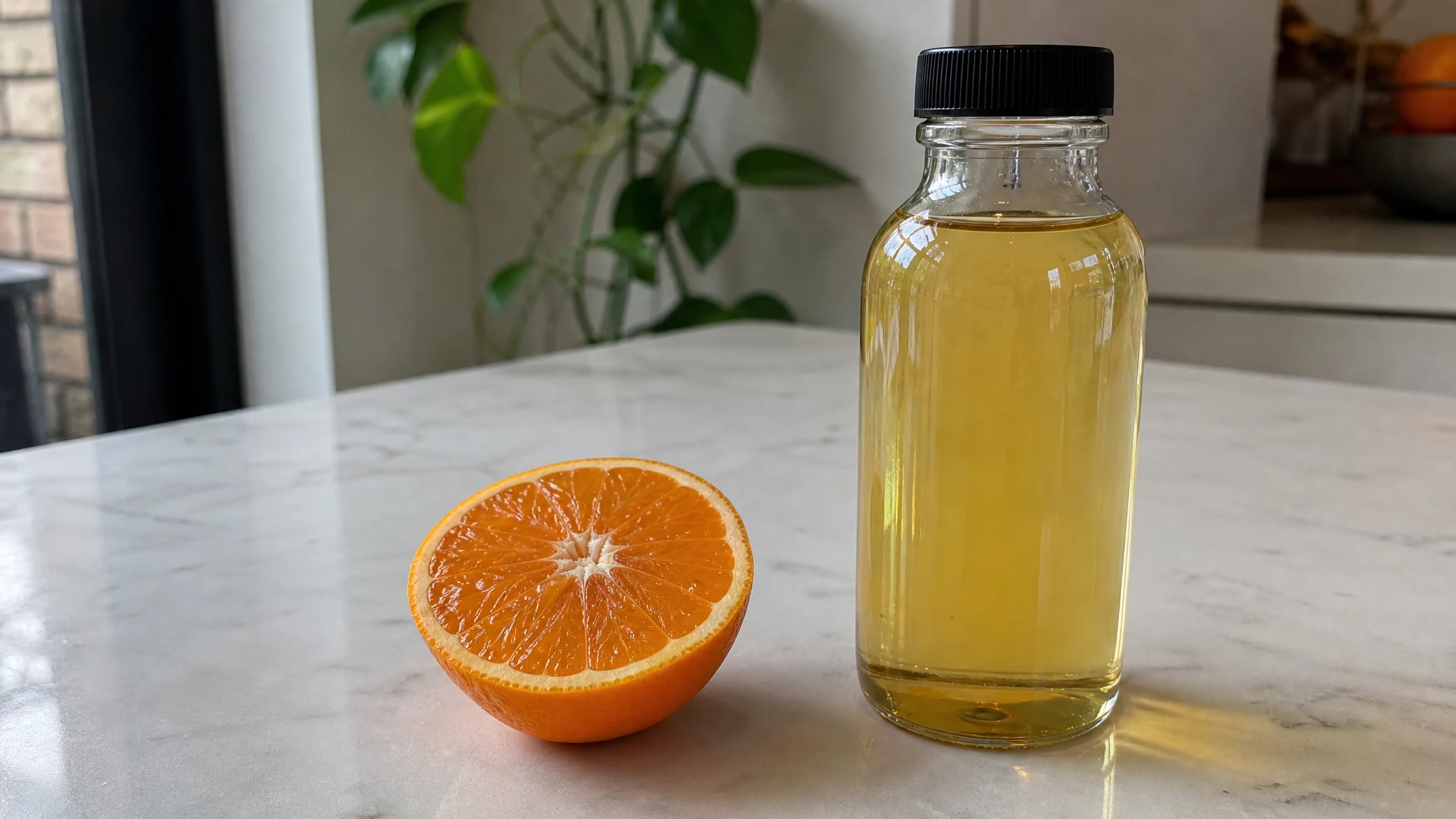
The cheapest check of all needs no sniffing. Look at the container. Dark glass keeps light out, which is why ours is amber. A cap that screws down firmly keeps air out. A label that names the plant, the part used and the extraction method gives you something to compare with the paperwork later. None of this proves what is inside, but it tells you whether the seller thought about keeping the oil in good shape.
Rung one: your nose, used as a freshness test
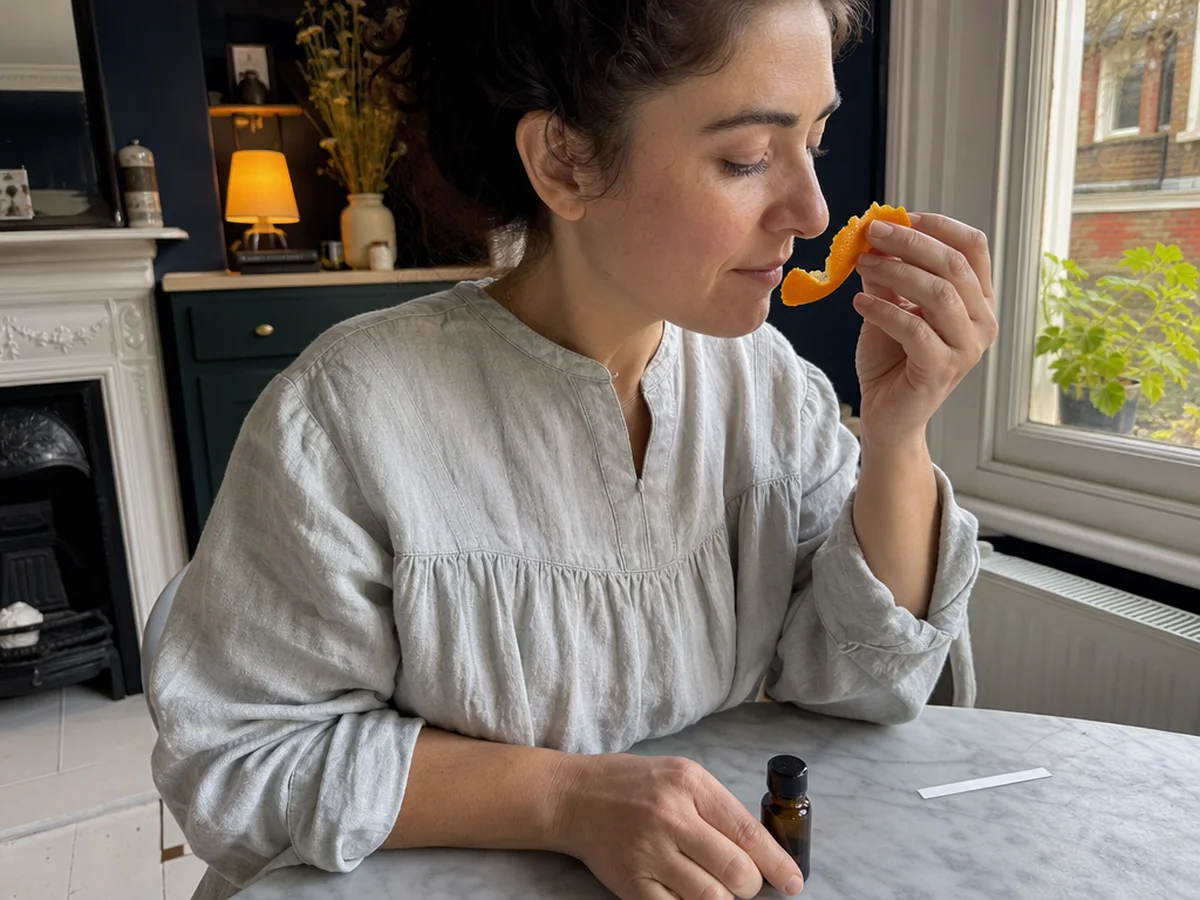
Smelling a bottle against a reference you trust is a real test, and it costs nothing. It will tell you quickly if an oil is the wrong one or a tired one. It will not catch a skilful blend, which is why it is a screen and not a verdict. The Tisserand Institute makes the practical point that oxidized oils lose some of their brightness and freshness, and that you notice it most when you compare against a fresh bottle, so your nose is as much a freshness check as an identity check.
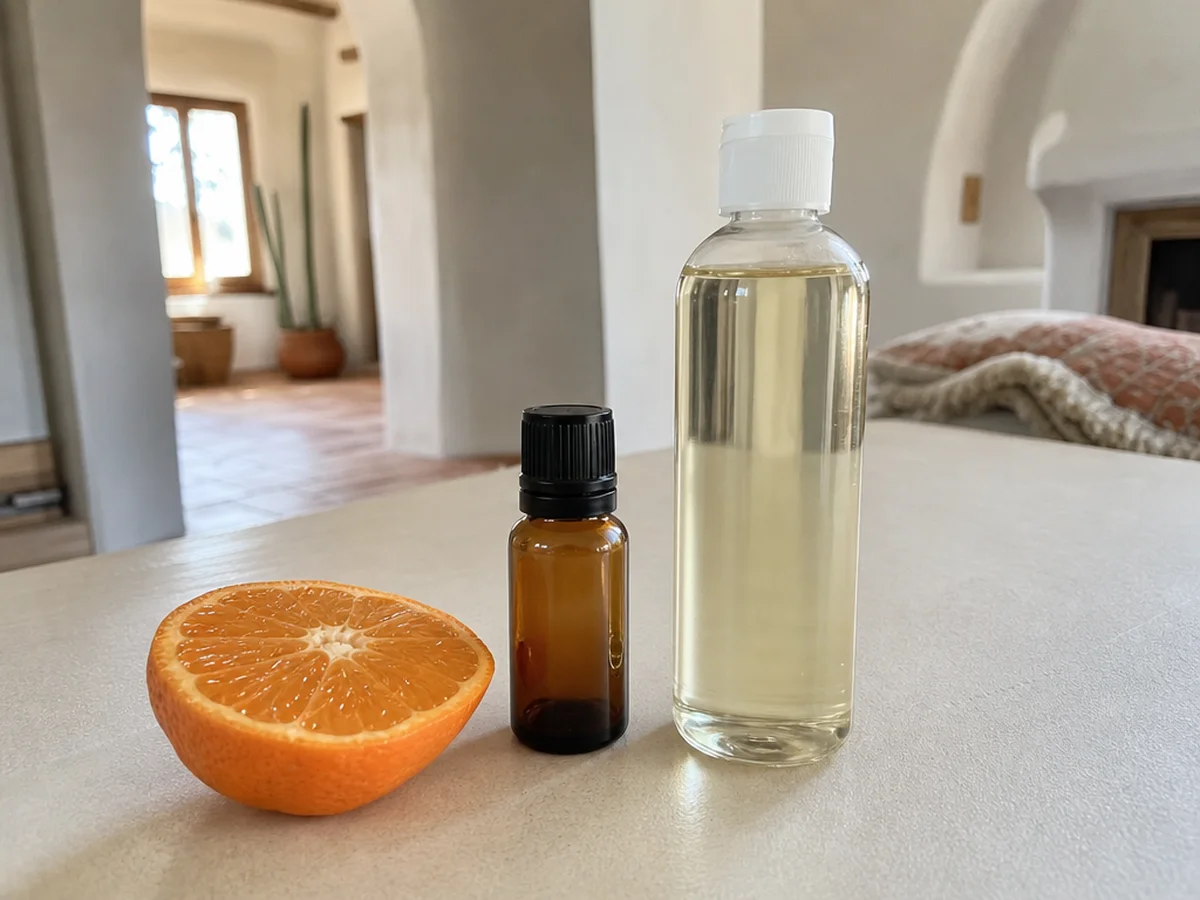
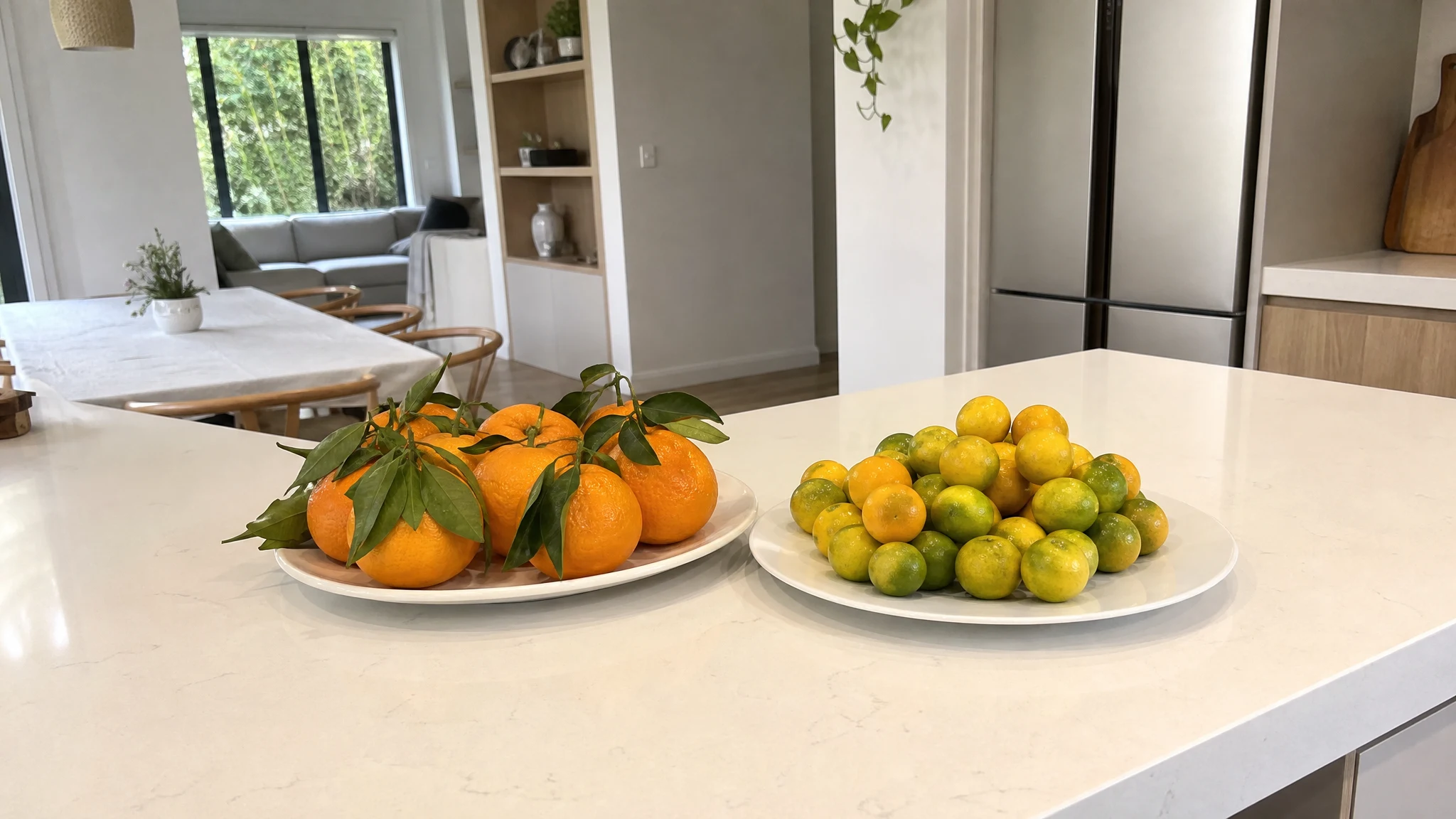
It also helps to know that mandarin oil comes in two looks. The EFSA panel that reviewed it describes the green type as green to green-brown and the red type as orange to red-amber. The Certificate of Analysis we publish for one batch lists its appearance as "Green liquid", which tells you the type of that batch and nothing about rank. Two honest bottles can differ in colour.
Rung two: a few simple numbers
Density, refractive index and optical rotation are quick physical measurements, and they are the three numbers on our certificate: a relative density of 0.852, a refractive index of 1.471 and an optical rotation of +69.80 degrees. They are good for consistency, because an oil that lands wildly outside the usual windows deserves questions. They are less good for proving identity, since they describe the oil as a whole and different mixtures can fall into the same narrow range. Our guide to reading a mandarin oil COA walks through each line.
Rung three: GC-MS, the full ingredient list
Gas chromatography with mass spectrometry separates an oil into its compounds and names them. When EFSA looked at ten batches of mandarin oil (five green, five red), it found up to 88 constituents, 47 of them identified, and limonene averaged about two thirds of the oil. What makes the result interesting is the spread: limonene ranged from 56.4% to 68.6% across those ten batches. So a GC-MS report is best understood as a record of one lot, to be read against the usual range, not a pass mark. Our composition article shows how wide those ranges run.
The method has honest limits, and the Tisserand Institute lays them out well. It is a big help in spotting adulteration and contamination, but not every adulterant can be caught using markers, and it cannot reach the sensitivity needed to check for pesticides. That last point matters for a fruit-peel oil: EFSA found chlorpyrifos compounds in some of its green batches, which is exactly the kind of thing a composition report is not built to show. A residue screen is its own test with its own report.
Rung four: chiral and isotope analysis
The most detailed tools look at the shape of molecules and the carbon isotopes inside them. Chiral analysis can separate mirror-image versions of the same compound, which ordinary GC-MS treats as one, so it can tell when a natural compound has been replaced by a synthetic copy. A 2025 study profiled 63 mandarin oils described as genuine this way and reported clear seasonal and geographical patterns. It is a research-grade method and you will rarely see it on a retail certificate, but it shows where the science of authenticity is heading, and it is a fair question for anyone buying in volume.
A tidy way to keep your own records
However many rungs you climb, write it down. A page per bottle is plenty: the date it arrived, the lot code, what the oil looked like, how it smelled when you opened it, and which documents came with it. When you open a new bottle months later, you will have something real to compare it with, and your nose will have a memory to lean on.
A short list to send any seller
- The botanical name, the plant part and the extraction method.
- The lot code on the bottle, matching the lot code on the paperwork, and the best-by date.
- The GC-MS report for that lot, with the method and laboratory named.
- A residue screen, if that matters to you, as its own document.
- A furocoumarin figure for the lot if the oil is going on skin that will see sun.
Our own paperwork is the certificate described above: density, refractive index and rotation for one batch, with no GC-MS on it. If you need GC-MS or residue data, ask us in writing through the contact page before you order and keep the reply. For a bulk project, the wholesale page is the place to start a conversation, and our guide to reading a mandarin oil label covers the lines on the bottle itself.
The best quality picture comes from a few records that agree with each other, each carrying a date and a lot code. A lovely smell is a good start, and the paperwork is what lets you repeat it.
Mandarin Essential Oil
Mandarin Essential Oil from our own shop, in sizes from 0.5 oz to bulk.
From $12.99
Shop Now →Sources & Further Reading
- Yang et al., 2024. Advanced analytical techniques for authenticity identification and quality evaluation in Essential oils: A review. Food Chemistry 451:139340.
- EFSA FEEDAP Panel, 2021. Safety and efficacy of a feed additive consisting of expressed mandarin oil from the fruit peels of Citrus reticulata Blanco for use in all animal species (FEFANA asbl). EFSA Journal.
- St-Gelais, Tisserand Institute. The Highs and Lows of GC-MS in Essential Oil Analysis.
- Tisserand Institute. Is my bottle of essential oil oxidized or no longer good to use?
- Cannizzaro et al., 2025. Comprehensive analysis of mandarin essential oils: Simultaneous qualitative, quantitative, chiral, and isotopic profiling via enantio-selective multidimensional gas chromatography coupled to isotopic ratio mass spectrometry. Journal of Chromatography A 1751.