Mandarin Oil Bottle Sizes: How Much Do You Need?
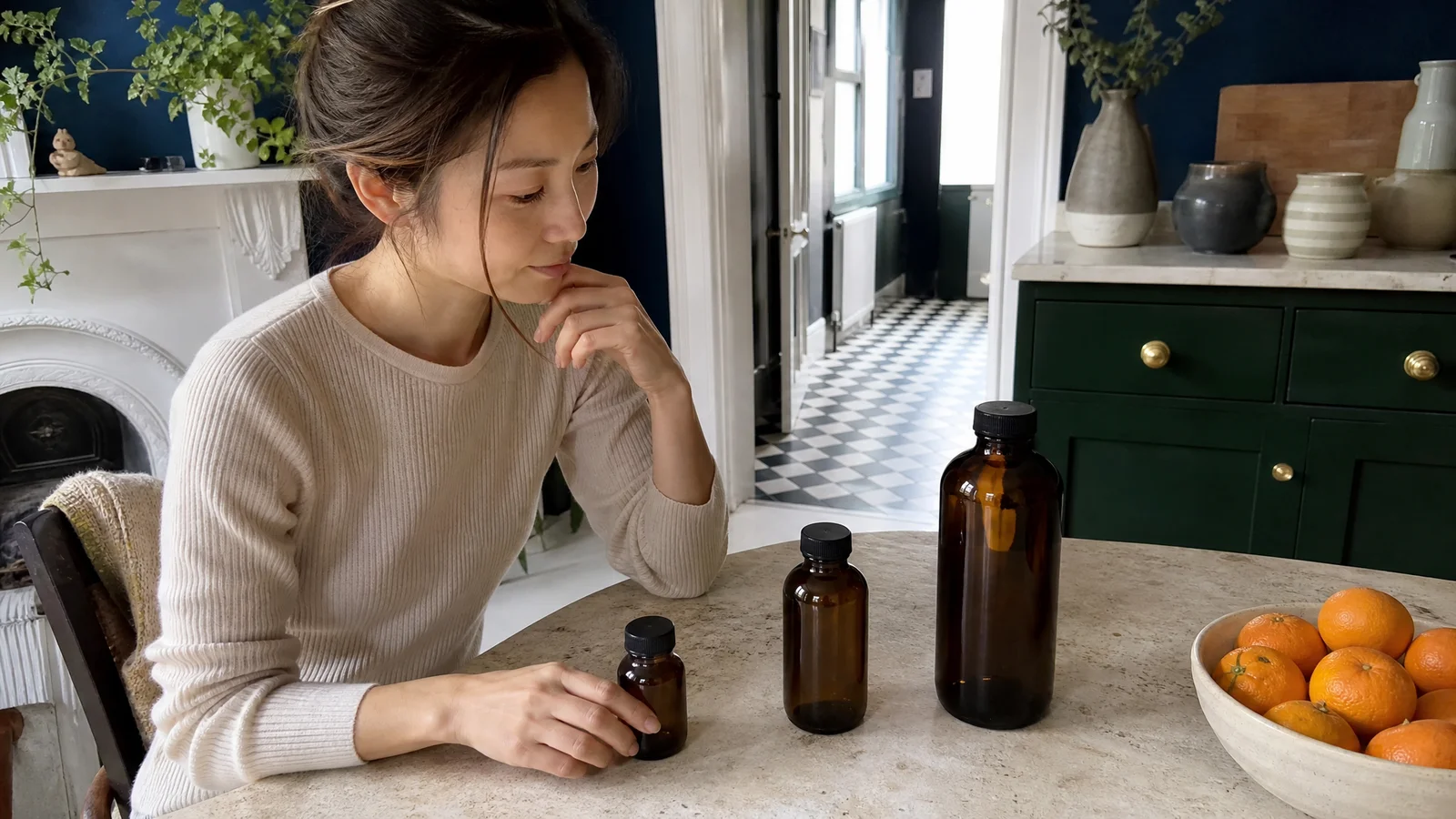
The best first bottle of mandarin oil is the one you will finish while it still smells bright. Pressed citrus oils are lovely when fresh and they do not improve with waiting, so we nudge most people toward the small end of our range, which runs from 0.5 oz up to 400 lb. Here is the arithmetic that turns a bottle size into a number of uses, and what the Tisserand Institute says about how long citrus oils stay at their best.
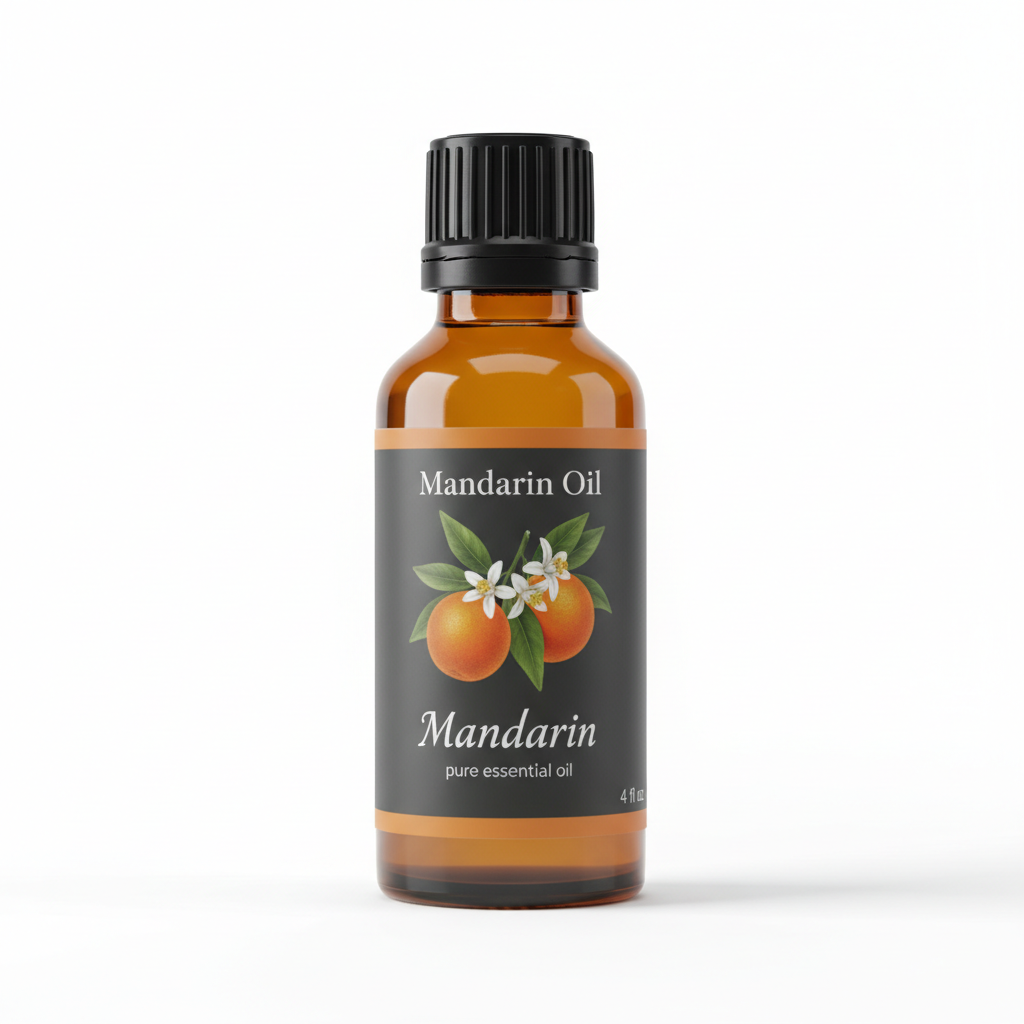
Mandarin Essential Oil
Our own Mandarin Essential Oil, in sizes from 0.5 oz to bulk.
From $12.99
Shop Now →What a bottle holds, in grams and drops
Sizes on a shop page are easy to misjudge, so convert first. The certificate of analysis we publish for one batch gives a relative density of 0.852 at 20 C, meaning 1 ml of that batch weighs about 0.852 g (see how to read the certificate). Other lots will differ a little, so treat the grams as close estimates. Drops vary with the dropper; 20 per ml is a common rule of thumb, and the table assumes fluid ounces of 29.57 ml.
| Size | Millilitres | Grams | Drops (approx.) |
|---|---|---|---|
| 0.5 oz | 14.8 | 12.6 | 296 |
| 1 oz | 29.6 | 25.2 | 591 |
| 2 oz | 59.1 | 50.4 | 1,183 |
| 4 oz | 118.3 | 100.8 | 2,365 |
| 8 oz | 236.6 | 201.6 | 4,731 |
| 16 oz | 473.2 | 403.2 | 9,463 |
For skin blends, our guidance is 0.5% to 2% in a carrier oil, roughly 3 to 12 drops per ounce of carrier, with a patch test first. That is a general line and not a mandarin-specific limit; our safety basics article covers skin use. A pound is 453.6 g, or about 532 ml at the density above.
Why freshness shapes the choice
The Tisserand Institute says most essential oils keep well for at least 1-2 years before oxidation takes effect, calls those rough guidelines, and names heat, light and moisture as the drivers. More air in the bottle speeds things up, citrus oils sometimes go cloudy as they oxidise, and refrigeration about doubles useful life (Tisserand Institute). Another page from the Institute advises a cool, dark place and notes that heavy oils such as vetiver, sandalwood and patchouli oxidise most slowly (Tisserand Institute, Keep essential oils cool). A light peel oil sits at the other end of that range, which is our inference rather than a measurement.
It matters because mandarin is mostly limonene, about two thirds of the oil in EFSA's ten batches (EFSA Panel, 2021), and oxidised limonene is the form linked to skin reactions. In a six-country patch-test study, air-oxidised R-limonene gave positive reactions in 5.2% of 2,900 consecutive dermatitis patients (Bråred Christensson et al., 2013). Those were people already being tested for dermatitis, so it is not a rate for everyone, but it shows why an old, half-empty bottle is a different material from a fresh one. That is the thinking behind our storage advice: buy small, reorder often, keep the bottle tightly capped in a cool, dark place.
A quick sum most people skip
Say you make one 1 oz skin blend a month at the top of our range, 12 drops. That is 144 drops a year, so a 0.5 oz bottle of about 296 drops lasts roughly two years. At 0.5% instead of 2% it lasts four times as long, which is no help if the oil is ageing in the bottle. As reasoning from these numbers, a bigger bottle only pays off when you use a large part of it in a season. We do not quote a shelf life for our oil, so ask for the best-by date of the lot that will ship to you and keep the reply.
Picking by how you use it
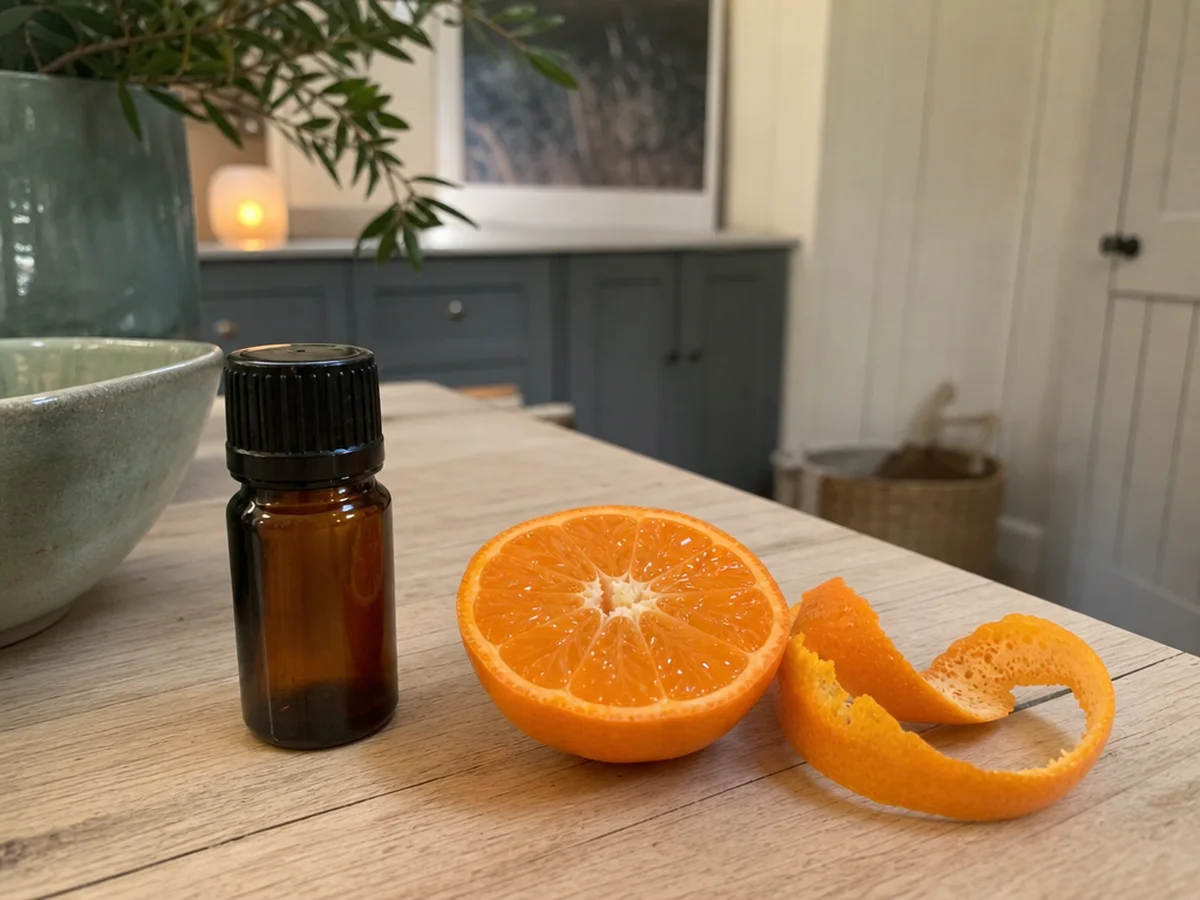
- Diffuser or room scenting, a few drops a week. The smallest size. At 5 drops a week, 296 drops is about 59 weeks.
- Occasional skin blends. 0.5 oz or 1 oz, then decant a working amount into a small airtight bottle and keep the main bottle sealed, which also cuts the air the oil sees.
- Soap, candle or cosmetic making for sale. Start with a sample bottle from our wholesale page to try the oil in your product, then size up to what a production cycle uses. Our IFRA article covers what to check for leave-on products.
- Regular production. The 5 lb to 400 lb sizes are for a steady line. Work out your annual use in grams and divide by 453.6 to see pounds.
A small-bottle habit we like
If mandarin is new to you, start with the smallest bottle and treat it as your tester. Open it, smell it, put a drop on a paper strip and notice how it opens and how it fades over the next few minutes. You'll find it is a lively top note, and that tells you quickly whether you want more of it. Once you know you love it, the bigger sizes make sense, and you will have a feel for how fast you really get through it.
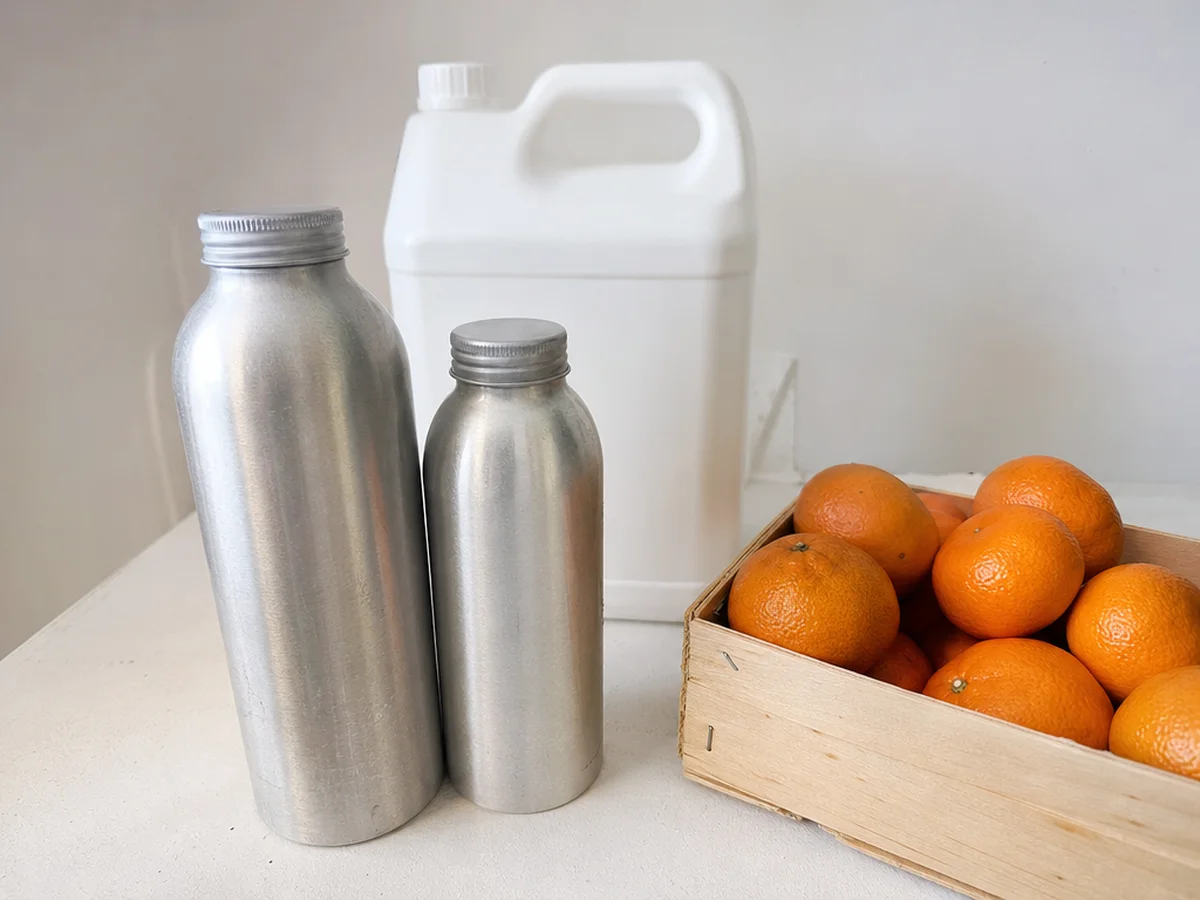
Write the date you open each bottle on the label with a marker. It takes five seconds and it answers the question "how old is this?" months later, when nobody can remember. It also makes it easy to decide which bottle to use first when you have two on the shelf.
Finally, be honest about how you scent your home. Some people diffuse a few evenings a week; others mix a new body oil every month. Neither habit is better, but they point to different sizes, and picking by habit beats picking by what looks like good value.
When bigger is the better answer
There are honest reasons to go larger. If you blend weekly, a small bottle means constant reordering. If you use a few ounces a month, a 16 oz bottle is gone in months rather than years. A refrigerator changes the sums too, given the Institute's point about useful life. What does not change is air: a 16 oz bottle with 2 oz left is mostly air, and decanting into smaller bottles as you go is cheap insurance.
Carrier oils, droppers and glass come from a craft or soap supply shop, since we sell only mandarin. For more on keeping it well, see our storage article, and for how mandarin differs from its citrus cousins, the citrus comparison.
In short, buy the size you will enjoy at its freshest, and let reordering do the rest.
Whatever size you land on, the happy ending is the same: a bottle that still smells sweet and bright when you reach the last drops.
Mandarin Essential Oil
Mandarin Essential Oil from our own shop, in sizes from 0.5 oz to bulk.
From $12.99
Shop Now →Sources & Further Reading
- Tisserand Institute. Is my bottle of essential oil oxidized or no longer good to use? tisserandinstitute.org
- Tisserand Institute. Keep essential oils cool! tisserandinstitute.org
- EFSA Panel on Additives and Products or Substances used in Animal Feed, 2021. Safety and efficacy of a feed additive consisting of expressed mandarin oil from the fruit peels of Citrus reticulata Blanco for use in all animal species (FEFANA asbl). EFSA J. PMC8190682
- Bråred Christensson et al., 2013. An international multicentre study on the allergenic activity of air-oxidized R-limonene. Contact Dermatitis. Europe PMC