Mandarin Essential Oil vs Fragrance Oil: Which to Use
A bottle labelled "mandarin" might hold oil pressed from the peel of Citrus reticulata, or it might hold a fragrance oil that was composed to smell like it. They sit side by side on supplier websites and often look alike in a photo, but they are different products with different paperwork. Neither is the villain here. The useful question is which one you can document for what you plan to make.
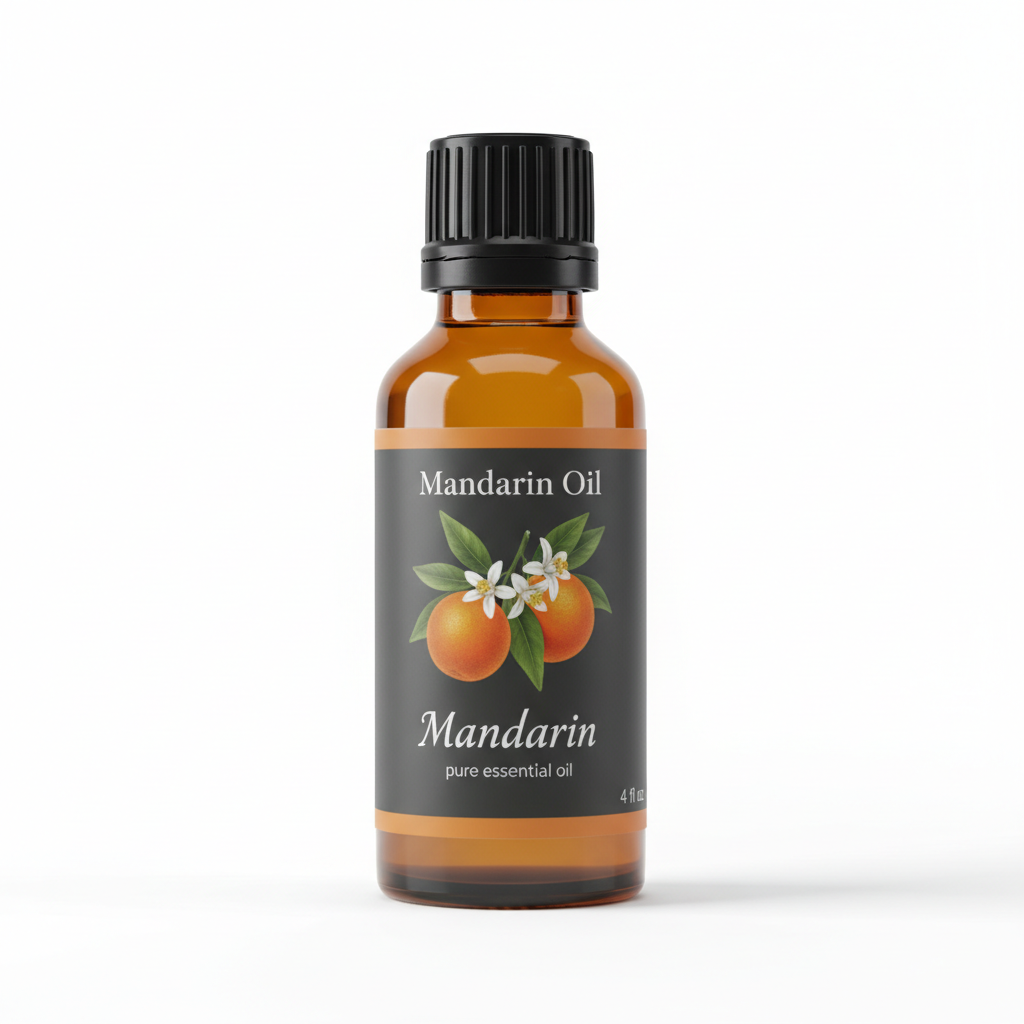
Mandarin Essential Oil
Our own Mandarin Essential Oil, in sizes from 0.5 oz to bulk.
From $12.99
Shop Now →An essential oil is what the fruit gave up
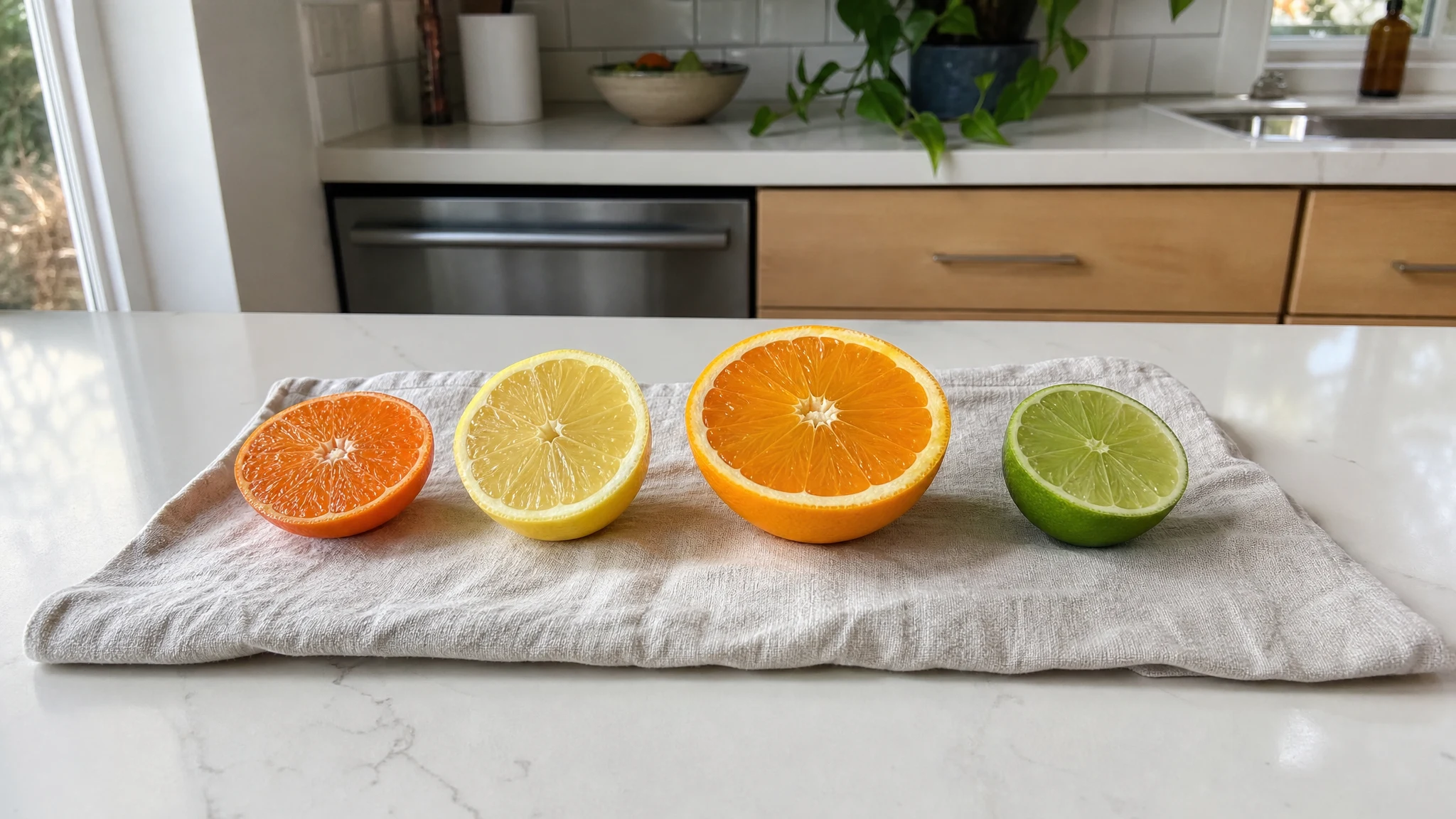
EFSA describes mandarin oil as obtained by cold expression from the fruit peel of Citrus reticulata Blanco. When its panel analysed ten batches, it found up to 88 constituents, 47 of them identified, with limonene averaging about two thirds of the oil. In a 2025 study of 63 mandarin oils described as genuine, researchers reported clear seasonal and geographical trends. The takeaway is a pleasant one: an essential oil is a little bit of a place and a harvest, and it shifts a bit with the fruit. Our composition article shows how wide the published ranges are.
A fragrance oil is a recipe
The FDA explains that fragrance formulas are complex mixtures of many natural and synthetic ingredients, and that in the United States they can be listed on a cosmetic label simply as "Fragrance", because the formulas are often trade secrets. So the words "mandarin fragrance oil" name a scent goal, not a list of ingredients. That is a statement about fragrances in general, and it explains why the supplier's technical data sheet is the document that matters for this kind of product.
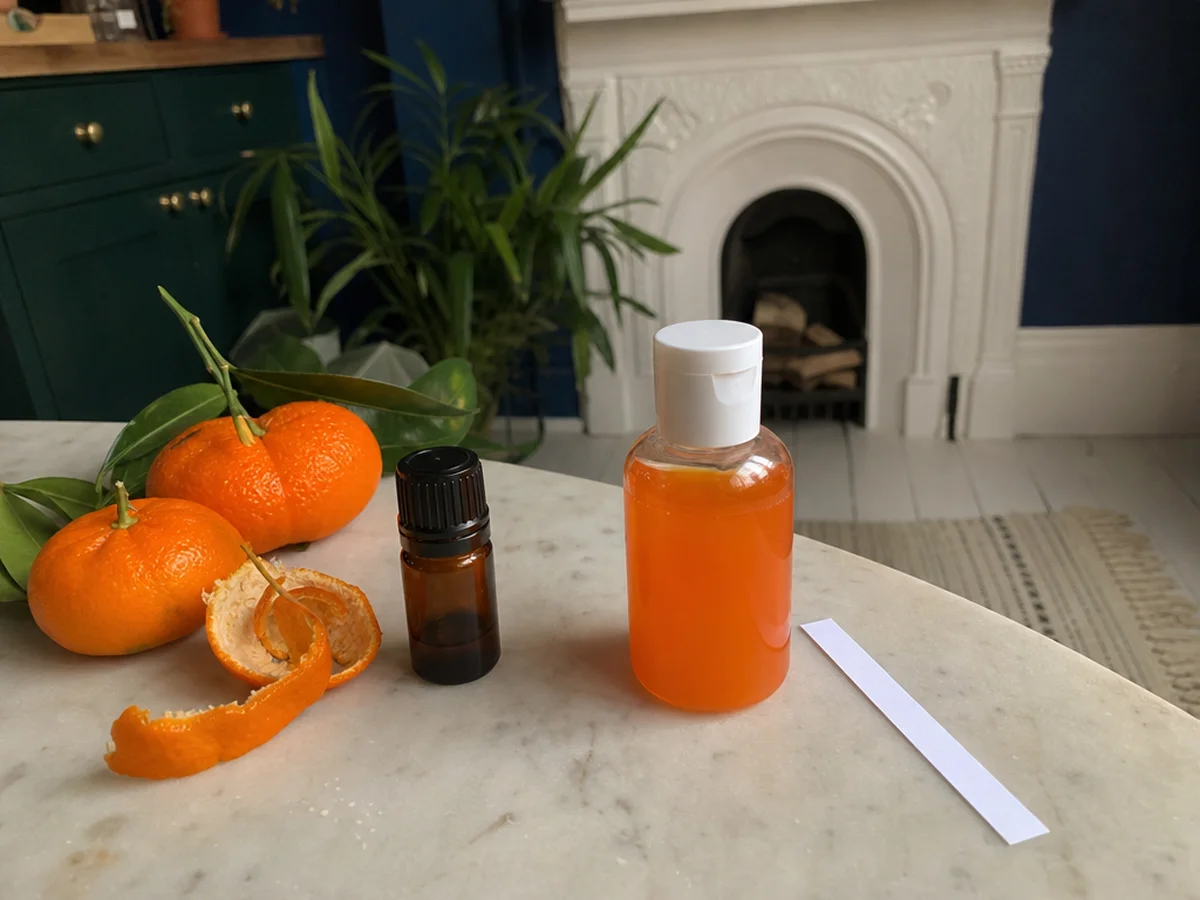
How they compare in practice
| Question | Essential oil | Fragrance oil |
|---|---|---|
| What does the name tell you? | Species, plant part and extraction can be printed and checked | A scent description; the formula belongs to the supplier |
| Does it vary? | Yes, with fruit and season | A formula can be held to a target, which is why makers like it for repeat batches |
| What can you ask for? | Lot report, best-by date, GC-MS if one exists | The ingredient and allergen declaration for the lot |
If you run a soap or candle line that needs the identical scent every time, a fragrance oil has a real argument in its favour, and we would say so even though it is not something we sell. If your product says "made with mandarin oil", you need the essential oil, because that sentence has a specific meaning. And if you simply want something plant-derived, read the label for a botanical name and extraction instead of trusting the title.
Allergies do not stop at the word natural
The FDA notes that some components of fragrance formulas can cause allergic reactions in some people. The same is true of essential oils, and mandarin shows it well. In a six-country patch-test study, air-oxidized R-limonene gave positive reactions in 5.2% of 2,900 consecutive dermatitis patients, with centres ranging from 2.3% to 12.1%, while limonene itself is generally not the culprit until it oxidizes. Those patients had already been referred for dermatitis, so the figure is not a rate for everyone. It simply means a tightly capped, reasonably fresh bottle is a better choice than an old one, whichever kind you buy.
Labelling and sun
Two rulebooks matter if you make leave-on products. In the European Union, Regulation 2023/1545 adds 56 fragrance allergens to individual labelling, triggered above 0.001% in leave-on and 0.01% in rinse-off products, with new products covered from 31 July 2026 and existing ones from 31 July 2028. How that applies to a natural oil is a question for a regulatory consultant. Our IFRA article goes further into the standards. In the United States, the FDA looks at intended use: a product meant only to cleanse or beautify is a cosmetic, and body-effect claims turn it toward being a drug, whichever type of oil it contains.
On sun, the Tisserand Institute states that expressed mandarin and tangerine oils contain extremely small amounts of furocoumarins, not enough to make them phototoxic, with IFRA and EU guidance of 15 ppm bergapten for the products it covers. That is general to expressed mandarin oil. The Certificate of Analysis we publish for one batch has no bergapten figure, so for a leave-on product worn in sun, ask us in writing through the contact page before ordering. For a fragrance oil, ask its maker what is in it and whether it is intended for skin.
A one-minute way to decide
- Do you need the scent to be identical every single time? A fragrance oil is built for that.
- Will your label say "made with mandarin oil"? Then you want the essential oil.
- Do you simply love the smell of the peel? Smell a few and choose the one that reminds you of the fruit.
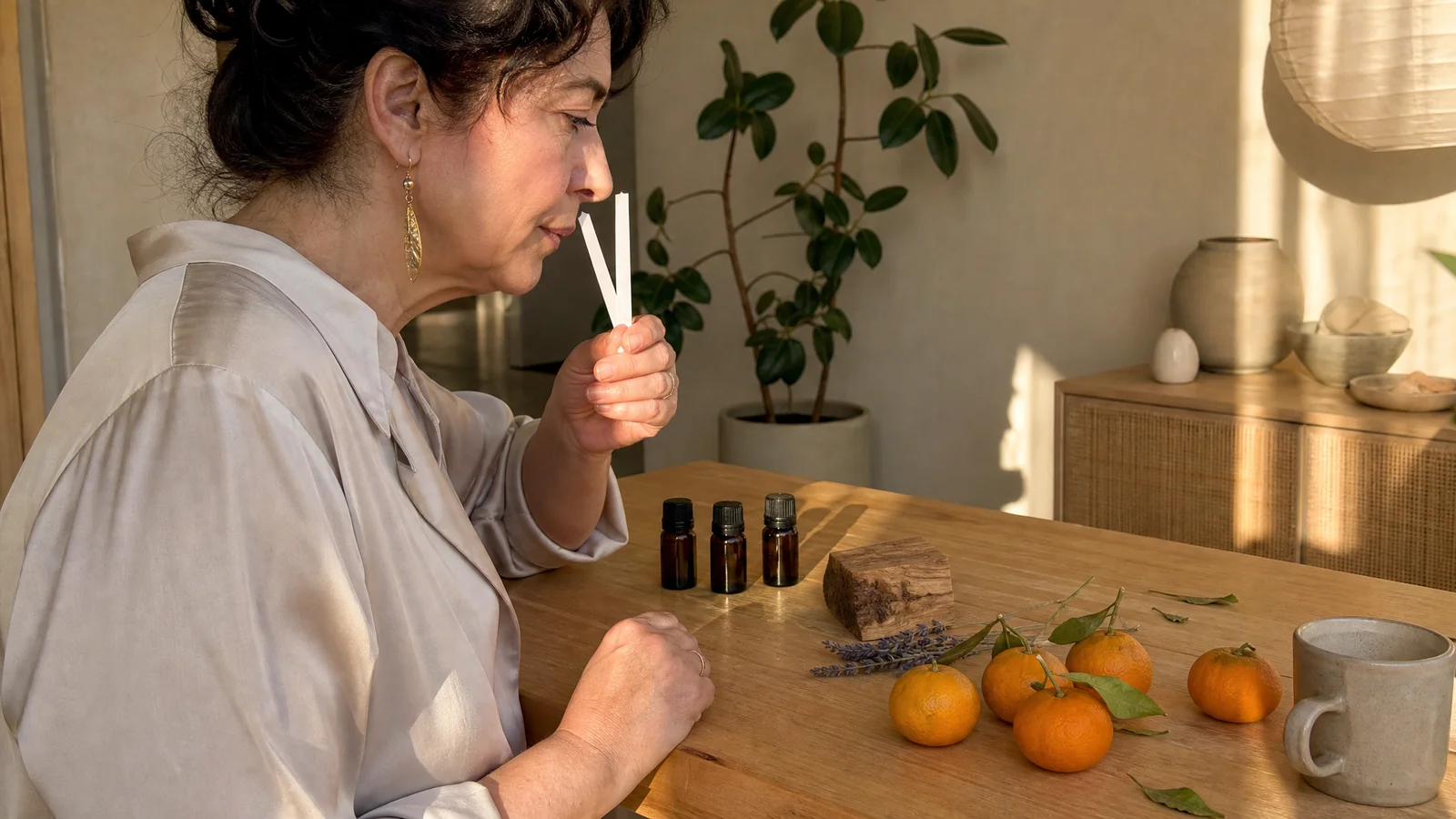
Whichever you smell, put a drop on a paper strip and come back to it after a few minutes. Ours is sweet, mellow and juicy, with a faint floral hum that stays behind the citrus. A good essential oil is a friendly, slightly changeable thing, and that is part of its charm.

We think there is room on the shelf for both, as long as the bottle is labelled for what it actually is. What matters is that you know which one you are holding and why you chose it.
Questions for each kind of supplier
- Essential oil: botanical name and extraction, lot code and date, the report that covers the lot, and a furocoumarin figure for sun-exposed use.
- Fragrance oil: the ingredient and allergen declaration for the lot, what it is intended for (skin, soap, candles), and what changed if the scent differs from your last order.
Compare paperwork, not names. If a seller cannot tell you whether a bottle is an essential oil or a fragrance oil, you have your answer to the first question. Our guides to quality checks and reading a label cover the next steps for the essential oil side.
Mandarin Essential Oil
Mandarin Essential Oil from our own shop, in sizes from 0.5 oz to bulk.
From $12.99
Shop Now →Sources & Further Reading
- EFSA FEEDAP Panel, 2021. Safety and efficacy of a feed additive consisting of expressed mandarin oil from the fruit peels of Citrus reticulata Blanco for use in all animal species (FEFANA asbl). EFSA Journal.
- Cannizzaro et al., 2025. Comprehensive analysis of mandarin essential oils: Simultaneous qualitative, quantitative, chiral, and isotopic profiling via enantio-selective multidimensional gas chromatography coupled to isotopic ratio mass spectrometry. Journal of Chromatography A 1751.
- US FDA. Fragrances in Cosmetics.
- US FDA. Aromatherapy.
- European Commission. Fragrance allergens labelling.
- Bråred Christensson et al., 2013. An international multicentre study on the allergenic activity of air-oxidized R-limonene. Contact Dermatitis 68:214-223.
- Tisserand Institute. Phototoxicity: essential oils, sun and safety.