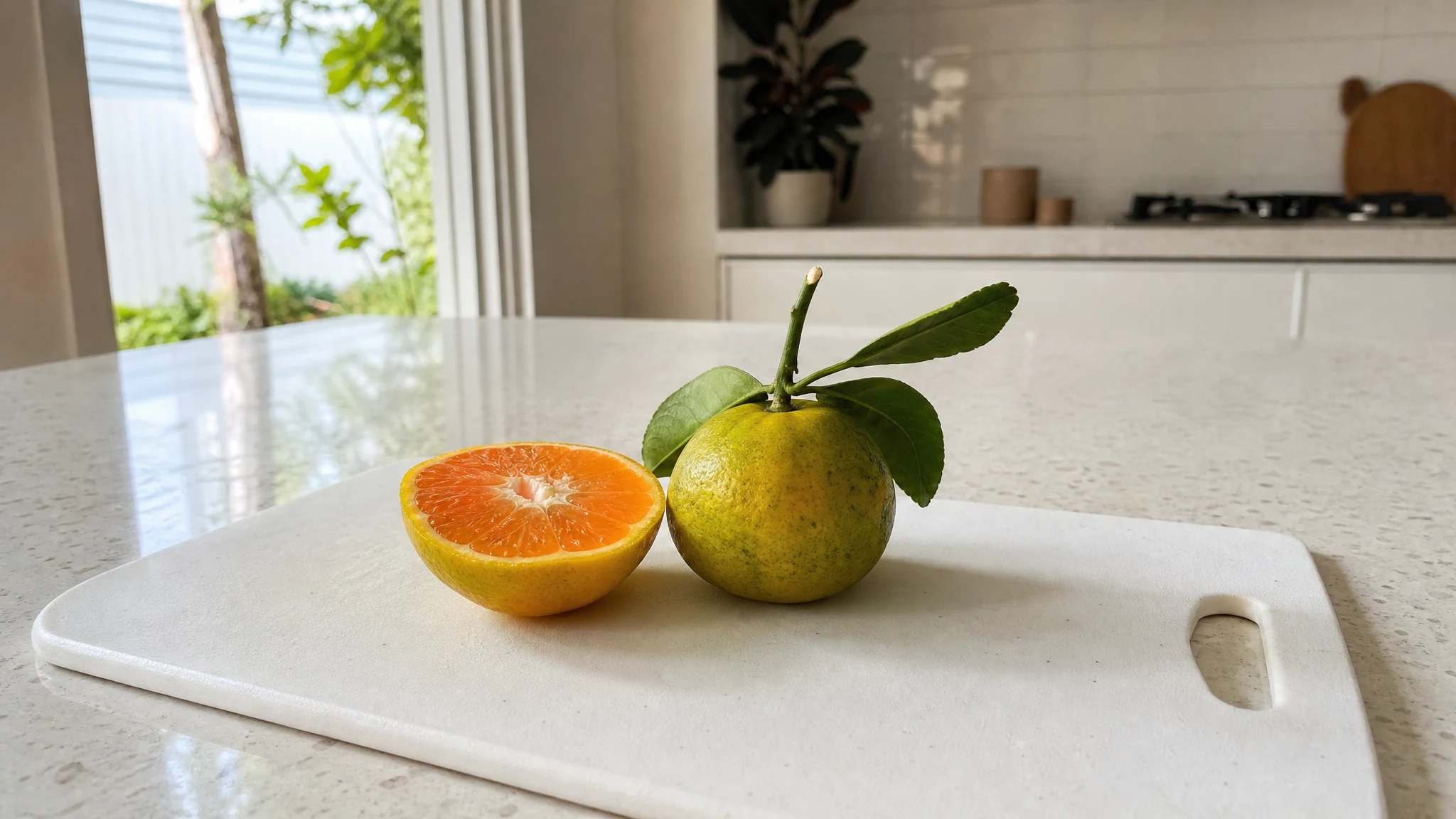
Mandarin vs Bergamot Oil: How They Differ in a Blend
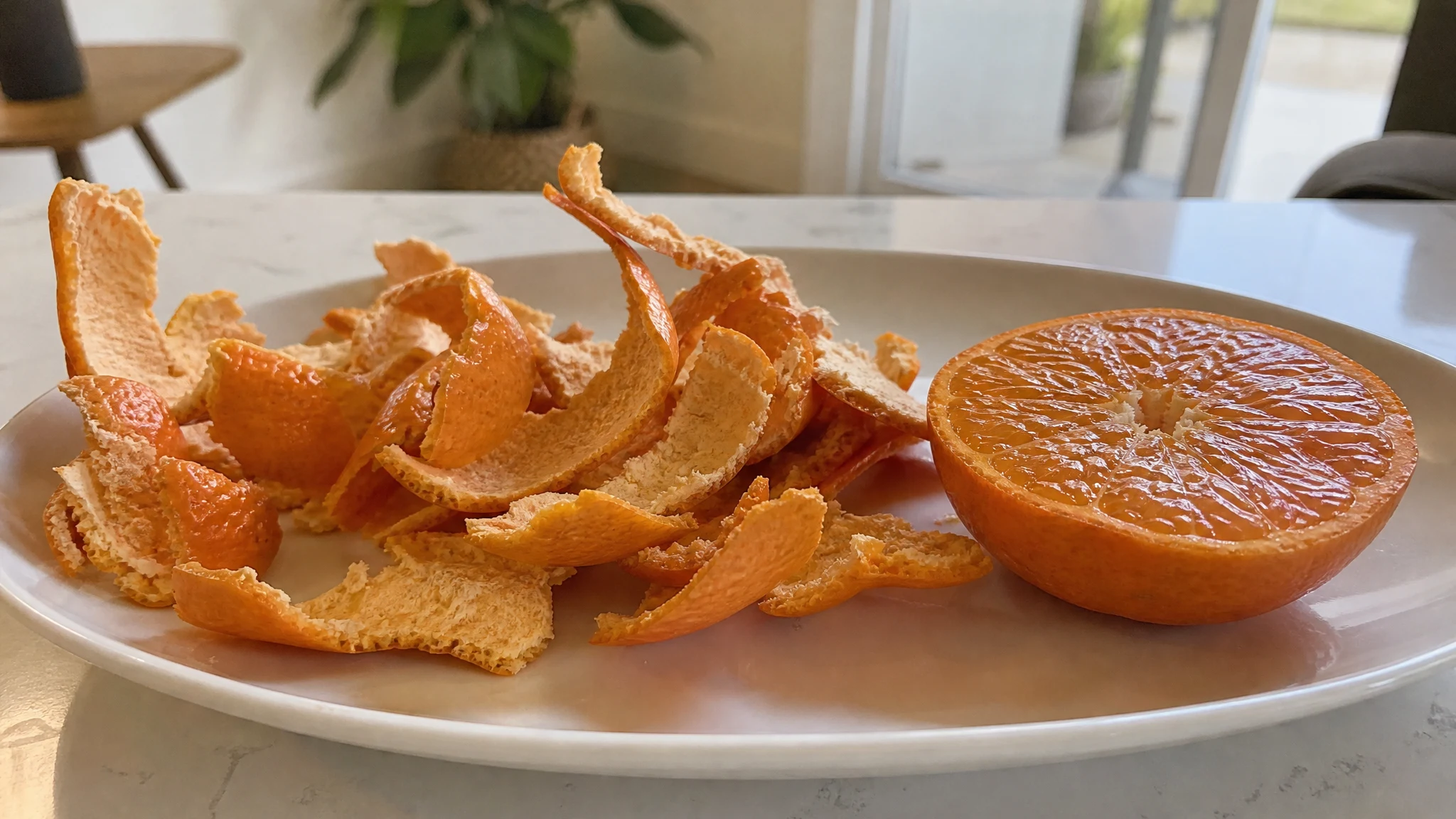
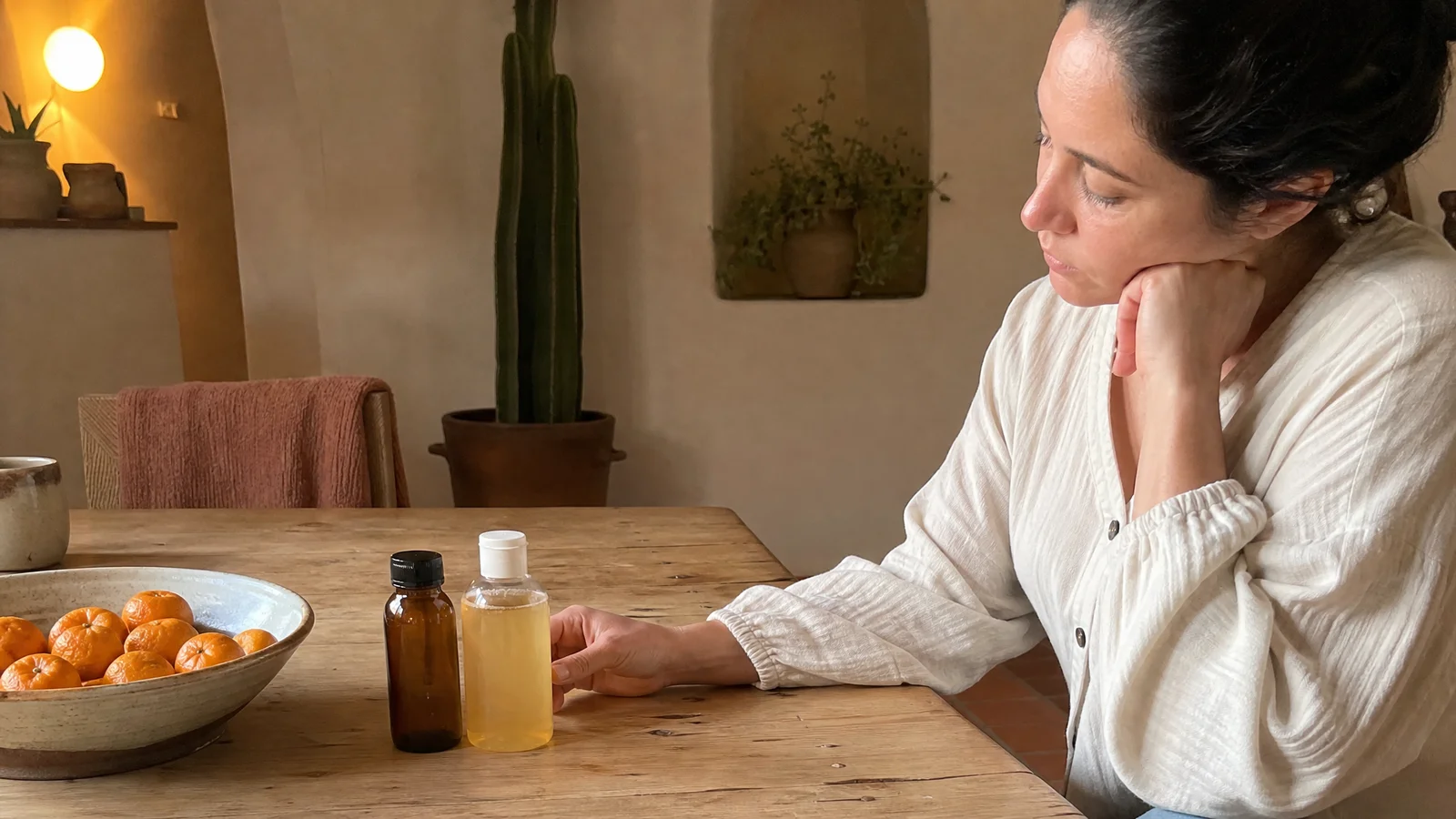
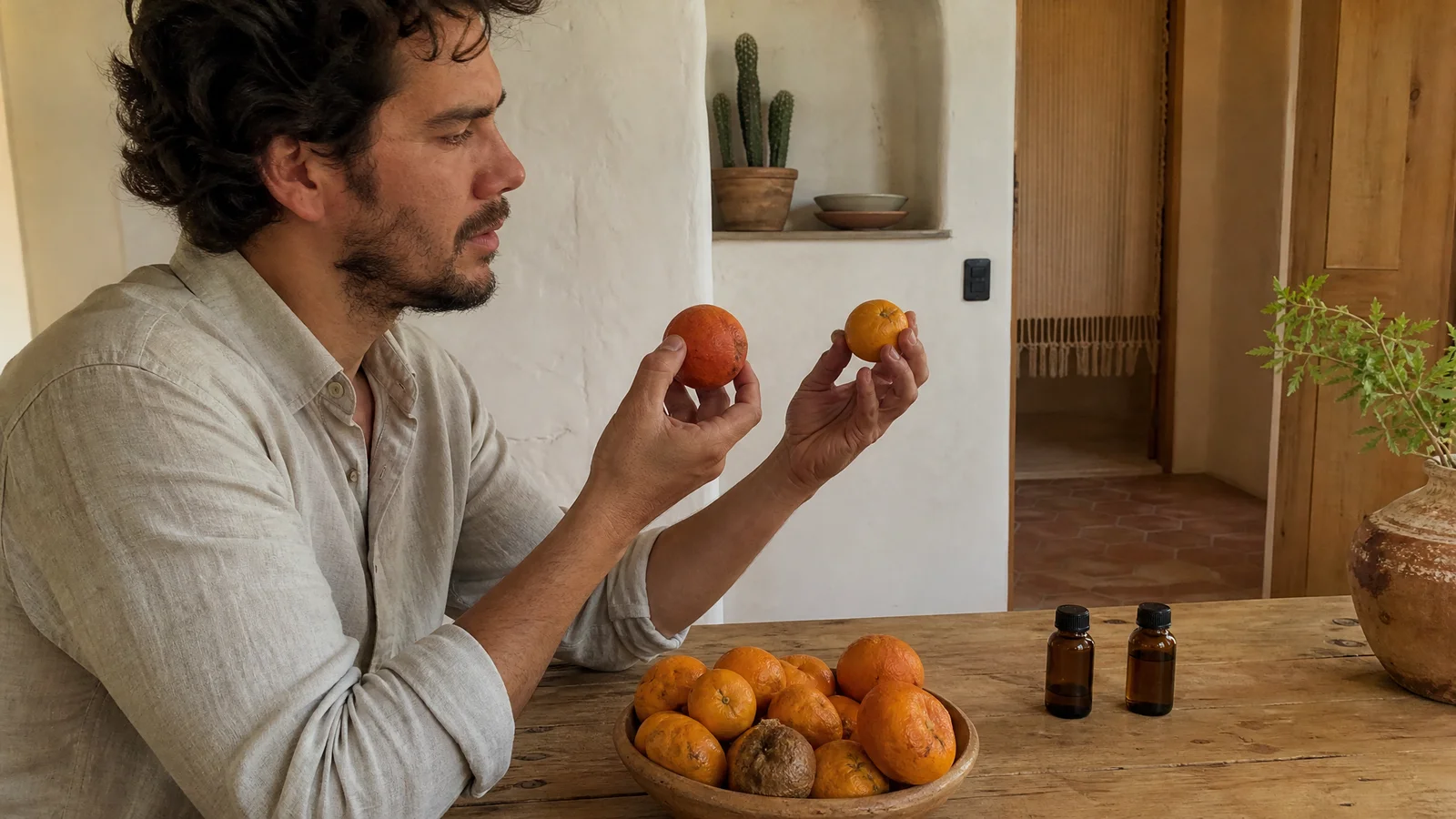
Picture two bottles on a perfumer's bench. One smells like a ripe mandarin, soft and juicy with a faint floral hum. The other smells brighter and more polished, a little like Earl Grey tea. Both are cold-pressed citrus peel oils, and it is tempting to treat them as stand-ins for one another. They are better thought of as neighbours.
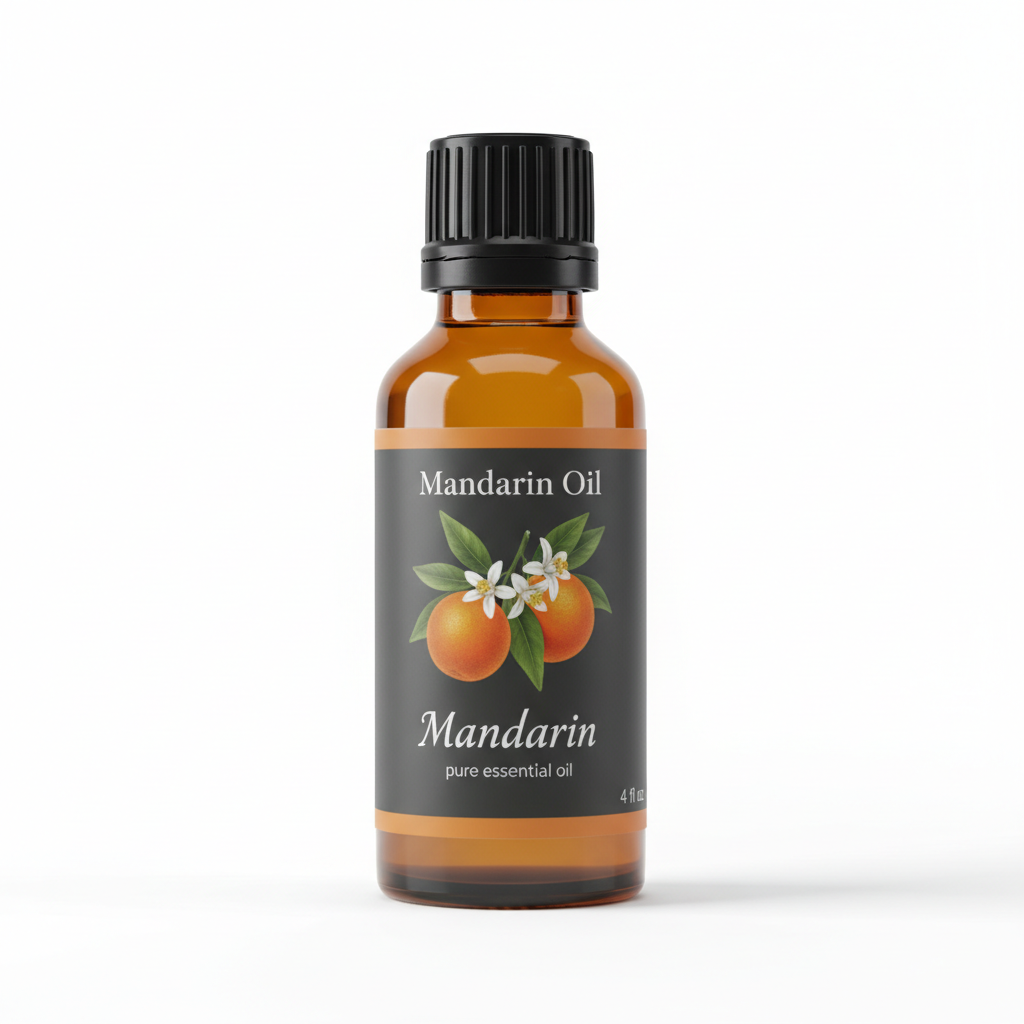
Mandarin Essential Oil
Our own Mandarin Essential Oil, in sizes from 0.5 oz to bulk.
From $12.99
Shop Now →What sets the two apart in the bottle
Mandarin peel oil is mostly limonene with a supporting share of gamma-terpinene. In one cold-pressed Ponkan mandarin sample, limonene came to about 75% and gamma-terpinene about 10% (Lu and colleagues, 2019). Bergamot is built differently. A review in Frontiers in Pharmacology gives limonene a range of 25% to 53% and then adds a large share of oxygenated compounds, linalyl acetate at 15% to 40% and linalool at 2% to 20% (Navarra and colleagues, 2015).
That ester and alcohol pairing is our best explanation for bergamot's floral, lavender-adjacent polish, which a mandarin lacks. It is reasoning from the composition tables rather than a smell test, but it matches what noses report. Mandarin, in turn, brings sweetness and roundness. Our oil has a sweet, mellow, juicy aroma with a faint floral hum, which is why we love it as a soft top note.
Why bergamot comes with a sun limit
Bergamot contains bergapten, a furanocoumarin that makes skin more sensitive to ultraviolet light. The Tisserand Institute notes that bergamot oil normally contains 0.11% to 0.33% bergapten and that it should be limited to 0.4% in a final product for skin exposed to sunshine, excluding wash-off products. Expressed mandarin, by contrast, is on Tisserand's list of oils with extremely small amounts of furanocoumarins.
Here is the arithmetic. The IFRA ceiling for bergapten in leave-on products is 15 ppm, which is 0.0015%. With bergamot at 0.2% bergapten, an oil level of 0.75% would reach that line (0.0015 divided by 0.002). The 0.4% cap sits comfortably under it. At 2%, the same bergamot would deliver about 40 ppm, far over. That is exactly why a drop-for-drop swap goes wrong: at our skin dilution guidance of 0.5% to 2%, mandarin is used at levels that would be too high for bergamot in a product worn in sunshine.
Our certificate does not carry furocoumarin data, so if you are making a leave-on product for sun-exposed skin, ask us in writing for what we can provide, and if you sell the product, have a regulatory consultant read the answer.
Why we say neighbours
It is tempting to think of mandarin as a milder bergamot, or bergamot as a fancier mandarin. We see them differently. One is a sweet, juicy opening and the other is a polished, floral backbone, and a blend that uses both has more shape than one that leans on a single note. Think of them as colleagues who happen to share an office.
Furocoumarin-free bergamot
You will see "FCF" on some bergamot bottles, meaning furocoumarin-free. The Navarra review explains that vacuum distillation of the peels yields an oil that is chemically comparable to the cold-pressed one, with the bergapten removed. Because that describes how the oil was made, a good supplier will name the process and give a measured bergapten figure for the lot.
A smell comparison you can do at home
If you have both oils, put a drop of each on its own paper strip and label them. Smell mandarin first: sweet, soft and juicy. Then bergamot: brighter, more polished, with a tea-like edge. Now hold both strips together under your nose and notice how the sweetness rounds the brightness. After five minutes, smell each strip again; you will probably find the heart of each oil has shifted, the way a top note does as it fades.
That exercise teaches you more about how they work together than any chart could, and it takes two minutes.
Blending them well
This is where the two shine together. We list bergamot among the oils that blend well with mandarin, along with lavender, chamomile, frankincense, vanilla and neroli. Mandarin leads with sweetness, and bergamot supplies the floral lift behind it. A few practical habits help:
- Mandarin for bergamot: expect to lose the polished floral edge, and dose mandarin by our 0.5% to 2% line and your own patch test, never by bergamot's number.
- Bergamot for mandarin: drop to bergamot's ceiling for anything left on skin in sunlight unless you know it is FCF. At 0.4% in one ounce of carrier (29.57 ml), that works out to about 0.118 ml, roughly 2 drops at 20 drops per millilitre.
- Weigh when it matters: drop sizes differ between oils, so a scale is more trustworthy than counting.
We sell mandarin only, so bergamot would come from another supplier. Ask whether it is expressed or furocoumarin-free, how it was made, and for the bergapten figure for your lot. Our pairing guide has more partners, our safety basics post covers dilution and patch testing, and our citrus comparison puts several siblings side by side.
When you do mix them, start with mostly mandarin and a smaller share of bergamot, smell the result on a strip, and adjust a drop at a time. Keep any bergamot within the ceiling that applies to your product, and write down your drop counts so you can repeat the blend you liked.
Treat them as bench mates, mandarin for the sweet opening and bergamot for the floral backbone, and each one does its own job better.
Mandarin Essential Oil
Mandarin Essential Oil from our own shop, in sizes from 0.5 oz to bulk.
From $12.99
Shop Now →Sources & Further Reading
- Navarra M. and colleagues, 2015. Citrus bergamia essential oil: from basic research to clinical application. Frontiers in Pharmacology 6:36. frontiersin.org
- Tisserand Institute. Phototoxicity: essential oils, sun and safety. tisserandinstitute.org
- Lu Q. and colleagues, 2019. Peel oils from three Citrus species: volatile constituents, antioxidant activities and related contributions of individual components. Journal of Food Science and Technology. PubMed Central