Mandarin, Vanilla and Cedar: A Sunlit Grove Blend
Picture a sunny grove in late afternoon: bright fruit overhead, warm bark nearby, something creamy in the air. A mandarin, vanilla and cedar blend is a nice way to bottle that mood. It also hides two small traps, because "cedar" and "vanilla" each mean several different products on a label.
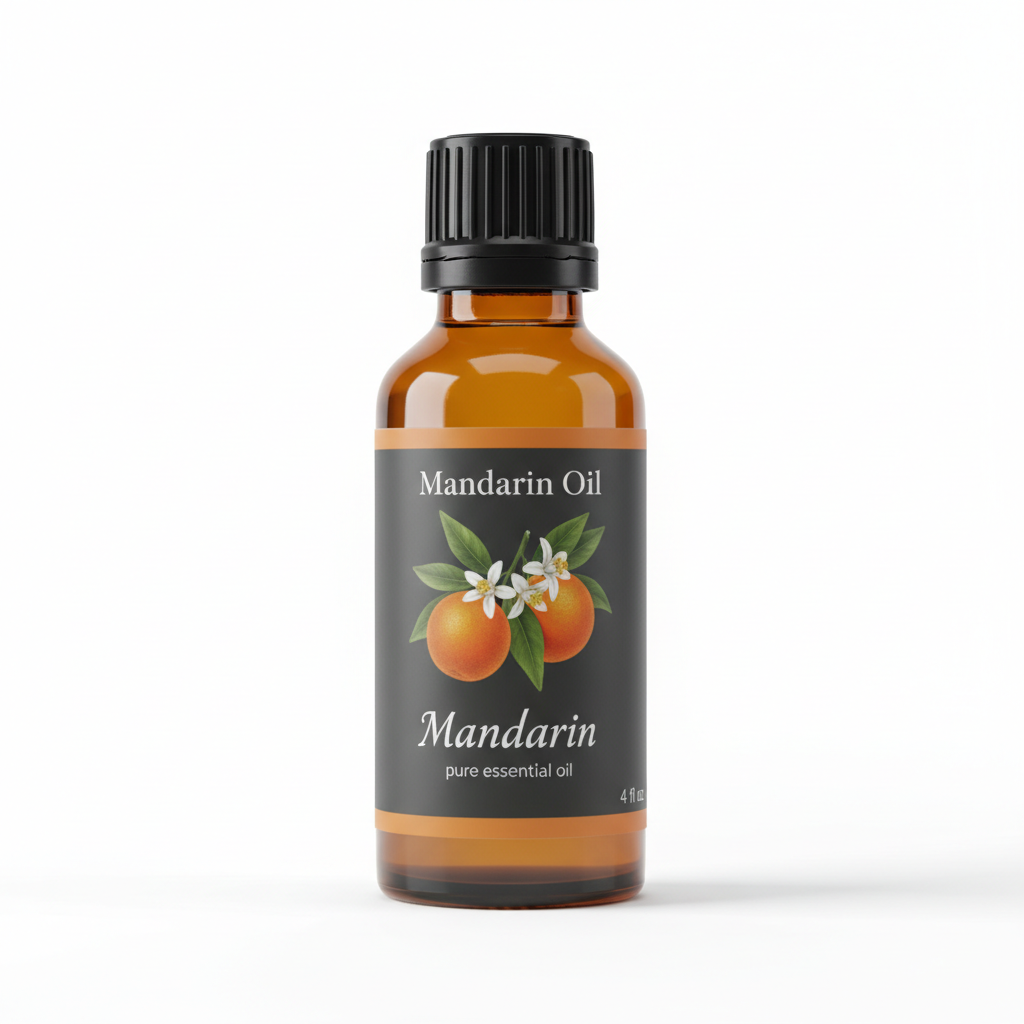
Mandarin Essential Oil
Our own Mandarin Essential Oil, in sizes from 0.5 oz to bulk.
From $12.99
Shop Now →Mandarin does the sunshine
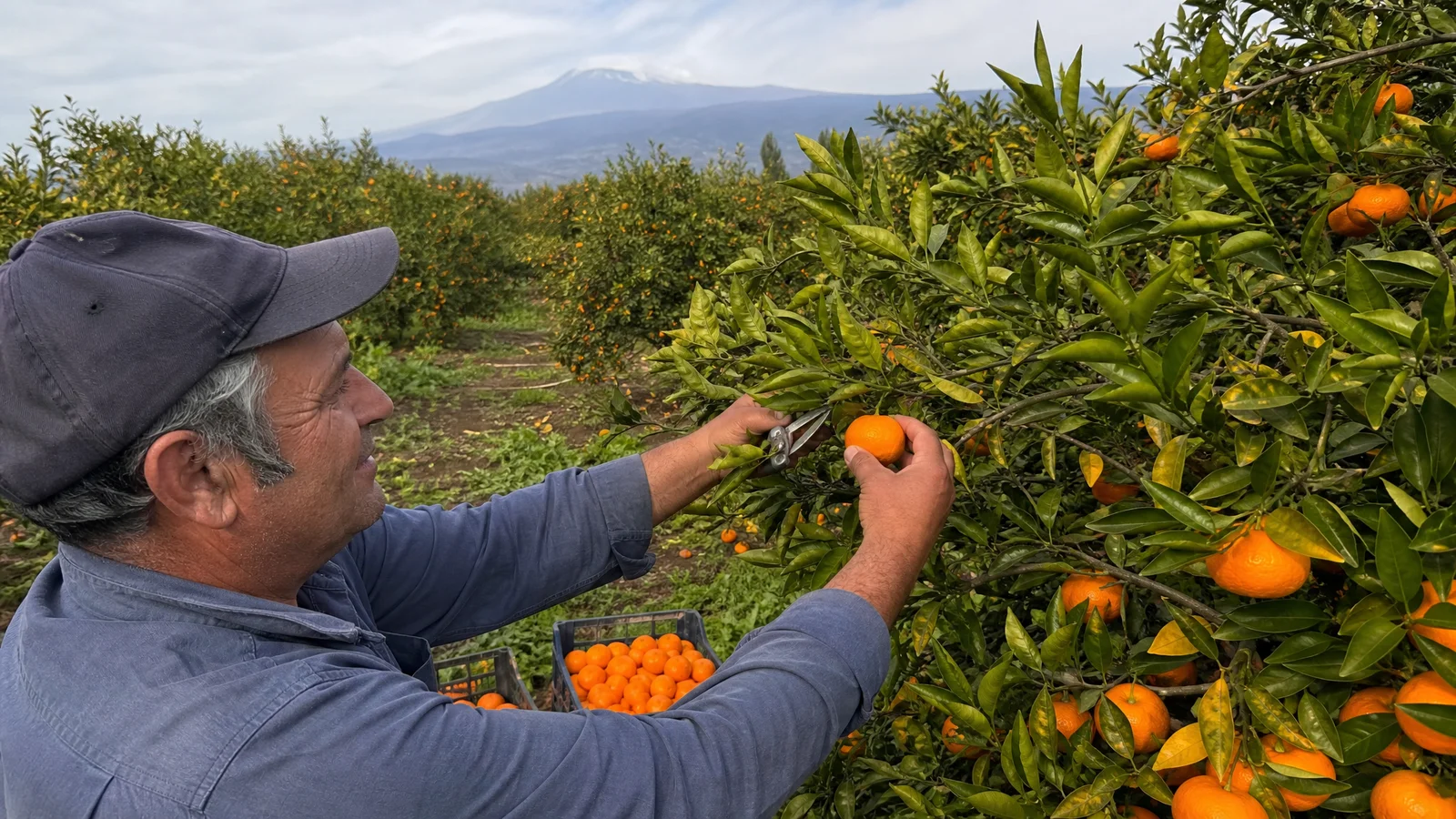
This is our part. We sell one mandarin oil, cold-pressed from the peel and sold neat. We describe the scent as sweet, mellow and juicy with a faint floral hum, and we place it as a top note, so it is the bright opening of any blend. Vanilla is one of the partners we suggest for it. Cedar and vanilla come from a craft, supply or flavour shop, because we sell only mandarin, with no cedar, vanilla or ready-made blends.
Picturing the blend
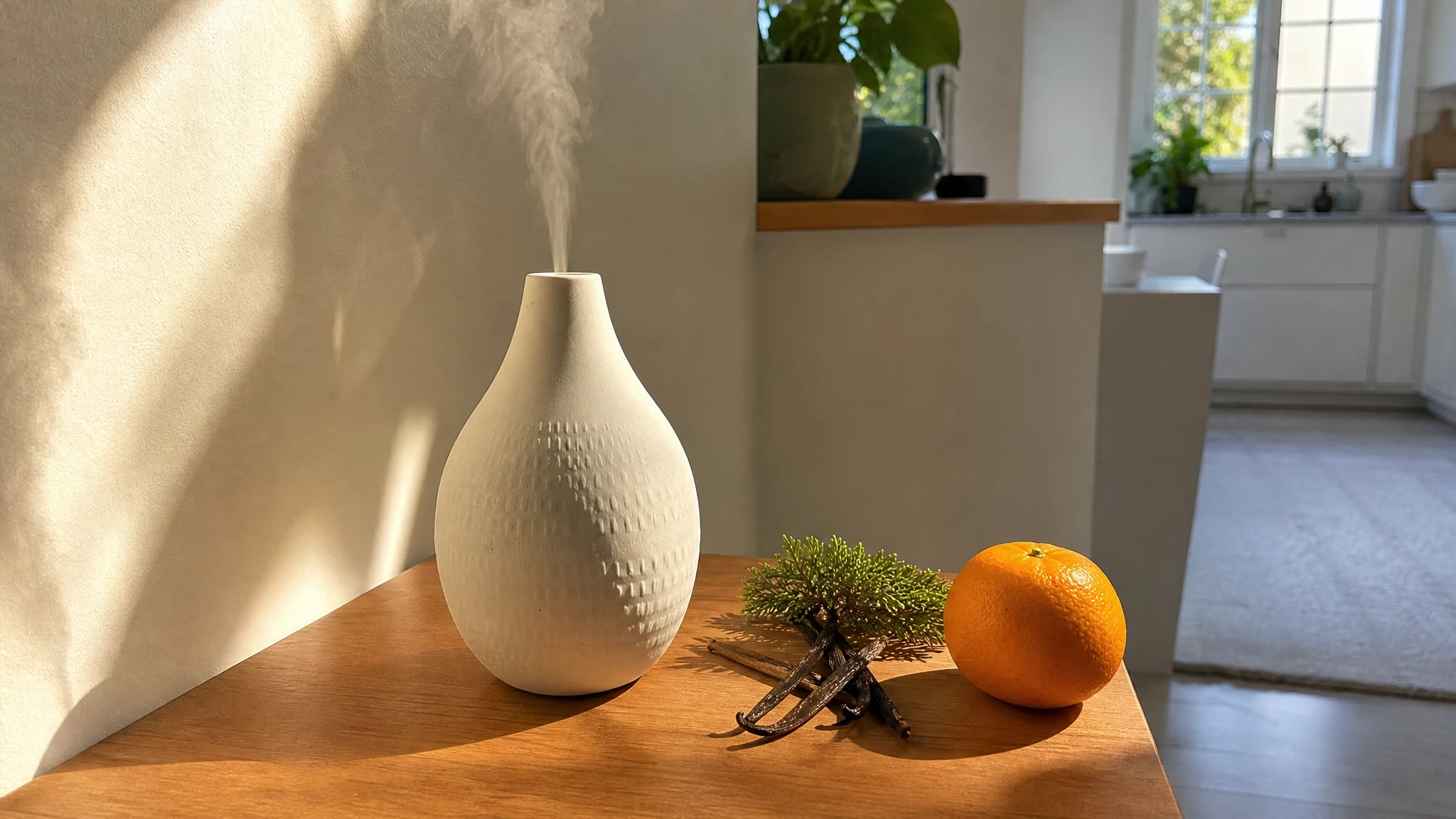
Before any drops, it helps to picture where each part sits. Mandarin is the sunshine, the first thing you smell when the blend starts: sweet, mellow and juicy, with that faint floral hum. Cedar is the warm wood underneath, and vanilla is the soft, round edge that joins them. If you can smell each ingredient by itself before you combine them, you will know what to add or take away when the blend feels off.
Cedar: buy the Latin name
A 2026 review of cedarwood oils by Setzer and Satyal points out that true cedars belong to the genus Cedrus, while the name "cedar" is also given to trees in Juniperus, Cupressus, Chamaecyparis, Thuja and other genera. Two common oils show how different they can be. Eastern red cedar (Juniperus virginiana) is dominated by compounds such as alpha-cedrene, cis-thujopsene and cedrol, while Atlas cedar (Cedrus atlantica) is dominated by himachalenes. Same word on the label, very different oils.
Practical advice follows: look for the botanical name and the plant part on the bottle, and ask the seller for the composition report of the lot you are buying. The review also notes that Atlas oil is often adulterated with another cedar species, which is another reason to ask.
Vanilla is not an essential oil
The US definition of vanilla extract in 21 CFR 169.175 requires that the content of ethyl alcohol be not less than 35 percent by volume. A bottle of vanilla extract is therefore a water and alcohol liquid, not an oil. Other products sold as vanilla include solvent-extracted absolutes, CO2 extracts and fragrance oils, and they behave differently in a diffuser. The cedar review makes a related point, that solvent and CO2 extracts are not essential oils. So check what your vanilla is, and follow your diffuser maker's instructions on what it accepts.
Sharing the drops
For safety context, EFSA's opinion on mandarin oil says it should be considered an irritant to skin, eyes and the respiratory tract and a skin sensitiser. Its opinion on Texas cedarwood oil (Juniperus deppeana) says something similar, adding respiratory sensitisation, and applies a tighter feed limit for cats. That is one cedarwood species in a feed context, and not a statement about every cedar bottle, but it argues for modest amounts.
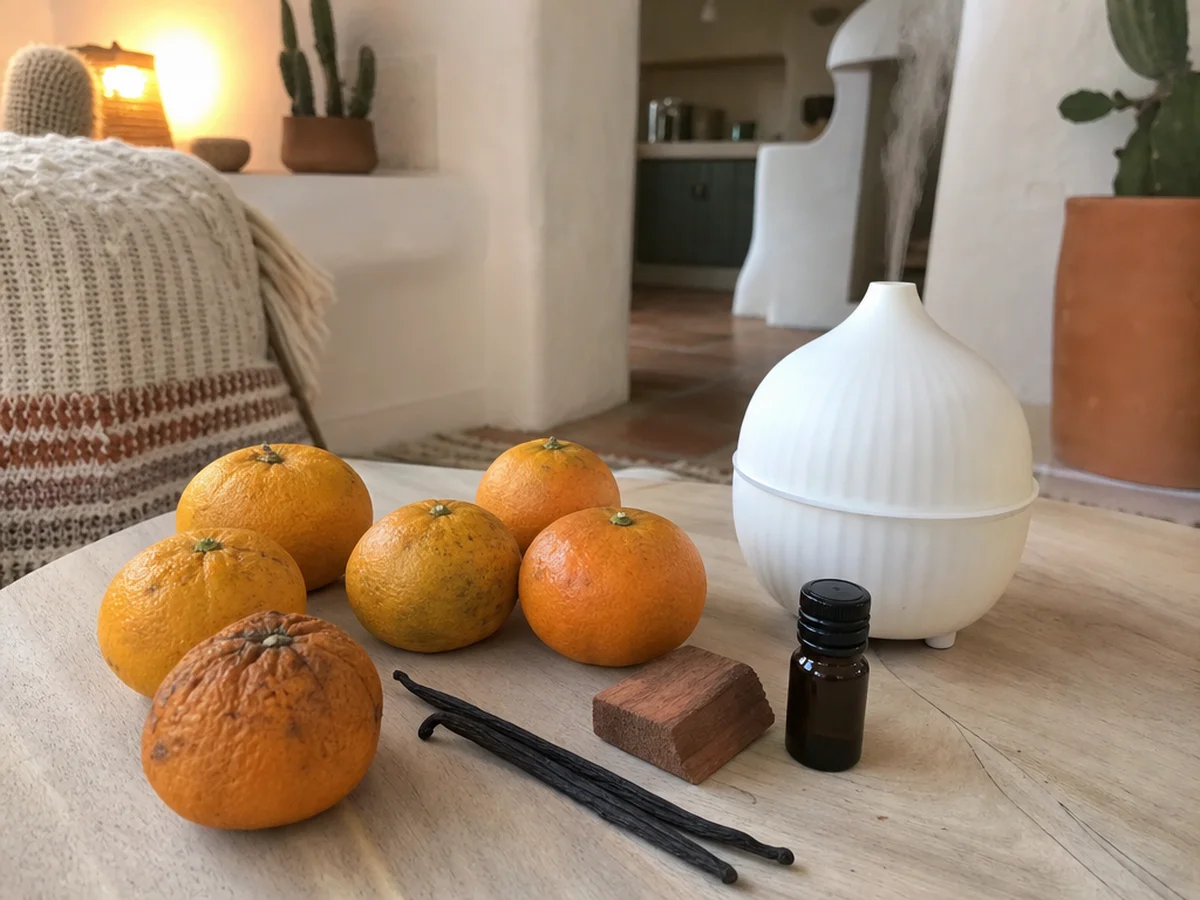
The Tisserand Aromatherapy FAQ gives diffuser figures for its own device: 6 to 8 drops for an adult, 4 in total for ages 5 to 12, up to 8 in total for ages 12 and over, and none below age 5. Treat "total" as the whole blend. Keeping mandarin as the lead and cedar as the smaller share, a 3 to 1 split is our suggestion:
| Total drops | Mandarin | Cedar oil |
|---|---|---|
| 4 | 3 | 1 |
| 8 | 6 | 2 |
The reasoning is scent as much as safety: mandarin's bright top fades first, and a slower oil carries the later part of the evening, so the cedar rewards a small hand. Add vanilla, if at all, by your device's instructions, not on top of the total. Diffuse in short sessions in a ventilated room, and keep cats and birds out of it; the FAQ says extra caution is needed with cats. Our pairing guide explains why top notes and base notes divide the work this way, and mandarin in natural perfumery goes further.
How the blend may unfold
Because mandarin is a top note, expect the bright fruit to lead for the first few minutes and then step back. What you will notice after that depends on the cedar and vanilla you chose: a woody warmth that grows, or a creamy softness that lingers. Run the diffuser for a short session, leave the room for ten minutes, and walk back in. That first breath is the closest you will get to smelling the blend as a guest would.
Making it your own
Treat the 3 to 1 split as a starting point rather than a rule. If the room feels too woody, give the cedar a rest next time; if it feels thin, check that your vanilla is the product you think it is. Change one thing at a time, and write down the drops beside the date so a good evening is repeatable. A small notebook by the diffuser is the cheapest piece of equipment you will own.
If you want it on skin instead
Our guidance for mandarin on skin is to dilute to 0.5% to 2% in a carrier oil and patch test first, and the roller-bottle article does the maths. Essential oil and fragrance oil are not interchangeable either, a point we cover in our comparison.
The nicest version of this scent is a restrained one: mostly mandarin, a whisper of cedar, and a vanilla you have actually identified.
Mandarin Essential Oil
Mandarin Essential Oil from our own shop, in sizes from 0.5 oz to bulk.
From $12.99
Shop Now →Sources & Further Reading
- Setzer WN, Satyal P. Cedarwood Oils: The Wood Essential Oil Compositions from Trees Known as "Cedar". Plants 2026
- US eCFR, Title 21, 169.175 Vanilla extract
- EFSA Journal 2021;19(6):e06625, Safety and efficacy of a feed additive consisting of expressed mandarin oil from the fruit peels of Citrus reticulata Blanco for use in all animal species (FEFANA asbl)
- EFSA Journal 2024;22(5):e8799, Safety and efficacy of a feed additive consisting of an essential oil obtained from the wood of Juniperus deppeana Steud. (cedarwood Texas oil) for use in all animal species (FEFANA asbl)
- Tisserand Aromatherapy FAQ: Tisserand Aromatherapy, We are here to help answer your frequently asked questions.