What Is Mandarin Oil? The Complete Guide to Citrus Reticulata Peel Oil
Key Takeaways
- Mandarin oil is a cold-pressed essential oil extracted from the outer peel of Citrus reticulata fruit.
- It is one of the gentlest citrus oils available, making it a popular choice for cosmetic formulations and aromatic blending.
- Three distinct varieties exist: green, red, and yellow mandarin oil, each with a subtly different scent character and chemical profile.
- Like all expressed citrus oils, mandarin oil contains furanocoumarins and may cause photosensitivity; proper sun safety practices are essential.
- Quality varies significantly by origin, harvest timing, and extraction method. Sourcing matters.
- Mandarin oil blends beautifully with florals, woods, and spices, making it a favorite in perfumery and home fragrance.
What Is Mandarin Oil?
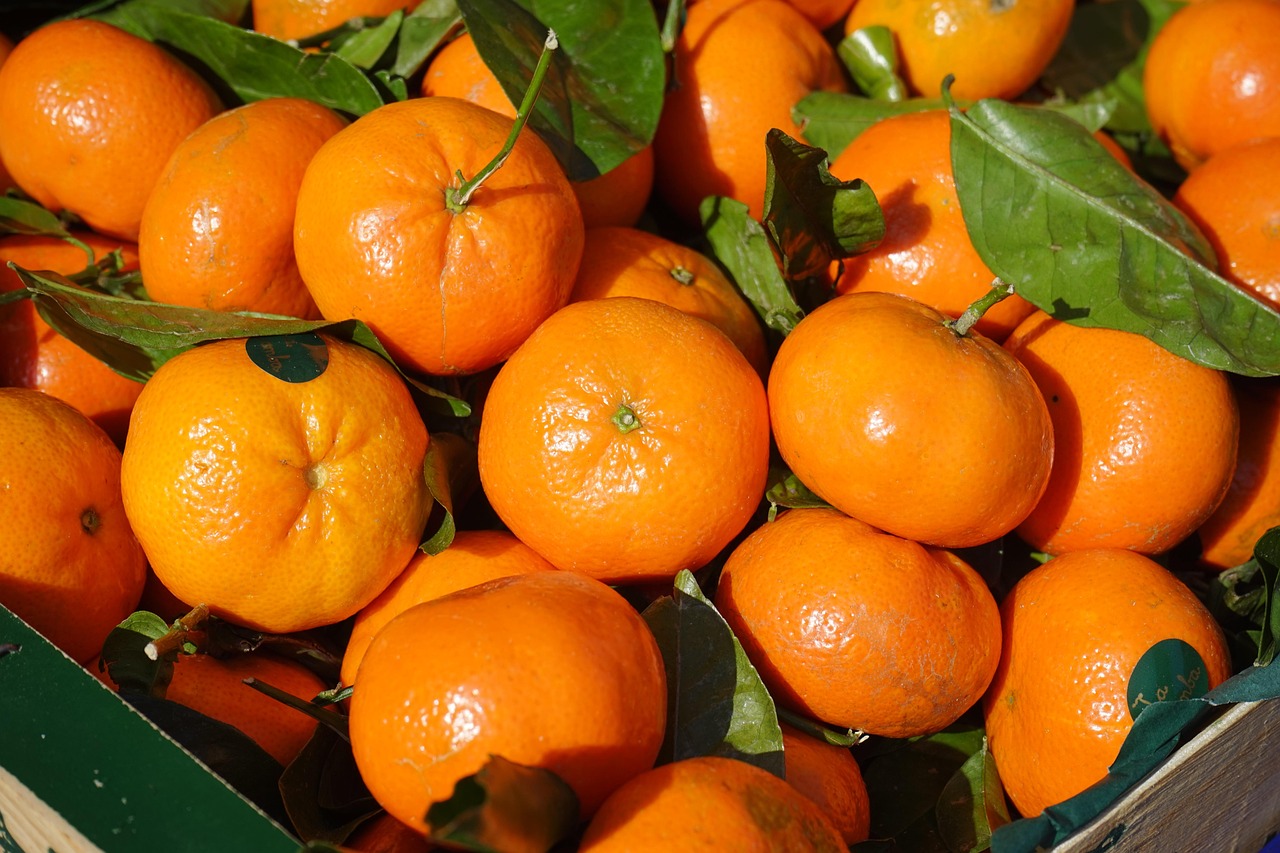
Mandarin oil is a natural essential oil obtained from the outer rind of the mandarin fruit, known botanically as Citrus reticulata. Unlike many essential oils that require steam distillation, mandarin oil is almost always cold-pressed directly from the peel. The result is a bright, luminous oil that carries the living scent of fresh citrus zest with very little alteration from heat or chemistry.
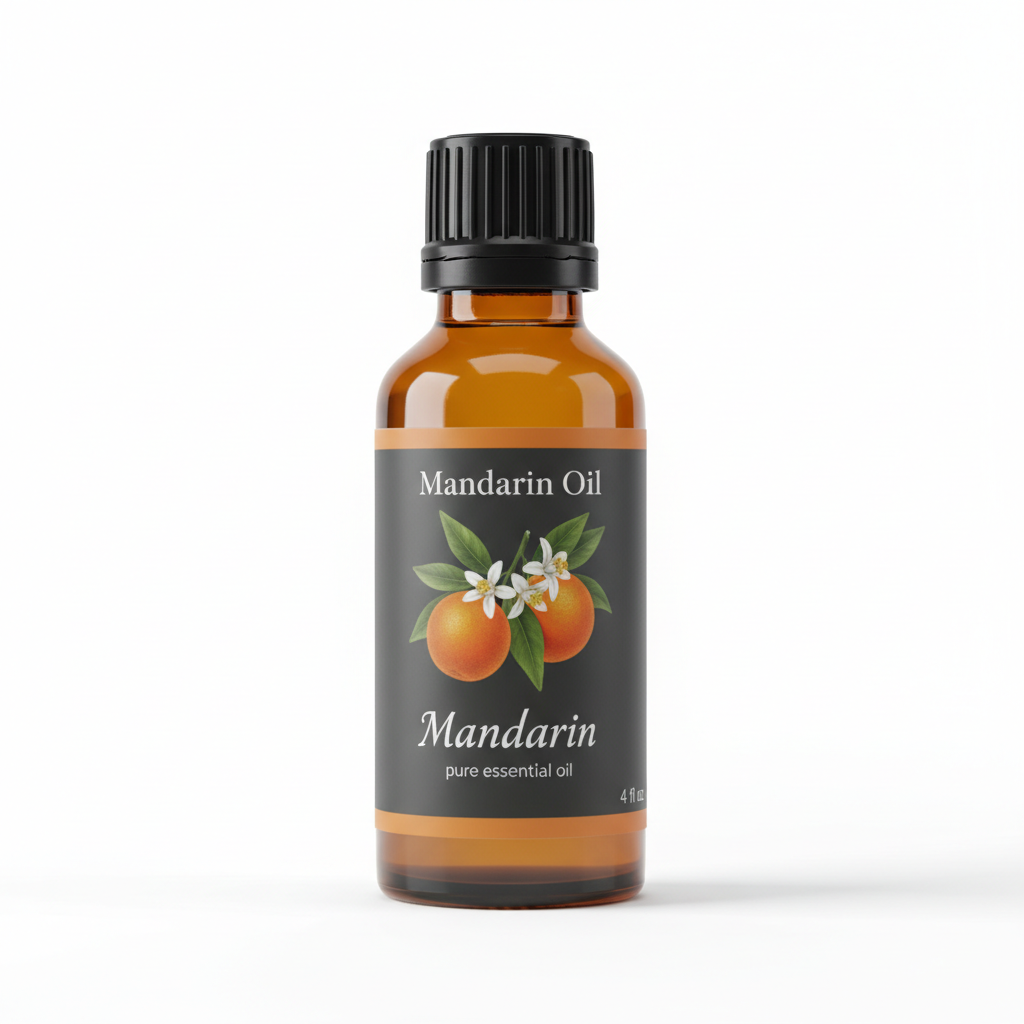
Mandarin Essential Oil
Our own Mandarin Essential Oil, in sizes from 0.5 oz to bulk.
From $12.99
Shop Now →In the world of cosmetics and aromatics, mandarin oil has earned a quiet, devoted following. It lacks the sharp green edge of lemon oil or the aggressive brightness of grapefruit. Instead, it offers something softer: a sweet, slightly floral citrus character that layers gracefully into blends and sits comfortably on the skin.
The oil is produced commercially in several countries, with Italy (particularly Sicily), Spain, Brazil, China, and Argentina among the most significant sources. Sicilian mandarin oil is widely regarded as a benchmark for quality in the fragrance industry, prized for its delicate top-note character and relative complexity.
People reach for mandarin oil in a wide variety of contexts: as a top note in fine fragrance, as a brightening ingredient in facial serums, as a room-freshening diffuser oil, and as a skin-conditioning addition to body oils and lotions. Its gentleness relative to other citrus oils is one reason formulators and home users alike return to it repeatedly.
If you are brand new to this oil and want a thorough orientation before diving into applications, our Mandarin Essential Oil FAQ covers fifteen of the most common questions in one place.
A Note on Naming
The names "mandarin" and "tangerine" are often used interchangeably in everyday conversation, and the botanical picture is genuinely a little tangled. In essential oil commerce, "tangerine oil" typically refers to the same species, Citrus reticulata, but is more commonly the label used for oils produced in the United States. "Mandarin oil" tends to be the preferred term in European and fine-fragrance contexts. Some suppliers further distinguish between Citrus reticulata (mandarin) and Citrus tangerina (tangerine), though the line between them is not always cleanly drawn.
For practical purposes in skin care and perfumery, mandarin oil and tangerine oil are functionally very similar. When comparing products, focus on the botanical Latin name on the label rather than the common name alone.
Botanical Origins: Meet Citrus Reticulata
Citrus reticulata is one of the oldest cultivated citrus species. Its origins trace to southeastern Asia, with China and the surrounding region considered its native homeland. The fruit has been grown in China for well over three thousand years, and early cultivation records suggest it held ceremonial as well as practical significance.
The name "reticulata" comes from the Latin for "net-like" and refers to the characteristic network of white pith strands visible beneath the peel. The peel itself is the part that matters most for oil production. It is thin, flexible, and densely packed with oil glands called oil sacs, or idioblasts, distributed throughout the flavedo (the colored outer layer).
The Plant and Its Cultivation
The mandarin tree is a relatively compact evergreen, typically growing between three and eight meters tall depending on the cultivar and growing conditions. It prefers subtropical and mild temperate climates, performing well in regions with warm summers, mild winters, and well-drained soil. Frost tolerance is limited.
Commercially significant cultivars include Satsuma, Clementine, Dancy, Kinnow, and several local Italian varieties used specifically for oil production. Not all cultivars yield oil with the same aromatic profile. The Avana variety grown in Sicily, for example, is particularly prized in the fragrance industry for its layered, almost honey-like sweetness.
Harvest timing is one of the most consequential decisions in mandarin oil production. Green fruit picked early in the season yields an oil with more terpene intensity and a sharper edge. Fully ripe red fruit yields a softer, sweeter, more rounded oil. Yellow mandarin falls between the two. This is why understanding variety and harvest timing helps you choose the right oil for your intended use. We cover this topic in full in our guide to green, red, and yellow mandarin oil and how harvest timing shapes each one.
Geographic Footprint and Terroir
Like wine grapes, mandarin oil carries the influence of its growing environment. Soil composition, altitude, rainfall patterns, and temperature variation all leave their mark on the finished oil's aromatic character. This concept, borrowed from viticulture, is sometimes called terroir in specialty botanical ingredient circles.
Sicilian mandarin oil is harvested in a volcanic landscape shaped by Mount Etna, with mineral-rich soils and a particular balance of sea air and mountain elevation. Many perfumers and quality assessors describe Sicilian mandarin as having a brightness and complexity that is difficult to replicate in other growing regions. Brazilian mandarin oil, produced in larger commercial volumes, is often more consistent but somewhat less nuanced. Chinese production is large-scale and variable in quality.
None of this means that non-Italian mandarin oil is inferior for all purposes. For a diffuser blend or a body lotion base, Brazilian or Spanish mandarin oil may serve perfectly well. For fine fragrance or a premium skin care formula where the aromatic character is central to the product's identity, origin becomes a more meaningful variable.
How Mandarin Oil Is Made
The extraction of mandarin oil is elegantly simple in principle, even if the industrial execution involves sophisticated machinery. Cold pressing, also called expression or cold expression, is the dominant method. No heat is applied. The mechanical action ruptures the oil sacs in the peel, releasing the oil along with juice and aqueous cellular material. The mixture is then centrifuged to separate the oil from the water-based components.
In traditional small-scale production, the process was genuinely done by hand. Workers pressed whole fruits against abrasive surfaces, collected the expressed liquid in a sponge-like container, and wrung it out manually. This method is now largely historical, but it survives in some artisan production contexts and gives us useful context for understanding what cold pressing means: mechanical rupture of the oil glands at or near ambient temperature.
Modern industrial extraction uses one of several mechanical systems. The most common in citrus oil production is the Food Machinery Corporation (FMC) extractor or similar devices that process whole fruits continuously. Another approach is the pelatrice, a machine that rasps or abrades only the outer peel layer while leaving the fruit interior intact for juice processing. This matters economically: because mandarin oil is a co-product of juice manufacturing, its price and availability are linked to the broader citrus juice market.
For a detailed walkthrough of the full extraction process, including photographs and a comparison of industrial versus artisan methods, see our dedicated article: How Mandarin Oil Is Made: Cold Pressing Citrus Peels.
Steam-Distilled Mandarin vs. Cold-Pressed Mandarin
A small percentage of commercially available mandarin oil is steam-distilled rather than cold-pressed. Steam distillation involves passing steam through plant material to volatilize aromatic compounds, which are then condensed and separated. For most citrus peels, this process alters the aromatic profile noticeably. Heat changes the ratio of volatile constituents and can introduce cooked or slightly altered notes that are not present in the fresh, cold-pressed oil.
Steam-distilled mandarin oil is sometimes marketed for uses where the phototoxic furanocoumarins of the cold-pressed version are a concern. Because furanocoumarins are relatively large, non-volatile molecules, they do not carry over efficiently into steam-distilled oil. Some formulators choose the distilled version for leave-on skin care products used during daytime. The trade-off is a somewhat different aromatic character.
For most aromatic and cosmetic applications where sun exposure is either avoided or managed properly, cold-pressed mandarin is preferred for its fresher, truer scent. This guide focuses primarily on cold-pressed mandarin oil, which is what most consumers encounter.
Scent Profile and Chemical Composition
Mandarin oil's scent is one of its most celebrated qualities. Describing it requires some patience, because the oil is more nuanced than a simple "smells like orange" summary would suggest.
The opening impression is bright and sweet, with the unmistakable character of fresh citrus peel. But underneath that familiar brightness sits something softer: a slight floral quality, a delicate sweetness that edges toward honey or even rose in some varieties, and a warm, slightly waxy dry-down that lingers longer than many other citrus oils. Green mandarin adds a sharper, more herbal facet. Red mandarin is the softest and most rounded of the three.
If you want a deep sensory exploration of what to expect before buying, our full mandarin oil scent profile guide walks through the aromatic journey in detail, including how the scent evolves on skin and in diffusion.
Key Chemical Constituents
The aromatic character of mandarin oil is the direct expression of its chemical makeup. Understanding the major constituents helps explain why the oil smells the way it does and behaves as it does in formulations.
| Constituent | Typical Range | Aromatic / Functional Role |
|---|---|---|
| Limonene | 65 to 75% | Bright, fresh citrus character; dominant top note |
| gamma-Terpinene | 14 to 22% | Herbal, slightly resinous quality; helps distinguish mandarin from sweet orange |
| alpha-Pinene | 1 to 3% | Clean, slightly piney freshness |
| Myrcene | 1 to 3% | Warm, slightly musky base character |
| Linalool | 0.5 to 2% | Soft floral note; contributes gentle sweetness |
| N-methylanthranilate | 0.3 to 0.7% | Distinctive grape-like, floral-sweet quality unique to mandarin among citrus oils |
| beta-Pinene | 0.5 to 2% | Fresh, slightly green top note |
| Furanocoumarins (e.g., bergapten) | Trace to low | Photosensitizing compounds; relevant to sun safety |
The single most important molecule in mandarin oil's identity is probably N-methylanthranilate (NMA). This compound, present in only trace-to-small amounts, is responsible for the distinctive grape-like, almost candy-like floral quality that sets mandarin apart from other citrus oils. Sweet orange oil, for example, contains virtually no NMA. Bergamot is rich in linalool and linalyl acetate. Mandarin's NMA is its fingerprint.
Limonene dominates the oil by percentage, as it does in nearly all citrus peel oils. Its contribution is the core fresh citrus brightness. The high proportion of gamma-terpinene in mandarin (typically higher than in sweet orange or lemon) is another distinguishing feature, adding a slightly earthy, herbal dimension that perfumers find useful for grounding the sweetness.
How Chemistry Changes by Variety and Origin
Gas chromatography-mass spectrometry (GC-MS) testing of mandarin oils from different origins and harvest stages reveals meaningful variation. Green mandarin typically shows higher gamma-terpinene and a sharper, more terpenic character. Red mandarin shows relatively higher proportions of NMA and esters, contributing to its sweeter, more rounded scent. Sicilian varieties often show a particular ester and furanoid ratio that gives them their characteristic complexity.
This is why GC-MS reports matter when evaluating mandarin oil quality. A reputable supplier will make these reports available on request. Without them, there is no objective way to verify that a bottle labeled "mandarin oil" actually contains what it claims, at the quality and origin stated.
Green, Red, and Yellow: Understanding the Three Varieties
One of the first things you will notice when shopping for mandarin oil is that many suppliers list three distinct versions: green, red (sometimes called ripe), and yellow. These are not different species or different cultivars in most cases. They are the same fruit harvested at different points in its development.
Green Mandarin Oil
Green mandarin is harvested while the fruit is still unripe, before the chlorophyll in the peel has fully broken down. The oil is the most terpenic of the three, with a sharper, more vibrant top note. Some describe it as having a slightly green or herbal quality alongside the citrus brightness. It is popular with perfumers who want an energetic, high-impact citrus note.
Green mandarin also tends to have a slightly higher gamma-terpinene content, which contributes to its distinctive aromatic difference from the riper varieties. Because the fruit is harvested early, green mandarin production can have a larger impact on overall fruit yield, which influences its market pricing.
Yellow Mandarin Oil
Yellow mandarin sits in the middle of the ripeness spectrum. The fruit is harvested as it begins to change color, when the peel transitions from green to yellow-orange. The oil has good brightness but with a slightly more balanced character: less sharp than green, not yet as soft as red. It is a versatile choice for blending and often represents a reasonable compromise for formulators who want citrus brightness without the sharper green edge.
Red Mandarin Oil
Red mandarin is extracted from fully ripe fruit with a deep orange-red peel. It is the sweetest and most rounded of the three. The floral-sweet quality contributed by NMA is often more perceptible in red mandarin than in the other varieties. It tends to have a warmer, slightly deeper character on skin and in blends. Red mandarin is frequently the go-to choice for cosmetic formulators working on products for sensitive skin, partly because its gentler aromatic character feels less sharp.
Understanding these distinctions in depth is genuinely useful for anyone selecting mandarin oil for a specific formulation or aromatic purpose. Our guide to green, red, and yellow mandarin oil covers the differences in chemistry, scent, and appropriate use cases with considerably more detail.
Uses in Skin Care and Fragrance
Mandarin oil's applications span a broad range: from professional perfumery to home diffusion, from premium facial oils to budget-friendly body lotions. Its relatively mild character among citrus oils makes it accessible in a wide range of formulations.
Mandarin Oil in Skin Care
In cosmetic skin care formulations, mandarin oil appears most commonly as a fragrance component and as a contributing ingredient in facial oils, body oils, and lotions. It is generally considered one of the gentler citrus oils for topical use when properly diluted, though patch testing and appropriate dilution are always required.
Formulators and skin care enthusiasts often combine mandarin oil with carrier oils such as jojoba, rosehip, squalane, or sweet almond oil. The citrus brightness of mandarin lifts what might otherwise be a heavy or overly earthy blend, providing an aromatic lift without the sharpness of lemon or lime.
Some formulations include mandarin oil specifically for its aromatic contribution to a "brightening" or "uplifting" sensory experience during use. This is a legitimate cosmetic claim based on the product's scent experience, not a claim about physical changes to skin. The distinction matters.
People who enjoy mandarin in skin care often describe their evening routines as feeling more ceremonial and grounding when the scent is present. This is the kind of experiential, atmosphere-centered value that mandarin oil genuinely delivers well.
Mandarin Oil in Perfumery
In fine fragrance, mandarin oil functions almost universally as a top note. Top notes are the first impression of a fragrance, the bright opening that greets the nose before the middle and base notes develop. Citrus top notes are beloved because they provide immediate appeal and a clean, fresh opening without demanding complexity from the first second.
Mandarin is a particularly well-liked citrus top note among perfumers because its NMA content gives it a slight floral-sweet character that bridges naturally into floral middle notes (jasmine, neroli, rose). It also transitions well into warm, resinous base notes like sandalwood, vetiver, or labdanum.
Classic fragrance families that commonly feature mandarin include fresh florals, aromatic chypres, hesperidic cologne-style compositions, and warm oriental builds. Mandarin pairs exceptionally well with bergamot, petit grain, neroli, jasmine absolute, ylang-ylang, black pepper, cardamom, and cedarwood.
Mandarin Oil in Home Fragrance and Diffusion
In diffusion, mandarin oil creates a bright, welcoming atmosphere. A few drops in an ultrasonic diffuser fill a room with a fresh citrus scent that feels both cheerful and gentle. It is not as penetrating as eucalyptus or as camphoraceous as rosemary; it simply brightens the air in a pleasant, unobtrusive way.
Many people use mandarin in diffuser blends for evening wind-down rituals, often combined with lavender, frankincense, or cedarwood to shift the blend toward something warmer and quieter. The citrus brightness gradually recedes as the heavier notes develop in the room, which creates a naturally evolving aromatic environment.
For a comprehensive catalog of ways to use mandarin oil across skin care, home fragrance, diffusing, and personal care, see our roundup of 20 bright ideas for using mandarin oil at home and in skin care.
Mandarin in Aromatics: What the Research Landscape Looks Like
It is worth being transparent about what research into citrus aromatics does and does not show. There is a body of scientific literature exploring how aromatic compounds interact with sensory systems, and some studies have examined citrus scents specifically. Some research suggests that citrus aromas may be associated with perceptions of freshness, energy, or positive mood in certain populations.
However, essential oil research is an early-stage field with significant methodological variability. Most studies are small, short-term, and conducted in specific contexts that do not necessarily generalize broadly. Mandarin oil should be appreciated for what it clearly and reliably offers: a beautiful, complex natural scent that many people find genuinely enjoyable in their daily routines. That is valuable on its own terms.
Safety Basics and How to Source Well
Mandarin oil is widely considered one of the gentler essential oils available. That said, "gentle" is a relative term, and all essential oils require respect. The following represents core safety knowledge for any new or experienced user.
Dilution Is Not Optional
Essential oils are highly concentrated botanical extracts. Mandarin oil should not be applied neat (undiluted) to skin. Standard cosmetic dilution guidelines recommend 1 to 3% in leave-on products and up to around 5% in rinse-off applications, though the appropriate rate depends on the specific product, usage area, and individual sensitivity.
A 2% dilution means approximately 12 drops of essential oil per ounce (30 ml) of carrier oil or formulation base. If you are new to calculating dilutions, this is the single most important practical skill to develop before using any essential oil on skin.
Patch Testing
Even properly diluted mandarin oil can cause a reaction in some individuals. Before using any new essential oil in a leave-on product, apply a small amount of the diluted preparation to the inside of the forearm. Wait 24 to 48 hours. If you notice redness, itching, swelling, or any irritation, discontinue use and consult a qualified professional.
Phototoxicity: The Sun Safety Issue
Cold-pressed mandarin oil contains furanocoumarins, the same class of compounds responsible for the well-documented phototoxic potential of bergamot oil. Furanocoumarins can react with UV light on the skin, potentially causing darkening, redness, or irritation in sun-exposed areas.
This means that cold-pressed mandarin oil should not be used in leave-on products applied to skin that will be exposed to direct sunlight or UV sources within 12 to 18 hours of application. Evening body oil rituals or formulations used on covered skin are generally considered lower risk, but caution is warranted.
Mandarin's furanocoumarin content is generally considered lower than that of bergamot, but it is not zero. If phototoxicity is a concern for your application, consider steam-distilled mandarin oil (which carries over fewer of these compounds) or ensure that sun exposure is avoided after application.
Our dedicated article on mandarin oil safety: dilution, patch tests, and sun precautions covers all of these topics with specific guidance, example dilution calculations, and notes on special populations.
Children, Pregnancy, and Individual Sensitivity
Essential oil safety guidance for children, people who are pregnant, and people who are nursing is more conservative than for the general adult population. Lower dilution rates are typically recommended for children, and certain oils are considered inappropriate for young children altogether. Mandarin is generally listed among the more suitable citrus oils for child-appropriate formulations, but professional guidance should be sought.
Anyone who is pregnant or nursing should consult a qualified healthcare provider before incorporating essential oils into their routine. This is not a blanket prohibition; it is an acknowledgment that individual circumstances vary and professional input is valuable.
Shelf Life and Oxidation
Citrus essential oils, including mandarin, are high in monoterpenes, particularly limonene. Monoterpenes oxidize relatively quickly compared to sesquiterpenes or resins. Oxidized citrus oil can cause skin sensitization that fresh oil would not. Proper storage matters enormously.
Keep mandarin oil in a tightly sealed amber or dark glass bottle, away from heat and direct light. Refrigeration extends shelf life significantly for citrus oils. Unopened, well-stored mandarin oil typically retains good quality for one to two years. Once opened and exposed to air regularly, quality may begin to decline within six to twelve months. If an oil smells noticeably different from how it smelled when you first opened it (more turpentine-like, sharper, or just "off"), it has likely begun to oxidize and should not be used on skin.
How to Read a Mandarin Oil Label
The essential oil market is unfortunately not uniformly regulated. Labels can be misleading, claims can be inflated, and quality varies enormously between suppliers. Knowing what to look for when purchasing mandarin oil protects both your formulations and your investment.
What a Good Label Should Include
- Botanical name: Citrus reticulata should appear clearly on the label or product description. Vague labeling that only says "mandarin oil" without the Latin name is a yellow flag.
- Country of origin: Where was the fruit grown? Italy, Spain, Brazil, Argentina, and China are the most common origins. Knowing the origin helps you calibrate expectations for scent character and quality tier.
- Extraction method: Cold-pressed (or expressed) should be specified. If steam-distilled, that should also be stated clearly.
- Part of plant used: For mandarin oil, this should be "peel" or "rind." If it says "whole fruit" or is unspecified, ask the supplier for clarification.
- Variety or color designation: Green, yellow, or red (where applicable).
- Batch number and testing: Look for a batch number and a reference to GC-MS testing. Reputable suppliers make GC-MS reports available for each batch.
- Cultivation method: Organic certification, wildcrafted, or conventionally grown. This affects both the product's positioning and, in some cases, trace chemical content.
Price as a Quality Signal
Mandarin oil is not among the most expensive essential oils, but it is not trivially cheap to produce well. A price that seems extremely low compared to other suppliers for the same origin and variety should prompt questions about how the supplier is able to offer that pricing. Adulteration with synthetic limonene or with lower-quality citrus oils is a known issue in the commodity citrus oil market.
Genuine Sicilian mandarin oil from a certified organic source, with documented GC-MS testing and proper traceability, will cost more than a bottle of generic "mandarin oil" with no origin data. The premium reflects real differences in growing conditions, quality control, and verification.
Certifications Worth Knowing
| Certification | What It Covers | Relevance to Mandarin Oil |
|---|---|---|
| USDA Organic (or EU Organic equivalent) | Growing practices; prohibits most synthetic pesticides and fertilizers | Relevant if pesticide residue concerns are a priority |
| ISO 3528 (Mandarin Peel Oil) | International standard specifying physicochemical characteristics of mandarin oil | Useful benchmark for composition verification |
| IFRA Compliance | Usage guidelines from the International Fragrance Association | Important for fragrance formulations; IFRA publishes usage limits for citrus oils in various product types |
| GC-MS Batch Testing | Chromatographic verification of chemical constituents | The most direct verification of oil identity and purity |
| Fair Trade or ethical sourcing certification | Labor and supply chain practices | Increasingly relevant for conscious consumers; covers growing and processing conditions |
Questions to Ask a Supplier
If you are sourcing mandarin oil for professional cosmetic use, these questions help you assess whether a supplier meets your quality standards:
- Can you provide the GC-MS report for the specific batch I am purchasing?
- What is the exact country and region of origin?
- What cultivar or variety of Citrus reticulata was used?
- What harvest season does this batch come from?
- Is this cold-pressed or steam-distilled?
- What is the recommended shelf life and storage guidance?
- Do you have organic certification documentation for this specific batch?
A supplier who responds to these questions with clear, documented answers is one worth building a relationship with. Evasion or vague answers to basic quality questions are a meaningful warning sign.
Building Your Mandarin Oil Knowledge Base
If reading this guide has sparked more questions than it has answered, that is a good sign. It means you are thinking carefully about a botanical ingredient that genuinely rewards close attention. Our Mandarin Essential Oil FAQ addresses fifteen of the most frequently asked questions in a quick-reference format, and our full range of mandarin oil guides covers everything from scent profiling to production methods to practical applications.
Mandarin oil is, in many ways, a model citrus ingredient: accessible in price, generous in scent, versatile enough for everything from a simple diffuser blend to a carefully constructed fine fragrance. The more you understand it, the more effectively and confidently you can use it.
Good mandarin oil should smell like standing next to a tree in full fruit on a warm afternoon. If your bottle smells flat, synthetic, or vaguely like cleaning product, trust that instinct and look for a better source.
Always consult a qualified healthcare provider with any personal health questions before incorporating new botanical ingredients into your wellness or skin care routine. The information in this guide is educational and intended for cosmetic and aromatic contexts only.