Mandarin Essential Oil FAQ: 15 Common Questions Answered
Mandarin orange essential oil draws a lot of curiosity, and rightly so. It is one of the gentlest, most approachable citrus oils available, yet it also carries real nuance in its scent profile and sourcing story. This page collects the most common mandarin oil questions we hear and gives you straightforward, honest answers. Browse by section or read straight through.
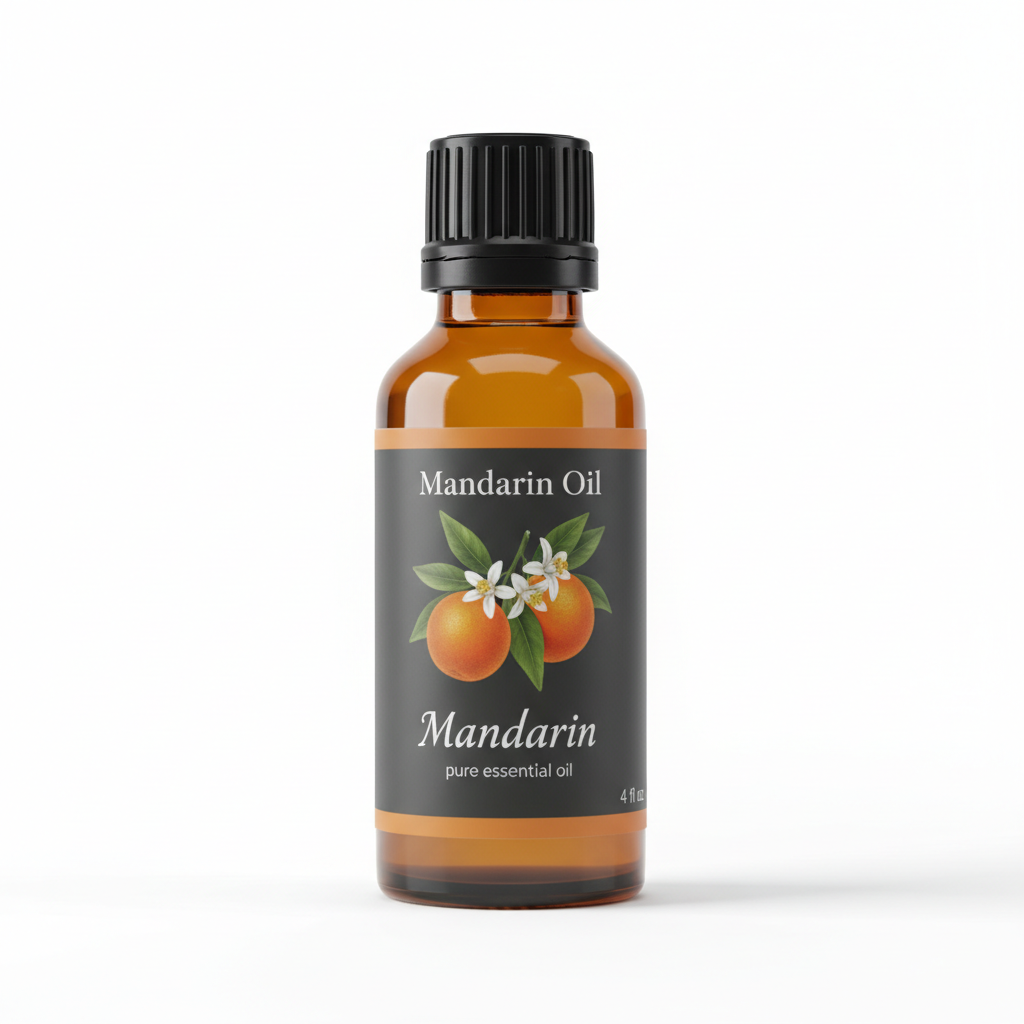
Mandarin Essential Oil
Our own Mandarin Essential Oil, in sizes from 0.5 oz to bulk.
From $12.99
Shop Now →The Basics: What Mandarin Oil Is and Where It Comes From
1. What exactly is mandarin essential oil?
Mandarin essential oil is a cold-pressed extract taken from the outer peel of Citrus reticulata fruit. The pressing process releases the volatile aromatic compounds held in the peel's tiny oil glands, producing a concentrated liquid with a sweet, soft citrus fragrance. For a deeper look at the plant's background, see our guide on what mandarin oil is and its complete citrus story.
2. Is mandarin oil the same as tangerine oil?
They come from closely related fruit varieties within the Citrus reticulata species, but they are not identical. Mandarin oil tends to carry a softer, slightly floral-sweet character, while tangerine oil is often described as brighter and more sharply citrusy. The chemical composition can differ in subtle ways depending on the specific cultivar and harvest origin.
3. What are the main producing regions?
Italy (particularly Sicily) is historically the most celebrated source, producing a red mandarin oil prized for its rich, complex scent. China, Spain, Brazil, and Argentina are also significant producers. Origin matters because soil, climate, and harvest timing all influence the final aromatic profile.
4. How is mandarin oil extracted?
Cold pressing is the standard method. Mechanical rollers or rasping equipment puncture and squeeze the peel under low heat, preserving the delicate top notes that high-temperature distillation can damage. Some producers do steam-distill mandarin peel, but the resulting oil has a noticeably different character and is less common in fine fragrance or cosmetic applications.
5. What does mandarin essential oil smell like?
It is sweet and soft with a gentle, almost honeyed citrus quality. There is often a subtle floral undertone, particularly in red mandarin varieties. It lacks the sharp brightness of lemon or grapefruit, sitting instead in a warmer, rounder aromatic register.
Quality and Sourcing: How to Choose Well
6. What should I look for on a mandarin oil label?
Look for the full Latin name (Citrus reticulata), the country of origin, the extraction method (cold pressed), and the plant part used (peel). Reputable brands will also list the batch number and provide access to a gas chromatography/mass spectrometry (GC/MS) report, which confirms the oil's chemical profile and checks for adulteration.
7. What does GC/MS testing actually tell me?
Gas chromatography/mass spectrometry separates and identifies the individual chemical constituents in an oil and measures their percentages. For mandarin oil, this reveals whether key aromatic compounds like limonene, gamma-terpinene, and methyl N-methylanthranilate are present in expected ranges. It can also flag synthetic additives or cheaper oils blended in to bulk up the volume.
8. Does the color of mandarin oil tell me anything?
Yes, to a degree. Red mandarin oil is typically yellow-orange to deep orange, while green mandarin (harvested from unripe fruit) can appear more yellow-green. A very pale, almost water-clear mandarin oil warrants closer scrutiny, as heavy dilution or adulteration can strip natural color. That said, color alone is not a substitute for proper GC/MS verification.
9. Is organic mandarin oil worth the premium?
Certified organic mandarin oil means the fruit was grown without synthetic pesticide programs, which some buyers prefer for personal peace of mind. The cold-pressing process does concentrate the peel's volatile compounds, so sourcing choices matter to those prioritizing minimal synthetic residue. Whether the aromatic quality justifies the cost difference is genuinely subjective and depends on your intended use.
Safety and Dilution: Using Mandarin Oil Responsibly
10. Is mandarin oil safe to apply to skin?
Mandarin oil is widely considered one of the gentler citrus oils for skin use, but it must always be diluted in a carrier oil before any topical application. A general guideline for adults is 1 to 2 percent dilution (roughly 6 to 12 drops of essential oil per 30 ml of carrier oil). Always perform a patch test on a small area of inner-arm skin and wait 24 hours before broader use. Consult a qualified healthcare provider if you have any skin sensitivities or are pregnant.
Dilution reminder: Essential oils are highly concentrated. More is not better. A 1 percent dilution is appropriate for daily leave-on use. A 2 to 3 percent dilution suits occasional body applications. Do not apply undiluted essential oil directly to skin.
11. Is mandarin oil phototoxic?
This is one of the most important mandarin oil questions to answer clearly. Cold-pressed mandarin is generally considered low-risk for phototoxicity compared to cold-pressed bergamot or lime, because it contains little to no furanocoumarin content. However, caution is still reasonable: avoid sun or UV-bed exposure on skin where any citrus oil has been applied, particularly for 12 hours after application. When in doubt, choose a steam-distilled version, which carries no phototoxic risk.
12. Can mandarin oil be used around children or pets?
Mandarin is often cited as one of the more child-friendly essential oils for aromatic use, but age, health status, and individual sensitivity all matter enormously. For children under two, avoid topical use entirely and keep diffusion sessions brief (15 to 20 minutes) in well-ventilated spaces. For pets, cats in particular have significantly reduced ability to process certain aromatic compounds, so always consult a veterinarian before diffusing any essential oil in a home with animals.
Everyday Use: Scent, Blending, and Routines
13. How do I use mandarin oil in a diffuser?
Add 3 to 6 drops to a water-filled ultrasonic diffuser and run it in 30-minute cycles to keep the scent present without overwhelming the room. Mandarin oil performs beautifully in smaller, cozy spaces where its soft sweetness can fill the air without becoming cloying. Evening wind-down routines and quiet reading hours are natural fits for its warm, mellow character.
14. What oils blend well with mandarin?
Mandarin oil is an exceptionally agreeable blending partner. It pairs naturally with other citrus oils like bergamot and sweet orange for a layered, sunny accord. Florals such as ylang ylang and neroli complement its soft sweetness. For something more grounding, try combining it with cedarwood, sandalwood, or frankincense. The oil's gentleness means it rarely fights with its neighbors in a blend.
15. How can I use mandarin oil in a skincare or body routine?
A few drops diluted into an unscented body lotion or facial oil can bring a pleasant, gentle citrus note to your morning or evening routine. Some people add a properly diluted blend to bath salts for an aromatic soak. For any leave-on skin application, stay within safe dilution limits and skip direct sun exposure on treated skin for the rest of the day. For more ideas, explore our article on mandarin oil in everyday wellness routines.
Storage and Shelf Life: Keeping Your Oil Fresh
16. How long does mandarin essential oil last?
Mandarin oil has a relatively short shelf life compared to many other essential oils, typically 1 to 2 years when stored properly. As a cold-pressed citrus oil, it is more vulnerable to oxidation than steam-distilled resinous or wood oils. An oxidized mandarin oil will smell flat, sharp, or slightly off, and its aromatic quality declines noticeably before it becomes entirely unusable.
17. What is the best way to store mandarin oil?
Store it in a dark amber or cobalt glass bottle with a tight-fitting cap, away from heat and light. A cool, dark drawer or a dedicated storage box is ideal. Refrigeration is an option for extending longevity, but bring the bottle to room temperature before opening to avoid moisture condensation inside the cap. For a full breakdown of storage strategies, see our guide on how to store mandarin oil for maximum shelf life.
18. How do I know if my mandarin oil has gone off?
The clearest sign is a change in scent: fresh mandarin oil smells sweet and rounded, while oxidized oil often smells sharper, somewhat solvent-like, or simply flat. You may also notice a color shift or a slightly thicker consistency. Oxidized citrus oils are not recommended for skin use, as they are more likely to cause irritation than fresh oil.
Purchasing and Value: Getting What You Pay For
19. Why does mandarin oil price vary so much between brands?
Several factors drive the price range. Italian-origin red mandarin from small, quality-focused producers commands a higher price than bulk commodity oil from large agricultural operations. Organic certification, third-party GC/MS testing, and small-batch bottling all add cost. Very cheap mandarin oil is often adulterated with synthetic limonene or blended with cheaper citrus oils, so price is a reasonable quality signal, though not the only one.
20. Should I buy a 5 ml or a 15 ml bottle?
Given mandarin oil's relatively short shelf life, a 5 ml bottle is often the smarter choice for new buyers or light users. A 15 ml bottle makes sense if you use it daily in blends or diffusion and can finish it within 12 to 18 months. Buying a large bottle to save money per milliliter only pays off if the oil does not oxidize before you use it.
Quick Reference: Mandarin Oil at a Glance
| Factor | Detail |
|---|---|
| Botanical name | Citrus reticulata |
| Plant part used | Outer peel (rind) |
| Extraction method | Cold pressing (most common) |
| Top producing regions | Italy, China, Spain, Brazil |
| Scent character | Sweet, soft, slightly floral-citrus |
| Typical shelf life | 1 to 2 years |
| Recommended skin dilution | 1 to 2 percent in carrier oil |
| Phototoxicity risk | Generally low; still avoid UV exposure post-application |
| Good blending partners | Bergamot, ylang ylang, cedarwood, neroli, frankincense |
Still Have Questions?
If something is not covered here, our broader library of mandarin oil content is a good next step. The complete guide to mandarin citrus covers the plant's background and varieties in full detail. Our piece on everyday wellness routines with mandarin oil offers practical, approachable use ideas. And if you are ready to purchase, our storage and shelf life guide will help you protect your investment from day one.
As with any concentrated botanical product, personal research and professional guidance go a long way. Consult a qualified healthcare provider with any questions specific to your health situation.