
Mandarin Oil Benefits for Everyday Wellness Routines, Explained Honestly
Mandarin essential oil has a reputation that precedes it. Type "mandarin oil benefits" into any search engine and you will find bold promises stacked beside glowing testimonials. Some of those claims are grounded in real botanical science. Others have drifted far from the evidence. This article works through the most common myths surrounding mandarin essential oil benefits, separates them from what research actually suggests, and gives you an honest foundation for building your own routines.
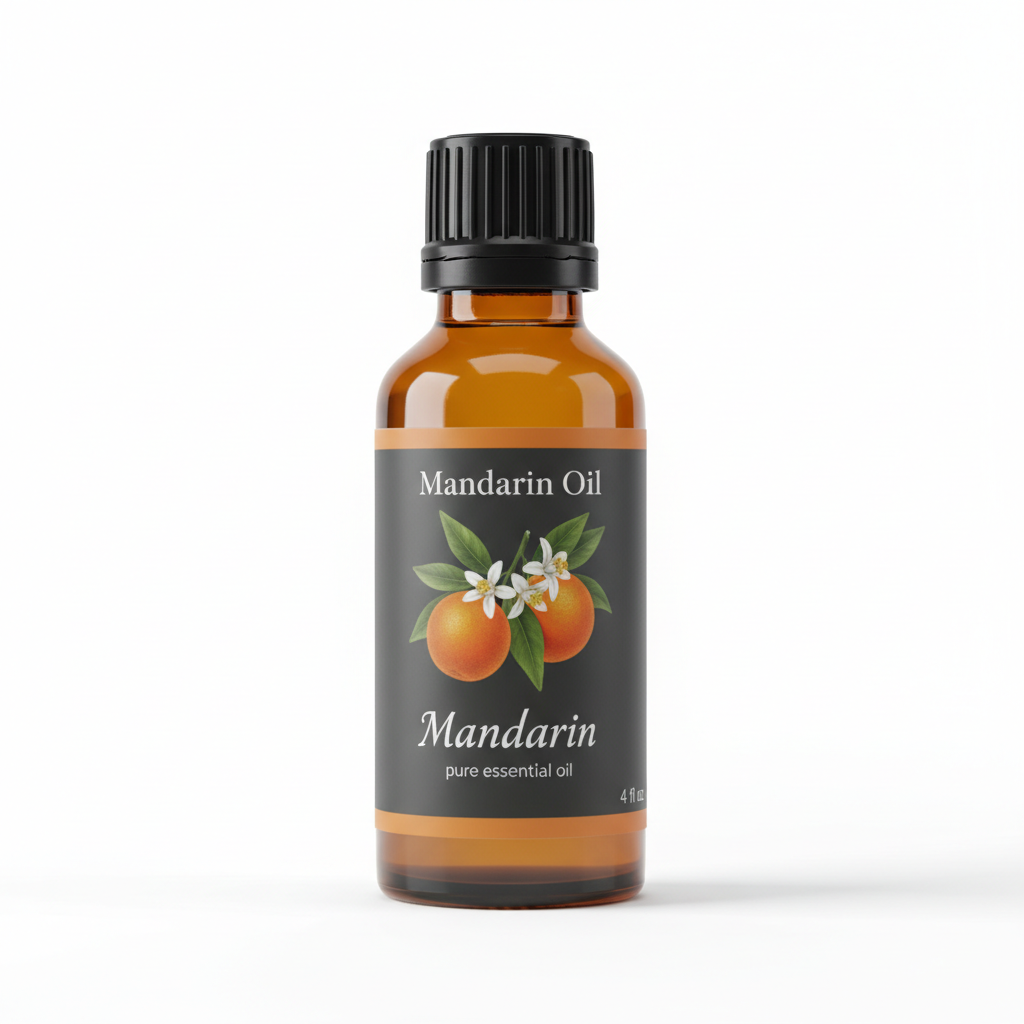
Mandarin Essential Oil
Our own Mandarin Essential Oil, in sizes from 0.5 oz to bulk.
From $12.99
Shop Now →A quick note on terminology before we begin. Mandarin oil comes in several commercial varieties: red, yellow, and green mandarin essential oil, each cold-pressed from the peel at different stages of ripeness. The chemistry varies between them, which matters when you read studies or sourcing claims. If you want a thorough primer on the different types, our complete guide to mandarin oil is a good starting point.
Myth 1: "Mandarin Oil Is Basically the Same as Orange or Tangerine Oil"
The Myth
Because mandarin, orange, and tangerine all belong to the citrus family and share a similar sweetness, many people assume their essential oils are interchangeable. You will sometimes see them grouped together in budget blends or swapped out in recipes without comment.
The Reality
The chemical profiles are related but meaningfully distinct. Mandarin oil is notably rich in methyl anthranilate, a nitrogen-containing compound that is largely absent from sweet orange and tangerine oils. This compound contributes to mandarin's characteristic soft, slightly floral quality and is one reason perfumers treat it as its own raw material rather than a substitute.
Green mandarin essential oil, pressed from unripe fruit, carries an even higher concentration of certain terpenes, particularly gamma-terpinene, which gives it a greener, sharper character compared to the rounder sweetness of red mandarin. Research into citrus terpene profiles consistently shows these are distinct compositions, not minor variations on a single theme.
Why does the myth persist? Partly because the fruits look similar in grocery stores, and partly because lower-cost suppliers do blend or substitute them. Sourcing transparency matters here. When you are choosing an oil for a specific aromatic purpose, the botanical name (Citrus reticulata) and the variety (green, red, or yellow) should both appear on the label.
Myth 2: "More Oil Means More Benefit"
The Myth
A pervasive idea in wellness communities is that if a little of something is good, more must be better. With essential oils, this logic is not only unhelpful. It can cause real problems.
The Reality
Essential oils are highly concentrated. A single drop of mandarin oil represents a large volume of fruit peel. Using undiluted citrus oils directly on skin is a common source of irritation, and mandarin oil, while considered one of the gentler citrus options, is no exception to the dilution principle.
Standard cosmetic formulation guidelines recommend diluting essential oils to 1 to 3 percent for leave-on skin applications. That works out to roughly 6 to 18 drops per 30 ml (one fluid ounce) of carrier oil. For diffusion, a few drops in a standard ultrasonic diffuser is adequate for a room-sized space. Running a diffuser at high concentration for hours on end adds no extra benefit and may become irritating, particularly in enclosed spaces.
Cold-pressed mandarin oil also contains furanocoumarins, compounds that can increase photosensitivity in skin. Some steam-distilled versions are lower in these compounds, but as a general practice: if you apply any citrus oil to skin, avoid direct sun exposure on that area for at least 12 to 18 hours. This is a safety consideration, not a marketing caveat.
Safety note: Always patch-test a diluted blend on a small area of skin before wider application. If you are pregnant, nursing, or managing a health condition, consult a qualified healthcare provider before adding essential oils to your routine.
Myth 3: "Green Mandarin Essential Oil Benefits Are Just Marketing Language"
The Myth
Skeptics sometimes argue that the distinction between green and red mandarin is a premium pricing tactic with no real difference behind it. Pay more, get the same oil in fancier packaging.
The Reality
The distinction is chemically real. Green mandarin essential oil is cold-pressed from the fruit before it fully ripens, and the resulting oil has a noticeably different terpene profile. Research into citrus essential oil composition shows that gamma-terpinene levels are substantially higher in green mandarin than in the ripe red variety. Methyl anthranilate, that signature floral-musky note, tends to be lower in green mandarin, giving it a crisper, more aromatic quality that perfumers and formulators specifically seek out.
This is not simply about personal preference. Formulators making a bright, green-leaning citrus fragrance will reach for green mandarin because red mandarin will not produce the same result. The raw material is genuinely different, and producers who are transparent about harvest timing and cold-pressing methods are providing useful information, not just telling a story.
That said, "green mandarin" on a label without supporting documentation is not automatically meaningful. Look for suppliers who disclose the country of origin (Sicily and Calabria in Italy are historically well-regarded sources), the pressing method, and ideally a GC/MS (gas chromatography/mass spectrometry) report confirming the chemical profile.
Myth 4: "Mandarin Oil Is a Powerful Mood-Changer"
The Myth
Wellness content frequently positions mandarin oil as a near-instant solution for low moods, framing it as something close to a mood-adjusting substance that you simply inhale and feel transformed by.
The Reality
Scent does interact with the limbic system, the part of the brain involved in emotional processing, and some research suggests that pleasant aromas may support a more positive atmosphere during activities like focused work or a calm evening wind-down. Mandarin oil is particularly well-regarded in this context because of its soft, non-intrusive sweetness. People commonly report that diffusing it during a bedtime routine contributes to a more settled feeling in the room.
But "may support a relaxed atmosphere" is a long way from "changes your emotional state." The evidence for scent influencing mood is real but modest, and individual responses vary considerably. Some people find citrus oils energizing rather than calming. Others are simply neutral to them. The experience is personal, shaped by memory and association as much as chemistry.
The myth of the powerful mood-changer often exists because anecdotal reports are emotionally compelling, and because the aromatic experience of mandarin is genuinely pleasant for most people. Pleasant and powerful are different things. Use mandarin oil in routines where you find it enjoyable. Build rituals around it. Do not expect it to carry more weight than it reasonably can.
Myth 5: "All Mandarin Oils Smell the Same, So Quality Doesn't Matter"
The Myth
Citrus oils in particular get dismissed as commodities. The thinking goes that cold-pressed mandarin peel is cold-pressed mandarin peel, and the cheapest version does the same job as the expensive one.
The Reality
Mandarin oil quality varies considerably, and the differences are detectable even to a non-expert nose once you have compared a few samples side by side. Factors that shape quality include the specific cultivar of Citrus reticulata, the soil and climate of the growing region, the ripeness at harvest, the speed of pressing after harvest, and how the oil has been stored since production.
Adulteration is also a documented issue in the citrus oil trade. Some suppliers extend mandarin oil with cheaper orange oil or synthetic limonene. A GC/MS test will reveal this, but most retail buyers never see one. Choosing suppliers who publish third-party testing data is the practical way to navigate this. Proper storage matters too. Citrus oils are among the most oxidation-prone essential oils, and an oil that has been sitting in a warm warehouse since the previous season will have lost much of its aromatic vibrancy. For more on keeping your oils at their best, see our guide on mandarin oil storage and shelf life.
Myth 6: "Mandarin Oil Has Been Used This Way for Thousands of Years"
The Myth
Historical depth is frequently used to validate wellness products. Mandarin oil is sometimes presented as an ancient practice with millennia of continuous tradition behind it.
The Reality
The mandarin fruit itself has a long and genuinely interesting history in China and across Asia, where it was cultivated and exchanged as a symbol of good fortune. That botanical and cultural history is worth knowing and does not need to be exaggerated.
Cold-pressed essential oil production as we know it, however, is a relatively modern commercial practice. Distillation and cold-pressing technology developed into their current forms during the 19th and 20th centuries. The specific aromatic compounds we discuss when we talk about mandarin essential oil benefits were not isolated or understood in ancient contexts. The fruit was meaningful. The oil as a distinct cosmetic or aromatic ingredient is a much more recent category.
This distinction matters because "thousands of years of use" implies a level of documented evidence that simply does not exist for the oil specifically. Appreciating mandarin oil on its actual merits, pleasant aroma, interesting chemistry, genuine versatility in fragrance and cosmetic formulation, does not require an inflated origin story.
Putting It Together: A Grounded Approach to Mandarin Oil
The honest picture of mandarin oil benefits is still a genuinely appealing one. The oil has a distinctive, well-studied chemical profile that sets it apart from other citrus oils. It is among the gentler options for cosmetic formulation. Its aroma is broadly well-received and may support a more pleasant atmosphere in everyday routines, from morning skincare to an evening wind-down diffusion session. Green mandarin essential oil benefits, specifically, include a unique terpene profile that gives formulators and home users a genuinely different aromatic character to work with.
What mandarin oil is not: a substitute for professional guidance, a solution to health concerns, or a product whose quality is uniform across suppliers. Approach it with the same discernment you would bring to any ingredient you are putting on your skin or breathing in your home. Read the sourcing information. Look for GC/MS data. Store the oil properly. Dilute it correctly.
Good routines are built on honest expectations. Mandarin oil, understood clearly, has a real place in them.