
A Short History of the Mandarin: From Chinese Orchards to Modern Perfumery
Few citrus fruits carry as much cultural weight as the mandarin. Small, sweet, and thin-skinned, it has traveled across centuries and continents, arriving in the modern perfumer's palette as one of the most beloved aromatic raw materials in the industry. Understanding where Citrus reticulata comes from, what it contains at a molecular level, and how it earned its place in fine fragrance helps explain why mandarin oil remains so enduringly relevant. This is a story that moves from ancient Chinese imperial courts to the cold-press facilities of southern Sicily, with quite a few interesting stops along the way.
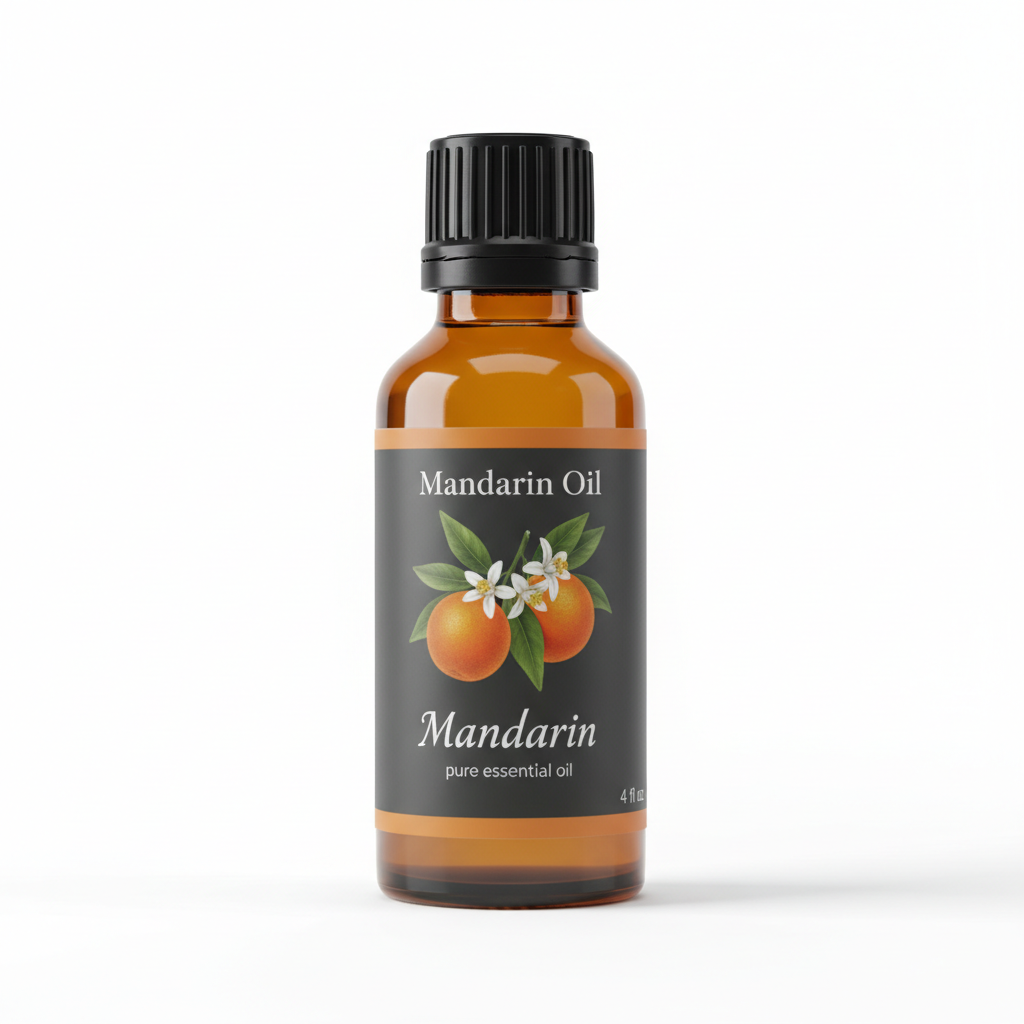
Mandarin Essential Oil
Our own Mandarin Essential Oil, in sizes from 0.5 oz to bulk.
From $12.99
Shop Now →Mandarin Orange History: Roots in Ancient China
The mandarin orange takes its common name from the Mandarin officials of the Chinese imperial court, who reportedly received the fruit as a gift and carried it as a symbol of status. Cultivation records suggest Citrus reticulata has been grown in China for well over 3,000 years, making it one of the oldest cultivated citrus species on record. Early references appear in Chinese agricultural texts from around the 12th century BCE, though modern botanical historians continue to refine those dates as new manuscripts surface.
The fruit spread gradually westward along trade routes. It reached Japan, then the Indian subcontinent, and eventually arrived in Europe sometime in the early 19th century. The first documented introduction to Britain occurred around 1805, when fruits were shipped from China to Malta and then onward. From there, cultivation expanded rapidly into the Mediterranean basin, particularly in Italy, Spain, and the south of France. Those regions still supply a significant portion of the world's mandarin oil today.
The name Citrus reticulata references the Latin word for netlike, a nod to the intricate white pith threads visible when the fruit is peeled. Taxonomically, the species encompasses a wide range of cultivars, including clementines, satsumas, and tangerines. For aromatic purposes, the distinctions matter. Cold-pressed oils from different cultivars can vary noticeably in scent, color, and chemical profile, which is something any serious buyer should keep in mind when evaluating sourcing claims.
For a broader look at the fruit's botany and how the oil is extracted, see our complete guide to mandarin oil.
From Orchard to Perfumery: The 19th-Century Breakthrough
Mandarin entered European perfumery in earnest during the mid-to-late 1800s, when French houses began incorporating citrus top notes more aggressively into eau de cologne formulations. The mandarin orange history within perfumery is partly a story of logistics. Unlike bergamot or lemon, which had well-established Italian supply chains by the 18th century, mandarin cultivation in the Mediterranean was still scaling up when the great perfume houses of Grasse were hitting their creative peak.
By the early 20th century, Sicilian producers had refined cold-press extraction into something approaching an art form. The peel of the mandarin is particularly rich in aromatic compounds, and hand-expression (the original technique, where workers squeezed peel against sponges to capture the oil) gave way to centrifugal cold-pressing as volumes grew. Both methods preserve the delicate, volatile top notes better than steam distillation, which is one reason mandarin in perfumery is almost exclusively represented by expressed rather than distilled oil.
Perfumers prize the oil for its brightness, its slightly floral undertone, and what many describe as a softer, less sharp profile compared to sweet orange. It functions beautifully as an opening note, adding luminosity to chypres, florals, and aromatic fougères. Several classic 20th-century fragrances used mandarin as a foundational top note, though the specific formulations are closely guarded.
Chemical Composition: What Is Actually in the Oil
The aromatic character of Citrus reticulata oil comes from a relatively well-mapped set of volatile compounds. Limonene dominates, typically comprising between 65 and 75 percent of the total composition in cold-pressed mandarin oil. This monoterpene is responsible for the bright, clean citrus note that opens when you first smell the oil.
Beyond limonene, the composition includes:
- Gamma-terpinene: A monoterpene that contributes a slightly herbal, warm facet and is present at levels of roughly 14 to 20 percent in some analyses. It is one of the compounds that distinguishes mandarin from sweet orange at a chemical level.
- Myrcene: Present in smaller quantities, myrcene adds a subtle, earthy undertone that rounds out the brightness of limonene.
- Alpha-pinene and beta-pinene: These terpene compounds appear in trace quantities but contribute to the fresh, slightly woody facet that some noses detect in high-quality mandarin oil.
- Linalool: Found at low concentrations, linalool is responsible for the soft, floral quality that makes mandarin feel warmer and rounder than lemon oil.
- Methyl N-methylanthranilate: This ester, even at very low concentrations (often under 1 percent), produces the characteristic slightly grapey, almost musky undertone unique to mandarin. It is frequently cited as the compound that gives the oil its distinctive and immediately recognizable character.
- Furanocoumarins (including bergapten): Cold-pressed mandarin oil contains phototoxic compounds, most notably bergapten. This has direct safety implications discussed below.
Research published in journals including the Journal of Agricultural and Food Chemistry has examined the variation in these compounds across different cultivars and growing regions. Observations from that body of work suggest that Sicilian mandarin oil tends to show higher gamma-terpinene content compared to Spanish or Brazilian oils, contributing to what many evaluators describe as a more complex, slightly greener character. These are compositional observations, not quality judgments, and the right oil depends on the application.
Research Observations: What Studies Are Exploring
The scientific literature on Citrus reticulata is active. Research suggests that the aromatic compounds in mandarin oil, particularly limonene and linalool, are of interest to researchers studying scent and its influence on mood and environment. Some studies have observed that citrus aromas used in diffusion contexts are associated with reports of improved alertness and positive mood states in participants, though the researchers frame these as preliminary observations rather than established conclusions.
Methyl N-methylanthranilate has received separate attention in the literature, with some research suggesting it may interact with olfactory receptors in ways that other citrus esters do not. That research is ongoing.
Work published in Molecules and related chemistry journals has examined the antioxidant activity of citrus peel extracts, noting that certain polyphenolic compounds present in the whole fruit show interesting properties in laboratory settings. It is worth being precise here: most of these studies examine extracts or isolated compounds, not the finished cold-pressed essential oil as used in cosmetic or aromatic applications. Extrapolating from in vitro findings to consumer product claims is not scientifically appropriate, and we do not do so here.
For practical inspiration on incorporating mandarin oil into daily routines, explore our roundup of 20 bright ideas for home and skin care.
Safety Profile and Contraindications
Mandarin essential oil has a generally favorable safety profile within recognized usage guidelines, but several points require careful attention.
Phototoxicity
Cold-pressed mandarin oil contains furanocoumarins, including bergapten, which can cause phototoxic reactions when skin treated with the oil is exposed to UV light. The reaction can range from mild discoloration to more significant irritation. The International Fragrance Association (IFRA) has published usage guidelines specifying maximum leave-on skin concentrations for expressed mandarin oil in applications where sun exposure may follow. Staying within those limits is not optional: it is a basic safety practice. Always avoid applying diluted mandarin oil to skin that will be exposed to sunlight within 12 to 18 hours.
Steam-distilled mandarin oil and some commercially produced furanocoumarin-free (FCF) versions are available for applications where phototoxicity is a concern. The trade-off is some loss of aromatic complexity, since furanocoumarins contribute to scent depth.
Dilution
Essential oils should always be diluted before skin contact. For adults, a dilution of 1 to 2 percent in a carrier oil is a reasonable starting point for leave-on products. That equates to roughly 6 to 12 drops of essential oil per 30 ml (1 oz) of carrier. Higher concentrations increase the risk of sensitization.
Patch Testing
Before applying any diluted essential oil blend to a large area of skin, perform a patch test. Apply a small amount of the diluted blend to the inner forearm, cover lightly, and wait 24 hours. If redness, itching, or irritation develops, discontinue use.
Children and Pregnancy
Essential oil use during pregnancy and with young children warrants extra caution. Consult a qualified healthcare provider before incorporating any essential oil into routines during pregnancy, while nursing, or for use around infants and young children.
Oxidation
Limonene-rich oils oxidize relatively quickly. Oxidized citrus oils are significantly more likely to cause skin sensitization. Store mandarin oil in a dark, cool location, keep the cap tightly sealed, and aim to use opened bottles within 12 months. Some producers add small amounts of antioxidants to extend shelf life; check the product specification sheet if this matters for your formulation.
Sourcing and Quality Indicators
Knowing what to look for when buying mandarin oil matters as much as understanding its history. The market ranges from excellent single-origin cold-pressed oils to heavily adulterated products cut with synthetic limonene or blended with cheaper citrus oils.
Key indicators of quality include:
- Gas chromatography/mass spectrometry (GC/MS) reports: Reputable suppliers provide third-party GC/MS analysis with each batch. These reports allow you to verify the compound profile matches expectations for genuine Citrus reticulata oil.
- Origin specificity: Vague claims like "citrus blend origin" are a warning sign. Look for suppliers who name the country, region, and ideally the cultivar. Sicilian, Spanish, and Brazilian oils each have distinct profiles.
- Extraction method disclosure: The label or specification sheet should state whether the oil is cold-pressed (expressed) or steam-distilled. For perfumery and most aromatic applications, cold-pressed is preferred.
- Color: High-quality cold-pressed mandarin oil is typically a warm amber to yellowish-orange color. Pale or nearly colorless mandarin oil may indicate distillation, heavy filtration, or adulteration.
- Harvest year: Freshness matters for citrus oils. Knowing when the oil was pressed helps you assess remaining shelf life.
Organic certification adds another layer of assurance, particularly relevant for mandarin given that conventional citrus farming uses pesticides that can concentrate in the peel during cold-pressing. It is not the only quality signal, but it is a meaningful one.
Mandarin in Perfumery Today
Modern perfumery continues to rely on mandarin as a versatile top note and heart modifier. Natural perfumers value its ability to bridge floral and citrus families. In commercial fragrance, it appears in everything from mass-market body sprays to niche extrait de parfum concentrations. The compound methyl N-methylanthranilate has attracted particular interest among perfumers for its ability to add depth and a slightly unexpected richness to citrus compositions, lending them staying power beyond what most top notes manage.
Sustainability conversations are shaping mandarin sourcing decisions at the supply chain level. Some producers in Sicily and Calabria have moved toward cooperative models that pay growers fairer prices while maintaining traceability. For buyers who care about ethical sourcing, these programs are worth researching and asking suppliers about directly.
If you are still developing your sensory vocabulary for this oil, our article on what mandarin oil smells like offers a detailed scent profile with useful comparison points across cultivars and origins.
The mandarin's journey from imperial Chinese orchards to a modern perfumer's organ spans millennia and crosses every major trading route the ancient world knew. That longevity is not accidental. Citrus reticulata rewards attention at every level: botanical, chemical, historical, and sensory. The more carefully you look, the more there is to find.