
Mandarin Oil Uses: 20 Bright Ideas for Home, Skin Care, and Everyday Moments
Mandarin oil sits in a quiet category of its own. It is citrusy without being sharp, sweet without being cloying, and familiar enough to feel comforting the moment the cap comes off. If you have been curious about what mandarin essential oil uses look like in daily life, the answer is surprisingly broad. This oil moves easily between a diffuser, a facial serum, a linen spray, and a kitchen countertop cleaner, often in the same week.
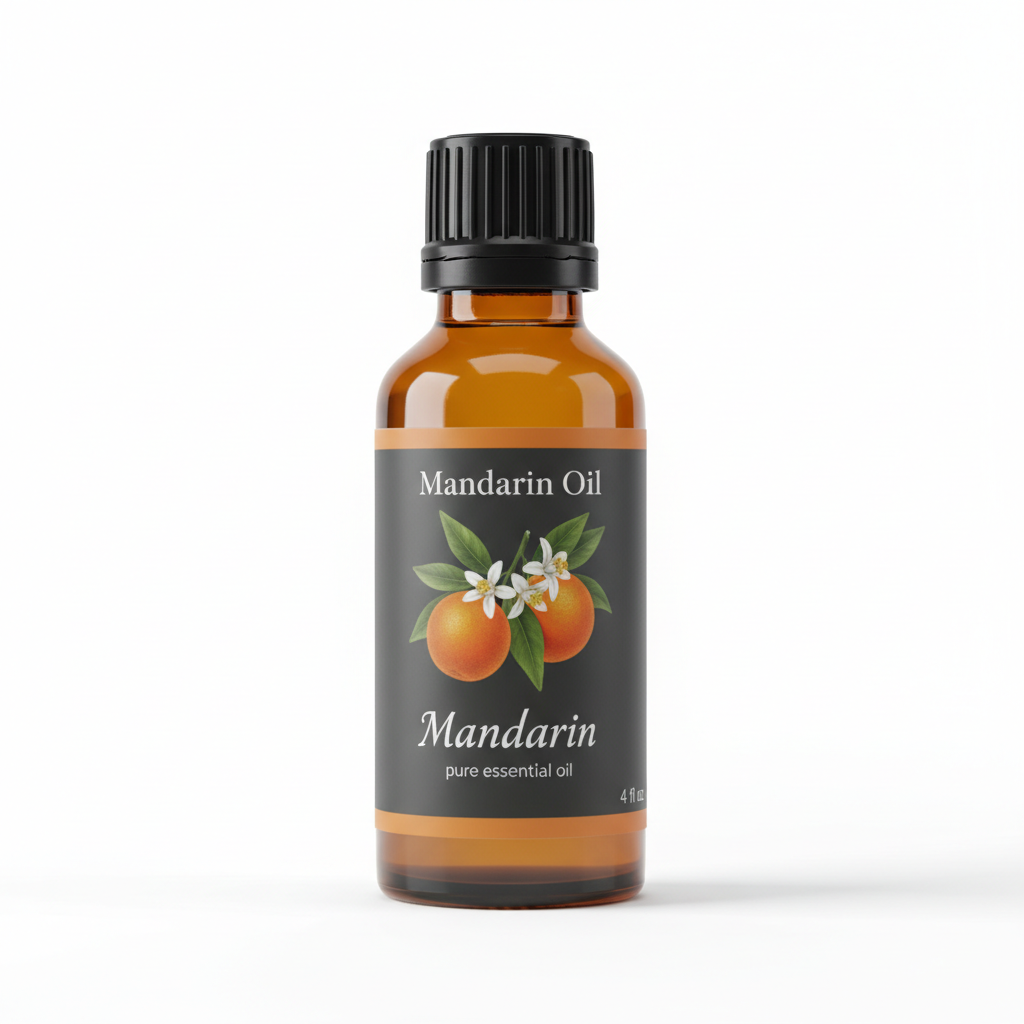
Mandarin Essential Oil
Our own Mandarin Essential Oil, in sizes from 0.5 oz to bulk.
From $12.99
Shop Now →The 20 ideas below are organized loosely by context: home, skin care, and those small everyday moments where a little citrus can quietly improve the whole atmosphere. Each one includes a practical takeaway so you can act on it right away. For a grounding overview of the oil itself, visit our complete guide to mandarin oil and citrus before diving in.
Safety note: Always dilute mandarin essential oil in a carrier oil before applying to skin. A standard dilution is 1 to 2 percent for face and body use (roughly 6 to 12 drops per 30 ml of carrier oil). Patch test before wider use. Keep out of reach of children. Avoid sun exposure on freshly applied skin, as expressed mandarin oil may cause photosensitivity. Consult a qualified healthcare provider with any concerns.
At Home: Fragrance, Cleaning, and Atmosphere
1. Morning Diffuser Blend to Open the Day
A diffuser is often the first introduction people have to mandarin oil uses, and for good reason. The scent is bright and rounded, filling a room without dominating it. Three drops of mandarin with two drops of sweet orange and one drop of ginger creates a warm citrus cloud that makes kitchens and living rooms feel genuinely welcoming in the early hours.
Mandarin oil tends to blend more softly than lemon or grapefruit, so it works well for households where sharper citrus notes feel too intense first thing. The rounded sweetness is forgiving in blends. You can read more about exactly what that scent profile means in practice in our article on what mandarin oil smells like.
Practical takeaway: Start with 4 to 6 drops total in a 100 ml ultrasonic diffuser. Run for 30 minutes, then take a break. Less is more with citrus oils in enclosed spaces.
2. Linen and Room Spray
A simple DIY room spray is one of the most satisfying mandarin essential oil uses because the results are immediate. Combine 15 drops of mandarin oil with 5 drops of lavender in a 100 ml glass spray bottle, add a teaspoon of high-proof alcohol (such as vodka) to help disperse the oils, then top with distilled water. Shake before each use.
This blend works beautifully on pillowcases, curtains, and upholstery. The citrus note fades first, leaving the softer lavender underneath, which makes it a popular choice for evening wind-down routines.
Practical takeaway: Spray lightly from about 30 cm away. Avoid spraying directly onto delicate fabrics or polished wood surfaces. Test on an inconspicuous area first.
3. Natural Surface Freshener
Mandarin oil has a long history of use in natural household products, partly because the scent is so appealing and partly because citrus oils blend well with other cleaning ingredients. Add 10 drops to a spray bottle with white vinegar and water (50/50 ratio) for a surface freshener that leaves countertops smelling genuinely clean rather than artificially perfumed.
This is a practical everyday use that many people overlook when thinking about what mandarin oil is used for. The scent lingers briefly, then clears, which is ideal for kitchen surfaces before food prep.
Practical takeaway: Do not use on natural stone surfaces like marble or granite. Vinegar can etch these materials. A water-only base works better there.
4. Wardrobe and Drawer Sachets
Cedar blocks and lavender sachets are classic wardrobe fresheners. Adding a few drops of mandarin oil to an unscented clay diffuser disk or a small piece of untreated wood brings a citrus brightness that feels fresher than lavender alone. Tuck one into a drawer or hang one in a wardrobe corner.
Refresh the scent every two to three weeks with another two or three drops. This keeps the fragrance present without building up to an overpowering level.
Practical takeaway: Never apply essential oils directly to fabric or clothing. Always use an absorbent diffuser medium between the oil and your textiles.
5. Car Diffuser Clip
A felt or terracotta car diffuser clip is a low-cost, low-maintenance way to keep mandarin oil working while you drive. Two or three drops on the clip, attached to a vent, releases a gentle citrus scent as air circulates through the car. It is noticeably more pleasant than most commercial air fresheners, which tend toward synthetic and overwhelming.
Mandarin oil is a particularly good choice for car use because it is uplifting without being stimulating in an edgy way. Many people find the scent simply makes the drive more pleasant, especially on longer journeys.
Practical takeaway: Refresh every three to five days. Keep the bottle stored away from direct sunlight in the glovebox, as heat degrades citrus oils quickly.
6. Candle Blending (for Candlemakers)
If you make your own soy or coconut wax candles, mandarin essential oil can add a genuine citrus top note to your fragrance blend. Use it in combination with a base note oil like sandalwood or cedarwood, since citrus top notes alone burn off quickly in candle wax.
A common starting ratio is 30 percent mandarin with 40 percent sweet orange and 30 percent a warmer base. Keep in mind that essential oils behave differently from fragrance oils in wax, and some experimentation is needed to find the right load percentage for your specific wax type.
Practical takeaway: Start with a fragrance load of around 6 percent and test thoroughly. Citrus essential oils have lower flash points than many fragrance oils, so check your wax supplier's guidance.
7. Yoga Mat and Workout Space Freshener
A diluted mandarin oil spray is a pleasant way to freshen a yoga mat or workout area. Mix 5 drops of mandarin with 3 drops of tea tree in a small spray bottle of water and a tiny amount of castile soap to emulsify the oils. Lightly mist the mat surface, wipe with a clean cloth, and allow to air dry before rolling.
The citrus scent clears the atmosphere in a home gym or practice space, making the whole environment feel cleaner and more inviting. Many practitioners find that starting a session in a freshly scented space helps them settle into focus more easily.
Practical takeaway: Always allow the mat to fully dry before use. Check your mat material: some rubber mats can degrade with repeated oil contact, so wipe thoroughly and use sparingly.
Skin Care: Topical Rituals and Blends
8. Face Oil Blending for a Glowing Complexion
Mandarin essential oil uses in skin care are among its most popular applications. The oil is frequently found in formulations targeting dull or uneven-looking skin. Blended into a lightweight carrier like rosehip seed oil at a 1 percent dilution (about 6 drops per 30 ml), it creates a facial oil with a fresh, appealing scent that does not overpower a morning routine.
The chemistry of mandarin oil includes limonene and other citrus constituents that have attracted research interest in cosmetic contexts. Some cosmetic formulators note that citrus oils may support a brighter appearance when used consistently as part of a broader skin care ritual. Keep sun exposure in mind: apply at night or ensure SPF protection if using in the daytime.
Practical takeaway: Use expressed (cold-pressed) mandarin at 1 percent for face use. If you want daytime use without photosensitivity concerns, look for steam-distilled mandarin oil, which has had the phototoxic compounds reduced or removed.
9. Body Scrub Addition
Sugar scrubs and salt scrubs absorb essential oils readily, making them an ideal vehicle for mandarin oil. Add 10 to 15 drops per 200 g of a base scrub mixture (sugar, carrier oil, and an emulsifier or just oil alone). The scent is vibrant during application and leaves a subtle citrus trace on skin.
Body scrubs are rinsed off, which means the final concentration on skin is lower than a leave-on product. Still, always patch test if you have sensitive skin, and avoid using on broken or freshly shaved skin.
Practical takeaway: Do not use citrus oil scrubs before sun exposure. Apply in the evening or to areas that will be covered by clothing if you plan to go outdoors.
10. Massage Oil for a Relaxing Evening
A simple massage oil is one of the most direct ways to experience mandarin essential oil uses at home. Blend 8 drops of mandarin with 4 drops of ylang ylang and 4 drops of frankincense in 30 ml of sweet almond or jojoba oil. The combination is warm, floral, and softly citrusy.
Massage oils are leave-on products applied to larger body areas, so accurate dilution is important. The 2 percent level suggested here (approximately 16 drops total in 30 ml) is appropriate for adults on body skin. Reduce to 1 percent for elderly individuals or those with sensitive skin, and avoid use on the face with a blend designed for body use.
Practical takeaway: Warm the oil briefly between your palms before applying. Store any unused blend in a dark glass bottle away from heat, and use within three months.
11. Bath Oil or Bath Salt Blend
Adding mandarin oil directly to bathwater is a common habit, but it carries a risk: undiluted essential oils float on water rather than dispersing, meaning concentrated droplets can contact skin directly. The safer approach is to pre-dilute in a carrier oil (like fractionated coconut) or mix into a dispersant like full-fat milk or a bath salt blend before adding to the tub.
For bath salts, mix 10 drops of mandarin per cup of Epsom or Dead Sea salt. The salts help disperse the oil more evenly when they dissolve. This makes for a genuinely pleasant evening soak that leaves the bathroom smelling quietly citrusy for hours afterward.
Practical takeaway: Limit bath oil blends to 4 to 6 drops per full bath after dilution. More is not better, and the skin is more permeable when warm and wet.
12. Cuticle and Hand Oil
Hands take a lot of daily abuse from washing, weather, and general use. A simple cuticle oil with mandarin is easy to make and genuinely pleasant to use. Combine 3 drops of mandarin with 3 drops of lemon (or lime) in 10 ml of jojoba oil and decant into a small roller bottle. Roll onto cuticles and massage in nightly.
Jojoba is an excellent carrier here because it closely mimics skin's natural sebum and absorbs without leaving a heavy residue. The citrus blend keeps the scent fresh and light rather than overly perfumed.
Practical takeaway: Apply before bed to minimize any photosensitivity concern. A roller bottle makes application precise and mess-free.
13. Lip Balm Scenting
If you make your own lip balm from beeswax or plant-based wax, mandarin essential oil can be used at a very low level (around 0.5 to 1 percent) to add a natural citrus scent. Because lip products contact the mouth, use only cosmetic-grade essential oil and keep the concentration low.
The scent fades faster in wax than in oil-based products, but even a subtle citrus note makes a plain balm feel more special. Many people find that a lightly scented lip balm becomes a small, welcome moment in a busy day.
Practical takeaway: Do not use mandarin oil in lip products at the same level as body products. Stick to 0.5 percent maximum for anything that may be ingested, and always research IFRA guidelines for lip-safe usage levels.
14. Scalp and Hair Oil Blend
Mandarin oil appears in some scalp oil formulations, often paired with carriers like argan or camellia oil. A blend of 4 drops of mandarin with 2 drops of rosemary (ct. camphor-free) in 20 ml of carrier oil can be applied to the scalp before washing, massaged in gently, and left for 20 minutes before shampooing out.
The citrus scent rinses away almost completely, leaving only a faint freshness. People who use scalp oils regularly often note that the ritual itself, the massage, the scent, the few quiet minutes, feels as worthwhile as any ingredient in the blend.
Practical takeaway: Avoid getting the blend near eyes. Use a shower cap during the waiting period to allow warmth to help the oil penetrate the scalp. Shampoo twice to fully rinse.
Everyday Moments: Small Rituals, Big Difference
15. Desk and Focus Atmosphere
Many people keep a personal inhaler or a small desk diffuser nearby during work hours. Mandarin oil is a popular choice for the midday slump, the moment when attention starts to drift and the afternoon feels long. The bright, sweet scent is engaging without being distracting.
A personal aromatherapy inhaler (a small tube with an absorbent wick inside) is ideal for this. Add 10 to 15 drops to the wick, cap it, and keep it in a desk drawer. Inhale for a few breaths when you need a moment of reset. The effect is sensory, not pharmacological, but many people find the act of pausing and breathing intentionally genuinely helpful.
Practical takeaway: Personal inhalers are office-friendly because they do not disperse scent into shared air. Colleagues with sensitivities will appreciate the consideration.
16. Bedtime Wind-Down Diffuser Blend
Mandarin is one of the softer citrus oils, which means it fits into evening routines in a way that lemon or bergamot sometimes do not. A blend of 2 drops of mandarin, 3 drops of lavender, and 1 drop of vetiver in a bedroom diffuser creates a calm, slightly grounding atmosphere as you prepare for sleep.
Running a diffuser for 30 to 45 minutes before bed, then switching it off before you sleep, is a common practice. Continuous overnight diffusion in an enclosed bedroom is generally not recommended, as it can lead to overexposure, especially for children or pets in the room.
Practical takeaway: Keep pets out of the diffusion space during use. Many essential oils, including citrus oils, are not appropriate for cats or dogs. Consult a veterinarian if you have concerns.
17. Journaling and Mindfulness Ritual
Scent and memory are closely linked in how the brain processes experience. Using the same oil during a regular journaling or mindfulness practice can create a sensory anchor that helps signal the beginning of that intentional time. Over weeks, the scent alone can help shift attention toward a more reflective mode.
This is less about what mandarin oil does biochemically and more about the ritual structure it supports. A small candle, a specific notebook, and a single drop of mandarin oil on a nearby diffuser stone can make a five-minute writing practice feel more deliberate and grounded.
Practical takeaway: Consistency matters more than quantity here. Use the same oil, the same time of day, the same small ritual. The association builds over time.
18. Citrus Cleaning Ritual for Mental Clarity
There is a long cultural tradition of using citrus scents during cleaning as a way to mark the transition between a cluttered, busy environment and a fresh, ordered one. Mandarin oil in a homemade floor wash or surface wipe ties into this tradition in a way that feels genuinely satisfying rather than gimmicky.
Add 10 drops of mandarin oil to a bucket of warm water with a few drops of castile soap for mopping hard floors. The scent dissipates as the floor dries, but the brief citrus atmosphere while cleaning makes the chore feel more like a deliberate act of refreshing the space.
Practical takeaway: Do not use on waxed or finished wood floors. Always test a small area first. The oil residue can make floors slightly slippery if used in excess.
19. Gift Making and Personal Fragrance Projects
Mandarin oil is one of the most approachable raw materials for amateur perfumers and gift makers. It blends predictably, smells universally appealing, and does not overpower delicate florals or musks. A simple eau de cologne formula using mandarin, neroli, and a soft musk base in a high-proof alcohol base is a satisfying starting project.
Hand-crafted fragrance gifts, whether a small room spray, a body oil, or a set of bath salts, feel genuinely personal. Understanding what mandarin essential oil uses are available gives you more options when designing something for a specific person or occasion.
Practical takeaway: Label all homemade products clearly with ingredients and dilution percentage. Include a note about patch testing for anyone receiving a skin-contact product as a gift.
20. Seasonal Citrus Celebrations
Mandarin oranges are deeply associated with winter festivals and citrus harvest seasons across many cultures. Using mandarin oil during these seasonal moments connects the scent to memory and celebration in a way that feels entirely appropriate. A diffuser blend with mandarin, clove (used sparingly, as it is a strong oil), and warm cinnamon bark creates a festive atmosphere that complements the season beautifully.
This is also an invitation to think about sourcing. Cold-pressed mandarin oil comes directly from the peel of the fruit, which means the quality of the oil reflects the quality of the fruit. Learning more about how mandarin oil is made through cold-pressing makes it easier to evaluate what you are buying and why some oils smell more vibrant and true than others.
Practical takeaway: Seasonal blends are a great opportunity to experiment with proportions. Start with mandarin as the base note (largest proportion) and add warming spice oils at no more than 10 to 15 percent of the total blend to avoid irritation.
A Few Final Notes on Buying and Storing
The full range of mandarin oil uses only comes through when you are working with quality oil. Look for bottles that list the botanical name (Citrus reticulata), the extraction method (cold-pressed or steam-distilled), and the country of origin. Reputable suppliers will share GC/MS testing data on request. Store your oil in a dark glass bottle, away from heat and direct light, and use it within 12 to 18 months of opening for the best scent and quality.
Citrus oils oxidize faster than most other essential oils, and oxidized oil smells noticeably flat or sharp. Starting with a good source matters. For a deeper look at what makes one bottle of mandarin oil different from another, our complete guide to mandarin oil covers sourcing, chemistry, and what to look for on a label.
Twenty uses is a good starting point. Most people who begin with one or two applications find the oil gradually working its way into more corners of daily life, which is perhaps the most honest thing that can be said about what mandarin oil is used for: it earns its place quietly, one bright moment at a time.