
Mandarin Oil Safety Basics: Dilution, Patch Tests, Sun Exposure, Pets, and Kids
Mandarin oil is one of the gentler members of the citrus family, with a soft, sweet scent that feels approachable even to newcomers. But gentle does not mean risk-free. Like every essential oil, it comes with a short list of real considerations that are worth understanding before you open the bottle. This guide walks through the practical side of mandarin oil safety: how to dilute it properly, how to perform a patch test, what sun exposure means for your skin, and how to think about use around pets and young children.
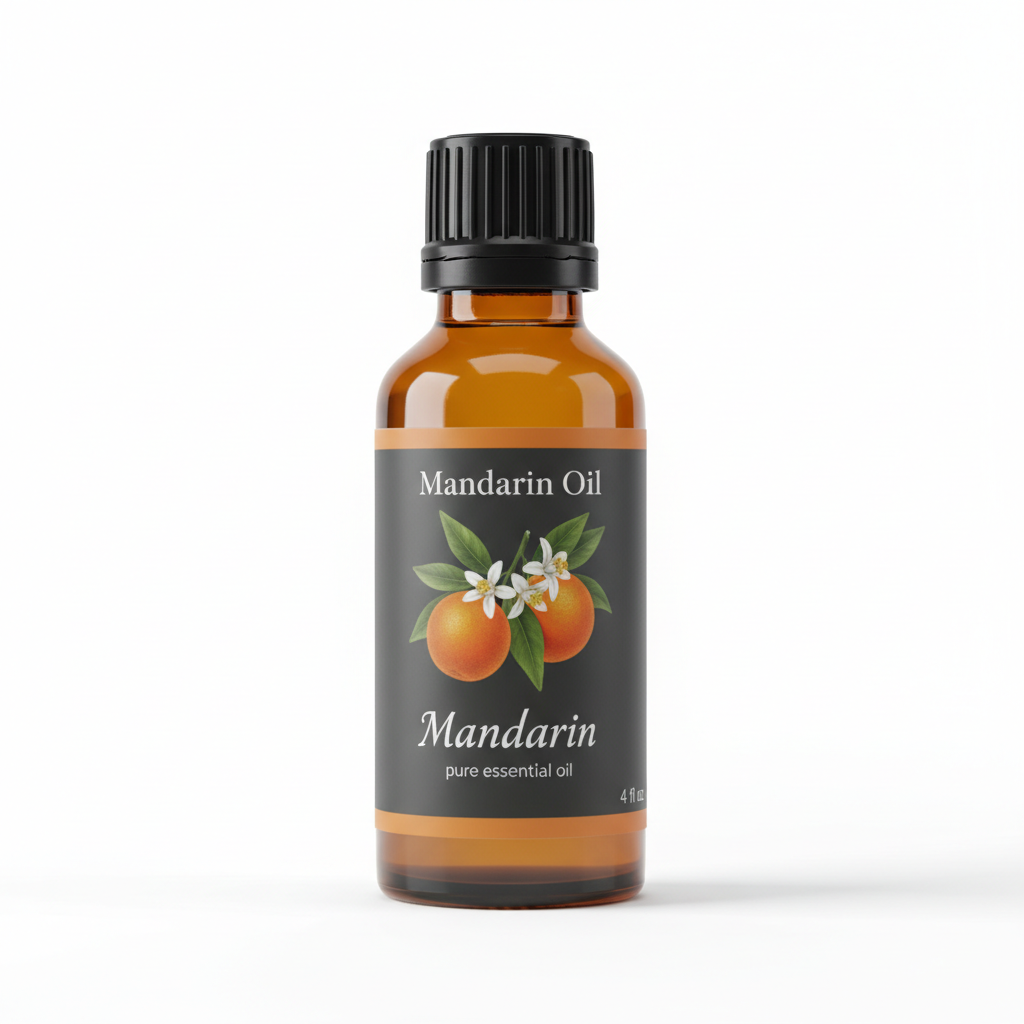
Mandarin Essential Oil
Our own Mandarin Essential Oil, in sizes from 0.5 oz to bulk.
From $12.99
Shop Now →If you are new to the oil itself, the complete guide to mandarin oil is a good place to start before diving into these safety specifics.
Why Safety Basics Matter for Citrus Oils
Essential oils are concentrated plant extracts. A single drop of mandarin oil represents the volatile compounds from a significant quantity of mandarin peel. That concentration is what gives the oil its vivid aroma and its complexity as a cosmetic ingredient. It is also why using essential oils undiluted, or in the wrong context, can cause skin irritation or other unwanted reactions.
Mandarin oil is cold-pressed from the outer peel of Citrus reticulata. The peel contains a class of compounds called furanocoumarins, which are the source of one of its most important safety considerations: photosensitivity. We will cover that in detail below. The oil's overall constituent profile, including limonene, gamma-terpinene, and alpha-pinene, is well-characterized, and most reputable suppliers publish gas chromatography (GC/MS) test results. Knowing what is in your bottle is step one of working with it safely.
Part 1: Mandarin Essential Oil Dilution
What You Will Need
- Mandarin essential oil (cold-pressed, ideally with a published GC/MS report)
- A carrier oil: jojoba, sweet almond, fractionated coconut oil, or sunflower oil are all common choices
- A small glass measuring dropper or pipette
- A clean, dark glass bottle or tin for blending
- A notebook or label to record your ratios
Understanding Dilution Percentages
Dilution is expressed as a percentage of essential oil relative to the total volume of the blend. The most widely cited general guidelines come from organizations such as the International Fragrance Association (IFRA) and aromatherapy educators, though individual responses vary. Here is a practical reference:
| Intended Use | Suggested Dilution | Drops per 1 teaspoon (5 ml) carrier |
|---|---|---|
| Body oil or lotion for adults | 1% to 2% | 1 to 2 drops |
| Facial serum or sensitive skin | 0.5% to 1% | 0.5 to 1 drop (blend in a larger batch) |
| Bath blend (added to a dispersant) | 1% | 1 drop per 5 ml dispersant |
| Perfume or spot application | Up to 2% | 2 drops |
| Children ages 2 to 6 (see section below) | 0.5% or less | 0.5 drop or fewer (blend in a larger batch) |
Note that these are general starting points. Some people prefer to begin at the lower end of any range and adjust over time based on their own experience.
Step-by-Step: How to Dilute Mandarin Oil
- Choose your carrier oil. Jojoba is a popular first choice because it is shelf-stable and absorbs well without feeling heavy. Sweet almond oil works beautifully for body applications. If you have a nut allergy, sunflower or fractionated coconut oil are worth considering instead.
- Decide on your batch size. Working in 10 ml batches (about two teaspoons) gives you enough product to test without waste. At 1%, a 10 ml batch needs 2 drops of mandarin oil.
- Add the carrier oil to your bottle first. This prevents the essential oil from sitting undiluted against the glass or skin before mixing.
- Count your drops carefully. Use a glass dropper rather than guessing from the orifice reducer. Drop counts vary by viscosity and dropper size, so work slowly.
- Cap and roll the bottle gently between your palms to combine. Avoid vigorous shaking, which can introduce air bubbles and speed oxidation.
- Label your blend immediately. Include the date, the essential oil used, and the dilution percentage. Mandarin oil is susceptible to oxidation over time, and a labeled bottle helps you track freshness.
Common Mistakes to Avoid
- Applying mandarin oil directly to skin without a carrier. Even a gentle oil can cause irritation at full concentration.
- Assuming "natural" means unlimited use. Limonene, while pleasant and well-researched, is a known sensitizer at high concentrations, particularly in oxidized oil.
- Using old or improperly stored oil. Oxidized citrus oils carry a higher sensitization risk. Store mandarin oil in a dark, cool place, tightly capped, and use it within 12 to 18 months of opening.
Part 2: How to Perform a Patch Test
A patch test is a simple pre-use check that helps you spot a sensitivity reaction before you apply a blend more broadly. It takes less than 48 hours and requires almost nothing.
What You Will Need
- Your prepared, diluted mandarin oil blend
- A small bandage or cosmetic patch (optional but helpful for a cleaner test)
- Clean skin on the inner forearm
Step-by-Step: Patch Testing
- Apply a small amount of your diluted blend to the inner forearm, roughly the size of a large coin. This area tends to have thinner skin that shows reactions more readily than, say, the back of the hand.
- Cover loosely with a bandage if you want to prevent accidental wiping, or leave uncovered. Both approaches work.
- Wait 24 to 48 hours. Check the area at 24 hours and again at 48. Look for redness, itching, swelling, or any change in the skin's appearance or texture.
- If no reaction occurs, you can proceed with broader use at the same dilution. If you see any reaction, discontinue use of that blend and consult a dermatologist or qualified healthcare provider before trying again.
A note on timing: Patch testing is most informative when done with the exact formulation and dilution you plan to use. Testing a 1% blend and then using a 3% blend gives you much less useful information.
Part 3: Is Mandarin Oil Photosensitive?
This is one of the most frequently asked questions about mandarin oil safety, and the answer is nuanced. So nuanced, in fact, that it comes up as its own topic in the mandarin essential oil FAQ.
Most cold-pressed citrus oils contain furanocoumarins, a group of naturally occurring compounds that can intensify UV radiation's effect on skin. This photosensitivity risk is well-documented for bergamot, lime, and lemon. For mandarin oil, the picture is more favorable. Mandarin oil is generally considered low in furanocoumarins compared to other citrus oils, and some batches test below detectable levels. However, this can vary by harvest, variety, and production method.
The type of mandarin also matters here. Green, red, and yellow mandarins are harvested at different stages and carry somewhat different constituent profiles. You can read more about how harvest timing affects the oil's composition in this overview of green, red, and yellow mandarin oil. When in doubt about a specific batch, the GC/MS report from your supplier is your best reference point.
Practical Guidance on Sun Exposure
- When using mandarin oil in a leave-on product (body oil, lotion, perfume), apply it to areas that will not be exposed to direct sunlight or UV lamp exposure for at least 12 hours. This is the cautious approach, and it costs nothing to follow.
- If you plan to go outdoors shortly after application, apply your mandarin blend only to areas covered by clothing, or use a rinse-off application such as a bath or wash where the oil does not remain on the skin.
- Facial applications deserve extra care. The face receives significant sun exposure, and discoloration or irritation on facial skin is more visible and slower to fade. Keep dilution low and consider timing applications for an evening routine when outdoors exposure is minimal.
- Steam-distilled mandarin oil is sometimes available and is generally considered non-photosensitizing because steam distillation does not carry over furanocoumarins effectively. If sun exposure is a consistent concern for you, steam-distilled versions are worth seeking out, though they do carry a slightly different scent profile.
Part 4: Using Mandarin Oil Around Children
Mandarin oil has a reputation as one of the more child-friendly citrus oils. Its scent profile is soft rather than sharp, and parents often gravitate toward it for evening routines and bedtime wind-down blends. That reputation is reasonable, but it does not replace careful practice.
General Age Guidelines
Most essential oil educators and aromatherapy organizations recommend avoiding essential oil skin application entirely for infants under three months. For older babies and toddlers, diffusion in a well-ventilated space is generally considered less risky than skin application, but even diffusion should be limited in duration and should never occur in an unventilated room with a young child present.
For children aged two and older, topical application at very low dilutions (0.5% or less) is more commonly discussed, though individual responses vary significantly. Always consult a qualified healthcare provider before using any essential oil on or around a young child.
Practical Steps for Child Safety
- Keep all bottles out of reach. Essential oils in childproof containers are still a hazard if ingested. Store them in a locked cabinet or high shelf.
- Never apply essential oils to a child's face, hands, or any area they might rub and then touch their eyes or mouth.
- Dilute more conservatively than you think necessary. If the adult guideline is 1% to 2%, start at 0.5% for a child aged two to six and go lower for younger children.
- Patch test on children just as you would on yourself, waiting the full 48 hours before broader use.
- Watch for signs of sensitivity: flushing, unusual fussiness, skin changes, or changes in breathing warrant stopping use immediately and contacting a healthcare provider.
Part 5: Mandarin Oil and Pets
This section warrants extra care, because citrus oils and pets are a combination that requires real caution.
Cats in particular lack certain liver enzymes that metabolize the compounds found in citrus oils. What humans process readily can accumulate in a cat's system and cause distress. Dogs have more robust metabolic pathways, but they are still significantly more sensitive to concentrated aromatic compounds than humans are.
Practical Steps for Households with Pets
- Avoid direct skin or coat application to cats entirely. Even well-diluted topical application on a cat is not advisable without specific guidance from a veterinarian who is knowledgeable about essential oil safety in animals.
- If you diffuse mandarin oil, ensure the pet can leave the room freely. Never diffuse in a small, enclosed space where a pet is confined.
- Keep diffusion sessions short, typically no more than 30 to 60 minutes in a space occupied by pets, and observe for any changes in behavior such as lethargy, drooling, squinting, or respiratory changes.
- Store oils where pets cannot access them. Cats are particularly curious about small bottles and can knock them over or chew through caps.
- Consult your veterinarian before using any essential oil in a home with birds. Avian respiratory systems are exceptionally sensitive to airborne compounds, and diffusion that is safe for mammals may not be safe for birds.
If you suspect a pet has ingested or been directly exposed to any essential oil, contact your veterinarian or an animal poison control line promptly.
Pulling It Together: A Quick Reference Checklist
Before you use mandarin oil in any application, running through a short checklist takes about two minutes and catches most common oversights.
- Is the oil within its recommended use period and stored properly?
- Have you diluted to an appropriate percentage for the intended use and the person using it?
- Have you patch tested this specific blend?
- Does the application involve sun-exposed skin within 12 hours?
- Are there children or pets in the space, and have you accounted for their specific needs?
- Do you have any current skin conditions, are you pregnant, or are you taking any medications? If so, please consult a qualified healthcare provider before use.
Mandarin oil rewards a little preparation. Once you have a clear sense of how it behaves, a good carrier oil on hand, and a consistent habit of patch testing, it becomes a genuinely enjoyable part of a considered skincare or aromatic routine. The scent is bright and grounding in equal measure, and knowing you are using it well makes it even better.
For a deeper look at the oil's origins and botany, the complete guide to mandarin oil covers where it comes from and what makes each variety distinctive.