
Where to Buy Mandarin Essential Oil: Smart Shopping Online and Locally
Knowing where to buy mandarin oil matters almost as much as knowing what you're buying. The market is crowded with bottles that range from beautifully sourced cold-pressed Sicilian oil to heavily diluted products dressed up with clever labeling. This guide will help you shop with confidence, whether you're searching for mandarin oil near me on a Saturday afternoon or scrolling through online listings at midnight.
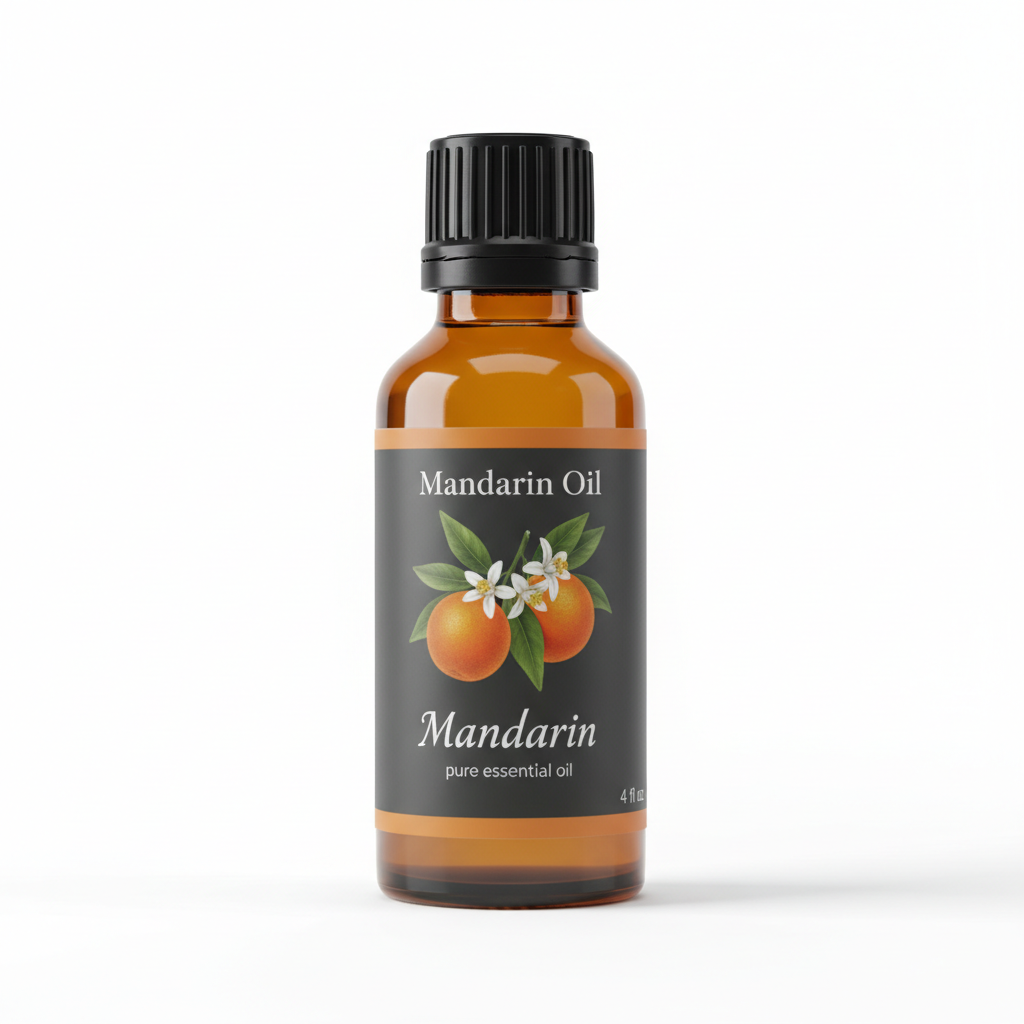
Mandarin Essential Oil
Our own Mandarin Essential Oil, in sizes from 0.5 oz to bulk.
From $12.99
Shop Now →What to Look for Before You Buy Mandarin Essential Oil
Quality indicators are your first line of defense. Before you add anything to a cart, train your eye to notice a few key details.
Botanical Name and Chemotype
The label should read Citrus reticulata. Some suppliers list Citrus nobilis (mandarin) or Citrus deliciosa for certain varieties, which is fine as long as the plant family is transparent. Generic listings that simply say "citrus oil" without a Latin name are worth skipping. For a deeper look at what the label should tell you, see our guide on how to spot pure mandarin oil: quality checks before you pay.
Extraction Method
Genuine mandarin oil is cold-pressed from the outer peel, not steam-distilled. Cold pressing preserves the lively top notes: bright, sweet, slightly floral. If a product description mentions distillation as the extraction method for mandarin specifically, that is a flag worth noting. Some suppliers do offer distilled mandarin, which smells noticeably different and is typically used in industrial flavoring rather than fine aromatic work.
Country of Origin
Sicily and Calabria in southern Italy are considered benchmark origins for red and yellow mandarin oil. Brazil produces large volumes of orange-family oils and does export mandarin, often at lower price points. China, Spain, and Argentina also supply the market. None of these origins is automatically inferior, but origin transparency signals a supplier that stands behind its sourcing. When a listing says only "imported" with no further detail, that omission tells you something.
Organic Certification
Citrus peels concentrate pesticide residues more readily than other plant parts because the oil glands sit right on the skin surface. For that reason, many experienced formulators and home users prefer certified organic mandarin oil. Look for USDA Organic, EU Organic (indicated by the green leaf logo), or equivalent third-party certification. The certificate number should be verifiable.
GC/MS Testing
Gas chromatography/mass spectrometry testing breaks down the chemical profile of an oil batch. Reputable suppliers publish these reports, often called batch-specific GC/MS reports, either on the product page or available on request. The key compounds to look for in a typical cold-pressed mandarin include limonene (usually the dominant component), gamma-terpinene, and methyl N-methylanthranilate, which is one of the compounds associated with the characteristic floral sweetness. If a supplier cannot produce a report, move on.
Key Features to Compare Across Products
Once you have a shortlist, use these comparison points to differentiate between options at similar price levels.
- Bottle type: Amber or cobalt glass protects photosensitive compounds. Plastic bottles are a quality concern for any citrus oil intended for long-term storage or use in leave-on cosmetic formulations.
- Dropper insert or cap type: An orifice reducer or dropper insert gives you control over dispensing and reduces oxidation from repeated cap removal.
- Batch dating: Cold-pressed citrus oils have a shorter shelf life than many other essential oils, typically one to two years from pressing. A supplier that provides a pressing date or best-by date is giving you useful information. One that doesn't may be moving older stock.
- Volume options: Access to multiple sizes (5 ml, 15 ml, 30 ml, 100 ml) suggests a supplier serving both retail and professional buyers. Locked-in 10 ml pricing with no larger option can mean thin margins dressed up as specialty retail.
- Scent description: Good product copy describes the oil accurately: sweet, tangy, slightly floral, with green or honeyed undertones depending on variety. Descriptions that lean heavily on wellness claims rather than actual scent character are a signal that the marketing team is working harder than the quality team.
Top Picks at Different Price Points
Rather than naming specific brands (the market shifts faster than a buying guide can track), here is a framework for evaluating products at three price tiers.
Budget Range: Under $10 for 10 ml
At this price point, you can find usable mandarin oil, but you should be realistic. Organic certification is rare here, GC/MS reports may not be available, and the origin is often unspecified or listed broadly as "imported." These oils can work well for candle making, reed diffusers, or other applications where exact purity is less critical. For skin-contact formulations, the budget tier is a riskier choice without third-party testing you can verify.
Mid Range: $10 to $25 for 10 ml
This is where value and quality start to converge. At this price, you should expect a stated country of origin, an option to request or download GC/MS data, and frequently an organic certification. Many well-regarded suppliers operate in this range, including specialty aromatics companies that source directly from distillers or pressing cooperatives. This tier is a strong fit for most home users, small-batch formulators, and anyone building a serious aromatic practice.
Premium Range: $25 and above for 10 ml
Premium pricing can reflect genuine differences: single-estate sourcing, specific harvest years, artisanal pressing, or exceptional quality control. It can also reflect marketing. At this tier, scrutinize the supplier's transparency. A premium price is justified when accompanied by detailed provenance, third-party testing, and a track record of consistent quality across multiple batches. If the only justification is attractive packaging, the premium is cosmetic.
For buyers working at scale, whether for product manufacturing, wholesale blending, or large-format diffusion, the pricing math changes significantly. Our bulk and wholesale mandarin oil guide for makers covers volume pricing, minimum order quantities, and what to expect from supplier relationships at that level.
Red Flags to Avoid
Shopping for essential oils online means navigating a market with very low barriers to entry. These patterns suggest a product or supplier worth avoiding.
- "Pure" as the only quality claim: Pure is not a regulated term in the essential oil industry. Any seller can print it on a label. Look for verifiable claims: certified organic, GC/MS tested, batch-specific reports.
- Uniform pricing across all oils: If a supplier sells lavender, frankincense, rose absolute, and mandarin all at $9.99 per 10 ml, the pricing structure does not reflect the actual cost differences between these materials. Rose absolute at $9.99 is not rose absolute.
- No contact information or vague business address: A legitimate supplier has a phone number, a real address, and a customer service contact. Marketplace-only sellers with no web presence beyond their storefront deserve extra scrutiny.
- Overpromising product descriptions: Listings loaded with wellness language and short on actual product specifications (origin, extraction method, testing) are prioritizing conversion over accuracy.
- Plastic packaging for skin-use products: Essential oils can interact with certain plastics over time. For any oil you plan to use in cosmetic formulations, glass is the appropriate choice.
- No return or satisfaction policy: Scent is subjective and quality matters. A supplier confident in their product offers a reasonable return window.
Where to Buy Mandarin Essential Oil
Online Specialty Retailers
The strongest selection for buy mandarin essential oil online comes from dedicated aromatics suppliers rather than general wellness retailers. Companies that focus specifically on essential oils tend to invest more in sourcing infrastructure and quality documentation. Look for suppliers with an established catalog, published GC/MS reports, and clear sourcing language. Ordering directly from a supplier's own website often gives you access to batch-specific information that marketplace listings don't carry.
Large Online Marketplaces
Platforms like Amazon carry hundreds of mandarin oil listings. The convenience is real, but the variability is also real. Use the quality criteria above as your filter. Check whether the seller links to third-party testing. Read reviews critically, looking for comments about scent accuracy and whether buyers noticed the oil smelling off or weak. Verified purchase reviews from users who mention specific use cases (diffusing, blending for lotion) are more useful than generic five-star praise.
Local Natural Foods and Wellness Stores
Searching for mandarin oil near me often turns up natural grocery chains, co-ops, and independent wellness shops. The advantage of buying locally is that you can sometimes smell a tester before purchasing, and the store has already done a basic vetting pass on the brands it carries. Ask the staff which brands they stock for their own use. Independent co-ops in particular tend to carry certified organic options from mid-range suppliers with solid reputations.
Craft and Soap Supply Shops
Suppliers serving the handmade cosmetics and candle-making community often stock mandarin oil in a range of sizes and at competitive per-ounce pricing. These suppliers understand formulator needs and frequently provide more detailed technical information than general wellness brands. If you're using mandarin oil as an ingredient rather than a standalone product, this channel is worth exploring.
Direct from Distillers and Importers
For serious buyers, sourcing directly from an importer or pressing cooperative cuts out intermediary markups and often provides the richest batch documentation. This approach typically requires larger minimum orders, but the quality ceiling is higher. Some Italian pressing cooperatives have begun selling directly to international buyers in small quantities as interest in single-origin citrus oils has grown.
Putting It Together
The best place to buy mandarin essential oil is wherever the supplier is most transparent. Price, platform, and packaging are secondary to documentation and sourcing honesty. A $15 bottle from a supplier who publishes GC/MS reports and knows the name of their pressing cooperative is almost always a better buy than a $30 bottle in beautiful packaging with nothing but "pure" on the label.
Start with your intended use. A simple room diffusion blend has different requirements than a carefully formulated face oil or a batch of artisan body products. Match the quality tier to the application, verify the claims you can verify, and build a relationship with one or two suppliers whose consistency you can track over time.
For a broader framework on evaluating value across the whole mandarin oil category, our complete quality and value guide walks through sourcing, chemistry, and decision-making in more depth.
| Channel | Selection | Price Range | Documentation Access | Best For |
|---|---|---|---|---|
| Specialty aromatics online | High | Mid to premium | Usually strong | Formulators, enthusiasts |
| Large online marketplaces | Very high | Budget to mid | Variable | Convenience buyers |
| Local natural food stores | Limited | Mid | Limited | First-time buyers, sniff testing |
| Craft and soap suppliers | Moderate | Mid | Often strong | Makers and batch formulators |
| Direct importers | Focused | Variable, often lower per oz | Strongest | High-volume or serious buyers |