How to Spot Pure Mandarin Oil: Quality Checks Before You Pay
Buying pure mandarin oil should be straightforward. It rarely is. The market is crowded with diluted bottles, synthetic imposters, and well-intentioned but poorly sourced products that smell pleasant enough until you compare them side by side with the real thing. This guide gives you the practical tools to evaluate mandarin oil quality before any money changes hands.
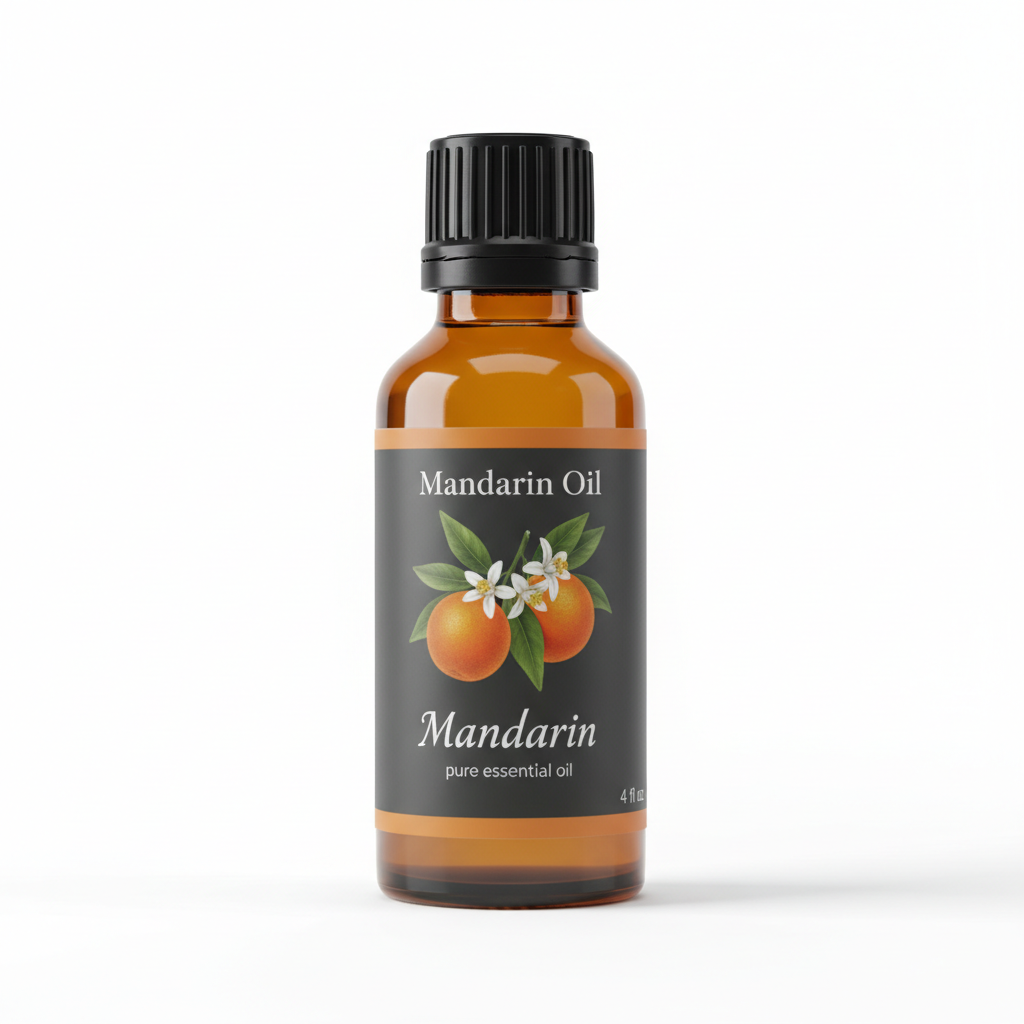
Mandarin Essential Oil
Our own Mandarin Essential Oil, in sizes from 0.5 oz to bulk.
From $12.99
Shop Now →Whether you are building a fragrance wardrobe, stocking a professional diffuser setup, or sourcing ingredients for a skincare line, the standards remain the same. Purity, provenance, and transparency from the supplier matter more than label design or price alone.
Why Mandarin Oil Quality Varies So Widely
Mandarin (Citrus reticulata) is a cold-pressed citrus oil extracted from the peel. That sounds simple. The complication is that "mandarin" is an umbrella term covering several botanical varieties, each with a distinct scent profile. Red mandarin, green mandarin, and yellow mandarin are the most commercially significant. They are harvested at different stages of ripeness, and the aromatic difference between them is pronounced.
Layered on top of that, mandarin oil is one of the most commonly adulterated citrus oils on the market. It is relatively expensive to produce in quantity, and it blends invisibly with cheaper orange oil, synthetic limonene, and artificial terpene blends. An untrained nose may not catch the substitution immediately. A gas chromatography-mass spectrometry (GC/MS) report will.
Understanding this landscape is the first step toward confident purchasing. For a deeper look at how mandarin oil compares to its close relative, see our piece on mandarin oil vs orange oil: scent, price, and best uses.
Quality Indicators: What to Look For
1. Botanical Name and Variety on the Label
A reputable supplier will always list the full botanical name: Citrus reticulata. Many will also specify the variety (red, green, or yellow) and the extraction method (cold-pressed from the peel). If the label says only "mandarin oil" with no further detail, that is a soft warning sign. It does not automatically mean the product is poor quality, but it suggests the supplier is not prioritizing transparency.
2. Country of Origin
The finest mandarin oil historically comes from Sicily and Calabria in southern Italy, where the combination of volcanic soil, coastal climate, and generations of citrus cultivation produces a peel with exceptional aromatic complexity. Brazil and Spain are also significant producers. Chinese-origin mandarin oil is widely available and can be high quality, but it requires more scrutiny because supply chains vary considerably.
Look for a specific origin, not a vague regional claim. "Mediterranean" is less useful than "Sicily, Italy."
3. GC/MS Testing and Batch Reports
This is the single most important quality indicator for serious buyers. Gas chromatography-mass spectrometry breaks down an oil's chemical composition into a detailed profile. You can verify that the key constituents of genuine mandarin oil (primarily limonene, gamma-terpinene, and methyl N-methylanthranilate) are present in appropriate ratios.
Reputable brands publish batch-specific GC/MS reports, either in the product listing or on request. If a company cannot or will not provide this documentation, move on. The cost of testing is modest for professional suppliers. Unwillingness to share results is a meaningful red flag.
4. Packaging That Protects the Oil
Mandarin oil is photosensitive. UV light degrades its aromatic compounds relatively quickly. Genuine, quality-conscious suppliers package their oil in amber or cobalt blue glass bottles. Clear glass bottles are a practical quality concern, not just an aesthetic one. Plastic bottles introduce a separate issue: citrus oils can leach compounds from certain plastics over time, affecting both scent and purity.
5. Price as a Rough Calibration Tool
Mandarin oil is not the cheapest citrus oil to produce. If you see a 10 ml bottle priced at well under three dollars, the economics of genuine cold-pressed production do not support that price point. This does not mean expensive automatically equals pure. It means suspiciously cheap is a reliable warning sign worth investigating further.
Key Features to Compare Across Brands
| Feature | What to Look For | Red Flag |
|---|---|---|
| Botanical name | Citrus reticulata clearly stated | "Citrus blend" or no Latin name |
| Variety | Red, green, or yellow specified | No variety information at all |
| Origin | Specific country or region named | Vague regional or "natural" claims |
| Extraction | Cold-pressed from peel | Steam distilled (possible but less common; verify why) |
| Testing | GC/MS report available per batch | "Purity guaranteed" with no documentation |
| Packaging | Amber or cobalt glass, UV-protective | Clear glass or plastic bottles |
| Shelf life guidance | Best-before date or production batch date | No date information at all |
The Scent Test: What Pure Mandarin Oil Actually Smells Like
No buyer's guide can replace your nose. Pure mandarin oil has a scent that is brighter, more floral, and more nuanced than standard sweet orange. There is a characteristic slightly honeyed, almost musky undertone (contributed by methyl N-methylanthranilate) that separates authentic mandarin from orange oil or synthetic citrus blends. It should not smell flat or one-dimensionally sharp.
Red mandarin (from fully ripe peels) is the richest and most rounded. Green mandarin (from unripe fruit) is sharper, more tart, and more herbal. Yellow mandarin sits between the two. If the oil you receive smells like orange juice or a generic citrus cleaner, that is worth querying with the supplier.
It is also worth knowing the difference between mandarin essential oil and mandarin fragrance oil before you buy. These are very different products with different uses and quality standards. Our guide on mandarin essential oil vs mandarin fragrance oil covers the distinctions in full.
Price Tiers: What Your Budget Gets You
Entry Level (roughly $8 to $18 for 10 ml)
At this price point, you will find some genuinely good options alongside a large number of mediocre ones. Brands in this range sourcing from larger commodity suppliers in Brazil or China can still produce acceptable oil if their quality controls are solid. The key question is documentation. Does the brand publish GC/MS data? Is the origin specific? Entry-level does not mean low quality by default, but it requires more scrutiny on your part.
Good uses: everyday diffusing, making your own room sprays, blending experiments where you will be using larger volumes.
Mid-Range (roughly $18 to $35 for 10 ml)
This is where the most reliable value tends to sit. Brands operating at this tier typically have established supplier relationships, publish batch testing, and provide meaningful provenance information. Sicilian or Calabrian-origin red mandarin at this price point is a reasonable expectation. You are also more likely to find organic certification here, which some buyers prioritize for blending with carrier oils used in personal care.
Good uses: personal care blending, professional-grade diffusing, candle and fragrance work where scent authenticity matters.
Premium (roughly $35 and above for 10 ml)
Premium pricing for a citrus oil like mandarin is only justified when there is a compelling sourcing story behind it: a specific single-estate origin, certified organic production from a named cooperative, or artisan small-batch processing. Some Sicilian producers working with heritage varieties command this pricing legitimately. Verify the claim rather than assuming the price reflects quality automatically.
Good uses: high-end natural perfumery, luxury skincare formulation, gifting, collectors building a reference library of regional variations.
Red Flags to Avoid
Some warning signs are subtle. Others are obvious once you know what to look for. Here is a consolidated list of the most common problems buyers encounter when shopping for pure mandarin oil.
- No botanical name on the label. This is non-negotiable for a genuine essential oil product.
- "Pure" or "100% natural" claims without any supporting documentation. These phrases are marketing language and carry no regulatory weight. GC/MS reports are what matter.
- Uniform pricing across all oils in a catalogue. If a supplier charges the same price for mandarin, lavender, and rose absolute, they are either not selling genuine rose absolute or their quality controls are suspect across the range.
- Synthetic fragrance listed in the ingredients. An essential oil should list only the botanical source. If you see "fragrance" or "parfum" as an ingredient, that is a fragrance oil, not an essential oil.
- No best-before date or batch information. Citrus oils oxidize. Freshness matters, and responsible suppliers track it.
- Implausibly large volumes at very low prices. A 4 oz (approximately 118 ml) bottle of "pure mandarin oil" priced under ten dollars is almost certainly diluted or synthetic.
- Customer service that cannot answer basic sourcing questions. If you email a supplier asking for the country of origin or requesting a GC/MS report and receive a non-answer, that tells you something important.
Where to Buy Mandarin Oil: Channel by Channel
Direct from the Brand
Buying directly from a specialist essential oil brand is generally the most reliable route. You can access batch documentation, contact customer service with sourcing questions, and build a relationship with a supplier whose standards you have verified. Brands that operate this way include established names like Tisserand, Florihana, Rocky Mountain Oils, and Plant Therapy, among others. Each has different strengths in terms of sourcing transparency and pricing.
Health Food and Natural Apothecary Stores
Bricks-and-mortar natural retailers often carry a curated selection of essential oils. The advantage is that you can often smell before you buy. The limitation is that shelf stock may be older, and you may not have easy access to batch documentation in-store. Ask staff whether GC/MS reports are available for what they carry.
Online Marketplaces (Amazon, Etsy, and Similar)
These platforms host both excellent and poor-quality mandarin oil. The same product verification principles apply. Look for the botanical name in the listing, check whether the seller links to batch testing, read reviews critically (especially any that mention scent authenticity), and be cautious of fulfilled-by-marketplace sellers with no identifiable brand presence. Etsy can be a good source for small-batch artisan distillers, particularly for regional specialty oils, as long as you verify their documentation.
Wholesale and B2B Suppliers
If you are formulating products commercially, direct relationships with wholesale suppliers like Jedwards International, Bulk Apothecary, or essential oil wholesalers in the EU offer volume pricing. At this level, requesting Certificates of Analysis (COA) and GC/MS reports is standard practice and should be expected from any professional supplier without hesitation.
A Practical Pre-Purchase Checklist
Before completing any purchase, run through these questions quickly.
- Is the botanical name Citrus reticulata clearly displayed?
- Is the specific variety (red, green, yellow) identified?
- Is a specific country or region of origin named?
- Is the extraction method listed as cold-pressed from the peel?
- Is a GC/MS report available for this batch?
- Is the packaging amber or cobalt glass?
- Is there a best-before or production date visible?
- Does the price sit within a realistic range for genuine cold-pressed citrus oil?
If you can answer yes to all eight, you are in good territory. If several answers are no or unclear, that is useful information before you spend anything.
A Note on Organic Certification
Organic certification means the fruit was grown without synthetic pesticides or fertilizers under a certified program (USDA Organic, Ecocert, and similar bodies). For a cold-pressed peel oil, some buyers prioritize organic sourcing for personal care applications where the oil will be used on the skin. It is a legitimate quality consideration.
That said, organic certification does not automatically mean better aroma. A well-managed conventional citrus grove in Sicily with rigorous post-harvest handling may produce oil with superior scent complexity to a certified organic supplier with less careful processing. Use organic certification as one data point among several, not as a substitute for the full picture.
Building a Reference Nose
One of the most practical investments you can make as a mandarin oil buyer is building a small reference collection. Purchase a genuine, well-documented red mandarin, a green mandarin, and a mid-grade sweet orange oil. Smelling them side by side, on a scent strip or directly from the bottle, calibrates your nose in a way that no written description fully replaces. Once you have that reference point, identifying off-notes or substitutions in an unfamiliar product becomes considerably easier.
For a full breakdown of how these citrus oils compare in scent character, price, and practical application, our detailed comparison of mandarin oil vs orange oil is a useful companion read.
The Bigger Picture: Supporting Quality Producers
Buying well-documented, traceable mandarin oil is not only good for your formulations or your diffuser. It supports the producers, cooperatives, and small-scale distillers who invest in careful cultivation and honest documentation. The citrus oil market has enough room for both commodity and artisan production. Knowing which you are buying, and why, puts you in a stronger position as a consumer and as a formulator.
For those who want to go deeper on every dimension of the purchasing decision, sourcing variables, and value assessment, our comprehensive resource on how to buy mandarin oil: the ultimate quality and value guide covers the full landscape in detail.
Pure mandarin oil is a genuinely beautiful material. It rewards the effort you put into finding the real thing.