Mandarin Essential Oil vs Mandarin Fragrance Oil: Which Should You Buy?
The mandarin aisle can be genuinely confusing. Two bottles, similar labels, wildly different prices, and the product descriptions don't always help. If you've found yourself squinting at a supplier's website wondering whether the essential oil or the fragrance oil is the right call, you're not alone.
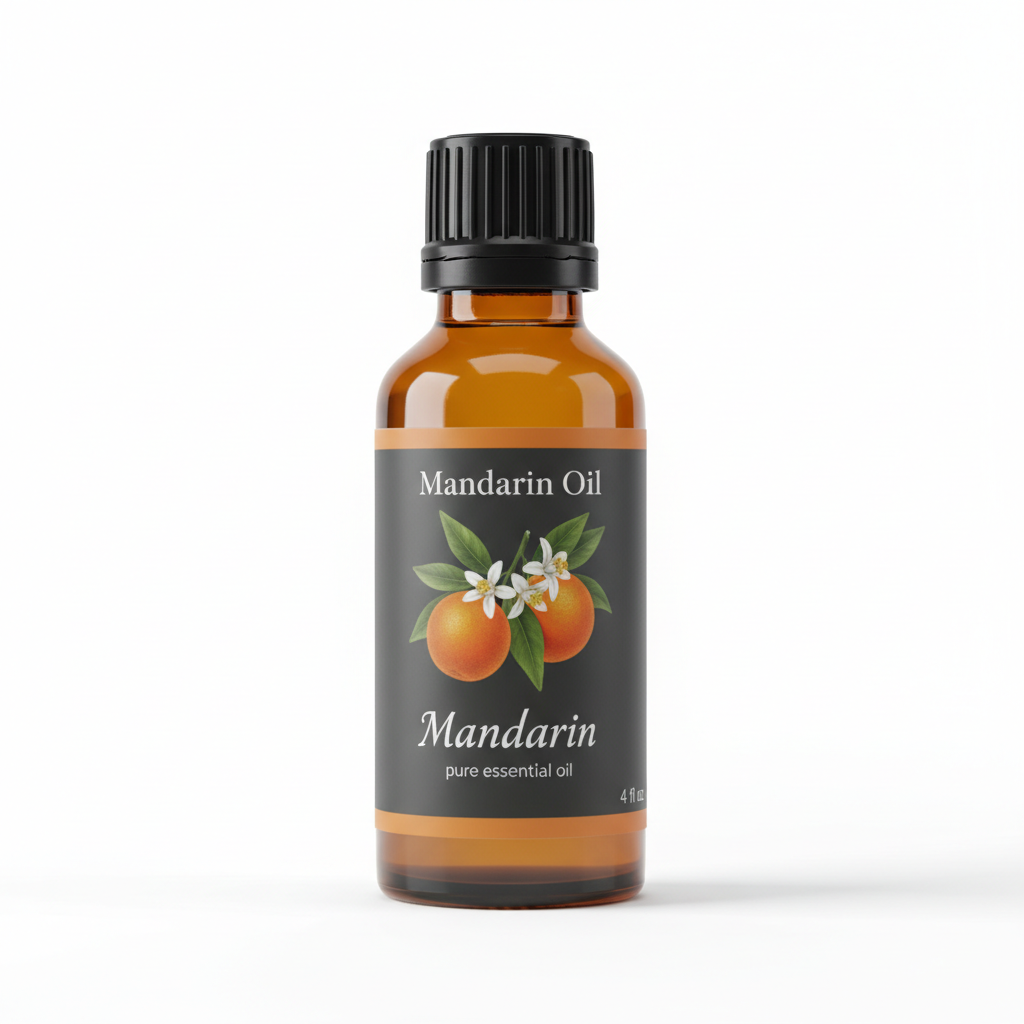
Mandarin Essential Oil
Our own Mandarin Essential Oil, in sizes from 0.5 oz to bulk.
From $12.99
Shop Now →This guide breaks down the real differences between mandarin essential oil and mandarin fragrance oil. Not just what they are, but what each one is actually good for, where each one falls short, and how to decide which belongs in your basket.
What Are They, Exactly?
Mandarin Essential Oil
True mandarin essential oil is cold-pressed directly from the outer peel of Citrus reticulata fruit. No heat, no solvents. The rind is mechanically abraded and the oil is separated from the resulting liquid. What you get is a concentrated aromatic extract that contains the actual volatile compounds naturally present in the fruit: limonene, gamma-terpinene, alpha-pinene, and a small cast of other constituents that vary by harvest and origin.
Because it comes from an agricultural crop, the scent shifts with the season, the grove, and the ripeness at harvest. Red mandarin (pressed from ripe fruit) smells richer and rounder than green mandarin (pressed earlier in the season), which skews brighter and sharper. This variability is part of what makes the oil interesting, and part of what makes quality sourcing matter. Our guide to buying mandarin oil goes deeper on what to look for.
Mandarin Fragrance Oil
Fragrance oils are blended aromatic compounds, typically a mixture of synthetic aroma chemicals, sometimes with a small percentage of natural materials added. They are designed in a lab to produce a specific, consistent scent profile. A mandarin fragrance oil might be built around citral, linalool, or synthetic limonene, then adjusted with other molecules to hit a target scent.
Fragrance oils are not extracts of actual mandarin fruit. They are formulations. That's not a criticism, it's simply what they are. A skilled perfumer can build a mandarin fragrance oil that smells intensely true-to-fruit, or one that smells more like a candy, a cleaning product, or a cocktail, depending on what the brief calls for. The scent is engineered, which means it's repeatable and controllable in ways that natural extraction is not.
Side-by-Side Comparison
| Attribute | Mandarin Essential Oil | Mandarin Fragrance Oil |
|---|---|---|
| Source | Cold-pressed from Citrus reticulata peel | Synthetically formulated aromatic blend |
| Scent consistency | Varies by harvest, origin, and variety | Highly consistent batch to batch |
| Scent character | Bright, fresh, slightly waxy, true-to-fruit | Ranges from fruit-forward to candy-sweet; depends on formulation |
| Scent throw in candles | Moderate; citrus top notes fade with heat | Strong and stable; formulated to survive the burn |
| Cost | Higher per ounce; quality varies by origin | Lower per ounce; widely available |
| Skin use (diluted) | Yes, with proper dilution; phototoxicity note for expressed oils | Depends on formulation; check IFRA compliance before skin use |
| Diffuser use | Yes; produces authentic citrus atmosphere | Not designed for diffusion; some contain fixatives unsuitable for inhalation |
| Candle and wax melt use | Works, but scent retention is limited | Designed specifically for this application; performs reliably |
| Soap and bath product use | Yes; note that scent often fades in cold-process soap | Fragrance oils typically hold better in soap; check skin-safe ratings |
| Certification potential | Can support organic, natural, or clean-beauty claims | Cannot support natural or organic claims |
| Flash point | Around 46-50°C (varies by batch) | Formulated to spec; often higher flash points available |
Pros and Cons
Mandarin Essential Oil
Pros
- Authenticity. The scent is derived from actual fruit. For diffuser blends or skincare products where the natural origin matters to your customers or to you, this distinction is real and verifiable.
- Clean formulation credentials. If you're building a product line around natural ingredients, cold-pressed essential oil fits. Fragrance oil does not.
- Complexity. A good-quality mandarin essential oil has a multi-layered scent that shifts slightly on the nose. There's a waxy top note, a bright citrus heart, and a faint sweetness that a synthetic blend may approximate but rarely matches exactly.
- Diffuser-appropriate. If diffusing into a room is part of your use case, essential oil is the correct choice.
Cons
- Batch variation. The scent profile changes with crop year and source region. What you buy today may smell slightly different from what you buy six months from now, which can be a problem for product consistency.
- Phototoxicity risk. Cold-pressed (expressed) mandarin essential oil contains furanocoumarins that may cause skin sensitivity when exposed to UV light. Products intended for leave-on skin use in daylight require a furanocoumarin-free (FCF) version or careful formulation guidance.
- Weaker candle performance. Citrus essential oils are notoriously difficult in candle applications. The volatile top notes burn off quickly, leaving little scent throw in a finished candle.
- Higher cost. Quality cold-pressed mandarin oil costs significantly more per ounce than most fragrance oil alternatives.
Mandarin Fragrance Oil
Pros
- Candle performance. This is where fragrance oil earns its place. For mandarin oil for candles, a well-formulated fragrance oil will outperform essential oil every time. It's engineered for heat stability and scent throw.
- Consistency. A good supplier will produce the same scent profile batch after batch. This matters enormously if you're running a product business and need customers to recognize your scent.
- Cost efficiency. Fragrance oils stretch further and cost less, making them practical for high-volume production.
- Scent range. You can source mandarin fragrance oils that skew fresh and zesty, or ones that lean into a sweeter, fruitier direction. The scent library is much wider than what you get from a single botanical source.
Cons
- Not suitable for diffusing. Fragrance oils should not be used in ultrasonic or heat diffusers. They are not designed for inhalation and may contain compounds that are safe in rinse-off or ambient candle contexts but not appropriate for direct diffuser use.
- Cannot carry natural claims. If your brand positioning is built around natural, botanical, or organic credentials, fragrance oil disqualifies that claim entirely.
- Skin use requires diligence. Before using any fragrance oil in a skin-contact product, you need to verify IFRA compliance for that specific application category. Not all fragrance oils are rated safe for leave-on skin products.
- Transparency gaps. Fragrance formulas are often trade secrets. You may not know exactly what's in the blend, which can create challenges for ingredient disclosure and allergen labeling.
Best For: Use-Case Recommendations
Candles and Wax Melts
Go with fragrance oil. This is the clearest call in the comparison. Mandarin essential oil loses most of its scent character during the candle-making process. A mandarin fragrance oil formulated for wax will give you a stronger, truer scent throw and a consistent result across your production runs. When sourcing mandarin oil for candles specifically, fragrance oil is the professional standard for most makers.
Diffuser Blends and Room Sprays
Go with essential oil. For any product where the oil will be dispersed into the air for direct inhalation, cold-pressed mandarin essential oil is the appropriate choice. It creates that clean, bright citrus atmosphere that works well in morning routines or daytime spaces. For blending ideas, the comparison in our mandarin vs orange oil guide is worth a read if you're building a citrus blend.
Skincare and Body Oils (Diluted)
Essential oil, with careful formulation. If you're blending a body oil, facial serum, or similar product, cold-pressed mandarin essential oil (properly diluted, ideally FCF for leave-on daytime use) supports a natural formulation. Make sure you understand dilution ratios and always recommend a patch test to your customers. A qualified cosmetic formulator or aromatherapist can help you get this right.
Soap Making
Fragrance oil often wins here too. Cold-process soap is harsh on essential oil scent, the high pH and heat during saponification cause most citrus essential oils to fade significantly. A mandarin fragrance oil rated for soap applications will hold its scent through the process much more reliably. Some makers blend both to get a bit of natural character alongside better retention.
Natural and Clean Beauty Product Lines
Essential oil only. If your brand promise includes natural, botanical, or organic positioning, there is no substitute for the real thing. The higher cost and batch variation are part of what you're managing when you commit to that positioning.
Hobbyist and Home Blending
Depends on your goal. Diffusing at home for a calm evening atmosphere? Essential oil. Making homemade candles to give as gifts? Fragrance oil will produce a more impressive result. Both are accessible and worth experimenting with.
A Note on Quality (For Both)
Neither category is automatically good. A cheap essential oil from an unverified source may be adulterated with synthetic limonene or blended with cheaper citrus oils. A low-quality fragrance oil may use inferior aroma chemicals that smell sharp and synthetic rather than fresh and bright.
For essential oil, look for suppliers who provide GC/MS (gas chromatography/mass spectrometry) testing data, list the botanical species and country of origin clearly, and can tell you whether the oil is expressed or steam-distilled. Our complete quality and value guide covers the sourcing questions worth asking.
For fragrance oil, look for suppliers who provide IFRA conformity certificates for your intended application, clear flash point data, and skin-safe ratings by product category. Reputable fragrance oil suppliers will have this documentation readily available.
It's also worth knowing that mandarin and tangerine are closely related and often confused in both essential oil and fragrance oil ranges. If you've been buying one assuming it was the other, our piece on mandarin oil vs tangerine oil will help you sort out the difference.
The Verdict
There is no single winner here. The right choice depends entirely on what you're making.
Choose mandarin essential oil when your application involves direct inhalation, when natural sourcing is central to your brand or personal values, or when you're blending for products where the authentic botanical origin matters to your customers.
Choose mandarin fragrance oil when candle performance, scent consistency, and cost efficiency are the priority, which covers a wide range of craft and commercial product applications.
Some makers use both, keeping essential oil for their diffuser blends and room sprays while relying on fragrance oil for their candle and soap lines. That's a perfectly reasonable approach. The two products serve different purposes, and knowing which tool to reach for in each situation is what separates a satisfying result from a frustrating one.