
What Blends Well with Mandarin Oil: A Complete Pairing Guide
Mandarin essential oil has a reputation for playing well with others. Its soft, sweet citrus character sits somewhere between orange and tangerine, bright but not sharp, making it one of the more forgiving oils to blend. Still, knowing why certain pairings work, and which ones fall flat, saves you from wasting good oil on a diffuser full of regret.
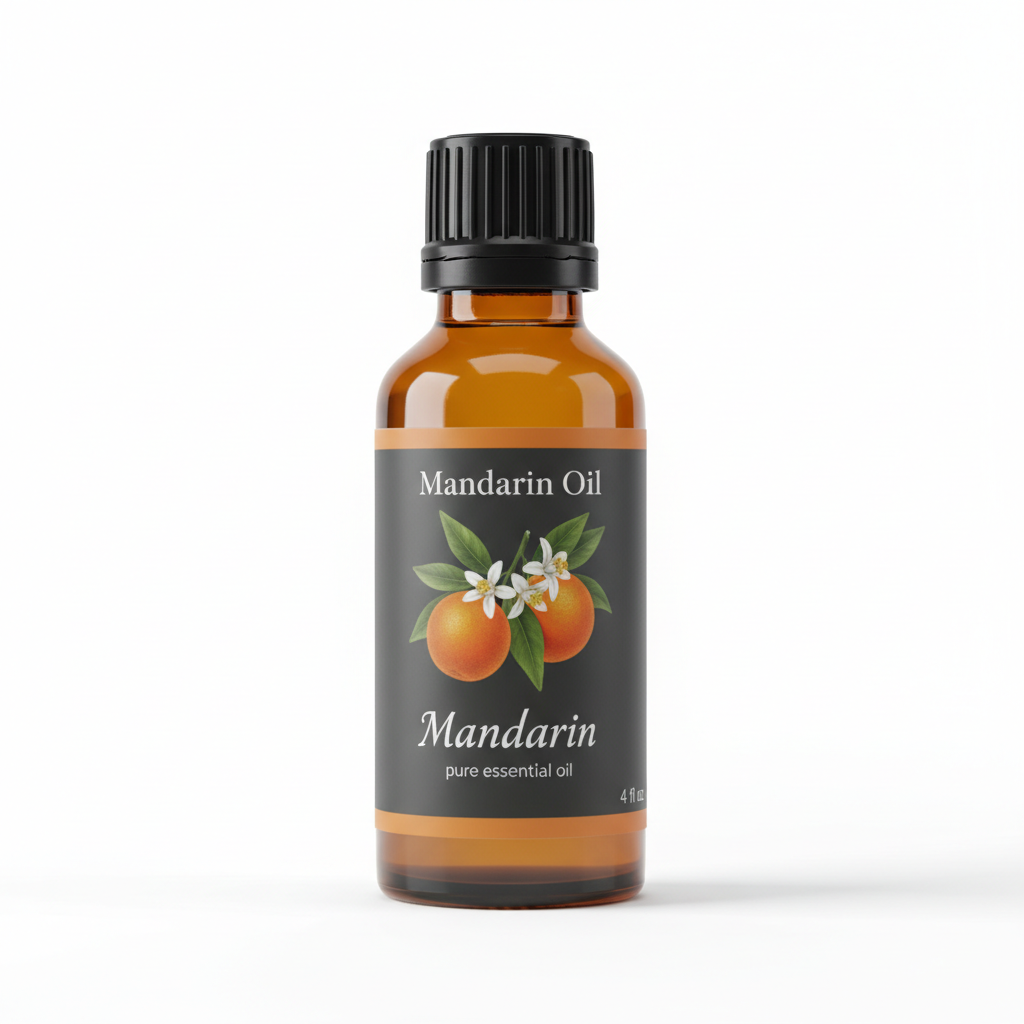
Mandarin Essential Oil
Our own Mandarin Essential Oil, in sizes from 0.5 oz to bulk.
From $12.99
Shop Now →This guide walks through the best aromatic families to pair with mandarin, explains the basic principles behind citrus blending, and gives you concrete starting-point recipes you can adjust to your own nose. If you are just getting started with mandarin oil at home, you may also want to read our broader overview on how to use mandarin essential oil at home before diving into blending.
Understanding Mandarin's Aromatic Profile
Before you blend anything, it helps to understand what you are actually working with. Mandarin oil is cold-pressed from the peel of Citrus reticulata. Its scent is dominated by limonene, with supporting notes of gamma-terpinene and methyl anthranilate. That last compound is the one responsible for the faintly floral, almost grape-like nuance that distinguishes mandarin from standard sweet orange.
In perfumery terms, mandarin sits in the top note category. It opens a blend with immediacy and brightness, but it also diffuses relatively quickly. This means your middle and base notes will carry the lasting impression. Mandarin's job is to welcome the nose in.
Red, yellow, and green mandarin oils each have slightly different aromatic characters. Red mandarin is the sweetest and most round. Green mandarin (harvested before full ripeness) is sharper and more herbal. Yellow mandarin falls in between. The pairings in this guide work across all three, though green mandarin will lean a little more assertive in herbal combinations.
The Core Aromatic Families That Pair Well with Mandarin
1. Florals
Mandarin and florals are a natural match. The slightly sweet, round character of mandarin supports floral middle notes without competing with them. Lavender is the most accessible starting point. It is widely available, cost-effective, and the combination is dependably pleasant for diffuser work, linen sprays, and body care.
Neroli (cold-pressed or steam-distilled from orange blossom) creates a more sophisticated pairing. Because neroli is itself a citrus-adjacent floral, it amplifies mandarin's gentle brightness while adding a creamy, honeyed depth. Ylang ylang works too, but use a restrained hand. It is an intense oil and can overtake a blend quickly.
2. Spices and Warm Resins
This is where mandarin moves from bright to cozy. Cardamom, cinnamon leaf (not bark, which can irritate skin at higher concentrations), clove bud, and ginger all carry a warmth that grounds mandarin's top-note lift. The combination is especially popular in autumn and winter diffuser work.
Frankincense and benzoin sit in the resin category and act as natural fixatives in a blend, meaning they slow the diffusion of top notes and add a softly balsamic quality. A mandarin-frankincense-cardamom blend is a reliable choice for evening diffuser rituals. For more seasonal inspiration along those lines, see our guide to mandarin oil in winter: cozy citrus blends for the holiday season.
3. Herbs and Greens
Rosemary, basil, and petitgrain pair cleanly with mandarin's citrus brightness. These combinations tend to feel fresh and energizing in the morning. Clary sage adds a slightly earthy, herbal complexity that works particularly well with red mandarin.
Vetiver is worth mentioning here even though it is technically a grass root. Its smoky, woody depth is an unexpected but effective counterpart to mandarin's sweetness. Use it at very low percentages (around 5 to 10 percent of the blend) so it supports rather than dominates.
4. Other Citruses
Mandarin blends smoothly with bergamot, lemon, grapefruit, and blood orange. These citrus-on-citrus blends are lighter and more one-dimensional (in the best sense) and work well in simple room sprays and personal perfume rollerballs where you want a clean, uncomplicated brightness.
5. Woods and Earthy Notes
Cedarwood (Atlas or Virginian), sandalwood, and patchouli each add depth to mandarin without overwhelming its character. Sandalwood in particular creates a classic citrus-woody combination that carries well in personal fragrance applications. These combinations are sometimes described as smelling "grown-up" compared to straight citrus blends.
Materials You Will Need
- Mandarin essential oil (red, yellow, or green, depending on your preference)
- Your chosen complementary oils (see pairings above)
- A carrier oil for skin application (fractionated coconut oil, jojoba, or sweet almond oil are common choices)
- Small glass dropper bottles (5 ml or 10 ml) for storing blends
- Perfumer's alcohol or distilled water if making a spray
- A notebook or blend log to record ratios
- Scent strips or cotton pads for testing before committing to a full batch
- A diffuser if you are making an aromatic room blend
Step-by-Step: How to Build a Mandarin Blend
-
Start with a clear purpose
Decide what you are making before you open a single bottle. A diffuser blend, a rollerball perfume, a body oil, and a room spray all use different ratios and carriers. Knowing your end use shapes every decision that follows.
-
Choose your aromatic family
Pick one pairing category from the list above. Do not try to hit every category in one blend. A good starting framework is one dominant note, one supporting note, and one anchoring or fixing note. Mandarin typically serves as your dominant top note.
-
Test on a scent strip first
Drop one oil on each of two or three separate scent strips, hold them together, and smell. This quick check saves oil and time. If the combination does not appeal to you dry, it will not improve when blended.
-
Build your ratios using the 40-30-30 starting point
A useful default for a three-oil blend is roughly 40 percent mandarin, 30 percent middle note, and 30 percent base or supporting note. These are not fixed rules. They are a place to begin. Adjust after you smell the blend on a strip for 10 to 15 minutes, because some notes (especially spices and resins) deepen as the more volatile components diffuse off.
-
Blend in small test batches
Work with 10 to 15 total drops on a scent strip or in a small sample vial before scaling up. Keep a written record of every drop you add. Without notes, you will not be able to recreate a blend you love.
-
Allow the blend to rest
Cap your test vial and let it sit for 24 to 48 hours. This resting period, sometimes called "marrying" in perfumery, allows the components to integrate. A blend that seems slightly harsh or disjointed on day one often rounds out noticeably by day two.
-
Dilute correctly before any skin application
Essential oil blends should be diluted in a carrier oil before applying to skin. A standard dilution for adult body care is around 2 to 3 percent (roughly 10 to 15 drops of essential oil per ounce of carrier). Always perform a patch test on a small area of skin before full application, and wait 24 hours to check for any response.
Safety note: Mandarin oil is phototoxic when cold-pressed. If you plan to apply a mandarin blend to skin that may be exposed to sunlight within 12 to 18 hours, choose a steam-distilled (non-phototoxic) mandarin oil instead, or avoid sun exposure on treated areas. People who are pregnant, nursing, or have specific health concerns should consult a qualified healthcare provider before using essential oil blends on skin.
-
Scale up your final formula
Once you are satisfied with your test batch, scale the ratio to fill your bottle. Use a simple multiplier: if your test was 10 drops total and your bottle holds 10 ml, multiply each ingredient by roughly 20 to fill the bottle (assuming 200 drops per 10 ml, which is a general approximation that varies by dropper size).
Three Starting-Point Recipes
Morning Brightness Diffuser Blend
| Oil | Drops |
|---|---|
| Mandarin (red or yellow) | 4 |
| Bergamot | 3 |
| Rosemary | 2 |
| Petitgrain | 1 |
This combination feels crisp and uplifting. People who use it as part of a morning routine often report that it contributes to a more focused, attentive atmosphere in the room.
Evening Wind-Down Diffuser Blend
| Oil | Drops |
|---|---|
| Mandarin (red) | 4 |
| Lavender | 3 |
| Frankincense | 2 |
| Vetiver | 1 |
This is a quieter, slower blend. The vetiver anchors it considerably, so start with just one drop and add a second only if you want a more earthy character. For more ideas around winding down with citrus, the article on mandarin aromatics for a calm evening: diffuser rituals goes deeper into the subject.
Cozy Spice Rollerball (2% Dilution)
| Ingredient | Amount |
|---|---|
| Jojoba oil (carrier) | 10 ml (fill to shoulder) |
| Mandarin (steam-distilled, non-phototoxic) | 5 drops |
| Cardamom | 3 drops |
| Sandalwood (Australian or Mysore) | 2 drops |
Note the use of steam-distilled mandarin here. Because a rollerball is applied directly to skin, avoiding the phototoxic cold-pressed version is the safer choice unless you are confident the area will not see sunlight. Patch test before regular use.
Common Mistakes to Avoid
- Adding too many oils at once. More ingredients do not automatically mean a better blend. Four or five oils is usually the upper limit before a blend becomes muddy and difficult to assess or adjust.
- Skipping the rest period. Smelling a blend immediately after mixing gives you an inaccurate read. The 24- to 48-hour rest period genuinely changes the scent profile.
- Using bark-derived cinnamon at standard dilutions. Cinnamon bark oil can cause significant skin sensitivity at typical body care dilutions. Cinnamon leaf is the safer option, and even then, keep it to a small percentage of the blend and dilute carefully.
- Ignoring phototoxicity. This is worth repeating. Cold-pressed mandarin applied to sun-exposed skin can cause lasting discoloration. Always check whether your oil is cold-pressed or steam-distilled before using it in any skin-applied formula.
- Not writing anything down. A blend you cannot reproduce is a missed opportunity. Keep a simple log: oils used, drop counts, date, and your notes on the scent and how it evolved over time.
- Letting one note dominate prematurely. Add base and middle notes conservatively at first. You can always add a drop more of vetiver or ylang ylang. You cannot remove it once it is in the bottle.
What to Expect from Your Mandarin Blends
Mandarin oil blends tend to evolve quickly in a diffuser, because the top notes carry off first. A well-anchored blend with a resin or wood base will have more staying power in a room than a pure citrus combination, which may feel noticeably lighter after 20 minutes.
In personal fragrance applications (rollerballs, body oils), the sillage (the trail a scent leaves) will be softer and more intimate than synthetic fragrance. Some people find this preferable. Others layer their blend with an unscented lotion applied beforehand to extend the skin's ability to hold the scent.
People who experiment with mandarin blends regularly often report that the process becomes more intuitive over time. Your nose learns to anticipate how certain combinations will age on the skin or in a diffuser. Start simple, keep notes, and let curiosity drive the next batch.
A useful habit: smell your wrist 30 minutes after applying a blend, not just immediately. The story a blend tells at 30 minutes is often more interesting than the opening.
A Note on Sourcing
The quality of your mandarin oil shapes every blend built on top of it. Look for oils with a clear GC/MS report (gas chromatography and mass spectrometry analysis) from the supplier. This report tells you the actual chemical composition of what is in the bottle. Reputable suppliers make these available, often on their product pages or on request.
For blending purposes, also check whether the oil is red, yellow, or green mandarin, and whether it is cold-pressed or steam-distilled. These details are not just marketing distinctions. They affect the scent profile, the phototoxicity risk, and ultimately how the oil will perform in your formula.
Good blending starts with good ingredients. Once you have those in place, the rest is a matter of curiosity, patience, and a well-kept notebook.