Mandarin Aromatics for a Calm Evening: Diffuser Rituals for Winding Down
There is something quietly reliable about the scent of mandarin. It is bright without being sharp, sweet without being cloying, and just familiar enough to signal to your senses that the day is winding down. A well-chosen mandarin aromatic oil, diffused as part of a deliberate evening routine, can help frame the hours between dinner and sleep as something worth paying attention to.
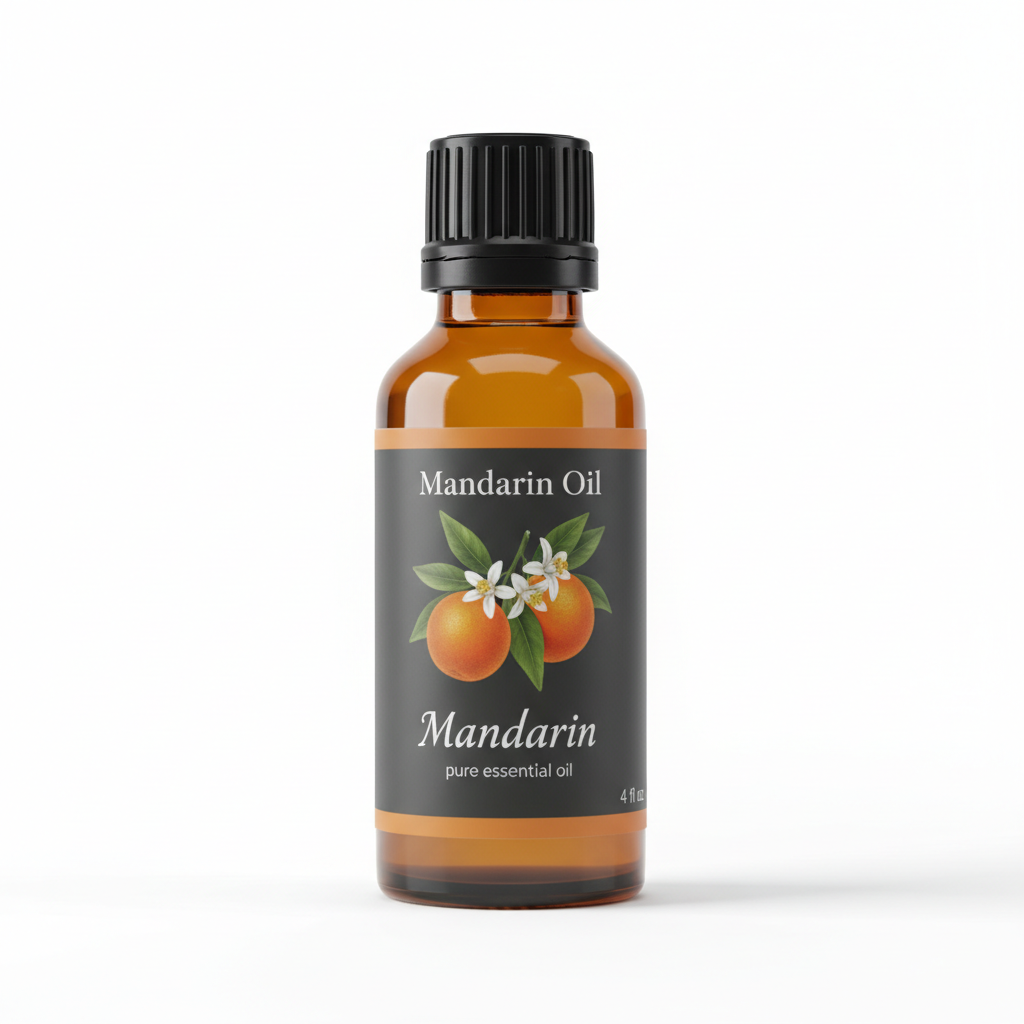
Mandarin Essential Oil
Our own Mandarin Essential Oil, in sizes from 0.5 oz to bulk.
From $12.99
Shop Now →This guide walks you through building a mandarin oil evening routine from scratch: what materials you need, how to blend for different moods, and the small details that separate a forgettable mist from a ritual you actually look forward to. If you are newer to working with citrus oils at home, it may be worth starting with our broader overview on how to use mandarin essential oil at home before diving into the blending specifics here.
Why Mandarin Works Well for Evening Diffusion
Mandarin (Citrus reticulata) is cold-pressed from the outer peel of the fruit. The resulting oil is rich in limonene, with supporting notes of gamma-terpinene and a small percentage of methyl anthranilate, which gives red mandarin its characteristic floral depth. These aromatic compounds produce a scent profile that tends to feel softer and rounder than sweet orange or lemon, making it a natural fit for quieter, lower-energy moments.
Some research suggests that citrus aromatic compounds may support a sense of ease during wind-down periods, though findings vary and no essential oil should be considered a substitute for professional guidance. What is well-documented is the more everyday observation: scent is a powerful environmental cue, and pairing a specific aroma with a specific activity can help your mind recognize that a shift is happening.
Evening diffusion is about creating atmosphere. Think of calming diffuser blends less as a formula and more as a sensory signal you are choosing to send yourself.
Materials You Will Need
- An ultrasonic diffuser: These disperse a fine cool mist without heat, which preserves the aromatic integrity of delicate citrus top notes. A 100 to 300 ml tank size is well-suited to a bedroom or small living area.
- Mandarin essential oil: Look for cold-pressed, steam-distilled, or expressed mandarin from a supplier that publishes GC/MS (gas chromatography/mass spectrometry) testing data. Red mandarin and green mandarin have meaningfully different scent profiles; see the notes below on choosing between them.
- Complementary carrier oils (optional): Not needed for diffusion itself, but useful if you plan to extend the ritual to a hand or foot application. Always dilute to 1 to 2% in a carrier oil before any skin contact.
- Secondary aromatic oils for blending: Lavender, cedarwood, sandalwood, ylang ylang, clary sage, and vetiver all pair well with mandarin in an evening context. Have two or three on hand before you start experimenting.
- A small dropper bottle or blending notebook: Tracking your drop counts lets you recreate blends you enjoy and adjust ones that did not land quite right.
- Distilled or filtered water: Tap water can leave mineral deposits inside your diffuser. Distilled water extends the life of the unit and keeps the mist clean.
Step-by-Step: Building Your Evening Ritual
Step 1: Choose Your Mandarin
Red mandarin is pressed from fully ripe fruit and carries a richer, almost floral sweetness with a slight musky undertone from methyl anthranilate. Green mandarin, pressed before full ripeness, is sharper, brighter, and more classically citrus-forward. For an evening setting, red mandarin tends to feel more settled and less energizing. Green mandarin is a fine choice if you prefer a cleaner, lighter opening note.
Quality matters significantly here. A poorly sourced mandarin oil can smell flat, solvent-like, or uncomfortably synthetic. Invest in a supplier with transparent sourcing, ideally traceable to a specific growing region such as Sicily, Calabria, or the Yunnan province in China.
Step 2: Set Up Your Diffuser Before You Need It
Fill the tank with distilled water to the indicated line. Place the diffuser on a stable surface at roughly chest height or below, never directly on a finished wood surface without a protective mat underneath (citrus oils can occasionally affect finishes if there is any surface contact). Position it toward the center of the room rather than against a wall, so the mist disperses evenly.
Do this before you sit down for the evening, not mid-scroll when you have already lost the thread of winding down. The act of preparing the diffuser can itself become part of the ritual signal.
Step 3: Build a Blend With Intention
For a 100 ml diffuser, a good starting point is 4 to 6 total drops. Below are three tested starting blends. Adjust drop counts to taste, keeping the total within the 4 to 6 drop range for a standard small diffuser.
| Blend Name | Ingredients | Drop Count (100 ml) | Scent Character |
|---|---|---|---|
| Quiet Grove | Red mandarin, cedarwood Virginia, lavender | 3 + 2 + 1 | Warm, woody, softly sweet |
| Dusk Peel | Red mandarin, sandalwood, a single drop of ylang ylang | 3 + 2 + 1 | Velvety, floral, gently exotic |
| Soft Landing | Green mandarin, lavender, vetiver | 3 + 2 + 1 | Clean citrus fading into earthy depth |
Add your drops directly to the water in the diffuser tank, not to the ultrasonic plate beneath. Gently replace the lid and set the diffuser to run for 30 to 45 minutes. Most ultrasonic diffusers have an interval setting; a 30-minutes-on, 30-minutes-off cycle is a reasonable default for an enclosed bedroom.
Step 4: Dim the Lights and Remove Other Competing Scents
This sounds obvious, but it is easy to overlook. Scented candles, reed diffusers, plug-in air fresheners, and even a recently used room spray will compete with your blend and muddy the aromatic experience. Clear the room of competing scents at least 20 minutes before you start diffusing. Lower lighting to a warm, dim level. The olfactory environment and the visual environment reinforce each other more than most people realize.
Step 5: Anchor the Ritual With a Consistent Activity
The scent alone is not the ritual. Pair your mandarin aromatic oil diffusion with a repeated activity: reading a physical book, light stretching, journaling, or even simply sitting without a screen for ten minutes. Over time, the association between the scent and the activity deepens, and the aromatic cue may begin to support a sense of transition more efficiently.
People who report the most noticeable effect from evening diffusion rituals tend to be those who practice them consistently for at least two to three weeks before assessing results.
Step 6: Clean Your Diffuser Regularly
Citrus oils, including mandarin, can leave residue in diffuser tanks over time. A quick wipe-down with a cotton pad dampened with rubbing alcohol after every three to four uses keeps the unit performing well and prevents old oil residue from contaminating new blends. A more thorough rinse with diluted white vinegar and water once a month is sufficient for most household diffusers.
Tips and Common Mistakes
Do Not Over-Drop
More drops does not mean a stronger or better experience. Overloading a small diffuser can create an overwhelming scent that becomes unpleasant within minutes. Start with fewer drops than you think you need and adjust upward incrementally. Four drops in a 100 ml diffuser in a standard bedroom is often plenty.
Check for Phototoxicity (Then Relax About It for Diffusion)
Cold-pressed mandarin is generally considered low-risk for phototoxicity compared to bergamot or cold-pressed lime, but this is only relevant when the oil contacts skin and is then exposed to sunlight. For diffusion, phototoxicity is not a concern. It becomes relevant only if you extend this routine to topical application. In that case, always dilute properly (1 to 2% in a carrier oil for adults) and do a patch test 24 hours before wider application. Avoid applying undiluted essential oils to skin.
Store Your Mandarin Oil Correctly
Citrus oils oxidize faster than most other essential oil families. Heat, light, and oxygen are the main culprits. Keep your mandarin oil in a tightly sealed amber or cobalt glass bottle, stored in a cool dark place. Refrigeration is genuinely helpful for extending shelf life. Most cold-pressed mandarin oils are best used within 12 months of opening.
Avoid Diffusing Around Pets Without Ventilation
Cats in particular are sensitive to certain aromatic compounds. If you share your space with a cat, keep the diffusion area well-ventilated, allow the animal to leave the room freely, and limit diffusion sessions to 30 minutes or less. Consult a veterinarian if you have concerns about specific oils and your pet.
Seasonal Adjustments to Your Evening Blend
Mandarin pairs differently across seasons. In cooler months, the warmth of cedarwood, clove bud (used sparingly), or frankincense lends the blend a comforting depth that feels seasonally appropriate. Our guide to mandarin oil in winter and cozy citrus blends for the holidays goes deeper into cold-weather combinations worth exploring.
In warmer months, pairing mandarin with lighter florals or green notes keeps the evening atmosphere from feeling heavy. Ideas for those lighter summer pairings are covered in our piece on summer citrus refreshes with mandarin oil.
What to Expect
After a week or two of consistent evening diffusion, many people report that the scent itself begins to feel like a natural cue to settle in. This is not a pharmacological effect. It is the straightforward result of repetition: a specific scent, paired with a specific activity, in a specific environment, begins to carry meaning. The aromatic experience becomes part of a larger sensory context that the mind starts to recognize.
Results vary. Some people notice a noticeable shift in how their evenings feel within days. Others take longer. A few find that different blends work better at different times, and that rotating between two or three favorites across the week keeps the experience fresh.
The goal is not perfection. It is a small, repeatable ritual that makes your evenings your own. A good mandarin oil evening routine does not ask much of you: a clean diffuser, quality oil, a few minutes of attention, and the willingness to let the scent do its quiet work. Please consult a qualified healthcare provider for any specific health concerns.