
Mandarin Oil Price Guide: Why Costs Vary and What Fair Value Looks Like
Mandarin oil sits in a curious spot in the essential oil market. It's approachable enough for first-time buyers, yet complex enough that pricing can vary wildly from one bottle to the next. A quick search reveals 10ml bottles ranging from under $5 to over $40, and bulk quantities that climb well past $80. That spread isn't random. Every dollar difference tells a story about sourcing, processing, testing, and the supply chain decisions a brand made long before the bottle reached your hands.
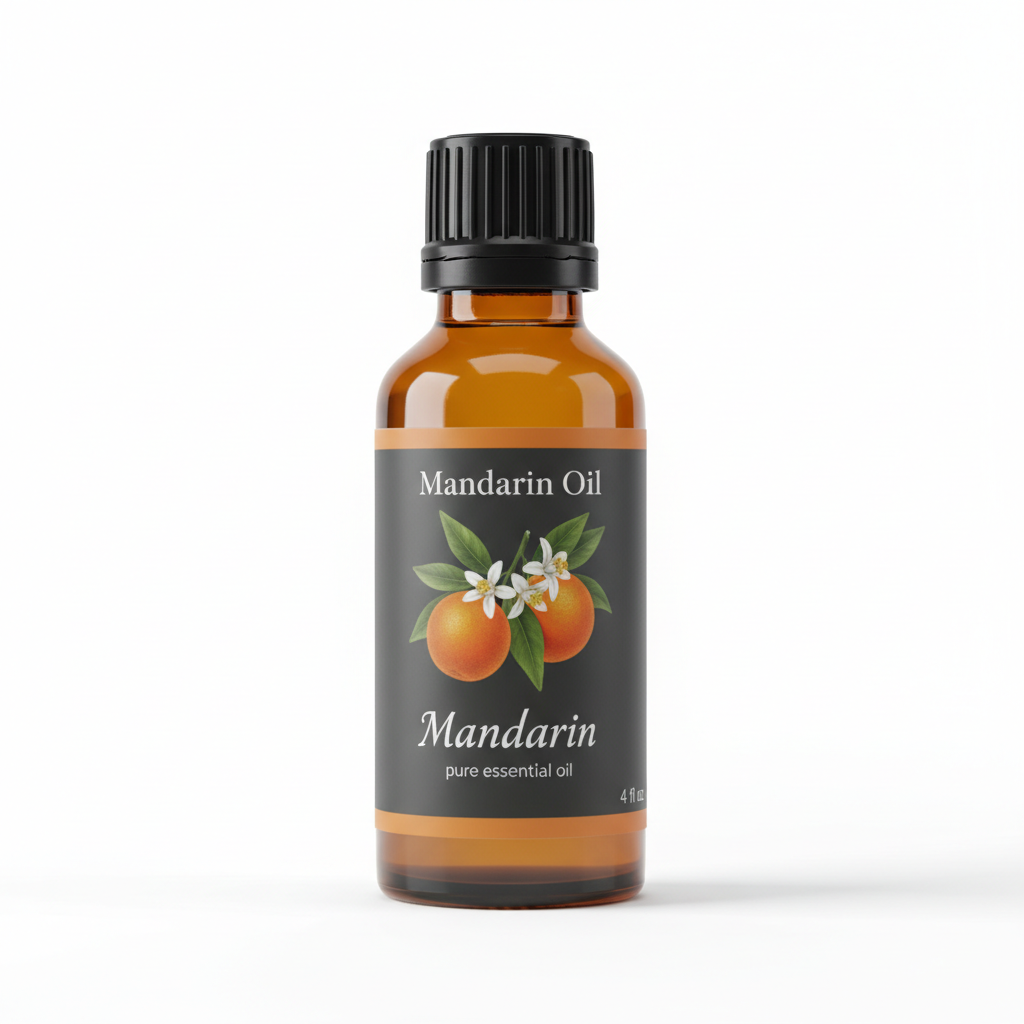
Mandarin Essential Oil
Our own Mandarin Essential Oil, in sizes from 0.5 oz to bulk.
From $12.99
Shop Now →This guide breaks down mandarin oil cost from the ground up: what drives it, what fair value looks like at each tier, and which red flags signal a product that isn't worth your money regardless of its price tag.
What Actually Drives Mandarin Oil Price?
Before comparing labels, it helps to understand the forces shaping the mandarin oil market at the production level.
Variety and Color
Mandarin oil comes in red, green, and yellow expressions, each cold-pressed at different points in the fruit's ripening cycle. Red mandarin, harvested from fully ripe fruit, tends to be the most widely available and sits at a moderate price point. Green mandarin, pressed from unripe fruit, carries a sharper, more herbaceous profile and commands a premium because yields are lower and demand from perfumers is consistent. Yellow mandarin occupies the middle ground. When you see a notably cheap bottle labeled simply "mandarin," it's worth asking which variety it actually is.
Origin and Growing Conditions
The majority of quality mandarin oil comes from Sicily and Calabria in southern Italy, with additional production in Spain, Brazil, and China. Italian-origin oil carries higher labor and land costs, and that's reflected at retail. Oils sourced from regions with lower production costs are not inherently inferior, but they warrant closer scrutiny around quality controls and testing transparency.
Cold-Pressing vs. Steam Distillation
Authentic mandarin oil is cold-pressed from the peel, not steam-distilled. Cold-pressing is gentler, preserves the full aromatic complexity of the peel, and is the industry standard for citrus oils. Steam-distilled mandarin exists but produces a noticeably flatter scent profile. If a price seems impossibly low, distillation method is one of the first things to investigate.
Testing and Certification
Gas chromatography and mass spectrometry (GC/MS) testing verifies that an oil's chemical composition matches what it claims to be. Brands that run this testing, publish the reports, and maintain third-party certification programs (such as organic certification from USDA or ECOCERT) absorb those costs into their pricing. That overhead is real, and it protects you as a buyer.
Packaging and Brand Overhead
UV-protective amber or cobalt glass, tamper-evident seals, and quality droppers add modest but real cost. So does a brand's investment in customer education, clear labeling, and responsive sourcing transparency. These are not vanity expenses. They signal a company that takes product integrity seriously.
Understanding the Price Tiers
Budget Tier: Under $8 for 10ml
Oils in this range exist, and some are adequate for casual aromatic use. The concern is consistency. At this price point, GC/MS testing is rarely provided, botanical sourcing details are often vague, and adulteration with synthetic limonene (the dominant natural compound in mandarin oil) becomes a real possibility. Synthetic limonene is cheap and smells citrusy enough to pass casual inspection, but it lacks the full aromatic character of a properly pressed peel oil.
If you are blending large volumes for candle-making or potpourri and scent precision matters less than budget, this tier can serve that purpose. For skin-care formulations or serious aromatic work, the risk of inconsistency is too high.
Mid-Range Tier: $8 to $22 for 10ml
This is where the mandarin oil market delivers its best value for most buyers. At this price point, reputable brands provide documented sourcing, published or available GC/MS reports, and proper UV-protective packaging. You'll find certified organic options here, as well as clearly labeled variety distinctions (red vs. green vs. yellow).
The scent quality at this tier is markedly more nuanced: brighter top notes, a fuller mid-body, and a dry-down that lingers pleasantly rather than disappearing in minutes. For personal care blending, diffuser use, and small-batch cosmetic formulation, this range covers your needs well.
Premium Tier: $22 to $50+ for 10ml
Premium mandarin oil pricing reflects a combination of factors: certified organic Italian or Sicilian origin, specific harvest-year documentation, artisanal pressing operations with small batch sizes, and sometimes single-estate sourcing. Perfumers, professional aromatherapists, and formulators working on high-end cosmetic products often operate in this range because batch consistency and traceability matter enormously at a professional level.
For the home user with a genuine passion for quality, a single premium bottle used sparingly in a cherished blend is a worthwhile indulgence. It is not a necessary starting point, though.
Bulk Pricing: 100ml and Beyond
Bulk mandarin oil cost is a different calculation entirely. A 100ml bottle from a reliable supplier typically runs $30 to $60, depending on origin and certification. For formulators, soap makers, or diffuser enthusiasts who go through oil quickly, bulk purchasing reduces per-ml cost significantly. The key is ensuring your bulk supplier provides the same documentation as a retail bottle: GC/MS reports, lot numbers, and clear origin labeling. For more on choosing the right volume for your needs, see our guide on best mandarin oil bottle sizes and which one to order.
Quality Indicators: What to Look For
- Botanical name on the label: Citrus reticulata is the correct species designation for mandarin. Some suppliers use Citrus nobilis (for tangerine) or blend without disclosure. The label should be specific. Our article on reading a mandarin oil label walks through exactly what each term means.
- Country of origin: Look for Italy, Spain, or a clearly named alternative region. "Imported" with no further detail is not sufficient.
- GC/MS report availability: Reputable brands either publish these on their website or provide them on request. A company that refuses or cannot produce a report is a significant concern.
- Packaging quality: Dark glass (amber or cobalt), a tight-fitting orifice reducer or dropper, and a tamper-evident seal are the baseline standards.
- Lot number and batch date: Citrus oils have a shorter shelf life than many other essential oils, typically one to two years from pressing. Lot traceability helps you understand what you're working with.
- Scent profile accuracy: Authentic mandarin oil is bright, sweet, and slightly floral, with a warmth that distinguishes it from sharper citrus oils like lemon or grapefruit. If a sample smells flat, purely synthetic-sweet, or chemically sharp, question its purity.
Red Flags to Avoid
- "Fragrance oil" or "parfum" language mixed with "essential oil" claims: These are different product categories. Fragrance oils are synthetic or blended compositions and are not cold-pressed plant oils. The price point will often look attractive precisely because the product is not what it implies.
- Plastic bottles: Essential oils degrade plastic and are themselves degraded by it. Any citrus oil sold in plastic is either old, impure, or packaged by a supplier who doesn't understand their own product.
- No botanical name or species designation: A label that only says "mandarin oil" or "mandarin essential oil" without Citrus reticulata is providing incomplete information.
- Prices that seem impossible: Mandarin oil has real production costs. A 10ml bottle of certified organic Sicilian oil at $3.99 is not a deal. It is a signal that something in the supply chain does not add up.
- Vague sourcing language: Phrases like "naturally sourced" or "pure and natural" without supporting documentation mean nothing. They are marketing words, not quality guarantees.
- No return or satisfaction policy: Established essential oil brands stand behind their products. A supplier with no recourse if you receive a poor-quality product is one to avoid.
Comparing Key Features Side by Side
| Feature | Budget Tier | Mid-Range Tier | Premium Tier |
|---|---|---|---|
| GC/MS Testing | Rarely available | Usually available | Standard, often batch-specific |
| Origin Transparency | Often vague | Clear country of origin | Region or estate specific |
| Organic Certification | Uncommon | Available from select brands | Common at this tier |
| Variety Specified | Rarely | Frequently | Always |
| Packaging Quality | Variable | Dark glass, standard | Dark glass, premium closures |
| Scent Complexity | Flat to moderate | Good to very good | Excellent, nuanced |
| Best For | High-volume, low-precision use | Home blending, daily diffusion | Professional formulation, gifting |
Where to Buy
The mandarin oil market has expanded significantly online, which creates both opportunity and noise. A few general principles for sourcing well:
Specialist essential oil retailers (both online and brick-and-mortar) represent the most reliable channel for quality-verified oils. These companies build their reputation on purity and sourcing, and they typically offer GC/MS reports, educational resources, and knowledgeable customer support.
Natural food stores and co-ops often carry a curated selection of mid-range oils from brands with solid track records. You can smell before you buy, which matters more than people realize when selecting a citrus oil.
Large online marketplaces require more caution. Third-party sellers on major platforms range from excellent to fraudulent, sometimes within the same product listing. If you buy through a marketplace, purchase directly from the brand's own storefront rather than a reseller, and read recent reviews specifically for scent quality and packaging condition on arrival.
Direct from supplier is the gold standard for bulk mandarin oil cost efficiency. Reputable wholesale suppliers publish full documentation and often provide sample vials before you commit to a larger order.
For a deeper look at navigating the purchasing process from start to finish, our comprehensive guide on how to buy mandarin oil covers every stage in detail.
Getting Fair Value at Your Budget
Fair value in the mandarin oil market is not synonymous with the lowest price. It means paying a price that honestly reflects the documentation, sourcing, and quality controls behind the product. A mid-range oil with a published GC/MS report, clear Sicilian origin, and a botanical name on the label is better value than a premium-priced bottle from a brand that offers none of those things.
Start with the documentation. If a supplier is proud of their product, they make that information easy to find. Then consider the scent: bright, rounded, and distinctly mandarin rather than harshly synthetic. The bottle should be dark glass. The label should tell you the species, the origin, and ideally the variety.
Mandarin oil rewards careful buying. The difference between a thoughtfully sourced bottle and a rushed, budget-corner-cutting one shows up immediately in your blends, your diffuser, and your overall satisfaction with the product. Spend a little time on due diligence upfront, and the oil you choose will more than justify its place in your collection.