
Best Mandarin Oil Bottle Sizes: Which One Should You Order First?
Picking a mandarin essential oil bottle size feels like a small decision until you realize you've either burned through a 5ml vial in two weeks or committed to a litre of oil you're not sure you love yet. The size you order first sets the tone for everything: cost per millilitre, shelf life, storage logistics, and whether you're satisfied or stuck.
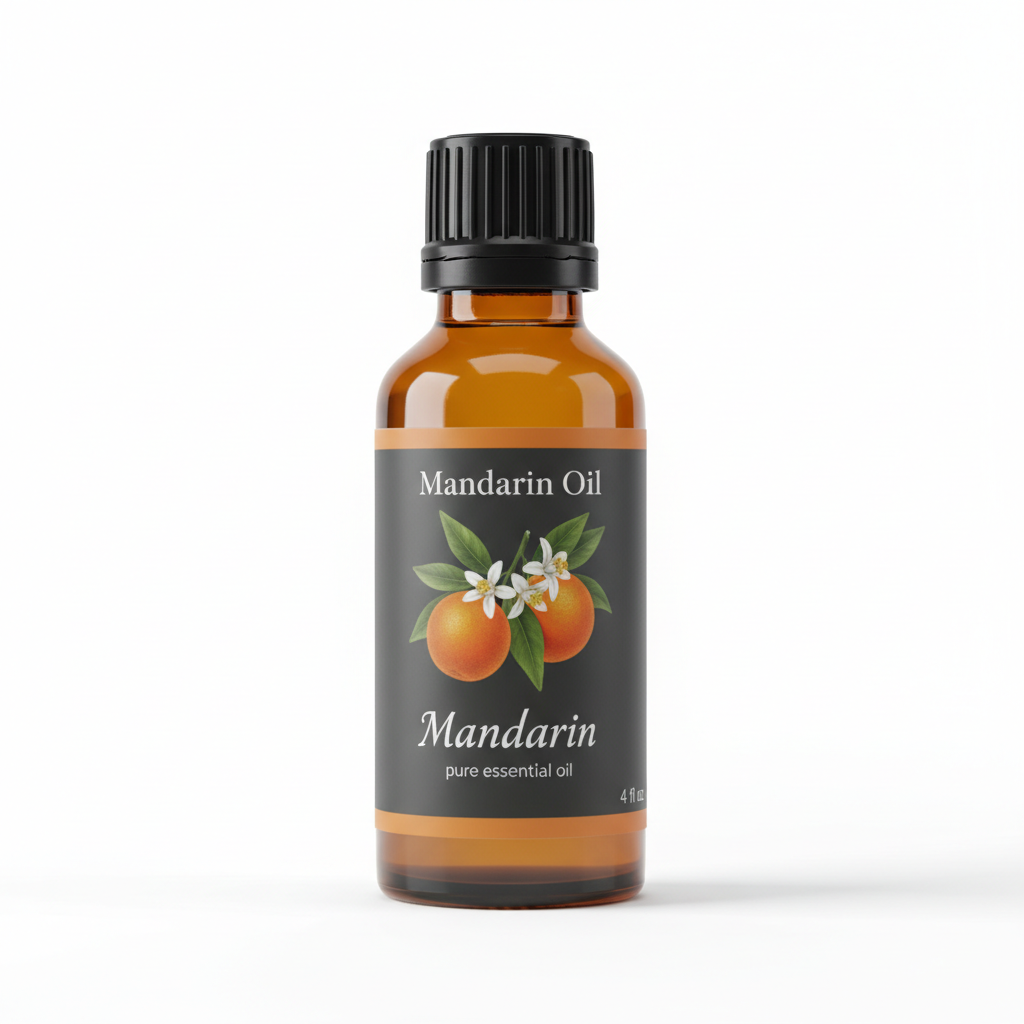
Mandarin Essential Oil
Our own Mandarin Essential Oil, in sizes from 0.5 oz to bulk.
From $12.99
Shop Now →This guide walks through each common mandarin oil size, explains what to look for at each tier, and helps you match a bottle to your actual usage habits rather than your optimistic ones.
Quality Indicators That Apply to Every Size
Before comparing millilitres, get the quality basics right. A large bottle of mediocre oil is still mediocre oil, just more of it.
Botanical and Country-of-Origin Information
Reputable mandarin oil should state the botanical name clearly. You'll see Citrus reticulata most often, sometimes with a cultivar note like Citrus reticulata var. mandarin. Country of origin matters too. Italian Sicilian mandarin oil carries a strong reputation for aroma quality, while Chinese and Brazilian oils are common in the mid-market and can be excellent when properly sourced. Any label that simply reads "citrus oil" without further detail is worth a second look.
Extraction Method
Cold-pressed (also listed as cold-expressed) from the peel is the standard for mandarin oil. This keeps the delicate top notes intact. Steam-distilled mandarin exists but is less common and produces a different scent profile. Neither is wrong, but you want to know which you're buying. If the extraction method isn't listed anywhere on the product page, that's a gap in transparency.
GC/MS Testing and Lot-Specific Documents
Gas chromatography/mass spectrometry (GC/MS) analysis confirms what's actually in the oil. The best suppliers provide lot-specific GC/MS reports, not generic certificates that apply to "mandarin oil" as a category. Some brands publish these on their website; others send them on request. Either approach works, but the documents should be available.
Packaging Materials
Dark amber or cobalt blue glass protects the oil from UV degradation. Some brands use high-density polyethylene (HDPE) plastic for larger sizes, which is acceptable for shorter-term storage. Avoid clear glass unless the oil will be stored in a dark cabinet. Any bottle that arrives with a leaking cap or no tamper seal warrants a return.
For a deeper look at evaluating overall quality before you buy, see our guide on how to buy mandarin oil: the ultimate quality and value guide.
Mandarin Oil Sizes: A Practical Breakdown
5ml (Sample or Trial Size)
A 5ml bottle holds roughly 100 drops of oil. That's enough for about two to three weeks of regular diffuser use or a handful of small blending experiments. The per-millilitre cost is the highest of any size, often two to four times more expensive than buying 30ml from the same brand.
Best for: First-time buyers who want to assess scent quality and brand reliability before committing. Also useful when comparing multiple mandarin oils side by side.
Watch out for: Some brands package their 5ml bottles with standard Euro-dropper inserts that allow air in quickly. Finish within four to six weeks after opening for best scent quality.
10ml (Everyday Starter Size)
This is the most commonly purchased size across the essential oil market. It fits easily in a bag, sits neatly on a diffuser shelf, and gives you enough oil to form a real opinion on how you'll use it. Cost per millilitre drops noticeably from the 5ml tier without requiring a large upfront spend.
Best for: People who diffuse mandarin a few times per week, use it occasionally in a rollerball blend, or incorporate it into a small batch of body oil.
Watch out for: Some brands sell 10ml bottles that are technically 9ml or even 8ml. Check the listed volume carefully, not just the bottle dimensions.
15ml (The Brand Standard)
Many North American essential oil brands default to 15ml as their core size. It offers a mild cost improvement over 10ml and has become the industry norm for a reason: it works well for most home users without creating the shelf-life pressure of a larger bottle.
Best for: Regular home diffuser users and candle or soap makers working on small personal batches.
30ml (The Enthusiast Size)
Once you know you love a mandarin oil and use it consistently, 30ml makes straightforward financial sense. Cost per millilitre is typically 20 to 40 percent lower than 10ml at the same quality tier. The bottle is still small enough to store easily.
Best for: Blenders who go through oil quickly, small-batch candle or soap makers, and anyone who diffuses mandarin daily.
Watch out for: Shelf life. Cold-pressed citrus oils, including mandarin, generally perform best within 12 to 18 months of opening. A 30ml bottle is very manageable in that window for active users. If you open it rarely, it may oxidize before you finish it.
100ml (Small Bulk or Studio Size)
At 100ml, you're moving into a different purchasing context. Prices at this tier vary widely: some suppliers charge a modest premium for small-batch artisan oil, while others offer steep discounts for standard-grade stock. Knowing your supplier matters more at this size than it does with smaller bottles.
Best for: Small cosmetic businesses, soap and candle studios making regular batches, or two or three home users purchasing together.
Watch out for: Storage conditions become important. Keep at room temperature, away from light and heat. If the oil will sit unused for months, consider splitting the purchase with someone.
500ml to 1kg (Wholesale or Production Use)
At this volume, you're not in a buying guide for casual shoppers anymore. You need supplier-level documentation: full COA, GC/MS by lot, SDS sheets, and clear labelling for cosmetic or product use compliance. The cost savings are real but so are the responsibilities.
Best for: Cosmetic formulators, candle and soap manufacturers, and product makers with consistent batch volumes.
If you're sourcing at this scale, our bulk and wholesale mandarin oil: a buyer's guide for makers covers supplier vetting and documentation requirements in detail.
Top Picks at Different Price Points
The essential oil market groups roughly into three quality and price tiers. Here's how mandarin oil performs at each level.
| Price Tier | What You Typically Get | Best Size to Start With | Key Trade-offs |
|---|---|---|---|
| Budget (under $8 per 10ml) | Standard-grade mandarin, often Chinese or Brazilian origin, basic or no GC/MS documentation | 10ml | Weaker aroma complexity; acceptable for high-volume blending where scent precision matters less |
| Mid-range ($8 to $18 per 10ml) | Decent sourcing transparency, GC/MS available on request, consistent scent profile across batches | 10ml or 30ml | The sweet spot for most home users and small makers |
| Premium ($18 and above per 10ml) | Specific origin (often Sicilian), lot-specific GC/MS published proactively, strong aroma complexity | 5ml to start, then 30ml once confirmed | Higher cost per use; worth it when scent quality is central to the product |
Key Features to Compare Side by Side
- Lot-specific GC/MS: Is the certificate tied to the lot you're receiving, or is it a generic document?
- Botanical clarity: Does the listing name the species and origin clearly?
- Packaging integrity: Dark glass, tight-fitting cap, orifice reducer or dropper insert included?
- Return policy: A confident supplier stands behind quality. Short or no return windows for sealed oils can indicate lower confidence in consistency.
- Batch freshness: Mandarin oil has a limited shelf life. Ask when the oil was pressed or distilled. Some suppliers list harvest year; others will tell you if asked.
- Price per millilitre: Do the maths across sizes before assuming a larger bottle is always the better deal. Some brands price 100ml only marginally lower than four separate 30ml bottles.
Red Flags to Avoid
A few warning signs appear consistently across the essential oil market, and mandarin oil is no exception.
- "Fragrance oil" or "perfume oil" in the small print: These are not essential oils and will not behave the same way in blends or diffusers.
- No botanical name listed anywhere: If a supplier can't specify Citrus reticulata, they may not know (or care) what they're selling.
- Suspiciously low pricing on large sizes: Mandarin oil has a real cost to produce. Very low prices on 100ml or 500ml quantities sometimes indicate adulteration with cheaper oils or synthetic components.
- Health or wellness claims on the label: Suppliers making dramatic claims about what the oil does for your body are often prioritizing marketing over quality sourcing.
- No contact information for supplier questions: Legitimate suppliers are reachable. If there's no way to ask about lot numbers or documentation, move on.
- Unclear storage or shelf-life information: A supplier who doesn't mention how to store the oil or how long it remains at peak quality is leaving out information you need.
Where to Buy
Mandarin oil is available from specialty aromatics suppliers, natural cosmetics retailers, and general marketplaces. Each channel has trade-offs.
Specialty aromatics suppliers generally offer the strongest documentation, most consistent quality, and best access to lot-specific information. They're the preferred source for makers and formulators.
Natural cosmetics retailers (both online and physical) offer reliable mid-range options with good return policies and are a solid starting point for home users.
General marketplaces offer range and competitive pricing but require more careful vetting. Look for sellers who publish GC/MS documents in the listing itself, not just on request. Read negative reviews carefully: complaints about weak scent or consistency are more informative than star ratings alone.
Our detailed breakdown of sourcing channels, including how to vet marketplace sellers, is covered in where to buy mandarin essential oil: smart shopping online.
Matching Size to Usage: A Quick Decision Framework
- Trying mandarin oil for the first time: Start with a 5ml or 10ml from a mid-range supplier. Assess scent before scaling up.
- Regular home diffuser use: A 10ml or 15ml suits most people and avoids the risk of oxidation from a bottle that sits half-used for months.
- Small-batch blending or cosmetic formulation: 30ml offers meaningful savings without committing to more oil than you'll use in a season.
- Studio or production use: 100ml and above, with full documentation and a vetted supplier relationship.
- Gifting: 10ml is the most giftable size. It's generous without being presumptuous about how much the recipient will use.
The right mandarin oil isn't the one with the most impressive label. It's the one that fits your actual workflow: the size you'll finish before the scent fades, from a supplier transparent enough to answer your questions. Start smaller than you think you need. Scale up once the oil earns a permanent place in your routine.