Mandarin Oil in Lotion and Body Butter: Two Paths, With Maths
For a first batch, do not build a water-based lotion. Buy an unscented base that its maker has already preserved and scent that, or whip a water-free butter for your own use. The mandarin oil is the easy part: at the low end of our 0.5 to 2 percent range it is a gram or two per jar. The hard part is everything around it, and this article does the arithmetic for both routes. We have not made either recipe, and nothing here comes from a test batch.
Mandarin Essential Oil
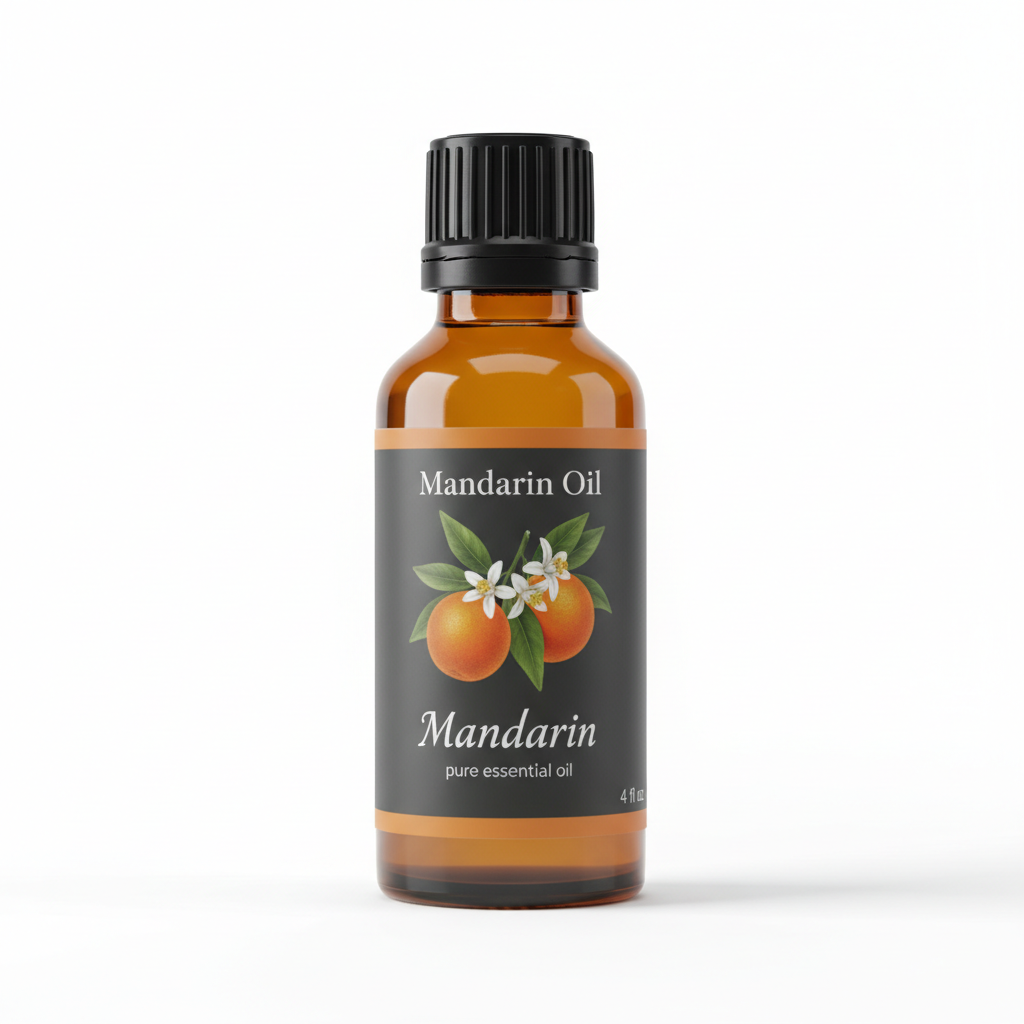
Our own Mandarin Essential Oil, in sizes from 0.5 oz to bulk.
From $12.99
Shop Now →Decide which path before you open the bottle
Path A scents a purchased, preserved lotion base. Path B is a butter with no water in it. Path C, a lotion you emulsify yourself from water, oil and emulsifier, is the one to skip. FDA's page on microbiological safety and cosmetics lists contaminated raw materials and water, and an ineffective preservation system, among the routes by which microbes get in, calls microbial contamination a common reason for recalls, and says that adding water waters down the preservative. A 2018 review in Molecules by Halla and colleagues calls water the major constituent of cosmetics and "an ideal growth factor for microorganisms". Making an emulsion makes you the person responsible for a preservation system, and that needs a cosmetic chemist or a tested base, not guesswork.
Path A: scent a preserved base
Ask the base maker three things before buying: that the base is unscented, what fragrance load its preservative and stability work covered, and whether it recommends a ceiling. Their number beats any percentage in this article. Then weigh. Our oil is sold neat, so the dilution maths is yours: its relative density is 0.852 on the published COA, so a drop (about 20 per ml) weighs about 0.043 g. Droppers vary, so weigh the oil on a scale reading to 0.01 g.
| Oil in base | Per 100 g of base | Per 8 oz (227 g) jar |
|---|---|---|
| 0.5% | 0.50 g, about 12 drops | 1.13 g, about 27 drops |
| 1% | 1.00 g, about 23 drops | 2.27 g, about 53 drops |
| 2% | 2.00 g, about 47 drops | 4.54 g, about 107 drops |
Our own safety copy says to dilute to 0.5 to 2 percent in a carrier oil, to patch test first and to start at the low end if you are new to citrus oils. That range was written for carrier oils. Applying the same percentages to a lotion is my inference, not a tested rule, and a lotion is left on over a larger area. So start at 0.5 percent, not 2. Stir the oil into the base at room temperature. Reasoning, not a source: mandarin is a top note, the first part of a scent to leave, so heating it in is a way to lose it. Whether the scent fades faster in a lotion than in a carrier oil, and whether the oil changes the base's texture or stability at 2 percent, is unknown to us.
Path B: a water-free whipped butter
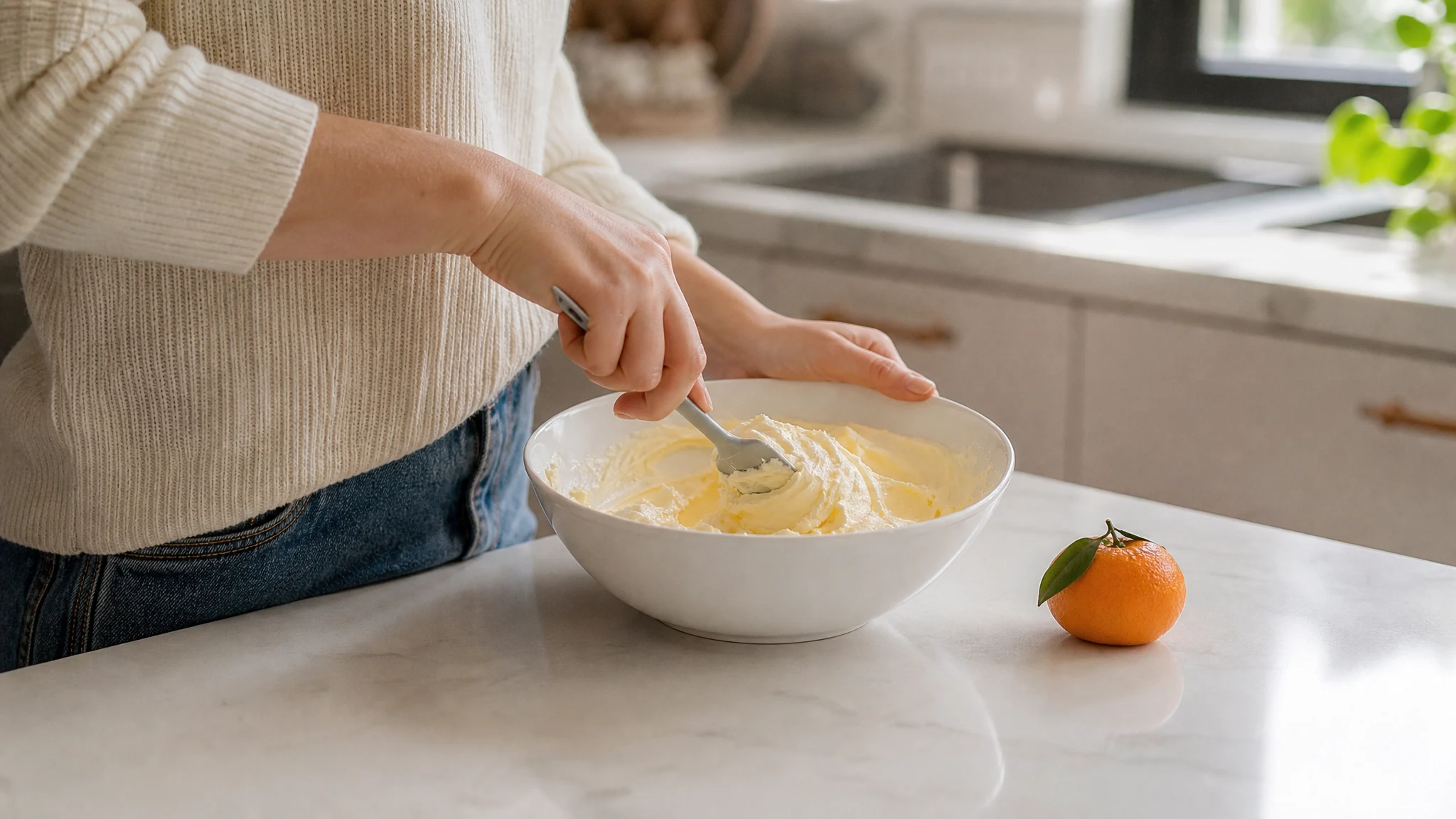
A formulation worked out from supplier data and arithmetic, untested: 60 g refined shea butter, 39 g of a liquid carrier oil and 1 g of mandarin oil, which is 1.0 percent and about 23 drops. A refined shea butter data sheet from DistrEbution (version 1.0, 2025) gives a melting range of 28 to 40 C, water at 0.2 percent or less, a peroxide value of 5.0 meq O2/kg or less and a 24-month shelf life for that butter. Those figures describe that supplier's shea, not our oil and not your jar. A twelve-degree melting range tells you the butter is a mixture of fats that set at different temperatures. My reasoning from that, not a data point: a slowly cooled batch is the usual setting for grainy texture, and I found no data sheet that gives crystallization behavior, so a small batch will tell you more than I can.
The preservative question is where sources split. The Molecules review and FDA both treat water as the risk, which is why a product with no water looks safer. Against that, Perry Romanowski, a cosmetic chemist writing for Chemists Corner (2018), calls the belief that anhydrous products need no preservative a misconception and says to add one, because a used jar is touched, picks up moisture and can become contaminated. I found no regulator text in the sources I read that exempts a water-free product. So for yourself: make a small batch, scoop with a dry clean spoon, never let water into the jar, and keep it away from the shower. For anything you give away or sell, ask a cosmetic chemist.
Why freshness decides how much oil to buy
The IFRA Standard on limonene says oxidation products of limonene, especially hydroperoxides, have been demonstrated to be potent sensitizers, and asks that limonene-rich natural products be kept to low peroxide levels, with a peroxide value under 20 millimoles per liter by IFRA's method (IFRA Standards, 51st Amendment compilation). In a 2006 multicentre study, Matura and colleagues patch tested 2,411 dermatitis patients at six European clinics and found 63 of them, 2.6 percent, reacted to oxidized limonene preparations. Those were patients with dermatitis, not the general public, and oxidized limonene is not the same as fresh oil, so the finding points to a mechanism and not to a rate for you. We publish no peroxide value for our oil.
The shop's advice is to buy small and reorder often, and the arithmetic backs it. A 227 g jar at 1 percent uses 2.27 g of oil. A 0.5 oz bottle holds about 12.6 g, so it covers about five and a half such jars, and a 1 oz bottle, about 25.2 g, about eleven. If you will make one jar a month, the half-ounce bottle already outlasts half a year of batches. Do not scent a large batch you cannot use quickly, and decant a small working amount into an airtight bottle and reseal the main one, as our storage copy advises. We state no shelf-life number for the oil. The storage article covers keeping the bottle.
What this recipe cannot tell you, and who can
Do a patch test and a small test batch before a full jar; the steps are in the safety basics, which also covers sun exposure. Our oil's contents beyond the COA are undisclosed, and we publish no IFRA certificate or allergen declaration, so no IFRA limit can be calculated for it. The IFRA article explains why. The shea butter, carrier oil, base and any preservative are not ours to sell; buy them from a cosmetic-ingredient supplier, and for a carrier see the carrier-oil guide. If you plan to sell, FDA states that companies and individuals who make or distribute cosmetics are responsible for their safety, which makes a cosmetic chemist or regulatory consultant part of the plan, not an extra. For a simpler leave-on use that skips the water question, see the sugar scrub and body oil recipes.
Mandarin Essential Oil
Mandarin Essential Oil from our own shop, in sizes from 0.5 oz to bulk.
From $12.99
Shop Now →Sources & Further Reading
- FDA. Microbiological Safety and Cosmetics. fda.gov/microbiological-safety-and-cosmetics
- Halla N. et al., 2018. Cosmetics preservation: a review on present strategies. Molecules 23(7):1571. pmc.ncbi.nlm.nih.gov/PMC6099538
- DistrEbution GmbH, 2025. Technical Data Sheet: Shea butter refined, article D10126, version 1.0. distrebution.com/D10126
- Romanowski P., 2018. Vitamin E is not a preservative, and other cosmetic preservation misconceptions. Chemists Corner. chemistscorner.com
- IFRA, 2024. The complete IFRA Standards, 51st Amendment compilation: Limonene (1995). ifra-standards-51st-amendment.pdf
- Matura M. et al., 2006. Not only oxidized R-(+)- but also S-(-)-limonene is a common cause of contact allergy in dermatitis patients in Europe. Contact Dermatitis 55(5):274-279. lup.lub.lu.se/685974