DIY Mandarin Candles and Wax Melts: Capturing Sweet Citrus in Wax
There is something quietly satisfying about a candle you made yourself. You chose the wax. You selected the fragrance. You poured it, labeled it, and placed it somewhere it would be noticed. Mandarin does exceptionally well in wax: its bright, sweet-tart character cuts through the heaviness that some heavier florals and musks can leave behind, and it fills a room with a scent that feels genuinely cheerful without being cloying.
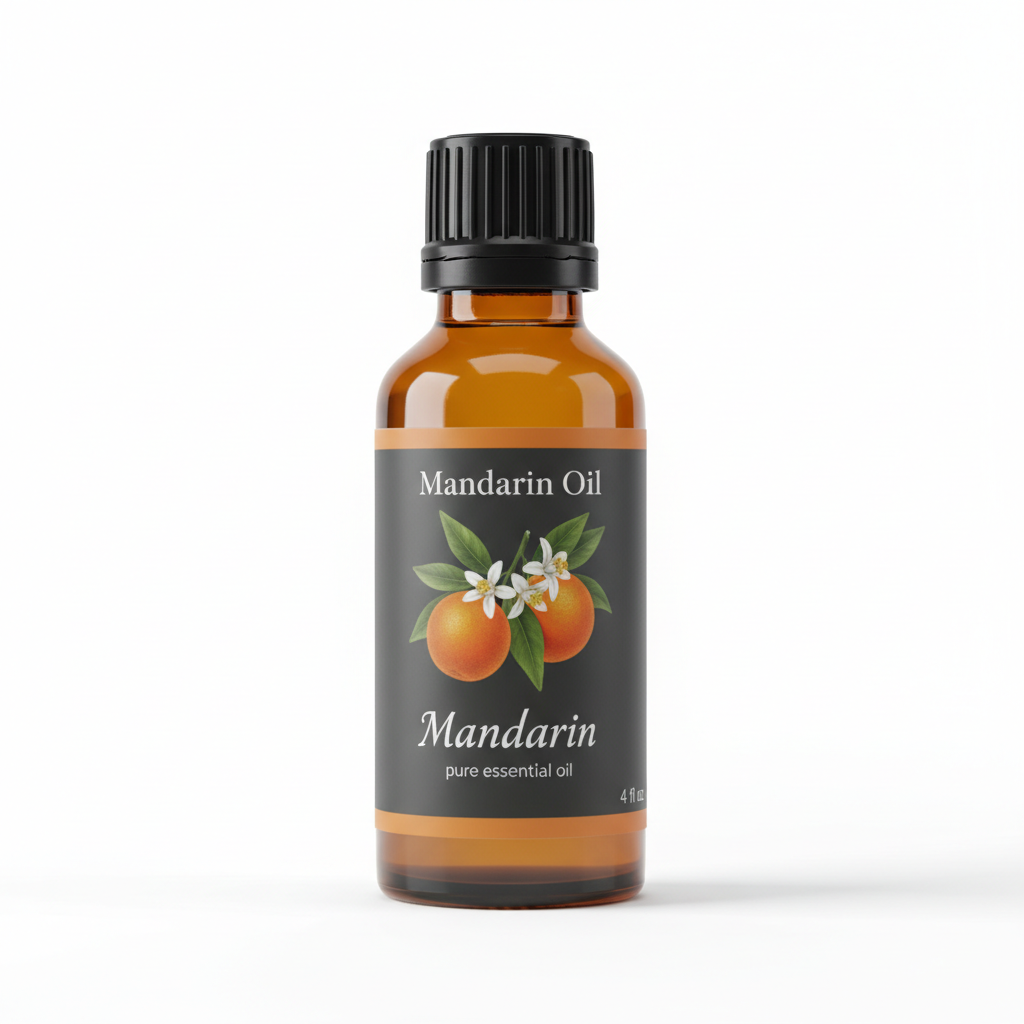
Mandarin Essential Oil
Our own Mandarin Essential Oil, in sizes from 0.5 oz to bulk.
From $12.99
Shop Now →This guide covers a complete mandarin candle recipe for container candles, plus a wax melt variation you can adapt to your own setup. Both are approachable for first-time chandlers. If you have ever melted butter on a stovetop, you already understand the core skill involved.
Before You Begin: A Note on Fragrance Choice
You have two main options for scenting your candles: mandarin fragrance oil or mandarin essential oil. Each has genuine advantages, and the right choice depends on your priorities.
Mandarin fragrance oil is specifically engineered for candle-making. It is formulated to survive the heat of the melt-and-pour process, bind reliably to wax, and throw scent strongly both cold (unlit) and hot (burning). Many crafters find fragrance oils produce a more consistent, room-filling result. If you want a candle that announces itself across the room, a quality mandarin fragrance oil is often the more predictable choice.
Mandarin essential oil, cold-pressed from the peel of Citrus reticulata, is beloved for its natural brightness and complexity. It is less heat-stable than fragrance oil, which means some of the top notes may soften during burning. However, the scent is unmistakably genuine. For smaller batches and wax melts (which use lower temperatures), essential oil performs beautifully. You can read more about its character and uses in our complete guide to using mandarin essential oil at home.
For this recipe, we use mandarin essential oil as the primary aromatic. A fragrance oil substitution note is included at the end.
Difficulty and Time
- Difficulty: Beginner-friendly
- Active prep time: 25 to 35 minutes
- Set time: 48 hours minimum before burning
- Yield: Two 8-ounce container candles, or approximately 16 wax melt cubes
Equipment You Will Need
- Double boiler or a heat-safe pouring pitcher set inside a saucepan of water
- Candy or candle thermometer (digital preferred)
- Kitchen scale (grams are more precise than volume for wax work)
- Two 8-ounce glass or tin containers with lids
- Wick centering bars or two pencils taped across the jar openings
- Pre-tabbed cotton wicks, sized for a 3-inch diameter container (ask your supplier for their wick chart)
- Small stir stick or bamboo skewer
- Rubbing alcohol and paper towels for cleanup
Ingredients
| Ingredient | Amount | Notes |
|---|---|---|
| Soy wax flakes (container grade) | 280 g (approximately 10 oz) | Golden Brands 464 or equivalent single-pour soy wax works well |
| Mandarin essential oil (cold-pressed) | 22 g (approximately 0.75 oz) | This equals roughly 6% fragrance load; see safety notes below |
| Pre-tabbed cotton wicks | 2 wicks | Size to your container diameter per wick supplier chart |
| Optional: Vanilla fragrance oil | 5 g | Adds warmth; see blending notes below |
| Optional: Dried mandarin peel slices | A few pieces | Decorative only; place on surface after pour, not embedded |
Fragrance Load Explained
Soy wax for containers generally accepts a fragrance load of 6 to 10 percent by weight. For this recipe, we use 6 percent. That is a conservative starting point, especially for essential oils, which are more volatile than fragrance oils. You may increase to 8 percent on your next batch if the scent throw feels too light. Do not exceed 10 percent: over-fragranced candles can seep oil, create uneven burns, or pose a fire hazard.
Calculation for reference: 280 g wax x 0.06 = 16.8 g fragrance. We round up slightly to 22 g to account for the essential oil's lower staying power in heat. Adjust based on your own testing.
Step-by-Step Instructions
Step 1: Prepare Your Workspace
Lay down newspaper or a silicone mat. Wax is much easier to clean up before it hardens. Have your thermometer, stir stick, and measured fragrance ready before you begin melting. Candle-making moves quickly once the wax is liquid.
Step 2: Secure Your Wicks
Press each wick tab firmly to the center bottom of your clean, dry containers. A small dot of hot glue or adhesive wick sticker will hold them in place during pouring. Thread the wick up through your centering bar or pencil setup so it stays upright.
Step 3: Melt the Wax
Add soy wax flakes to your pouring pitcher. Heat over a double boiler, stirring occasionally. Monitor the temperature continuously. You are aiming for a melt temperature of 75 to 80 degrees Celsius (167 to 176 degrees Fahrenheit). Do not leave melting wax unattended. Wax is flammable above approximately 93 degrees Celsius (200 degrees Fahrenheit).
Step 4: Add Fragrance at the Right Temperature
This step is critical. Remove the pitcher from heat. Allow the wax to cool to 60 to 65 degrees Celsius (140 to 149 degrees Fahrenheit) before adding your mandarin essential oil. Adding fragrance to wax that is too hot accelerates evaporation and you lose the top notes you are paying for. Stir slowly and steadily for two full minutes. This is not optional: proper incorporation prevents fragrance pooling at the bottom of the candle.
Step 5: Pour
Pour the scented wax into your prepared containers slowly, aiming for the center to avoid disturbing the wick. Fill to about 1.5 cm (half an inch) below the jar rim. Set in a draft-free space at room temperature. Do not move the jars while cooling.
Step 6: Second Pour (If Needed)
Soy wax often sinks slightly in the center as it cools, leaving a small well or crack around the wick. This is normal. Reheat a small amount of leftover wax to 65 degrees Celsius and top off the depression. One to two tablespoons is usually enough.
Step 7: Trim and Set
Once fully cooled and set (at least four hours), trim the wick to 6 mm (one quarter inch). Then wait. A minimum setting time of 48 hours allows the fragrance to fully bind with the wax. Many experienced chandlers wait 72 hours for the best cold throw. Burning a fresh candle too soon often results in a weaker scent experience overall.
Wax Melt Variation
Wax melts use a simpler pour process because there is no wick to manage. They also perform very well with essential oils since the heat source (a wax warmer) is gentler and lower than an open flame.
Wax Melt Ingredients
- 200 g clamshell-grade soy wax or paraffin blend
- 16 g mandarin essential oil (8% fragrance load)
- Optional: 4 g cedarwood or vanilla fragrance oil
Wax Melt Method
- Melt wax to 75 degrees Celsius.
- Cool to 60 degrees Celsius, then add fragrance. Stir for two minutes.
- Pour into a silicone mold or plastic clamshell mold.
- Allow to set fully at room temperature (two to three hours).
- Pop out and package. Set for 24 hours before use for best scent.
Candle Safety Warnings
Read this section in full before making or burning your candles.
- Never leave melting wax unattended. Keep a fire extinguisher accessible in your workspace.
- Work in a ventilated area when handling essential oils and melting wax. Open a window.
- Do not burn candles near flammable materials, children, or pets. Keep wax melts and warmer dishes out of reach of children and animals.
- Mandarin essential oil is photosensitizing in its cold-pressed form due to naturally occurring furanocoumarins. This is relevant only to skin application, not candle use. However, if you use leftover mandarin oil on your skin, avoid direct sun exposure for at least 12 hours afterward. Patch testing is advised for all topical use.
- Citrus essential oils and some citrus fragrance oils may irritate sensitive individuals when diffused in concentrated amounts. Burn candles in well-ventilated rooms.
- Consult a qualified healthcare provider before using any essential oil products around infants, people who are pregnant, or individuals with respiratory sensitivities.
- Keep burning candles on a heat-proof surface, trim wicks before each burn, and do not burn for longer than four hours at a time.
Blending Ideas and Variations
Mandarin is one of the most blend-friendly citrus oils available. Its sweetness bridges easily between fresh greens, warm woods, and soft florals. If you enjoy blending, consider replacing up to 30 percent of the mandarin essential oil with one of the following options.
- Mandarin and Vanilla: A soft, approachable combination that works beautifully for bedroom or living room candles. Our Sunlit Grove signature blend explores exactly this pairing with cedarwood added for depth. It is worth a look before you finalize your formula.
- Mandarin and Pink Pepper: A brighter, more energetic result. The spice adds an unexpected lift without competing with the citrus.
- Mandarin and Neroli: Elegant and slightly floral. The two oils share botanical family characteristics, so the combination feels coherent rather than busy.
- Mandarin and Cedarwood: Warm, grounded, and well-suited to autumn and winter candles. The wood rounds out the citrus sweetness.
For a deeper look at what pairs well with mandarin across different product types, our complete mandarin pairing guide covers fragrance families, ratios, and specific oil recommendations.
Substituting Mandarin Fragrance Oil
If you choose to use mandarin fragrance oil instead of essential oil, the process is nearly identical. Fragrance oils generally tolerate slightly higher pour temperatures. Follow your fragrance oil supplier's specific flash point guidance. Start with a fragrance load of 8 percent and adjust from there. The scent throw will typically be stronger and more consistent across the burn, which is why many professional chandlers favor diy citrus candles made with high-quality fragrance oils for larger production runs.
Storage Instructions and Shelf Life
Store finished candles away from direct sunlight. Citrus-based fragrances, including mandarin, are sensitive to UV exposure and will fade or discolor if left in a sunny window. A lidded jar helps preserve both scent and appearance.
Properly stored, soy candles scented with essential oils retain good fragrance for six to nine months. Candles made with fragrance oils often last twelve months or longer. Label each candle with the pour date so you can track freshness.
Unlit wax melts stored in a sealed bag or container will hold their scent for six to twelve months depending on the fragrance type. Exposure to air accelerates top note evaporation, so packaging matters.
Troubleshooting Common Issues
Weak Scent Throw
The most common cause is adding fragrance when the wax is too hot, or not stirring long enough. On your next batch, verify your thermometer accuracy with boiling water (it should read 100 degrees Celsius at sea level), cool to 60 degrees before adding fragrance, and stir a full two minutes.
Sinkholes or Cracks
Normal with soy wax. A second pour at the correct temperature fills them cleanly. Pouring too hot on the first pass worsens sinking.
Frosting (White Powder Appearance)
A natural characteristic of pure soy wax, not a defect. It does not affect scent or burn quality. If appearance matters, try a soy-paraffin blend wax or a coconut wax alternative.
Tunneling (Candle Burns Down the Center)
Usually a wick-sizing issue or the candle was extinguished too soon on the first burn. Always allow a full melt pool to reach the edge of the jar on the first burn, which typically takes two to three hours for an 8-ounce container.
Making your own diy citrus candles takes a small amount of patience and a willingness to take notes and adjust. Keep a simple log of each batch: wax type, pour temperature, fragrance percentage, and how the finished candle performs. After two or three rounds, you will have a formula that is genuinely yours, and a candle that fills your home with exactly the kind of brightness that mandarin does so well.