Six Cold-Process Soap Batches: A Soapmaker's Mandarin Oil Fade Test
Ask any experienced soapmaker about citrus oils and you'll usually get the same sigh. Mandarin, sweet orange, bergamot, lime: all of them smell wonderful in the bottle and disappointingly faint six weeks later. The question comes up constantly in soapmaking forums and supplier reviews: does mandarin oil fade in soap, or is there a way to formulate around it? We wanted a more structured answer than the usual anecdotal back-and-forth, so we ran a small, informal test: six cold-process batches, each using mandarin oil, with a few key variables changed between them. This is not a laboratory study and it doesn't produce scientific proof of anything. It's a documented kitchen-table experiment, the kind many small-batch soapmakers run for themselves, just written up so other soapers can compare notes.
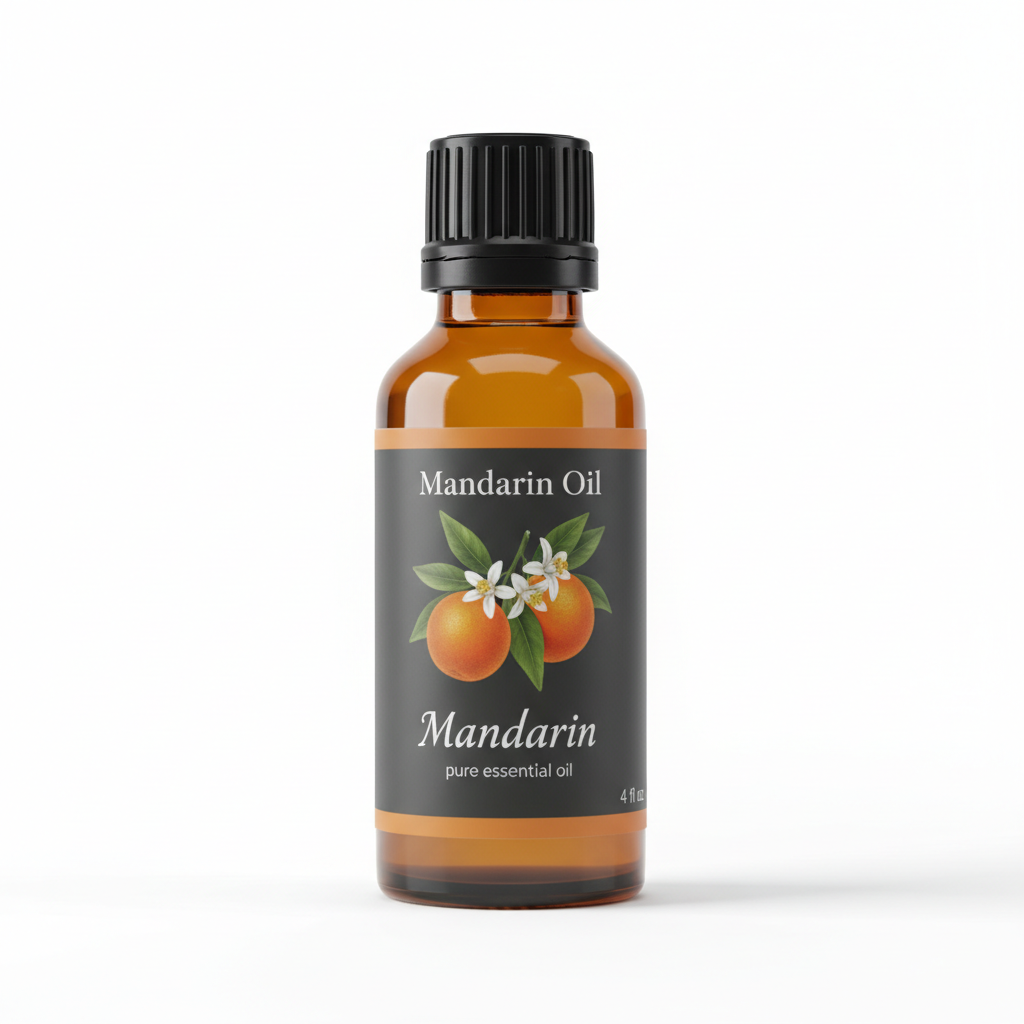
Mandarin Essential Oil
Our own Mandarin Essential Oil, in sizes from 0.5 oz to bulk.
From $10.99
Shop Now →Why Citrus Oils Are Notorious for Fading in Cold Process
Before describing the batches, it helps to explain what soapmakers are actually fighting against. Mandarin oil is cold-pressed from the peel and is largely composed of d-limonene, a light, volatile terpene that gives citrus oils their bright top-note character. That same lightness is what makes it evaporate quickly, and cold process soap is a rough environment for volatile compounds. The batter starts alkaline (often above pH 13 before saponification finishes), it can climb well past 120°F during gel phase, and the bars then sit exposed to air for four to six weeks of hardening. Heat drives off volatile molecules, and an alkaline environment can also alter some of them chemically. Compare that to a lotion or a roll-on blend, where the oil is added at a stable, near-neutral pH and encounters no comparable heat spike. It's a fundamentally different chemical environment, which is part of why citrus essential oil scent fade in soapmaking gets discussed so much more than citrus fade in other product types.
Fragrance suppliers and hobbyist forums generally agree that citrus top notes are the most fugitive scent family in cold process work, more so than florals, and considerably more than heavier, resinous notes. Where the conversation gets murkier is technique: does trace time matter? Does a higher usage rate actually help, or does it just mean more scent is lost, proportionally, to the same forces? That's what we wanted to look at directly.
Setting Up the Test
We kept the base recipe constant across all six batches (a simple olive, coconut, and sustainable palm oil blend at 5% superfat unless otherwise noted) and varied four things one at a time: usage rate, the point in the process where the oil was added, superfat level, and hardening time before the first scent check. Each batch used the same lot of mandarin oil, purchased at the same time, to avoid comparing oil from different growing seasons or extraction runs.
| Batch | Usage Rate | Added At | Superfat | Notes |
|---|---|---|---|---|
| 1 (control) | 3% of oil weight | Light trace | 5% | Standard approach, no other changes |
| 2 | 5% of oil weight | Light trace | 5% | Higher usage rate only |
| 3 | 3% | Very thin trace (near emulsion) | 5% | Earlier addition, less time in warm batter |
| 4 | 3% | Thick trace | 5% | Later addition, batter cooler and more set |
| 5 | 3% | Light trace | 8% | Higher superfat, more free oil to "hold" scent |
| 6 | 3% | Light trace | 5% | No gel phase (insulation avoided, fridge-cooled) |
We also blended the mandarin oil with a small percentage of a fixative-leaning base note (a common soaper's trick) in batches 1 through 5, but left batch 6 as mandarin oil alone, unblended, so we'd have at least one data point for the oil on its own. All bars were cut at 24 hours and hardened on open racks in the same room, out of direct sunlight, with airflow but no forced ventilation.
What We Observed at 1, 4, and 8 Weeks
We did informal sniff checks (unblinded, by the same two people each time, which we acknowledge is a limitation) at one week, four weeks, and eight weeks after cutting. These are subjective impressions, not measured with any instrument, and should be read as observations rather than conclusions.
- Week 1: All six batches smelled noticeably citrusy straight off the rack. Batch 2 (5% usage rate) seemed the strongest, which was expected. Batch 6 (no gel phase) also came across as brighter than the control, which lined up with our assumption that lower peak temperature would mean less volatile loss during saponification.
- Week 4: This is where the batches started to separate. The control batch had faded to what we'd describe as a soft, background citrus note, barely detectable unless the bar was held close to the nose. Batch 2 (higher usage rate) still had a clearer scent, though it read as proportionally fainter than its week 1 strength would suggest, meaning the extra oil didn't seem to translate one-to-one into extra staying power. Batch 6 (no gel phase) held onto the most noticeable scent of the group at this checkpoint. Batch 4 (added at thick trace, cooler batter) also seemed to retain slightly more than the control.
- Week 8: By this point, most batches had settled into a faint, mostly background presence, with mandarin reading as barely perceptible in the control and batch 3 (earliest addition). Batch 6 still had the most detectable scent of the six, though even that was a fraction of its original strength. Batch 5 (8% superfat) did not stand out as meaningfully better than the control, which suggested to us that superfat level, at least in the range we tested, has less influence on scent retention than gel phase management does.
Mandarin Oil Trace Time and Scent Retention
One of the more practical questions soapmakers ask is when, exactly, to add citrus oil during the mixing process. Our results here were modest but suggested a pattern worth testing further yourself. Batch 4, added at a thicker trace when the batter had cooled somewhat from the initial mixing exotherm, seemed to retain slightly more scent through the eight-week mark than batch 3, which was added almost at emulsion, while the batter was still warm and had the longest total exposure to heat during gel. This tracks with what a lot of experienced soapers already suspect: less time in a hot, high-pH environment before the bar sets probably means less volatile loss, at least for the top-note-heavy compounds that dominate mandarin's scent profile. It's a small effect in our observations, not a dramatic one, and we'd want to see it repeated across more batches and more citrus oils before treating it as reliable guidance rather than a starting hypothesis.
Key Learnings for Soapmakers Working With Mandarin Oil
None of this rises to the level of a controlled study, but a few patterns showed up consistently enough across our six batches that we think they're worth sharing as things to test in your own workshop.
- Avoiding gel phase seemed to help the most. Of every variable we changed, keeping the batter cooler by skipping insulation and using a fridge or freezer hardening appeared to make the biggest difference in how much mandarin scent survived to eight weeks.
- Adding the oil later in the process, at a thicker trace, may help slightly. Less time exposed to hot, alkaline batter before the mixture sets seemed to correlate with somewhat better scent retention, though the effect in our test was modest.
- Cranking up the usage rate has diminishing returns. Batch 2's higher percentage produced a stronger scent at week 1, but it faded proportionally in a similar pattern to the other batches rather than holding a flat, durable edge over the control.
- Superfat level didn't move the needle much, in our sample. We expected the extra free oil in batch 5 to act as something of a scent reservoir. It didn't show a clear advantage over the control in our checks.
- Blending with a fixative base note is still worth doing. This test wasn't designed to isolate that variable cleanly, but our general experience, echoed by many soapmakers, is that pairing a bright citrus top note with a heavier, longer-lasting base note gives a more balanced result over the hardening period and shelf life, even once the citrus itself has faded into the background.
If you're formulating with mandarin oil in cold process soap and scent longevity matters to your finished product, the practical takeaway from our small test is to focus on process rather than just quantity. A cooler hardening period and thoughtful timing of when the oil goes into the batter appear to matter more than simply increasing how much you use. That said, six batches is a small sample, sniff testing is inherently subjective, and citrus oils vary somewhat lot to lot, so we'd encourage anyone serious about this to run a version of this test with their own base recipe, their own hardening setup, and their own nose before drawing firm conclusions.
A Note on Reading This Test
We're sharing this as one soapmaking household's documented observations, not as a scientific paper. We didn't use gas chromatography or any instrument to measure limonene concentration before and after hardening; we relied on trained but subjective human noses, checked at three points in time, across a single batch of oil. Anecdotal evidence like this is useful for generating ideas worth testing further, and it lines up with broader community experience around citrus oils in cold process soap, but it shouldn't be treated as a substitute for controlled testing if you're formulating at commercial scale. If scent retention is central to your product line, the more reliable path is running your own side-by-side batches with your specific recipe, hardening conditions, and oil supplier, since small formulation differences can shift results more than any single variable we tested here.